The landscape of digital marketing and professional writing underwent a significant transformation in 2022 as artificial intelligence (AI) transitioned from a niche experimental technology to a fundamental utility for content creators. Driven by advancements in Natural Language Processing (NLP) and the widespread commercialization of Large Language Models (LLMs) such as OpenAI’s GPT-3, AI content generators have become essential for businesses seeking to maintain high-frequency publishing schedules while managing operational costs. These tools are designed to assist in the generation of blog posts, social media updates, advertising copy, and technical reports by predicting linguistic patterns and synthesizing information at speeds unattainable by human writers alone.

The Evolution of AI in the Content Economy
The surge in AI writing adoption is the culmination of a decade of progress in machine learning. Historically, automated content was restricted to "spinning" software that rearranged existing text, often resulting in poor syntax and low readability. The release of GPT-3 in mid-2020 marked a turning point, providing the infrastructure for software developers to build sophisticated interfaces that could generate coherent, contextually relevant, and creative text. By early 2022, the market for AI writing assistants was valued at hundreds of millions of dollars, with venture capital flowing into startups promising to solve "writer’s block" and reduce content production timelines by up to 80%.
Market data from 2022 indicates that over 60% of marketers have integrated some form of AI into their workflow. The primary drivers for this adoption include the increasing demand for search engine optimized (SEO) content and the need for multi-channel marketing consistency. As search engines like Google refined their algorithms to prioritize "helpful content," the role of AI shifted from pure automation to a collaborative "human-in-the-loop" model, where AI generates drafts that are subsequently refined by human editors.
Leading AI Content Generation Platforms of 2022
The competitive landscape of 2022 saw several key players emerge, each tailoring their technology to specific market segments, from individual bloggers to enterprise-level marketing departments.
1. Jasper AI: Market Leader in Creative Command
Jasper AI, formerly known as Jarvis, established itself as the industry standard for high-end content generation in 2022. The platform’s rebranding followed a trademark dispute with Disney, but the transition did not hinder its growth. Jasper’s "Boss Mode" feature allowed users to issue direct commands to the AI, facilitating the creation of long-form articles that maintain narrative consistency. By integrating with tools like SurferSEO, Jasper positioned itself as a comprehensive solution for digital marketers focused on ranking in competitive search environments. Its pricing model, starting at approximately $99 per month for advanced features, targeted professional agencies and mid-sized businesses.

2. Copy.ai: Optimization for Short-Form and Social Media
Copy.ai focused its utility on the high-volume needs of social media managers and e-commerce specialists. Offering over 90 templates, the platform excels at producing "hook" text, Instagram captions, and Facebook ad copy. In 2022, Copy.ai introduced a "Freemium" model that significantly lowered the barrier to entry for solopreneurs. Its ability to generate dozens of variations for a single prompt allows marketers to conduct A/B testing on ad copy with unprecedented efficiency.
3. Frase: The Convergence of SEO and AI
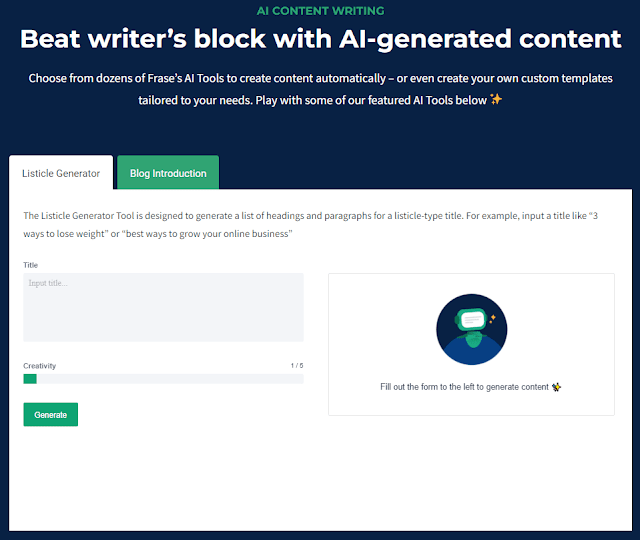
Frase distinguishes itself by merging AI writing with intensive content research. Unlike tools that focus solely on the act of writing, Frase analyzes the top-performing results on Search Engine Results Pages (SERPs) to create detailed content briefs. This data-driven approach ensures that the generated text includes the necessary keywords and topics to compete for search visibility. For SEO professionals, Frase serves as both a research assistant and a drafter, streamlining the path from keyword selection to published article.
4. Article Forge: High-Volume Automated Drafting
Article Forge occupies a unique niche by requiring minimal user input. While other tools require a collaborative "dialogue" with the AI, Article Forge generates complete articles based on a single keyword. The platform utilizes a proprietary deep learning model to research and write content from scratch, aiming to produce text that is indistinguishable from human writing to search engine crawlers. In 2022, it became a preferred tool for niche site owners who prioritize quantity and foundational SEO structure.
5. Rytr: Accessibility and Budget-Friendly Innovation
Rytr gained traction in 2022 as a highly accessible alternative to more expensive platforms. With a clean interface and a robust free tier, it became the tool of choice for students and small business owners. Despite its lower price point, Rytr includes advanced features such as a built-in plagiarism checker and the ability to choose the "tone" of the writing, ranging from formal to humorous, ensuring the output aligns with the brand’s voice.

6. Writesonic: Versatility Across Marketing Channels
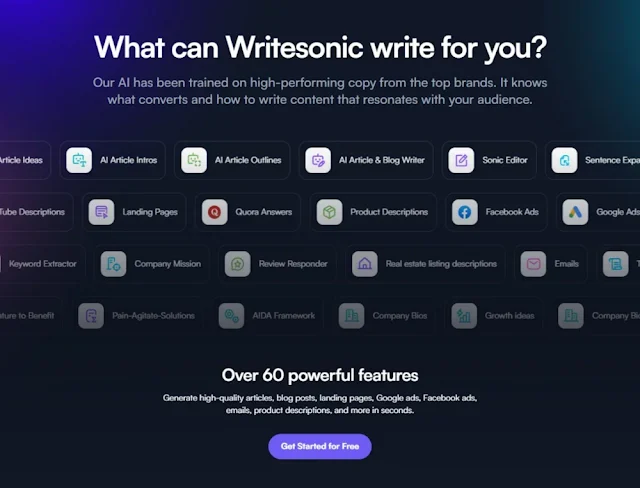
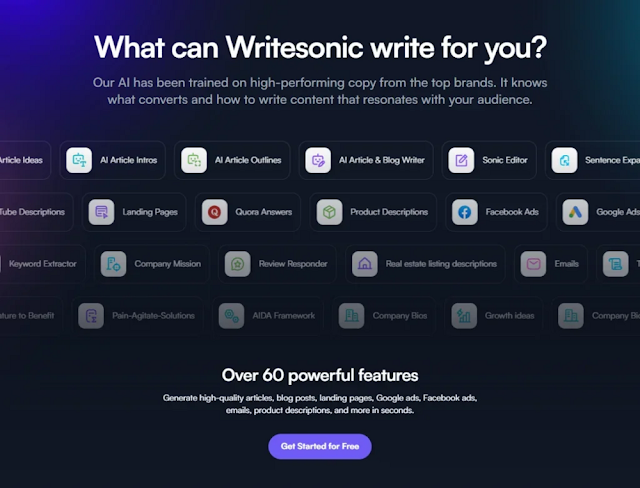
Writesonic offers a diverse suite of tools that cater to both long-form blog needs and short-form marketing requirements. Its "AI Article Writer 3.0" was noted in 2022 for its ability to generate 1,500-word articles in under a minute. Additionally, Writesonic provides tools for landing page generation, making it a valuable asset for growth hackers and startup founders who need to build digital assets rapidly.
7. Copysmith: Enterprise-Grade E-commerce Solutions
Copysmith focuses heavily on the e-commerce sector, providing integrations with platforms like Shopify. Its primary value proposition lies in its ability to generate thousands of unique product descriptions simultaneously. For large-scale retailers managing extensive inventories, Copysmith’s AI reduces the manual labor associated with catalog management while ensuring each description is optimized for search.

8. Hypotenuse.ai: Specialized Product and Image Generation
Hypotenuse.ai emerged as a specialist in the e-commerce and creative space. Beyond text, the platform began exploring the intersection of text and visual AI, helping brands create cohesive product narratives. Its "Batch Generation" feature is specifically designed for high-growth e-commerce brands that require consistent brand messaging across thousands of SKUs.
9. Kafkai: Algorithmic Content for SEO Specialists
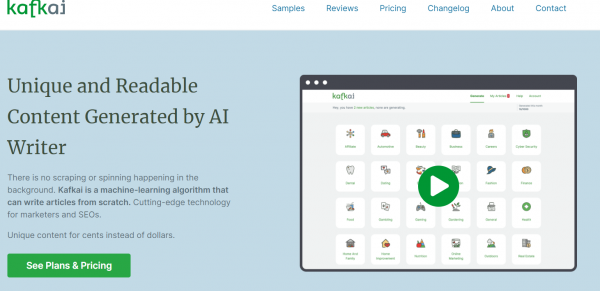
Kafkai is built specifically for the SEO community. It utilizes a niche-trained model that focuses on producing content for specific categories like health, finance, or technology. By training the AI on specific industries, Kafkai aims to produce more accurate and authoritative text than general-purpose models, catering to marketers who operate in highly regulated or technical fields.
10. Peppertype.ai: High-Quality Output for Content Teams
Peppertype.ai emphasizes the quality and "cleanliness" of its output. Built on top of GPT-3, the platform uses a layer of proprietary filtering to ensure that the content generated requires minimal editing. In 2022, it became a favorite for content teams that prioritize brand integrity and linguistic precision, offering a collaborative environment for teams to manage their content pipelines.
Technical Infrastructure and Operating Costs
The proliferation of these tools is underpinned by the SaaS (Software as a Service) business model. Most AI generators in 2022 operate on a credit-based or word-count-limited subscription. This pricing reflects the underlying costs of accessing API endpoints from providers like OpenAI. As the complexity of the prompts and the length of the output increase, so does the computational power required, leading to the tiered pricing structures observed across the industry.

| Tool | Entry Pricing (Approx.) | Primary Use Case |
|---|---|---|
| Jasper | $49 – $99/mo | Professional Long-form / SEO |
| Copy.ai | $35 – $49/mo | Social Media / Ad Copy |
| Frase | $14.99/mo | SEO Research & Writing |
| Rytr | Free – $9/mo | Budget-conscious Creators |
| Writesonic | $15/mo | General Marketing / Landing Pages |
Industry Reactions and Ethical Considerations
The rapid adoption of AI writing has not been without controversy. In mid-2022, the SEO community was divided following Google’s "Helpful Content Update." Official statements from Google representatives initially suggested that AI-generated content might be flagged as spam if it was created solely to manipulate search rankings. However, the consensus among industry experts evolved to suggest that Google’s algorithms prioritize the quality and utility of the content rather than its origin. If an AI-generated article provides genuine value to the reader, it is likely to be rewarded in the rankings.
Academic and journalistic institutions have also voiced concerns regarding plagiarism and the "hallucination" effect—a phenomenon where AI generates factually incorrect information with high confidence. This has led to the implementation of strict editorial guidelines in many organizations, requiring human fact-checking for all AI-assisted output.

Broader Impact and Future Implications
The rise of AI content generators in 2022 signals a permanent shift in the labor market for writers. The role of the "copywriter" is transitioning into that of a "content editor" or "AI prompter." Professionals who can effectively direct AI tools are finding themselves more productive, able to handle larger volumes of work without a corresponding increase in hours.
Furthermore, the democratization of high-quality writing tools allows small businesses with limited budgets to compete with larger corporations in the digital space. By lowering the cost of content production, AI is enabling a more diverse range of voices to establish an online presence. However, this also leads to an "information explosion," where the sheer volume of content online may make it increasingly difficult for individual pieces to stand out.
As 2022 draws to a close, the integration of AI into content workflows is no longer a matter of debate but a competitive necessity. The tools listed above represent the first generation of a technology that will continue to evolve, likely incorporating more multimodal capabilities, such as integrated image and video generation, to provide a holistic creative suite for the modern digital economy.
About the Author