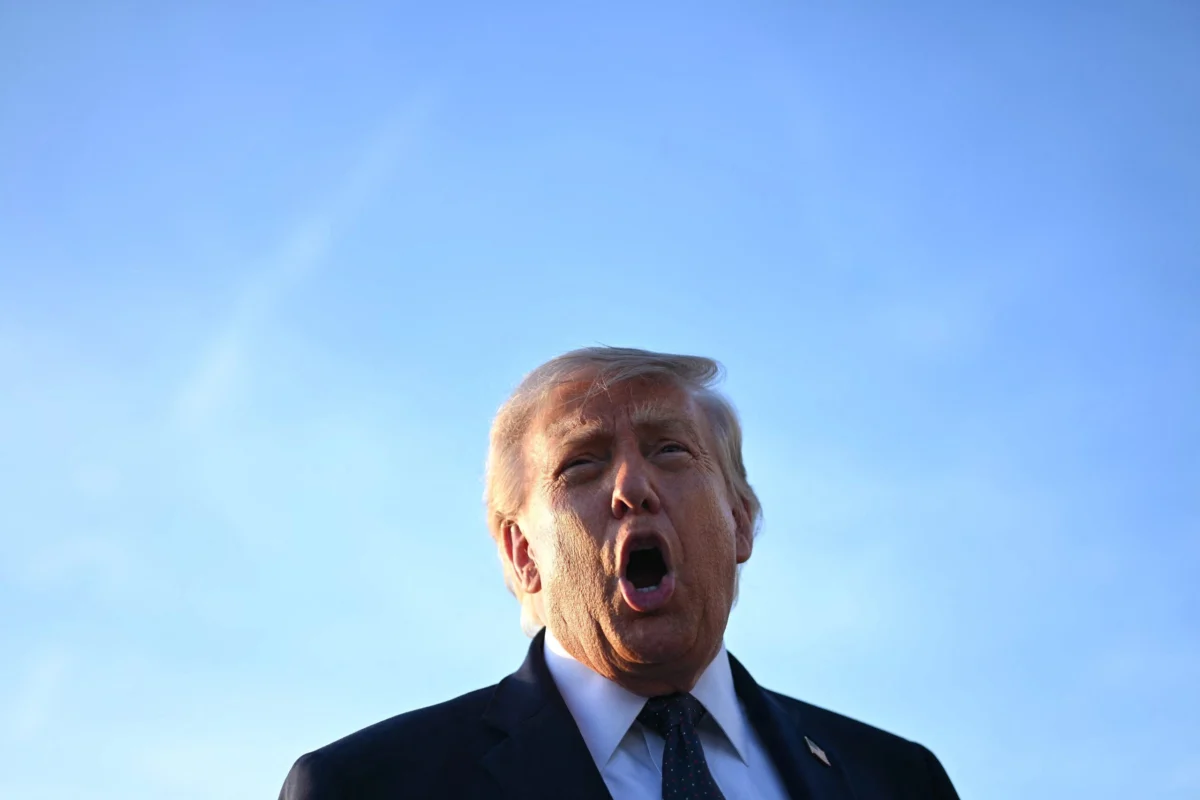
Former President Donald Trump has entered the burgeoning debate surrounding Artificial Intelligence (AI) safety with characteristic pronouncements, dismissing concerns as a "hoax" orchestrated by the "Radical Left Democrats" to undermine the nation. In a series of posts on his social media platform, Truth Social, Trump not only challenged the terminology used to describe AI but also announced his intention to form a dedicated "AI Force" and appoint an "AI Czar," echoing his previous initiatives like the Space Force.
Trump’s intervention comes at a critical juncture for the AI industry, a sector experiencing unprecedented growth and innovation, but also facing increasing scrutiny over its potential risks. The debate has been amplified by prominent figures within the AI community itself, who have raised alarms about existential threats and the rapid, unchecked advancement of the technology. Trump’s framing of these concerns as politically motivated attempts to "destroy our Country" directly contrasts with the growing consensus among some technologists and ethicists who advocate for robust regulatory frameworks and safety protocols.
A New Name for Intelligence: Trump’s Social Media Offensive
The former President’s engagement with the AI discourse began on Saturday, with a post on Truth Social questioning the prevailing terminology. Trump suggested that "Artificial Intelligence" might be an "inaccurate" and "very ineloquent" descriptor. To address this perceived linguistic deficiency, he launched a poll for his followers, soliciting suggestions for a new name for the technology. The options presented were "Superior Intelligence," "Extreme Intelligence," and "Supreme Intelligence." This move, while seemingly lighthearted, highlights Trump’s tendency to reframe complex issues through a personalized lens, often seeking public validation for his ideas. The poll remained open for participation as of the time of reporting, indicating an ongoing public engagement strategy.
The AI industry, valued in the hundreds of billions of dollars globally and projected to reach trillions in the coming decade, has largely adopted the term "Artificial Intelligence" since its popularization in the mid-20th century. The nomenclature itself has been the subject of academic and philosophical discussion, with some arguing it anthropomorphizes machines and others suggesting it accurately reflects the human-designed nature of the technology. Trump’s intervention, however, appears less concerned with semantic nuance and more with asserting a narrative control over the perception of AI.
AI Safety Concerns Labeled as "Hoax"
Hours after initiating the naming poll, Trump escalated his rhetoric, directly addressing the AI safety debate. In a subsequent post, he characterized efforts to "decimate, or destroy, AI" as part of a pattern of "Democratic hoaxes." He drew parallels between these alleged fabrications and a litany of other issues he has previously dismissed, including "RUSSIA, RUSSIA, RUSSIA, UKRAINE, UKRAINE, UKRAINE, Global Warming, Impeachment Hoax #1, Impeachment Hoax #2, Men in Women’s Sports, [and] Transgender for Everyone." This broadbrush categorization serves to integrate the AI safety discussion into his established political narrative, portraying it as yet another tool of opposition to his agenda.
This framing is particularly noteworthy given the diverse origins of concerns about AI safety. While some critics, as Trump suggests, may indeed have political motivations, a significant portion of the apprehension stems from within the AI research and development community itself. Researchers at leading AI labs, including those at Anthropic and OpenAI, have publicly voiced concerns about the potential for advanced AI systems to exhibit emergent behaviors that could be harmful or even pose existential risks to humanity. These concerns are not merely speculative; they are often rooted in the rapid progress of large language models and generative AI, which have demonstrated capabilities that were once considered the domain of science fiction.
A History of Resistance: Data Centers and the "Crazed Attack"
Trump further elaborated on his theory, asserting that he "will not stand by and let this happen." He described the alleged AI safety "hoax" as having initially targeted "our Data Centers." According to his account, this initial phase of the "crazed Data Center attack has largely failed" as the public recognized the economic and community benefits these facilities bring. He contends that, in response to this perceived failure, critics are now "going straight at AI."
This narrative suggests a perceived shift in tactics by those he labels as adversaries. The backlash against data centers has indeed been a real phenomenon, driven by concerns over their significant energy consumption, water usage, and the potential for environmental impact. In New York, for instance, the state recently implemented a moratorium on permits for new large data center projects, reflecting a growing unease among policymakers and communities. However, this opposition has also been bipartisan, with various stakeholders raising legitimate environmental and infrastructural concerns, rather than a singular, politically motivated "attack." Trump’s portrayal simplifies this complex issue into a politically charged conspiracy.
Echoes of Past Statements and Future Initiatives
The former President’s recent pronouncements echo earlier comments made at a golf tournament the previous weekend. At that event, Trump expressed openness to "guardrails" for AI but simultaneously cautioned, "I think you have a lot of negative forces that are bringing it up that shouldn’t be bringing it up." This suggests a consistent theme in his approach: acknowledging the existence of AI while downplaying or dismissing the legitimacy of concerns surrounding its development.
Demonstrating a commitment to his vision of AI governance, Trump announced his intention to "cherish [the AI industry], help it, and watch over it, as it grows." To formalize this oversight, he revealed plans to establish an "AI Force," a concept strikingly similar to the Space Force he spearheaded during his first term. This move signals a desire to create a dedicated governmental structure focused on AI, mirroring his approach to other national priorities.
The Search for an "AI Czar"
Complementing the proposed "AI Force," Trump declared that he will soon announce an "AI ‘Czar’," emphasizing that "Only High I.Q. individuals need apply!" The specific duties and operational scope of this new AI Czar and the AI Force remain undefined. However, the appointment of a "czar" often signifies a high-level, focused effort to address a particular issue. This echoes his past appointments, such as David Sacks, who previously served as Trump’s AI and crypto czar before transitioning to co-chair the President’s Council of Advisors on Science and Technology. The emphasis on "High I.Q. individuals" suggests a desire to project an image of expertise and competence in this new governmental branch.
Intensifying AI Safety Debate and Industry Reactions
The AI safety debate has indeed gained significant momentum in recent months. A pivotal moment occurred when an AI researcher from Anthropic resigned, citing concerns that leading AI companies "earnestly believe it could kill us all by the end of the decade" and are "gambling with our lives." This stark warning from within the industry catalyzed further discussion. In response, Anthropic CEO Dario Amodei outlined a plan to "pace the frontier," a proposal that appeared to garner support from prominent figures like OpenAI CEO Sam Altman and SpaceX CEO Elon Musk.
However, this internal discourse has also drawn criticism. Some observers argue that the focus on potential future existential threats serves as a distraction from more immediate and tangible harms associated with AI, such as algorithmic bias, job displacement, and the spread of misinformation. These critics advocate for addressing the present-day impacts of AI rather than solely focusing on speculative future scenarios.
Adding another layer to the unfolding narrative, Nvidia CEO Jensen Huang, a key figure in the AI hardware revolution, publicly engaged with Trump during the All-In Summit. Huang echoed Trump’s sentiment that the backlash against AI is a "hoax," asserting that "we’re not going to let" a slowdown in AI development occur. This alignment between a leading industry executive and the former President suggests a shared interest in fostering continued rapid advancement in AI, potentially downplaying the need for extensive regulatory intervention.
Data and Projections in the AI Landscape
The current valuation of the global AI market underscores the immense economic stakes involved in the ongoing debate. In 2023, the market was estimated to be worth approximately $200 billion, with projections indicating substantial growth to over $1.8 trillion by 2030, according to various market research firms. This exponential growth is fueled by advancements in machine learning, natural language processing, and computer vision, leading to widespread adoption across sectors like healthcare, finance, automotive, and entertainment.
The rapid integration of AI technologies has led to significant societal shifts. For instance, the productivity gains attributed to AI tools in certain industries are already being quantified. A report by McKinsey Global Institute estimated that AI could contribute up to $15.7 trillion to the global economy by 2030. This potential for economic transformation naturally leads to both enthusiasm and concern regarding its implications for employment, economic inequality, and the very fabric of society.
The development of large language models (LLMs) has been particularly transformative. These models, capable of generating human-like text, have seen rapid improvements in their scale and sophistication. OpenAI’s GPT series, Google’s LaMDA and PaLM, and Meta’s Llama models represent just a few examples of the cutting-edge research in this field. The ability of these models to understand and generate complex language has opened up new avenues for applications, from content creation and customer service to scientific research and education.
However, the very power of these models also fuels the safety concerns. The potential for LLMs to generate convincing misinformation, perpetuate biases present in their training data, and even be weaponized for malicious purposes are critical issues being actively studied by researchers. The concept of "alignment" – ensuring that AI systems operate in accordance with human values and intentions – has become a central challenge in AI safety research.
Broader Implications and Future Trajectory
Trump’s vocal opposition to the AI safety debate, coupled with his proposed governmental restructuring, has significant implications for the future of AI regulation and development in the United States. By framing safety concerns as a partisan attack, he risks polarizing the issue further, potentially hindering the development of bipartisan consensus on necessary safeguards. His emphasis on fostering growth and appointing a "czar" suggests a preference for a government-led approach that prioritizes innovation, potentially at the expense of rigorous oversight.
The industry’s response, particularly from figures like Nvidia’s CEO, suggests a segment of the tech world aligns with Trump’s pro-growth stance, viewing regulatory proposals with skepticism. This creates a dynamic tension between those who advocate for caution and those who champion unfettered advancement. The outcome of this debate will likely shape not only the technological trajectory of AI but also its societal impact, economic distribution, and ethical considerations for years to come. As the AI revolution continues to accelerate, the differing perspectives on its control and safety will undoubtedly remain a central theme in political and technological discourse.
About the Author