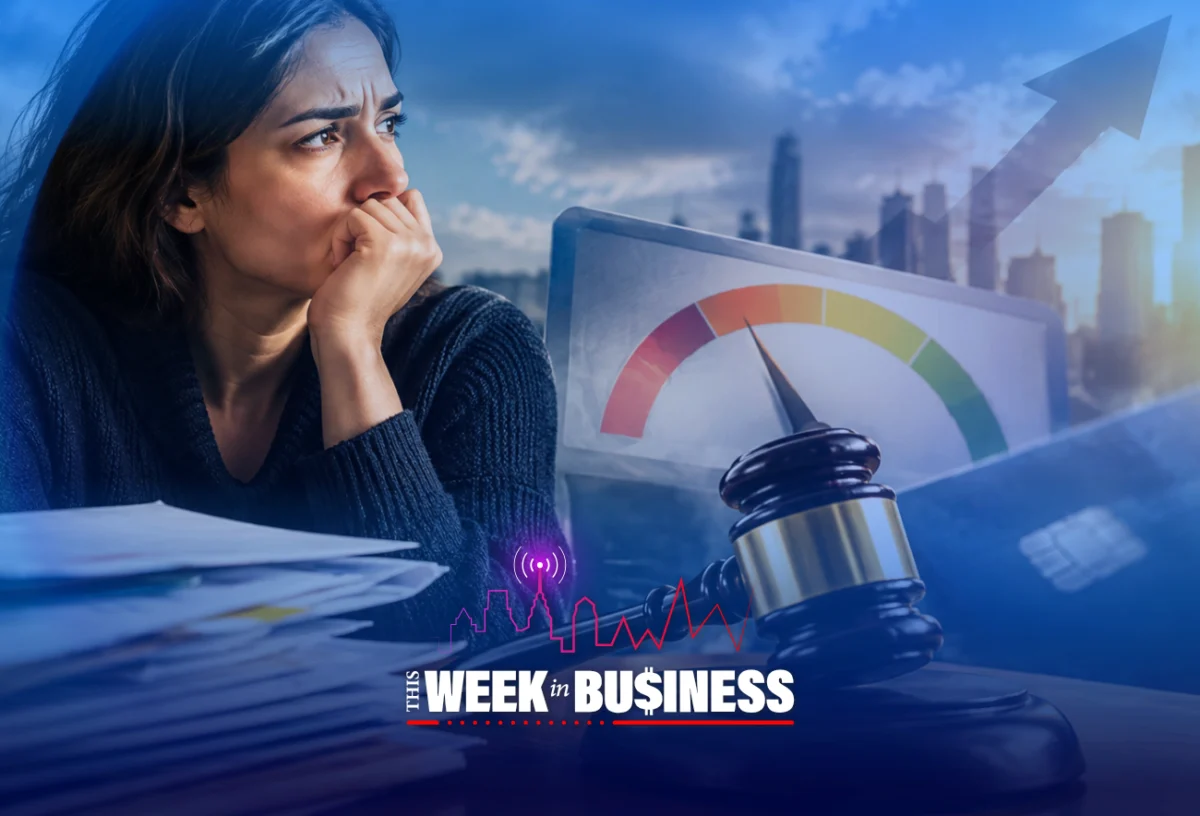
The landscape of American consumer finance is currently witnessing a notable increase in personal bankruptcy filings, a trend that naturally raises concerns about the underlying health of the national economy. However, according to experts like Sasha Indarte, an associate professor at the Wharton School of the University of Pennsylvania, interpreting this rise solely as an indicator of a worsening economy might be an oversimplification. Instead, current numbers may reflect a recalibration towards more historically typical levels following an unusual period of economic interventions and consumer behavior shifts.
The Current Landscape: A Surge in Filings
Recent data from the American Bankruptcy Institute (ABI) paints a clear picture of this upward trajectory. For instance, total bankruptcy filings across the United States surged by 18.3% in 2023 compared to the previous year, reaching 445,186 cases. This increase encompassed both commercial and non-commercial filings, but the bulk of this growth was driven by consumers. Specifically, Chapter 7 non-commercial filings, which allow for the liquidation of assets to discharge debts, rose by 20.6% to 289,350 cases. Chapter 13 non-commercial filings, which involve a reorganization plan for individuals with regular income, also saw a substantial increase of 15.6%, totaling 150,050 cases.
These figures represent a significant acceleration from the low points observed during the COVID-19 pandemic. While the raw numbers remain below the peak levels seen in the wake of the 2008 financial crisis, the rate of increase warrants careful examination, especially considering the varied economic pressures consumers currently face.
Understanding the "Return to Normal" Thesis
Professor Indarte posits that the recent uptick in bankruptcy filings should be viewed within a broader historical context. For much of the pandemic, government stimulus packages, eviction and foreclosure moratoriums, enhanced unemployment benefits, and widespread debt forbearance programs created an artificial suppression of bankruptcy filings. Millions of Americans received direct financial aid, student loan payments were paused, and creditors were often more flexible in restructuring debts, all of which provided a significant safety net that temporarily reduced financial distress and the need for formal bankruptcy protection.
Prior to the pandemic, consumer bankruptcy rates had been relatively stable for several years, albeit at levels higher than those observed during 2020-2022. The "return to normal" argument suggests that as these pandemic-era protections expire and the economy normalizes—characterized by higher inflation, rising interest rates, and the resumption of regular debt obligations—more individuals are finding themselves without the temporary buffers that previously prevented them from reaching a point of financial insolvency. In this view, the current rise is less about a sudden, catastrophic deterioration of the economy and more about the unwinding of an unprecedented period of government and creditor support, allowing underlying financial pressures to manifest more clearly.
A Chronology of Economic Shifts and Their Impact on Debt
To fully grasp the current situation, it’s crucial to trace the economic timeline that has shaped consumer financial health over the past few years:
- Pre-Pandemic Stability (2018-2019): Before COVID-19, consumer bankruptcy filings had stabilized at levels significantly lower than the post-2008 recession peaks, averaging around 750,000 to 800,000 total filings annually. While still a substantial number, this period was marked by steady job growth and relatively low interest rates, contributing to a generally improving, albeit uneven, consumer financial picture.
- The Pandemic Anomaly (2020-2022): The onset of the COVID-19 pandemic in early 2020 triggered an immediate economic shock. However, the subsequent policy response was swift and massive. The CARES Act and subsequent relief packages injected trillions of dollars into the economy through direct payments, expanded unemployment benefits, and the Paycheck Protection Program (PPP). Crucially for consumers, eviction and foreclosure moratoriums, along with the unprecedented pause on federal student loan payments, provided critical financial breathing room. Many households used stimulus funds to pay down existing debts or build up savings, leading to a dramatic drop in bankruptcy filings—reaching a nearly 35-year low in 2021.
- The Post-Pandemic Unwinding (2023-Present): As the economy reopened and stimulus measures tapered off, a new set of challenges emerged. Supply chain disruptions, coupled with robust consumer demand, fueled a rapid rise in inflation, reaching multi-decade highs. In response, the Federal Reserve embarked on an aggressive campaign of interest rate hikes, significantly increasing the cost of borrowing for mortgages, auto loans, and credit cards. Concurrently, federal student loan payments, which had been paused for over three years, officially resumed in October 2023, adding a substantial new monthly burden for millions of households. It is against this backdrop that bankruptcy filings began their upward trend, reflecting the cumulative impact of these expiring protections and new financial stressors.
Key Economic Drivers Behind the Trend
Several interconnected economic factors are contributing to the current rise in consumer bankruptcies:
- Persistent Inflation and Cost of Living: While headline inflation has moderated from its peak, the cumulative effect of several years of elevated prices continues to strain household budgets. The cost of necessities like housing, groceries, and transportation remains significantly higher than pre-pandemic levels. Many households, particularly those with fixed or slowly rising incomes, find their purchasing power eroded, making it harder to cover essential expenses, let alone save or pay down debt. The Bureau of Labor Statistics reported that while the Consumer Price Index (CPI) cooled, certain categories like housing and food have remained stubbornly high, disproportionately affecting lower and middle-income households.
- Elevated Interest Rates and Debt Service Burden: The Federal Reserve’s rapid tightening cycle has pushed the federal funds rate to its highest level in over two decades. This has translated directly into higher Annual Percentage Rates (APRs) on credit cards, personal loans, and variable-rate mortgages. For consumers carrying significant credit card balances—which collectively surpassed $1 trillion in the U.S. in 2023, according to the Federal Reserve Bank of New York—the cost of servicing this debt has become much more expensive. Minimum payments are increasingly composed of interest rather than principal, making it difficult for individuals to escape the debt cycle.
- Depleted Savings and Rising Consumer Debt: The boost in savings experienced during the pandemic, partly due to stimulus and reduced spending opportunities, has largely evaporated for many households. The personal saving rate, which spiked to over 25% in early 2020, has since fallen back to pre-pandemic levels or even lower, hovering around 3-4%. Concurrently, non-mortgage consumer debt, particularly credit card debt, has surged. This indicates that a growing number of Americans are relying on credit to bridge the gap between their income and expenses, a precarious position that can quickly lead to insolvency when combined with high interest rates.
- Resumption of Student Loan Payments: The end of the federal student loan payment pause in October 2023 added a new and significant financial obligation for millions of borrowers. With an average monthly payment estimated to be around $300-$400, this resumption has strained budgets already stretched by inflation and high interest rates. While some borrowers qualified for new income-driven repayment plans, many found themselves facing payments they hadn’t budgeted for in years, potentially pushing them over the edge into financial distress.
The Human Element: Stigma, Misconceptions, and the Safety Valve
Beyond the statistics, Professor Indarte highlights the often-overlooked human aspect of bankruptcy. Despite its legal purpose, a significant stigma remains attached to filing for bankruptcy in American society. This stigma often leads to misconceptions, such as the belief that bankruptcy is a moral failing or that it will permanently destroy one’s financial future. This can deter individuals from seeking help even when they are in dire financial straits, prolonging their struggles and potentially exacerbating their debt burden.
-
The Bankruptcy Process: A Brief Overview
- Chapter 7 (Liquidation): This is the most common form of consumer bankruptcy. It involves a trustee selling non-exempt assets to pay off creditors. Most debtors, however, have limited non-exempt assets, allowing them to discharge most unsecured debts (like credit card debt, medical bills, and personal loans) without losing significant property. To qualify, debtors must pass a "means test" to demonstrate their income is below a certain threshold or that they don’t have enough disposable income to pay back a substantial portion of their debts.
- Chapter 13 (Reorganization): This option is for individuals with regular income who can afford to repay some of their debts over time. It involves creating a repayment plan, typically lasting three to five years, during which the debtor makes regular payments to a trustee, who then distributes the funds to creditors. Chapter 13 allows debtors to keep their assets, including their homes, and can be used to catch up on mortgage or car payments.
Both processes require credit counseling and debtor education courses, emphasizing financial literacy and responsible money management moving forward.
-
Impact on Credit and Financial Rebuilding
While bankruptcy does have a significant negative impact on one’s credit score—remaining on credit reports for seven to ten years—it is not a permanent financial death sentence. In fact, for many, it serves as a necessary reset. By discharging overwhelming debt, individuals can stop the cycle of accumulating interest and fees, allowing them to begin rebuilding their financial lives from a more stable foundation. Many who file for bankruptcy find that their credit scores, after an initial sharp drop, begin to improve relatively quickly as they demonstrate responsible financial behavior post-filing. Secured credit cards and small loans can help re-establish credit, and over time, debtors can qualify for mortgages and other forms of credit again.
Indarte emphasizes that bankruptcy ultimately serves as an important financial safety valve. In a capitalist economy, debt is an integral component, but when it becomes unmanageable, a legal mechanism for discharge or reorganization is crucial. Without this safety valve, individuals caught in overwhelming debt could face unending cycles of poverty, reduced productivity, and social instability, which would have broader negative repercussions for the economy as a whole. It provides a pathway for individuals to escape the crushing weight of unserviceable debt and reintegrate into the economy as financially viable participants.
Perspectives from the Field
Bankruptcy attorneys and financial counselors largely corroborate Professor Indarte’s analysis. They report a noticeable increase in inquiries from individuals struggling with credit card debt, medical bills, and now, student loan payments. Many clients express feelings of shame and hopelessness, having exhausted all other options. Attorneys often highlight the educational component of bankruptcy, noting that while it provides relief, it also mandates financial literacy training, which can be invaluable for long-term financial health.
From a macroeconomic standpoint, economists generally agree that a functioning bankruptcy system is essential. While a sharp, uncontrolled spike in filings could signal deeper systemic issues, a controlled increase, particularly one that reflects a return to historical norms after an artificially low period, is not necessarily a harbinger of a severe recession. Instead, it indicates that financial pressures, which were temporarily masked, are now coming to the fore.
Broader Implications for the Economy
The rise in consumer bankruptcies has several broader implications:
- Impact on Lenders and Credit Markets: For banks and other creditors, an increase in bankruptcies means higher charge-offs and potential losses on outstanding loans. This can lead to tighter lending standards, making it more difficult for other consumers to access credit, which could in turn slow down economic activity. However, financial institutions generally build reserves for such eventualities, and the current increase, while significant, is not yet at levels that threaten the stability of the broader financial system.
- Consumer Spending and Confidence: Individuals grappling with financial distress are less likely to engage in discretionary spending. A widespread increase in bankruptcies could therefore lead to a contraction in consumer spending, a critical driver of the U.S. economy. However, the relief provided by bankruptcy for some individuals might eventually free up their income for necessary spending, albeit after a period of adjustment.
- Policy Considerations: The trend could prompt policymakers to re-evaluate existing consumer protection laws, debt relief programs, and financial literacy initiatives. Discussions around student loan forgiveness, credit card interest rate caps, and accessible financial counseling services might gain renewed urgency.
Conclusion
The rising tide of consumer bankruptcies in the United States is a complex phenomenon that resists simplistic interpretations. While it undeniably reflects significant financial stress for a growing number of American households grappling with inflation, high interest rates, and renewed debt obligations, it is not necessarily a singular sign of an imminent economic collapse. Instead, as experts like Sasha Indarte suggest, it may largely represent a normalization of bankruptcy rates following an extraordinary period of pandemic-era support.
The increase underscores the challenges many individuals face in managing their finances in a dynamic economic environment, highlighting the critical role of bankruptcy as a legal mechanism for financial recovery. While the raw numbers demand attention and empathy for those affected, a nuanced understanding reveals that this trend is a multifaceted indicator, reflecting both the unwinding of unique historical circumstances and the persistent financial pressures within the U.S. economy.
About the Author