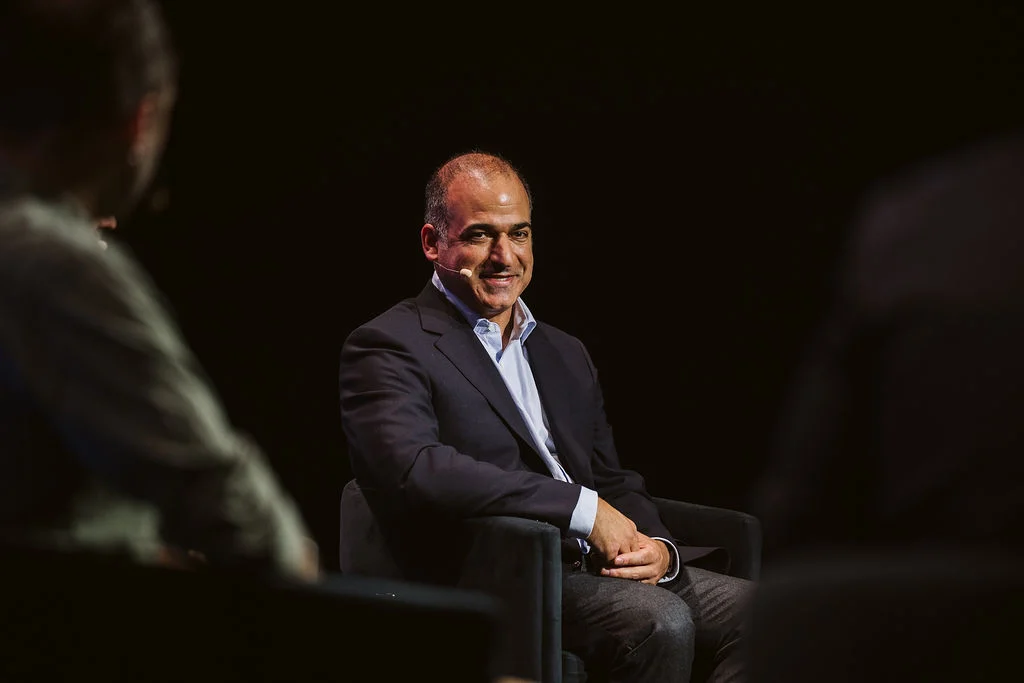
The nascent field of "world models" within artificial intelligence, aiming to imbue AI with a fundamental understanding of the physical world and its dynamics, is currently shrouded in an unusual degree of secrecy. This opacity, while potentially strategic, is leaving industry observers, potential partners, and even data suppliers in the dark about the concrete applications and commercialization timelines of this potentially revolutionary technology. At a recent panel discussion at the All In conference – distinct from the popular podcast of the same name – the challenges and mysteries surrounding the development of world models were brought into sharp focus, highlighting a landscape where groundbreaking research is abundant, but tangible product roadmaps remain elusive.
The All In Conference: A Crucible for AI Discourse
The All In conference, held in early September 2026, served as a significant gathering point for a diverse range of technologists, investors, and researchers. While the event itself is not a direct player in the world model space, its reputation for fostering in-depth discussions on emerging technologies made it an opportune venue for exploring the complex dynamics of this particular AI frontier. The panel, moderated by the author of the original piece, brought together key figures to dissect the state of world model development, a field that has rapidly attracted substantial venture capital and the attention of some of AI’s most prominent pioneers.
Titans of the World Model Arena: AMI Labs and World Labs
At the forefront of this burgeoning domain are two influential entities: Yann LeCun’s AMI Labs and Fei-Fei Li’s World Labs. Both have garnered significant attention and substantial funding, positioning themselves as leaders in the pursuit of AI that can comprehend and interact with the physical world. However, when assessed on their immediate focus on revenue generation and commercial viability, both organizations currently rank surprisingly low. This suggests a strategic emphasis on foundational research and development, a common characteristic of ambitious deep-tech ventures, but one that leaves their immediate market impact uncertain.
The core promise of world models lies in their ability to automate and enhance "spatial intelligence." This capability opens a vast spectrum of potential applications, ranging from sophisticated robotics and highly immersive interactive video experiences to the next generation of autonomous driving systems. The theoretical potential for commercialization is immense, with applications poised to impact logistics, entertainment, manufacturing, and transportation sectors, among others.
A Veil of Secrecy: Navigating the Product Fog
Despite the compelling potential, pressing for details on the commercialization of world model technology often leads to a nebulous response. Michael Rabbat, a co-founder and VP of World Models at AMI Labs, was a participant on the panel and offered a glimpse into the company’s stance. When directly questioned about AMI’s specific projects, Rabbat was notably guarded, stating, "We’ll talk about it when we’re ready to talk about it." This sentiment was further clarified in subsequent communication, where Rabbat explained via email that the company is "still in a research and building phase, so we’re not talking publicly about any product plans or timeline."
While AMI Labs is a relatively new entity, having been established less than a year prior to this discussion, this reticence is not an isolated incident. The broader world-modeling ecosystem exhibits a similar pattern of discretion. World Labs’ "Marble" project is arguably the most advanced publicly demonstrated product in the space. Its capabilities, showcased through various demos, span straightforward media creation, the construction of explorable environments for video games, and the generation of complex CGI effects. While robotics applications are also part of the narrative, the platform appears to be primarily geared towards illustrating its potential rather than unveiling a fully realized commercial offering.
The Supply Chain’s Perspective: Data Suppliers in the Dark
The shroud of secrecy even extends to the companies that supply essential components to these AI ventures. Alex de Vigan, CEO of Physicl, a data supplier for the world model industry, shared his perspective on the sidelines of the same conference. De Vigan confirmed that Physicl’s data has proven valuable to its clients, but he, too, remains unaware of the precise nature of their end products. "I wish they would tell us more," de Vigan stated. "We could build more useful data if we knew what they were working on." This reliance on opaque partnerships underscores the challenges faced by the entire ecosystem in anticipating and aligning with market needs.
The Versatility of World Models: A Double-Edged Sword
A significant factor contributing to this mystery is the inherent versatility of the world model concept itself. At its most fundamental level, a world model can be envisioned as a navigable digital map of the environment, akin to the AI systems that underpin self-driving cars. However, the underlying modeling approach is so adaptable that the same technology enabling a Waymo vehicle to navigate urban traffic could, in theory, empower a humanoid robot to efficiently handle packages or transform a few minutes of raw video footage into a fully explorable virtual space.
AMI Labs, for instance, has already demonstrated an interest in diverse sectors, including manufacturing, biomedicine, robotics, and even the development of AI software for medical professionals through its Nabia partnership. While it is unlikely that the company will pursue all these avenues simultaneously, the breadth of its exploration suggests a strategic diversification, with specific areas potentially emerging as key focuses.
The "Dark Forest" Hypothesis: A Strategic Silence
The reluctance to reveal specific product roadmaps is not simply a matter of nascent development; it appears to be a deliberate strategic choice, particularly in the context of intense competition and readily available funding within the AI sector. The potential for lucrative businesses built on world model technology is widely acknowledged. As long as venture capital continues to flow freely, there is little immediate pressure for these companies to narrow their focus or commit to a single commercial path.
Moreover, prematurely announcing a specific product or breakthrough could have significant competitive repercussions. If AMI Labs, for example, were to unveil a groundbreaking humanoid robot or a next-generation rendering system, it would undoubtedly pique the interest of numerous other AI labs, potentially accelerating the development of competing solutions. This could quickly transform the landscape into one of intense competition, not only from other specialized world model companies but also from broader AI giants like OpenAI and Anthropic, as well as a proliferation of "neo-labs" emerging in the field.
This dynamic reflects a broader trend in the fast-paced world of AI development. Easy access to funding allows companies to pursue ambitious research under the radar. However, this same funding environment empowers potential rivals. By maintaining secrecy, these companies can delay the inevitable emergence of direct competition, allowing them more time to solidify their technological advantages and market positioning before the path to commercialization becomes clearly defined.
This strategic silence echoes what Chinese science fiction author Cixin Liu famously described as the "dark forest hypothesis" in his novel "The Dark Forest." The theory posits that in a universe where civilizations are aware of each other but lack understanding, the safest strategy for any civilization is to remain silent and hidden, lest they attract the attention of potentially hostile advanced entities. In the competitive AI landscape, the "woods" are populated by other ambitious labs, and the "stars" represent untapped markets and technological breakthroughs. The optimal strategy, therefore, is to avoid revealing one’s presence and intentions until a decisive advantage can be secured.
Looking Ahead: The Commercialization Frontier
As world model technology matures, the industry will undoubtedly witness a shift from pure research to tangible product development. The current period of strategic secrecy, while understandable from a competitive standpoint, presents a challenge for stakeholders seeking clarity. The coming years will likely see a gradual unveiling of specific applications, as these leading labs begin to translate their foundational advancements into commercially viable solutions. The ultimate success of these ventures will depend not only on their technological prowess but also on their ability to navigate the complex interplay of innovation, competition, and market demand in this rapidly evolving AI domain.
The implications of world models are far-reaching, promising to redefine how AI interacts with and understands the physical world. The current opacity, therefore, is not merely a temporary phase but a critical strategic maneuver in a high-stakes race for technological dominance. As the field progresses, the industry will be watching closely to see which of these secretive endeavors will emerge from the shadows to reshape our technological future.
This article was originally published on September 18, 2026.
About the Author