The recent landscape of Silicon Valley was starkly illustrated during a Saturday evening gathering at a converted church in San Francisco, where the Foundation for American Innovation hosted a black-tie event dedicated to the burgeoning sector of artificial intelligence. Among the attendees was Mira Murati, the founder and CEO of Thinking Machines Lab, who attempted to address a crowd of more than 350 industry professionals regarding the history of technological revolutions. Murati, who rose to prominence as the Chief Technology Officer of OpenAI before launching her own $12 billion startup, found her remarks frequently obscured by the ambient noise of the social gathering. The scene served as a microcosm for a broader inquiry currently permeating the tech industry: the nature and visibility of female power in an era dominated by a few mononymous male figures.
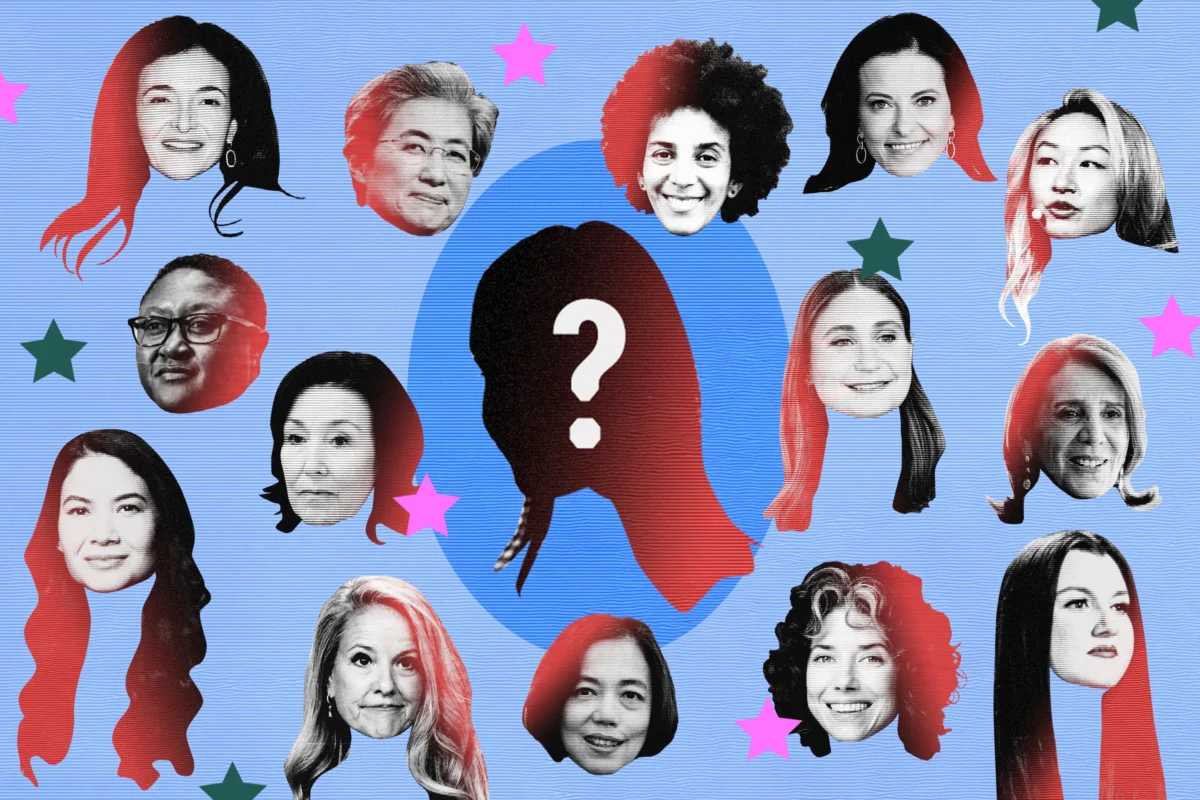
As the technology sector transitions from the "move fast and break things" era into a more complex period defined by generative AI and geopolitical maneuvering, the definition of power is being recalibrated. While names like Elon Musk, Jensen Huang, and Sam Altman are synonymous with the industry’s current direction, identifying their female counterparts requires a more nuanced examination of financial, intellectual, political, and social capital.
The Changing Face of Silicon Valley Leadership
The question of who wields the most influence among women in Silicon Valley often yields a diverse list of names rather than a single, dominant figure. Leaders such as Gwynne Shotwell, President and COO of SpaceX; Lisa Su, CEO of AMD; and Safra Catz, CEO of Oracle, represent a class of executives managing multi-hundred-billion-dollar enterprises. However, their visibility often differs significantly from the "cult of personality" model associated with male tech founders.
In recent years, the emergence of a new guard of female leaders in the AI sector has added a layer of complexity to this hierarchy. Daniela Amodei, co-founder and President of Anthropic, and Mira Murati represent a shift toward operational and research-driven leadership. Unlike previous eras where female executives were often placed in "soft" leadership roles, these figures are at the helm of the most technically demanding and strategically significant companies in the world.
A Decade of Transformation: From Lean In to the Backlash
To understand the current state of power, one must look at the chronological evolution of gender dynamics in the Valley over the last fifteen years. The 2013 publication of Sheryl Sandberg’s Lean In marked a pivotal moment, encouraging women to aggressively pursue corporate advancement. While influential, the "Lean In" philosophy eventually faced criticism for placing the burden of systemic change on individual women and failing to address the structural biases of the "bro-topia" culture.
The mid-2010s were defined by a series of legal and social reckonings. The 2015 gender discrimination trial of Ellen Pao against Kleiner Perkins, though legally unsuccessful for the plaintiff, catalyzed a broader conversation about workplace culture. This was followed in 2017 by Susan Fowler’s disclosures regarding the internal environment at Uber, which led to significant leadership changes and the eventual rise of the #MeToo movement within tech.
By the early 2020s, the industry entered what some critics, including researcher Timnit Gebru, describe as the "era of lip service." During this period, firms prioritized the visible appointment of women to high-profile roles, yet systemic issues regarding pay equity and research autonomy remained. Gebru’s own departure from Google in 2020 after raising concerns about AI ethics highlighted the friction between corporate branding and internal dissent.
As of 2026, the industry is navigating a "backlash to the backlash." The resurgence of right-leaning political sentiment in tech, bolstered by leadership changes at major social media platforms and the re-election of Donald Trump in 2024, has led to a cooling of Diversity, Equity, and Inclusion (DEI) initiatives. Many women in the industry now report a strategic pivot away from identity-based advocacy in favor of focusing strictly on technical and financial execution.
Quantifying the Capital Gap: Venture Trends in 2025
Financial capital remains the primary metric of power in Silicon Valley, and the data suggests a complex trajectory for female founders. According to the financial data platform PitchBook, female-founded or co-founded startups raised a record $73.6 billion in 2025. This figure represents approximately 27.7 percent of the total U.S. venture deal value, a significant increase from the 2 percent recorded for solely woman-founded companies in 2022.
However, analysts note that these figures are heavily skewed by a few massive "mega-rounds" for AI companies. A substantial portion of the 2025 funding was concentrated in two firms with female co-founders: Anthropic and Scale AI. While the total dollar amount has reached a historic high, the actual number of individual deals for women-led startups has seen a slight decline.

Venture capitalists like Aileen Lee of Cowboy Ventures and Sarah Guo of Conviction have noted that the "testosterone culture" of high-risk, high-reward investing still favors the overconfident, "outlandish" pitches typically associated with male founders. Catherine Bracy, author of World Eaters, argues that the venture capital model’s tolerance for a 90 percent failure rate naturally aligns with "alpha male" risk profiles, potentially excluding more risk-averse but sustainable business models led by women.
Strategic Silence vs. Cult of Personality
A recurring theme among the most powerful women in tech is the rejection of the "celebrity CEO" model. Gwynne Shotwell is frequently cited as the most effective executive in the industry, having grown SpaceX into an $800 billion entity prior to its 2025 IPO. Yet, Shotwell maintains a low public profile, rarely posting on social media and focusing instead on regulatory approvals and operational execution.
This "heads-down" approach is echoed by Lisa Su at AMD, who has stated that she avoids weighing in on social issues to focus on semiconductor policy and technological competition. This stands in stark contrast to the manifestos and public sermons often delivered by male peers.
Sarah Guo, whose fund Conviction has raised over $330 million for early-stage AI investments, argues that the "girlboss" era of the 2010s was aesthetically and strategically flawed. Guo posits that treating women as a "special category" ultimately led to them being taken less seriously. Her firm, which is majority-women, focuses on winning through performance in defense tech and AI infrastructure rather than through gender-based advocacy.
The Artificial Intelligence Frontier and Organizational Design
The rise of generative AI has provided a unique opportunity for a new style of organizational leadership. At Anthropic, Daniela Amodei has implemented a structure where she manages the day-to-day operations and all leadership reports, allowing her brother and co-founder, Dario, to focus on research and public-facing philosophy.
Amodei has emphasized the importance of ensuring AI does not become a "tool just for the guys." Anthropic’s leadership ranks are notably diverse, with women heading departments ranging from public policy to platform engineering. This internal structure suggests that while the "face" of AI might still be predominantly male, the operational machinery is increasingly being designed and managed by women.
The Washington Connection: Policy as the New Power Lever
As tech companies face increasing scrutiny over antitrust issues, data privacy, and AI safety, the ability to influence Washington, D.C., has become a critical component of power. Executives like Ruth Porat, President and Chief Investment Officer of Google, and Dina Powell McCormick, Meta’s Vice Chair, occupy roles that bridge the gap between financial markets and government regulation.
The necessity of political alignment was evidenced in 2024 when Mary Barra, CEO of General Motors, participated in high-profile political events to secure the future of the automotive industry’s transition to electric and autonomous vehicles. In the current political climate, the "dry powder" of social advocacy is often traded for the pragmatic necessity of regulatory survival.
Broader Impact and Implications
The landscape of 2026 suggests that female power in Silicon Valley has become more integrated into the core functions of the industry but also more discreet. Women now possess significant financial and intellectual capital, yet many are choosing to bypass the "social media matrix" that defines the public perception of tech power.
Critics like Timnit Gebru argue that the goal should not merely be for women to succeed within a "terrible system" that prioritizes rapid data center expansion and environmental degradation. Instead, Gebru suggests that true power for women may lie in redefining what success looks like—moving away from the "harmful acceleration" of the current AI boom toward more ethical and sustainable models.
Ultimately, the difficulty in identifying a "female Elon Musk" may stem from a fundamental difference in how power is exercised. While the male figures of the Valley often seek to sway elections and deliver sermons, the most powerful women are increasingly found managing the world’s most complex supply chains, navigating the halls of Congress, and architecting the internal logic of the machines that will define the next century. Whether this shift toward operational and strategic power will eventually result in the same level of cultural reverence as their male counterparts remains an open question for the next decade of Silicon Valley’s evolution.
About the Author