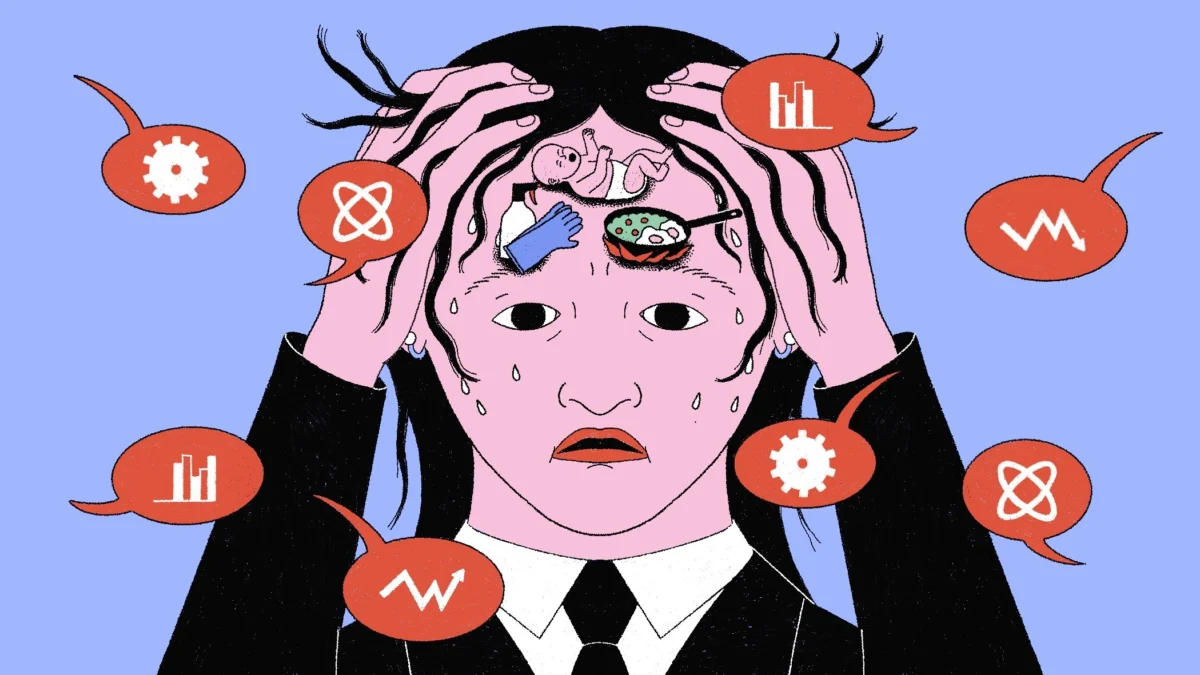
The landscape of Silicon Valley is undergoing a profound transformation, driven by the dual forces of rapid generative AI integration and a volatile post-pandemic economic environment. Amidst these shifts, the experiences of women in the technology sector provide a critical barometer for the industry’s progress—or lack thereof. Recent investigations and comprehensive surveys conducted by WIRED reveal a complex dichotomy: while female executives are increasingly leveraging artificial intelligence to reclaim their time and optimize operations, entry-level women and those in non-executive roles continue to navigate a persistent "bro culture" that remains deeply embedded in the foundations of the world’s most powerful tech hubs.
The Generative AI Divide: Automation vs. Alienation
As artificial intelligence moves from a theoretical frontier to a daily utility, a clear divide has emerged in how it is perceived across different strata of the workforce. For women in leadership positions, AI is often viewed as a liberatory tool. Many executives report using large language models (LLMs) and automated agents to handle administrative burdens, draft communications, and synthesize vast amounts of data. This automation allows them to focus on high-level strategy and mentorship, effectively bypassing some of the traditional "office housework" that has historically fallen disproportionately on women.
However, this optimism is not universal. In sectors where AI is being used to monitor or replace human judgment, the sentiment is overwhelmingly negative. Data indicates that insurance claims adjusters, for instance, have expressed significant dissatisfaction with AI implementation. In a recent analysis of workplace reviews, a staggering 98 percent of mentions regarding AI from claims adjusters were negative. Workers in these roles argue that AI should be a supportive tool rather than a replacement for human empathy and nuanced decision-making. This friction highlights a growing tension: while the C-suite sees efficiency, the rank-and-file often see a degradation of professional agency.
The Persistence of "Bro Culture" and the Search for Power
Despite decades of diversity, equity, and inclusion (DEI) initiatives, the "boys’ club" mentality of Silicon Valley continues to present a formidable barrier for new hires. Women entering the tech workforce in 2024 and 2025 report encountering environments that still prioritize exclusionary social networks and "hustle culture" archetypes that favor men. This culture is not merely a social inconvenience; it has material impacts on career trajectory, venture capital (VC) acquisition, and retention.
A significant point of inquiry remains the "power gap" in tech leadership. While women hold some of the most consequential roles in the industry—overseeing massive cloud infrastructures, financial operations, and AI safety protocols—they rarely achieve the "cult figure" status afforded to their male counterparts. Names like Elon Musk, Sam Altman, and Jensen Huang dominate the cultural zeitgeist, while powerful female leaders often operate with less public visibility. Analysts suggest this is a result of both systemic bias in media representation and a conscious choice by many female leaders to avoid the volatile "celebrity CEO" model, which can be particularly unforgiving for women when mistakes occur.

A Chronology of the Post-Pandemic Tech Shift
To understand the current state of women in tech, one must look at the timeline of the last three years, which has seen a dramatic reversal of the "growth at all costs" era:
- 2021–Early 2022: The height of the pandemic tech boom. Hiring was at an all-time high, and DEI initiatives were central to corporate branding.
- Late 2022–2023: The "Great Reset." Mass layoffs swept through Silicon Valley, with companies like Meta, Google, and Amazon shedding hundreds of thousands of jobs. Research suggests that these layoffs often disproportionately affected "non-core" departments such as recruiting and DEI, where women are frequently overrepresented.
- 2024: The AI Pivot. Investment shifted almost exclusively toward generative AI. As companies restructured to become "AI-first," the cultural focus shifted back toward engineering-heavy environments, which have historically been male-dominated.
- 2025 and Beyond: A new political and social realignment. The "Hot Girl Renaissance" in San Francisco and a shift in billionaire political allegiances have created a new, more polarized social landscape in tech hubs.
The Economic and Political Realignment
The post-pandemic tech bust did more than just shrink payrolls; it fundamentally altered the political DNA of Silicon Valley. As liberal politicians and regulators began to scrutinize the power of Big Tech, a significant segment of the industry’s billionaire class shifted their support toward more conservative platforms. This shift has had a trickle-down effect on workplace culture.
When mass layoffs occurred in 2022 and 2023, many tech workers felt a sense of betrayal by the "benevolent" tech giants. This disillusionment has led to two distinct trends: the rise of labor movements and a search for alternative support systems. For the first time, workers at organizations like Wikipedia have moved to unionize, seeking collective bargaining power in an era of AI-driven uncertainty. Simultaneously, the rise of niche support groups—such as "Dogs Anonymous," an online community for owners of difficult dogs—reflects a workforce looking for human connection and shared vulnerability outside of their professional identities.
The "Hot Girl Renaissance" and Professional Identity
In a curious cultural development, San Francisco has seen the emergence of what some call a "Hot Girl Renaissance." This movement involves a push to buck stereotypes about dating and social life in tech circles, but it has also sparked a wider debate about the value of being perceived as attractive in a professional context. For women in tech, this is a double-edged sword. While some embrace the reclaiming of femininity in a historically sterile environment, others fear it reinforces the idea that a woman’s value is tied to her appearance rather than her technical or leadership capabilities.
This cultural shift coincides with a period where Silicon Valley is grappling with its own identity. As the "founder-hero" myth is increasingly questioned, the industry is struggling to define what a modern tech leader should look like. The tension between being a "serious" professional and navigating a social scene that still prizes youth and traditional beauty standards remains a unique challenge for women in the sector.
AI Ethics and the Battle for the Future
The competition within the AI sector has also revealed the cutthroat nature of the "boys’ club." Recent reports indicate that OpenAI walked away from a partnership with the startup Cursor—a deal estimated to be worth over $1 billion in annual revenue—specifically because the startup was acquired by SpaceX, led by Elon Musk. This level of corporate maneuvering, driven by personal rivalries between male tech titans, often leaves little room for the collaborative and ethical frameworks that many female AI researchers have been advocating for years.

Furthermore, the pressure to innovate at a breakneck pace—a phenomenon sometimes referred to as "tokenmaxxing"—has led to concerns about the quality and ethics of AI discoveries. When OpenAI recently claimed a significant breakthrough in solving Navier-Stokes equations using AI, the academic community responded with skepticism and accusations of impropriety. Women in AI ethics roles often find themselves at the center of these storms, tasked with maintaining integrity in a culture that frequently prioritizes speed over accuracy.
Broader Impact and Future Implications
The current state of women in tech is a microcosm of the broader challenges facing the industry. As AI continues to automate routine tasks, the "human" elements of work—empathy, ethical judgment, and cultural management—will become increasingly valuable. Paradoxically, these are the areas where women have historically excelled, yet they are also the areas that are often undervalued in Silicon Valley’s current meritocracy.
The implications for the future are clear:
- Retention Challenges: If the "bro culture" persists in the AI era, tech companies risk losing a generation of female talent that is more interested in ethical, sustainable innovation than in "move fast and break things" archetypes.
- The Rise of Alternative Power Centers: As the traditional Silicon Valley model becomes more polarized, we may see the rise of new tech hubs or decentralized networks where women have more agency to build inclusive cultures from the ground up.
- Regulatory Scrutiny: The lack of diversity in the teams building the most powerful AI models in history is already a point of concern for regulators. If the industry does not address its internal culture, it may face external mandates to do so.
In conclusion, the voices of women in tech serve as a necessary critique of an industry at a crossroads. While the tools of the trade are changing faster than ever, the social and professional structures surrounding them remain stubbornly rooted in the past. Whether Silicon Valley can truly evolve to reflect the diversity of the world it claims to serve remains the defining question of the AI era. For now, the women on the front lines are watching, working, and waiting for the industry to catch up to their reality.
About the Author