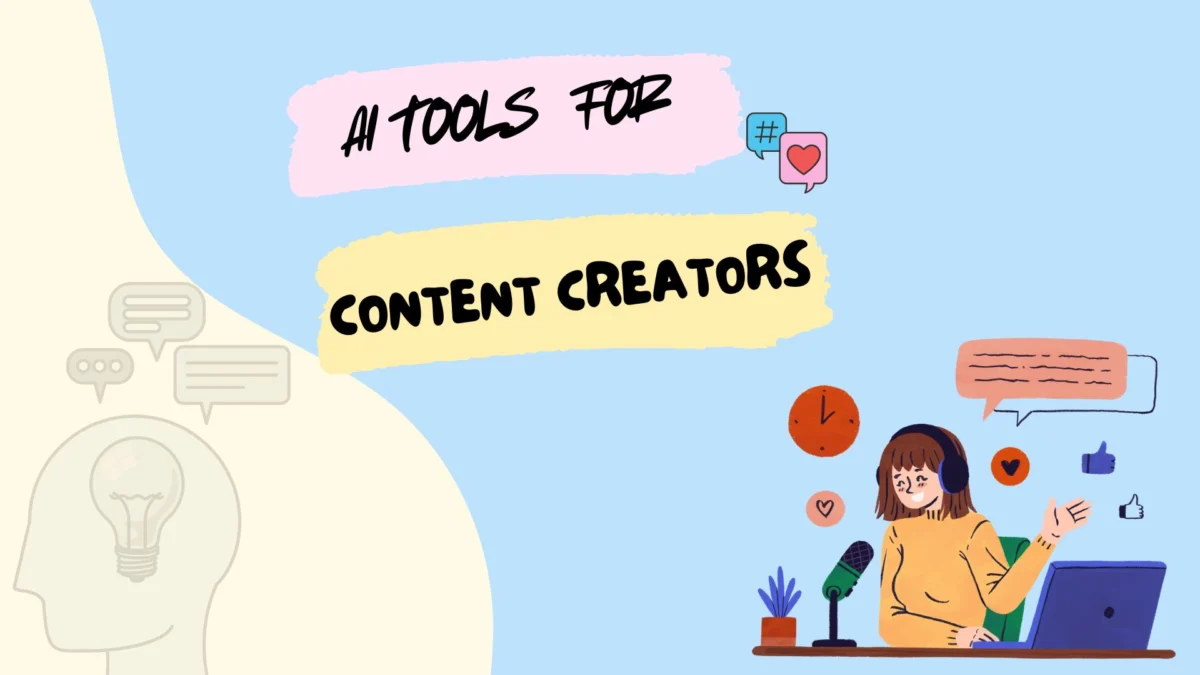
The digital content landscape in 2025 is defined by a paradigm shift where generative artificial intelligence is no longer an experimental luxury but a foundational utility for the global creator economy. As the industry matures, the integration of multimodal AI models has streamlined workflows, allowing individual creators and enterprise-level marketing teams to produce high-fidelity assets at a fraction of the historical cost and time. This evolution is driven by the necessity to meet the insatiable demand for personalized, platform-specific content across a fragmented media ecosystem. Market analysts at Goldman Sachs and Gartner suggest that AI-driven automation could influence up to 70% of creative tasks by the end of this decade, fundamentally altering the roles of writers, designers, and videographers.
The Evolution of Creative AI: A Brief Chronology
The journey to the sophisticated tools of 2025 began in late 2022 with the public release of Large Language Models (LLMs) and diffusion-based image generators. By 2023, the industry witnessed a "Year of Integration," where established software suites like Adobe Creative Cloud and Microsoft Office incorporated "Copilot" functionalities. 2024 served as the "Year of Video," marked by the emergence of high-consistency video generation models such as OpenAI’s Sora and Runway’s Gen-3 Alpha. Entering 2025, the focus has shifted toward "Agentic AI"—tools that do not merely respond to prompts but can plan, execute, and optimize entire content campaigns with minimal human intervention.
1. ChatGPT: The Foundation of Strategic Ideation and Scripting
OpenAI’s ChatGPT remains the dominant force in the text-based AI sector, having evolved from a simple chatbot into a sophisticated reasoning engine. In 2025, the platform utilizes advanced models that prioritize logical consistency and factual accuracy, making it an essential partner for long-form scriptwriting and complex content strategy.
Beyond simple text generation, ChatGPT’s "Custom GPT" ecosystem allows creators to build specialized assistants trained on their specific brand voice and historical performance data. This ensures that every output—whether it is a YouTube script or a white paper—aligns with the creator’s established identity. Industry data indicates that teams using advanced LLMs for initial drafting have seen a 45% reduction in time-to-market for digital campaigns.
2. Canva Magic Studio: Democratizing High-End Graphic Design
Canva has solidified its position as the primary alternative to complex professional design suites by embedding AI into every facet of its interface. Magic Studio represents a suite of tools that automate the most tedious aspects of visual design, such as background removal, image expansion, and style transfer.
The platform’s growth is a testament to the "prosumer" trend. By 2025, Canva’s user base has expanded significantly among small-to-medium enterprises (SMEs) that lack the budget for full-scale creative agencies but require agency-quality social media assets. The "Magic Switch" feature, which allows a single design to be instantly reformatted for Instagram, TikTok, LinkedIn, and print, addresses the 2025 requirement for multi-channel presence.
3. RunwayML: The Frontier of Generative Cinematography
RunwayML has transitioned from a niche tool for experimental artists to a staple in professional video production houses. With the maturation of its Gen-3 Alpha and subsequent models, Runway offers temporal consistency that was previously impossible in AI-generated video.
The tool’s "Motion Brush" and "Director Mode" provide creators with granular control over camera movements and specific element animations within a frame. In late 2024, Runway announced partnerships with major film studios to assist in pre-visualization and visual effects (VFX) workflows, signaling a shift where AI video tools are becoming complementary to traditional filmmaking rather than just a replacement for stock footage.
4. Midjourney: Mastering Visual Esthetics and Brand Consistency
Midjourney continues to lead the field in artistic quality and photorealism. Version 6 and its successors have resolved earlier issues regarding text rendering and anatomical accuracy, making Midjourney the preferred choice for high-end editorial photography and conceptual art.
For creators in 2025, Midjourney’s "Style Reference" and "Character Consistency" features are critical. These allow users to maintain a unified visual language across hundreds of generated images, solving the problem of stylistic drift that plagued earlier versions of AI art. This capability is particularly valuable for digital marketers building cohesive brand identities across visual platforms.
5. Synthesia: Scaling Human-Centric Video Production
Synthesia has revolutionized the corporate and educational sectors by decoupling video production from the physical requirements of cameras, lights, and actors. Its AI avatars, which now feature micro-expressions and contextual body language, are indistinguishable from human presenters in most professional contexts.
The platform’s primary value proposition in 2025 is localization. A single script can be translated and "performed" by an avatar in over 120 languages with perfect lip-syncing. This has led to a significant increase in the production of global training modules and multilingual news updates, as companies no longer need to hire regional talent for every market.
6. Descript: The Intersection of Text and Audio-Visual Editing
Descript has fundamentally changed the paradigm of video and podcast editing by treating media as text. The "Overdub" feature, which allows users to correct audio mistakes by simply typing new words in a cloned voice, has become a standard requirement for high-volume podcasters.
In 2025, Descript’s "Underlord" AI assistant automates the "paper edit"—the process of removing filler words, silence, and repetitive phrases. According to internal user data, this reduces the mechanical workload of editors by up to 60%, allowing them to focus on the creative narrative rather than the technical cleanup.
7. ElevenLabs: The New Standard in Synthetic Speech
ElevenLabs has emerged as the leader in "Speech AI," offering the most emotionally resonant and high-fidelity voice cloning technology on the market. In 2025, its applications range from narrating audiobooks to providing real-time dubbing for international streamers.
The ethical implications of voice cloning have led ElevenLabs to implement robust "Voice Lab" security measures, ensuring that users can only clone voices they have the rights to. This balance of power and security has made it a trusted tool for publishers like HarperCollins and news organizations that require consistent, high-quality narration for their digital articles.
8. Tribescaler: Optimizing for the Attention Economy
As platforms like X (formerly Twitter) and LinkedIn become more algorithmically driven, Tribescaler has filled the niche for "viral hooks" and headline optimization. The tool uses a massive database of high-performing content to suggest structures that maximize engagement and click-through rates.
While critics argue this contributes to a "sameness" in social media, the data suggests otherwise: creators using Tribescaler often see a 3x increase in initial reach. In 2025, the tool has expanded to include "Hook Analysis" for short-form video scripts on TikTok and Reels, reflecting the dominance of vertical video in the attention economy.
9. Clickable: Data-Driven Advertising Automation
Clickable addresses the bridge between creative design and performance marketing. By analyzing real-time ad performance data, Clickable’s AI suggests visual and copy adjustments to improve conversion rates.
In the 2025 advertising landscape, where privacy regulations have limited traditional tracking, "creative excellence" has become the primary lever for ad performance. Clickable allows brands to run hundreds of A/B tests simultaneously, generating ad variations that cater to different psychographic profiles without the need for manual design intervention.
10. Copy.ai: Enterprise-Grade Content Workflows
Copy.ai has pivoted from a simple copywriting tool to a comprehensive "GTM (Go-To-Market) AI" platform. It focuses on the end-to-end automation of marketing tasks, from SEO-optimized blog posts to automated email sequences.
The platform’s 2025 updates focus on "Workflows," which allow users to connect Copy.ai to their CRM and CMS. For example, a new product launch in a database can automatically trigger the creation of a press release, five social media posts, and a customer announcement email—all tailored to the brand’s specific tone of voice.
Supporting Data and Industry Implications
The rapid adoption of these tools is supported by significant capital investment. In 2024, venture capital funding for generative AI startups exceeded $25 billion, with a shift toward applications that demonstrate clear ROI for enterprise users. A survey by the Content Marketing Institute found that 78% of CMOs now consider "AI Literacy" a mandatory skill for new hires in the creative department.
However, this technological surge has prompted responses from regulatory bodies and traditional industry players. The European Union’s AI Act, which reached full implementation phases in 2025, requires clear labeling of AI-generated content in certain contexts. Similarly, the New York Times’ ongoing litigation regarding data scraping for AI training has led to a new era of licensing agreements, where AI companies pay for access to high-quality human-generated data to refine their models.
Analysis of the Broader Impact
The proliferation of these 10 tools suggests a future where the "barrier to entry" for content creation is virtually non-existent, but the "barrier to standing out" has never been higher. As the volume of content increases, the value of unique human perspective, investigative depth, and emotional authenticity becomes a premium commodity.
The broader impact on the labor market is multifaceted. While entry-level production roles are being automated, there is an increased demand for "AI Orchestrators"—professionals who can manage multiple AI tools to execute complex creative visions. The transition in 2025 is not about the replacement of the creator, but the transformation of the creator into a director of digital systems.
As these technologies continue to converge, the distinction between different media types—text, image, audio, and video—is blurring. The tools of 2025 allow for a "create once, distribute everywhere" model that is truly seamless, ensuring that the next phase of the digital revolution is defined by unprecedented creative efficiency and the democratization of global storytelling.
Note on Information Accuracy
Features and pricing models for the aforementioned tools are based on market data as of February 1, 2025. Due to the rapid pace of software development, users are advised to consult official platform documentation for the most current specifications and compliance standards. This report is intended for informational purposes and does not constitute financial or legal advice regarding software procurement.
About the Author