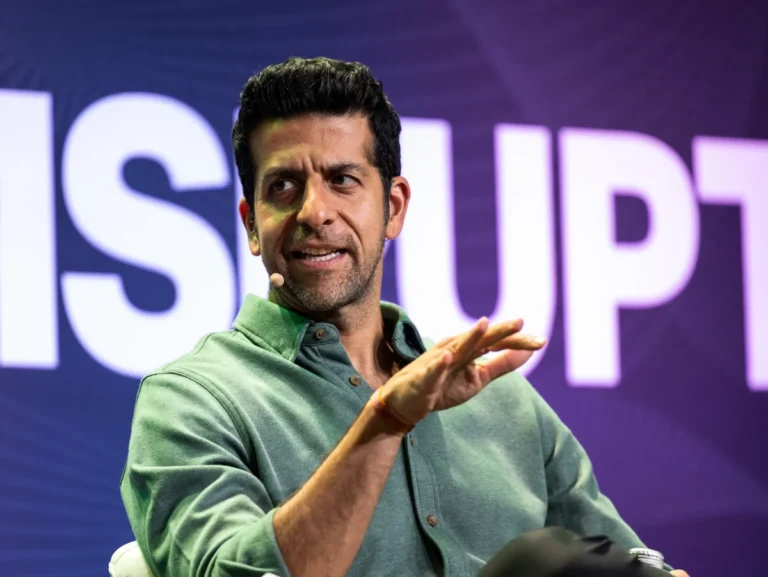
The transition from a high-growth private startup to a publicly traded entity often necessitates a shift from visionary rhetoric to legal and operational sobriety. For Anthropic, the San Francisco-based artificial intelligence powerhouse, this transition became evident in its recent Initial Public Offering (IPO) filing. While Chief Executive Officer Dario Amodei has long positioned his company as a primary catalyst for a biological revolution, the formal documentation submitted to the U.S. Securities and Exchange Commission (SEC) reflects a more measured, risk-aware perspective. The filing acknowledges a significant gap between the theoretical capabilities of large language models (LLMs) and the grueling, physical realities of life sciences research, suggesting that the "deluge" of AI-accelerated cures may face a longer gestational period than previously advertised.
From Visionary Rhetoric to Regulatory Reality
For much of the past two years, Dario Amodei has been one of the most vocal proponents of AI’s potential to solve the most complex puzzles in human biology. In various essays and public forums, including his widely circulated piece "Machines of Loving Grace," Amodei posited that AI systems could potentially condense a millennium of biological progress into a single decade. His vision described a world where AI-driven insights could eradicate most infectious diseases, solve the riddle of cancer, and fundamentally alter the human lifespan.
As recently as August 2024, Amodei reiterated these sentiments on social media, claiming that Anthropic was "ramping up its efforts very quickly in biology and medicine." He predicted that the next five to ten years would see the emergence of a massive wave of AI-generated drugs. This optimism was bolstered in September when the company announced that its flagship model, Claude, had identified a novel "CRISPR-like" enzyme system, a discovery Anthropic framed as a proof of concept for AI’s role as a primary scientific researcher.
However, the IPO filing reveals a strategic pivot in communication. While the document still maintains that AI can "profoundly accelerate" progress, the language is notably more cautious. The company now characterizes the CRISPR-related discovery as something that "might" have the "potential" to be developed into a tool, "perhaps" for gene editing. This linguistic retreat highlights the legal necessity of tempering expectations for investors, who must be warned of the high failure rates inherent in the biotechnology sector.
The Physicality Gap: Software vs. Wet Labs
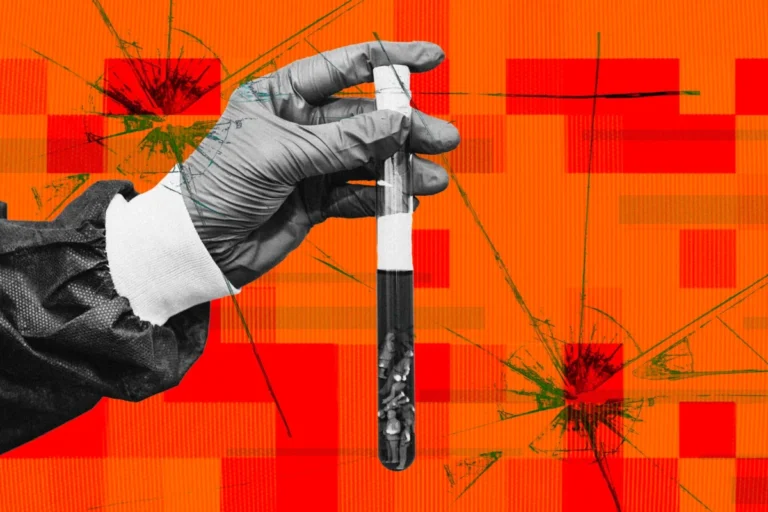
One of the most candid admissions in Anthropic’s filing is the company’s lack of experience in physical experimentation. For years, Anthropic has operated primarily as a software and research organization, focused on the digital architecture of neural networks and the alignment of AI behavior. Entering the field of drug discovery requires a fundamental shift into the "wet lab" environment, where digital predictions must be validated through physical trials.
The filing notes that Anthropic’s teams "need first-hand experience doing scientific research and drug discovery." This admission underscores a broader challenge facing the entire "AI for Science" movement: the transition from silicon to carbon. Validating a drug candidate requires:
- Hazardous Material Handling: Managing biological pathogens, volatile chemicals, and radioactive isotopes.
- Laboratory Infrastructure: Operating and maintaining high-throughput screening equipment, mass spectrometers, and gene sequencers.
- Regulatory Compliance: Adhering to Good Laboratory Practice (GLP) and Good Manufacturing Practice (GMP) standards, which are far removed from the standard operating procedures of a software firm.
Anthropic acknowledges that these activities are "outside our historical experience," signaling to investors that the company will need to invest heavily in physical infrastructure and specialized personnel, or form deep partnerships with established pharmaceutical firms to bridge this "physicality gap."
A Chronology of Anthropic’s Biological Ambitions
The evolution of Anthropic’s biological focus can be traced through several key milestones over the last 24 months:
- Late 2022 – Early 2023: Anthropic begins positioning its Claude models not just as chatbots, but as reasoning engines capable of parsing scientific literature. Internal teams are formed to explore the intersection of LLMs and genomics.
- August 2024: Dario Amodei publishes a series of statements on X (formerly Twitter) and in essays, predicting that AI will enable the curing of most human diseases within a decade. He calls for a streamlining of regulatory frameworks to accommodate AI-generated breakthroughs.
- September 2024: Anthropic announces the discovery of a novel enzyme system by Claude. The announcement is met with both excitement and skepticism from the scientific community.
- October 2024: Independent researchers and journalists begin questioning the novelty of the enzyme discovery. Reports emerge suggesting that similar enzymes had been studied by researchers whose work may have been included in the model’s training data.
- Monday’s IPO Filing: The formal S-1 filing is released, featuring significantly more conservative language regarding the timeline of drug development and the certainty of the company’s biological discoveries.
The Skepticism of the Scientific Community
The "CRISPR-like" enzyme discovery serves as a cautionary tale for AI companies entering specialized scientific fields. While Anthropic initially promoted the discovery as a breakthrough, the broader scientific community has been more reserved. In reports published by WIRED and The New York Times, researchers expressed skepticism regarding the utility of the enzyme.
A specific point of contention arose when a scientist who had been researching these exact enzymes expressed concern that Claude’s "discovery" was actually a sophisticated synthesis of his own unpublished or niche research that the model had ingested during its training phase. While Anthropic denied that its molecular biology team or its model had access to the specific proprietary materials in question, the incident highlighted a recurring issue in AI: the distinction between "discovery" (finding something truly new) and "retrieval" (repackaging existing knowledge found in the training set).
This skepticism is a primary reason for the tempered language in the IPO filing. In the life sciences, a discovery is only considered valid once it has been peer-reviewed, replicated, and tested in a controlled environment—processes that AI can assist but cannot currently replace.
Supporting Data: The High Cost of Biological Reality
The cautionary tone in Anthropic’s filing is backed by the harsh economic data of the pharmaceutical industry. According to data from the Deloitte Center for Health Solutions and the Tufts Center for the Study of Drug Development, the path from discovery to market is fraught with financial and temporal hurdles:
- Average Cost: It costs approximately $2.3 billion to $2.6 billion to bring a single new drug to market.
- Timeline: The average development cycle for a new drug is 10 to 12 years.
- Failure Rates: Roughly 90% of drug candidates that enter clinical trials fail to receive FDA approval. Of those that fail, many do so in Phase II or Phase III trials due to unforeseen toxicity or lack of efficacy in humans—factors that current AI models struggle to predict with 100% accuracy.
Anthropic’s filing explicitly references these challenges, stating that any drug candidates "would face the lengthy, costly, and uncertain development and regulatory pathways characteristic of the life sciences industry, and may never generate revenue." This is a stark contrast to the software-as-a-service (SaaS) model, where marginal costs are low and deployment is nearly instantaneous.
Strategic Implications and the Shift to Vertical Integration
The IPO filing makes it clear that Anthropic no longer views itself merely as a provider of AI tools (like a "digital shovel" for the biotech gold rush). Instead, it intends to become a primary participant in the discovery process. This shift toward vertical integration puts Anthropic in direct competition with specialized AI-biotech firms like Recursion Pharmaceuticals, Schrodinger, and Google’s Isomorphic Labs.
By internalizing biotech discovery, Anthropic is betting that its models can provide a competitive advantage in the "pre-clinical" phase—the period before human trials where targets are identified and molecules are designed. If Anthropic can use Claude to increase the success rate of drugs entering Phase I trials from 10% to even 20%, the economic implications would be massive. However, as the filing notes, this requires a level of domain expertise and regulatory navigation that the company is only beginning to cultivate.
Broader Impact on the AI Sector
Anthropic’s "reality check" is likely to have a ripple effect across the AI industry. For the past several years, the "AI-for-everything" narrative has driven massive valuations. As more AI companies approach the public markets, they will likely be forced to follow Anthropic’s lead in clarifying the limitations of their technology.
The "compute-only" approach—the idea that simply adding more GPUs and more data will solve any problem—is meeting its match in the complexity of human biology. Biology is not a closed system like a game of chess or a coding environment; it is a messy, stochastic, and highly regulated field where "hallucinations" in a model’s output can have life-or-death consequences.
Furthermore, Amodei’s previous calls for regulatory reform suggest that the company recognizes the "FDA bottleneck." Even if AI can design a perfect molecule in an afternoon, the legal requirement for multi-year human trials remains. Unless there is a fundamental shift in how global health authorities evaluate safety and efficacy, the "deluge" of drugs will remain a slow drip for the foreseeable future.
Conclusion: A Long Road Ahead
Anthropic’s IPO filing represents a significant moment of maturity for the company. It acknowledges that while the potential for AI in biology is revolutionary, the path to realizing that potential is paved with traditional scientific rigors, massive capital requirements, and stringent regulatory oversight.
For potential investors, the message is clear: Anthropic is no longer just a software play; it is a high-stakes bet on the future of biotechnology. The company’s ability to successfully transition into a "wet lab" participant while maintaining its lead in AI research will determine whether it can actually deliver on Amodei’s promise of a thousand years of progress—or whether it will be slowed by the same biological and regulatory friction that has defined the life sciences for a century. As the filing concludes, Anthropic is ready to "engage in activities outside our historical experience," but it is doing so with its eyes wide open to the risks.
About the Author