The landscape of software engineering is currently undergoing a seismic shift as artificial intelligence begins to solve one of the industry’s most enduring and labor-intensive challenges: formal verification. Stanford University researcher Chuyue Sun and her team of computer scientists recently demonstrated an AI tool capable of completing a complex engineering verification project in less than 12 hours for a total cost of under $500. This same task had previously required three highly skilled experts five months of manual labor to achieve. The results of this study, published in a recent research paper, have ignited intense interest in formal verification—a field of mathematics and coding that has remained largely academic and niche for decades due to its prohibitive complexity and cost.
Formal verification is the process of using mathematical proofs to ensure that a software system’s behavior matches its intended design under all possible conditions. Unlike traditional testing, which probes software for known vulnerabilities or common edge cases, formal verification aims to prove the total absence of certain classes of bugs. While the concept has existed since the mid-20th century, its practical application has been limited to high-stakes environments such as aerospace, nuclear energy, and core operating system kernels. The emergence of generative AI and specialized large language models (LLMs) is now promising to bring this level of "mathematical certainty" to mainstream software development.
The Evolution of Software Reliability: From Testing to Proof
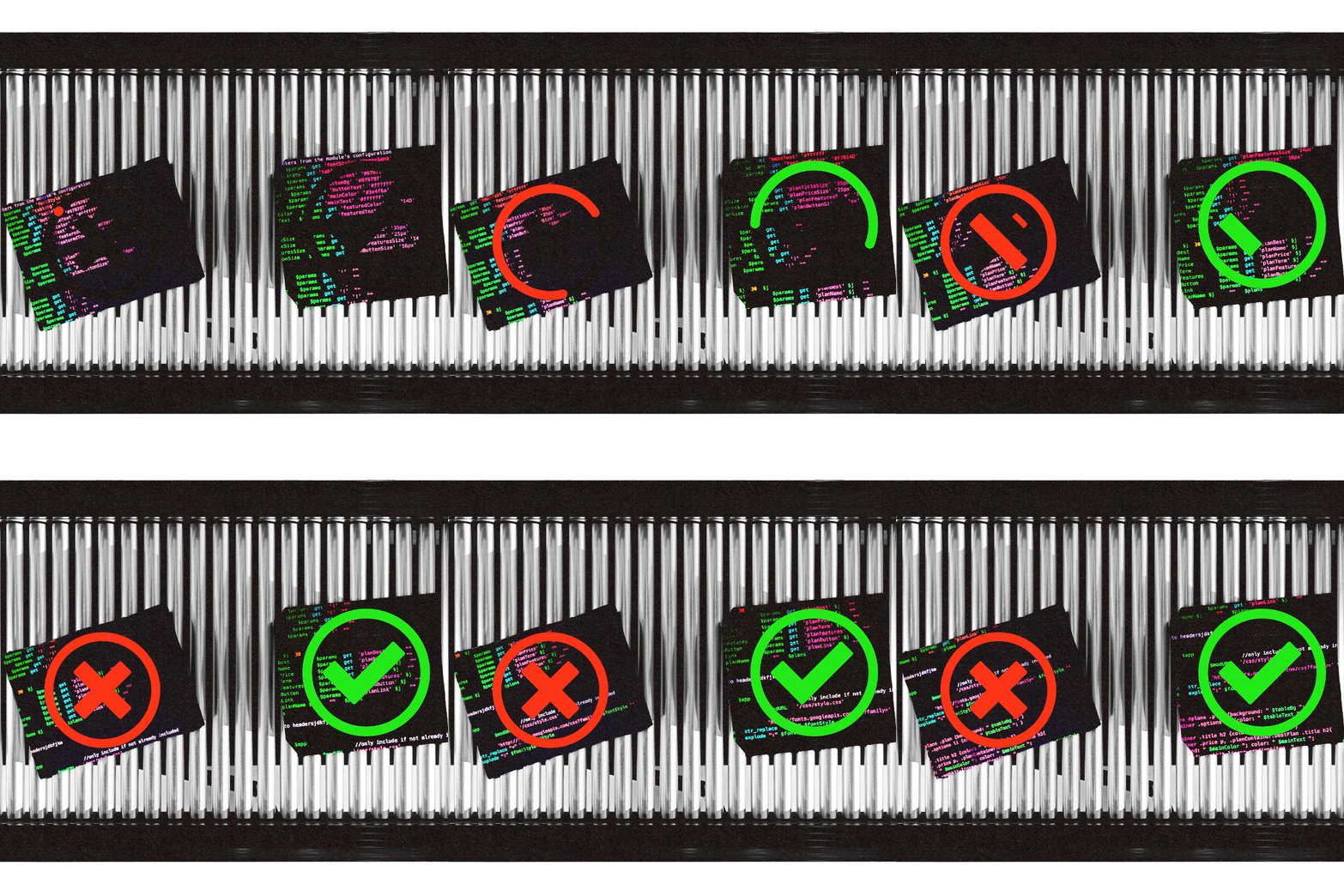
For decades, software developers have operated under the philosophy that bugs are an inevitable byproduct of complexity. Standard industry practices involve various levels of testing—unit testing, integration testing, and "fuzzing"—to identify flaws. However, even the most sophisticated testing regimes cannot account for every possible state of a complex system. Formal verification offers a different approach: it requires engineers to write precise mathematical statements about what the software should do and then converts the source code into logical formulas that can be validated by automated "theorem provers."
The primary barrier to the widespread adoption of formal verification has always been the "human bottleneck." Writing formal specifications requires a rare hybrid of skills—deep mathematical rigor and expert-level programming. This scarcity of talent, combined with the weeks or months required to verify even small modules of code, has historically made the process too expensive for most commercial applications.
The recent breakthrough by Sun and her colleagues at Stanford highlights a turning point. By leveraging AI to automate the generation of these mathematical proofs, the time required for verification has been reduced by several orders of magnitude. The team applied their AI tool to verify a portion of the code responsible for encrypting conversations in Signal, the private messaging application known for its robust security standards. This successful application demonstrates that AI can handle high-stakes cryptographic code, which is notoriously difficult to verify manually.
The Economic Landscape: A New Wave of AI Startups
The potential for AI to democratize formal verification has triggered a surge in venture capital investment. Several high-profile startups are now competing to build the infrastructure for an "error-free" software future. Among the leaders is &Truth, a startup Sun joined in August following her research. The company, which officially launched this week, has already raised $70 million from investors. &Truth aims to create a platform capable of verifying software across any programming language, effectively translating human-readable code into machine-verifiable logic.
Ilya Sergey, Chief Science Officer at &Truth, draws a parallel between software and physical infrastructure. "Bridges and buildings don’t collapse because people did math before constructing them," Sergey noted. "Why don’t we do the same for code? The technology to mathematically reason was all there, just difficult to scale."
The competition in this space is formidable. Harmonic, co-founded by Robinhood CEO Vlad Tenev, has secured $295 million in funding to develop its math-focused AI agent, Aristotle. This week, Harmonic announced that Aristotle now supports the verification of software written in C and hardware designs in Verilog. The company is currently trialing its technology with industry giants, including Nvidia—whose venture capital arm is a Harmonic investor—and the chipmaker Tensordyne.
In addition to dedicated startups, major AI research labs are entering the fray. Last week, Anthropic and the verification firm Theorem announced a joint project that used AI to identify bugs in open-source software that trillions of previous tests had failed to catch. This collaboration resulted in an add-on for Anthropic’s Claude AI, designed to assist developers in the verification process, signaling that formal proof capabilities may soon become a standard feature of AI-assisted coding environments.
Chronology of the Formal Verification Renaissance
The journey of formal verification from academic obscurity to a $300 million-plus investment sector has been marked by several key milestones:
- 2005–2015: Early successes in formal verification are seen in critical systems. Projects like the seL4 microkernel prove that it is possible to mathematically verify a complete operating system kernel, though it requires years of effort from PhD-level researchers.
- 2016–2020: Major tech companies like Amazon Web Services (AWS) and Apple begin integrating formal verification into their most sensitive security layers. AWS uses "automated reasoning" to secure its cloud infrastructure, while Apple applies it to its "corecrypto" library.
- 2023: The explosion of generative AI provides the missing link: the ability to translate natural language requirements and raw code into formal mathematical specifications.
- May 2024: Vitalik Buterin, creator of Ethereum, publishes a widely read analysis of formal verification, calling it an essential tool for the future of blockchain security while cautioning against viewing it as a "panacea."
- August–October 2024: A rapid succession of funding rounds and product launches from &Truth, Harmonic, and Anthropic signals the commercialization of AI-led verification.
Industry Adoption: NASA, Apple, and the Cloud
While AI is the new catalyst, formal verification already has a foothold in the world’s most critical digital infrastructure. Boeing utilizes it for flight control systems where software failure could result in catastrophic loss of life. Amazon Web Services relies on formal proofs to reassure customers that its cloud isolation barriers are impenetrable. According to Byron Cook, a vice president at AWS, formal verification has not only improved security but has also allowed internal teams to move faster by identifying fundamental architectural flaws early in the development cycle.
Apple’s security team recently disclosed that formal verification of its "corecrypto" library uncovered subtle issues that traditional testing methods could never have detected. However, Apple remains "conservative" in its approach, noting that the manual review of these proofs must still keep pace with the speed of new code development—a gap that AI is now poised to fill.
Despite these successes, mid-sized technology companies have historically avoided formal verification. In interviews with industry executives, the consensus is that the cost-to-risk ratio has rarely favored formal proof. "Waiting weeks for code to be verified is a non-starter in a market where innovation speed is everything," one cybersecurity executive noted. The promise of AI is to reduce that "wait" from weeks to minutes.
Technical Challenges and Skepticism
Not all experts believe that AI-driven formal verification will solve the software industry’s reliability crisis. Will Wilson, CEO of the bug-hunting startup Antithesis, describes formal verification as a "trap" for those enamored with mathematical purity. Wilson argues that while formal verification can prove that code matches its specification, it cannot prove that the specification itself is correct or that the software will behave correctly when interacting with flawed hardware or unpredictable human users.
Antithesis, which uses exhaustive testing rather than formal proof, has found bugs in software that had already been formally verified. "It can give you some assurance," Wilson says, "but only robust exhaustive testing can prove your assurance is true."
Furthermore, there are concerns regarding "unjustified trust." June Andronick, CEO of Proofcraft, warns that if AI generates both the code and the proof of its correctness, humans may stop scrutinizing the results. If the AI makes a logical error in the specification, the formal proof will simply confirm that the code follows that erroneous logic, creating a false sense of security.
The Future: AI-Generated Code and Cybersecurity Defense
As AI models increasingly write the world’s code, the need for automated verification becomes even more urgent. Security researchers warn that attackers are already using AI to find vulnerabilities in software at unprecedented speeds. Formal verification is seen as a necessary countermeasure—a way to "harden" software against AI-driven cyberattacks.
Madan Musuvathi, who recently left Microsoft Research to found the startup Truidic, believes that verification is the only way to make AI-generated systems safe for widespread use. "AI in the hands of attackers can be extremely powerful," Musuvathi stated. "Verification can make AI safe and secure for everyone, everywhere."
The transition from manual to AI-assisted verification is also changing the nature of the work for verification engineers. For those who enjoy the "puzzle-like" nature of the field, AI offers a way to move beyond the drudgery of writing basic proofs and focus on high-level system architecture.
As the technology matures from the prototyping stage to commercial deployment, the industry faces a fundamental question: will formal verification become a standard part of every developer’s toolkit, or will it remain a specialized shield for only the most critical systems? With hundreds of millions of dollars in venture capital and the backing of the world’s largest tech firms, the "mathematical proof" era of software engineering appears to have finally arrived. The $500 project that once cost hundreds of thousands of dollars is not just a research milestone; it is the first sign of a future where software reliability is no longer a matter of luck, but a matter of math.
About the Author