The digital marketing landscape is currently undergoing a seismic shift as artificial intelligence (AI) transitions from a peripheral experimental technology to a core component of content production. As organizations face increasing pressure to produce high volumes of engaging, SEO-optimized content, AI content generators have emerged as a primary solution for maintaining competitive relevance. These tools, largely powered by advanced large language models (LLMs) such as OpenAI’s GPT-3, are designed to assist marketers, bloggers, and e-commerce professionals in overcoming writer’s block and accelerating the "time-to-publish" metric. The year 2022 has marked a significant turning point in this sector, with software capabilities expanding from simple sentence completion to the generation of complex long-form articles, marketing copy, and technical reports.
The Evolution of Generative AI in Professional Writing
To understand the current state of AI content generation, it is necessary to examine the technological chronology that led to the 2022 market explosion. The journey began with basic rule-based systems and Markov chains in the early 2010s, which often produced nonsensical or highly repetitive text. The paradigm shifted in 2018 with the introduction of the Transformer model by Google researchers, followed by the release of GPT-2 and subsequently GPT-3 by OpenAI in June 2020.
Throughout 2021 and early 2022, developers began building sophisticated user interfaces atop these models, tailoring them to specific business needs. This resulted in a specialized market where tools are no longer generic but are instead fine-tuned for SEO, social media, or e-commerce. Industry data suggests that the AI writing assistant market is projected to grow at a compound annual growth rate (CAGR) of over 15% through 2028, reflecting a broader corporate trend toward automation and digital transformation.
Analysis of Leading AI Content Generation Platforms
The following platforms represent the current vanguard of AI-assisted writing, categorized by their specific utility, pricing structures, and technical strengths.
1. Jasper AI (Formerly Jarvis)
Jasper AI remains the market leader in the high-end content generation space. Following a significant rebranding in early 2022—prompted by trademark discussions with Marvel over the name "Jarvis"—the company has focused on its "Boss Mode" functionality. This feature allows users to direct the AI through natural language commands, facilitating the creation of long-form blog posts and marketing campaigns.

- Key Features: Integration with Surfer SEO for real-time optimization, support for 25+ languages, and a vast library of over 50 templates.
- Pricing: The "Starter" plan begins at approximately $29 per month, while "Boss Mode" starts at $59 per month, scaling based on word count.
- Strategic Advantage: Jasper is designed for teams that require a "human-in-the-loop" workflow, where the AI acts as a sophisticated co-author rather than a standalone replacement.
2. Copy.ai
Copy.ai has positioned itself as the premier tool for short-form marketing copy. Utilizing a user-friendly interface, it caters specifically to social media managers and advertising agencies.
- Key Features: Over 90 tools and templates, including specific modules for Instagram captions, LinkedIn posts, and Facebook ad copy.
- Pricing: Offers a robust free tier with 2,000 words per month. The "Pro" plan is priced at $49 per month for unlimited words.
- Strategic Advantage: Its "First Draft Wizard" significantly reduces the time spent on initial content ideation.
3. Frase.io
Frase distinguishes itself by merging AI generation with deep SERP (Search Engine Results Page) analysis. It is less of a creative writing tool and more of a content strategy platform.
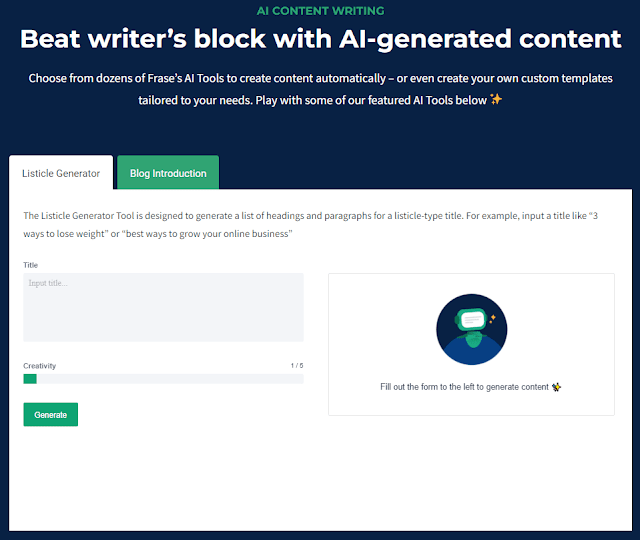
- Key Features: Automated content briefs, competitor analysis, and an AI writer that focuses on factual density.
- Pricing: Solo plans start at $14.99 per month, with Team plans reaching $114.99 per month.
- Strategic Advantage: Frase is essential for SEO professionals who need to ensure their content covers all "entities" and keywords required to rank on Google.
4. Article Forge
Article Forge operates on a different philosophical premise than its competitors. While most tools require constant user input, Article Forge is designed for high-level automation.
- Key Features: One-click article generation based on a single keyword and the ability to automatically post to WordPress.
- Pricing: Plans range from $27 per month (Standard) to $117 per month (Unlimited).
- Strategic Advantage: Ideal for bulk content creation and the management of "niche sites" where volume is prioritized.
5. Rytr
Rytr has gained traction as the most cost-effective solution for individual freelancers and students.

- Key Features: Built-in plagiarism checker, a mobile-friendly interface, and a "magic command" tool.
- Pricing: Includes a free plan; the "Saver" plan is $9 per month, and the "Unlimited" plan is $29 per month.
- Strategic Advantage: Rytr provides the highest utility-to-price ratio in the current market.
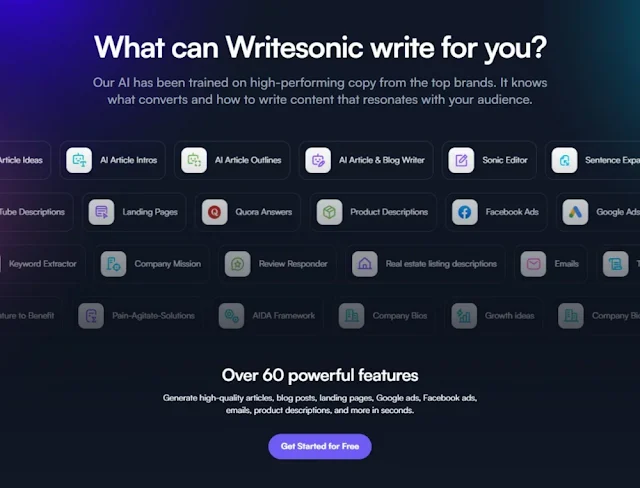
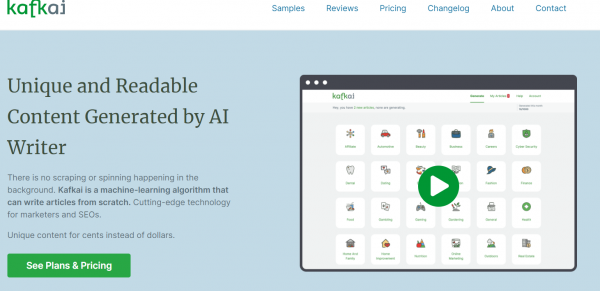
6. Writesonic
Writesonic is noted for its versatility, offering specialized tools for landing pages and product descriptions that are optimized for conversion.
- Key Features: AI Article Writer 3.0 (which can write 1,500-word articles), Sonic Editor, and a landing page generator.
- Pricing: A credit-based system starting at $15 per month for short-form content.
- Strategic Advantage: Excellent for growth hackers who need to test multiple variations of marketing copy quickly.
7. Copysmith
Copysmith is tailored for enterprise-level e-commerce teams, focusing on scalability and integration.

- Key Features: Bulk product description generation and integration with Shopify and Google Ads.
- Pricing: Starter plans at $19 per month; Professional plans at $59 per month.
- Strategic Advantage: It solves the specific problem of managing thousands of unique product SKUs.
8. Hypotenuse.ai
This platform focuses on high-quality visual-to-text workflows, particularly for e-commerce and retail brands.
- Key Features: Batch generation and a unique "Content Detective" feature that helps the AI find factual information.
- Pricing: Starter plans at $29 per month.
- Strategic Advantage: Produces highly fluent and less "robotic" sounding text compared to basic GPT-3 implementations.
9. Kafkai
Kafkai is a specialized tool for SEO marketers working within specific niches. It uses unique machine learning models trained on specific industries.
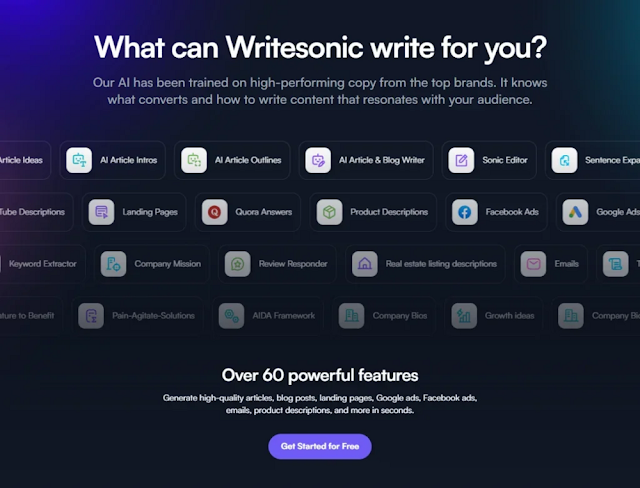
- Key Features: Niche-specific training sets (e.g., health, real estate, finance).
- Pricing: Ranges from $29 to $199 per month based on article volume.
- Strategic Advantage: Reduces the "hallucination" rate of AI by restricting its knowledge base to specific sectors.
10. Peppertype.ai
Built on top of a massive library of high-performing marketing copy, Peppertype.ai focuses on quality and "punchy" sentences.
- Key Features: Content rewriter and "expand" features to turn bullet points into full paragraphs.
- Pricing: Personal plans start at $35 per month.
- Strategic Advantage: Highly effective for brand voice consistency.
Supporting Data: The Impact on Productivity
Recent surveys of digital marketing agencies indicate that the adoption of AI writing tools has led to a 30% to 50% reduction in the time required to produce a first draft. Furthermore, a 2022 study on content marketing trends revealed that 12% of B2B marketers are already using some form of AI for content creation, with that number expected to triple by 2024. The economic implication is clear: the cost per word for initial drafts is plummeting, allowing human editors to focus on strategy, fact-checking, and brand alignment rather than the manual labor of typing.

Industry Responses and Ethical Considerations
The rise of these tools has not been without controversy. In mid-2022, Google released its "Helpful Content Update," which many industry analysts interpreted as a measure to prioritize human-centric content over low-quality AI-generated spam. Google’s official stance, clarified through various search advocate statements, suggests that the use of AI is not inherently penalized, provided the resulting content is useful, accurate, and provides a good user experience.
However, the academic and journalistic communities have raised concerns regarding "AI plagiarism"—the phenomenon where an AI might reproduce phrases or ideas from its training data without proper attribution. Consequently, the integration of plagiarism detection tools (such as Copyscape or Originality.ai) has become a standard requirement for professional AI workflows.

Broader Impact and Future Implications
The proliferation of AI content generators in 2022 signifies a fundamental shift in the definition of a "writer." The role is evolving into that of a "Content Editor" or "Prompt Engineer." As these models become more sophisticated, the focus will shift from the act of creation to the act of curation and verification.
Experts suggest that the next phase of development will involve "multimodal" AI, where text generation is seamlessly integrated with image and video generation. For businesses, the implication is a drastically lowered barrier to entry for high-quality content marketing. However, as the volume of content on the internet increases, the "human touch"—original research, personal experience, and emotional resonance—will likely become the new premium differentiator in a sea of algorithmically generated text.
In conclusion, while Jasper AI and its competitors offer unprecedented efficiency, they remain tools of augmentation. The most successful marketing strategies of 2022 and beyond will be those that successfully marry the speed of artificial intelligence with the creative oversight and ethical accountability of human professionals.
About the Author