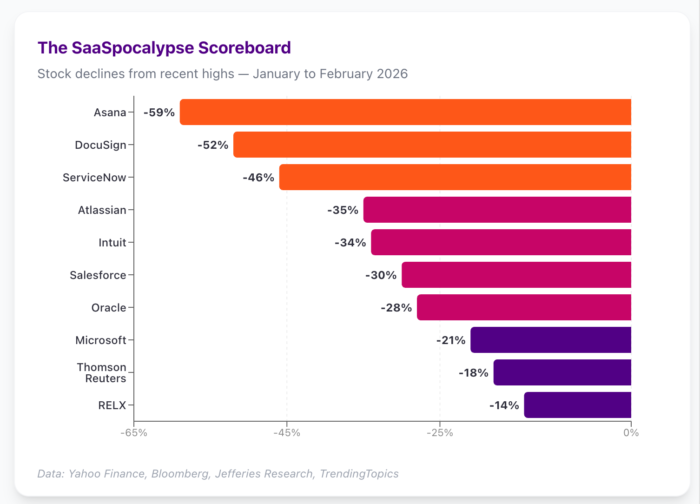
On February 3rd, 2026, the global software market experienced a seismic shockwave, with approximately $285 billion in market capitalization vanishing in a single trading session. This dramatic downturn, quickly dubbed the "SaaSpocalypse" by Wall Street analysts, saw prominent tech companies suffer precipitous drops. Atlassian plummeted 35% within a week, while Intuit saw its valuation slide by 34%. Salesforce touched a 52-week low, and Oracle’s market value nearly halved from its October highs. Asana’s stock continued its downward spiral, falling 59% over twelve months and trading a staggering 92% below its all-time peak.
The catalyst for this unprecedented market upheaval was a seemingly minor product update from AI company Anthropic. The company announced a new feature for its advanced chatbot, Claude, named "CoWork," which included a suite of plugins designed to automate a vast array of core business processes. This development fundamentally challenged the long-standing business model of the Software-as-a-Service (SaaS) industry.
The Genesis of the "SaaSpocalypse": Claude CoWork’s Transformative Potential

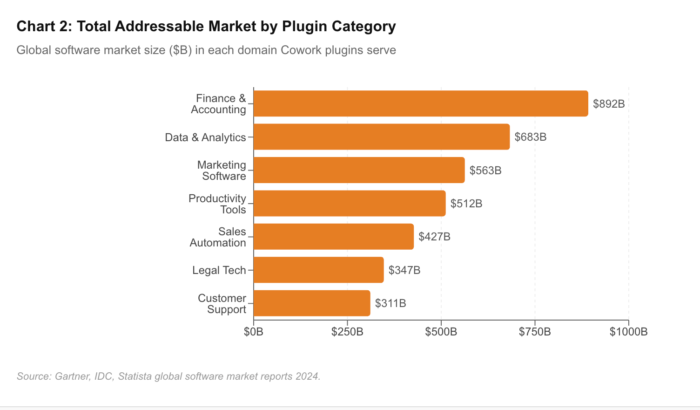
Claude CoWork is engineered to empower AI agents to autonomously execute entire business workflows. The initial launch included 11 plugins, covering critical business functions such as sales, legal review, financial analysis, and marketing campaigns. These capabilities represent a radical departure from the traditional software landscape, where executing these tasks historically required specialized, often expensive, software and highly trained human operators. CoWork promises to drastically compress the time and expertise needed to transform an idea into a fully operational product or service. Even the widely adopted WordPress platform has introduced a plugin for Claude CoWork, streamlining the process of creating functional websites from concept to launch in mere hours.
The Plugin Economy: A New Frontier of Opportunity
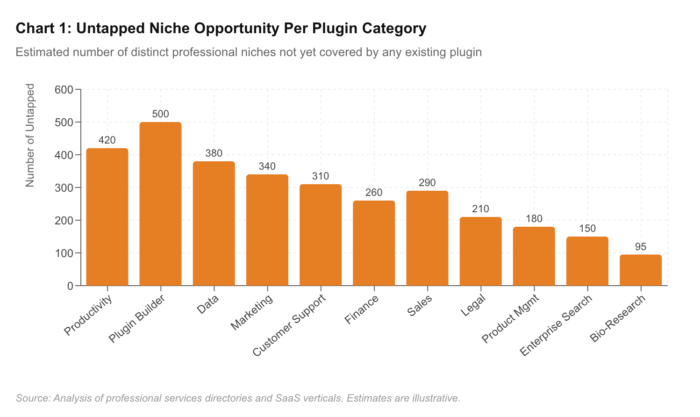
While the initial 11 plugins from Anthropic are foundational, they are merely the opening salvo in what is anticipated to be a burgeoning plugin ecosystem. This launch is seen as a "starting gun" for a new generation of startups and independent ventures. For astute observers, this moment represents a rare platform opening, akin to the early days of the Apple App Store, where early builders stand to gain significant advantages. The opportunity lies in developing plugins that fill the gaps left by Anthropic’s initial offerings and cater to a myriad of industry-specific needs.
Anthropic’s core CoWork plugins aim to automate fundamental business processes. The potential applications are vast, extending far beyond the initial 11. Industries such as real estate, coaching, course creation, podcast production, e-commerce, and short-term rental management are ripe for specialized plugin development. Crucially, the creation of these plugins does not necessitate traditional coding expertise. Plugins are built using markdown, a plain text format that defines how Claude operates within a specific role. This low-barrier-to-entry model democratizes innovation, allowing individuals with domain knowledge and a clear understanding of business processes to contribute.
Historical Parallels: The WordPress and App Store Revolutions
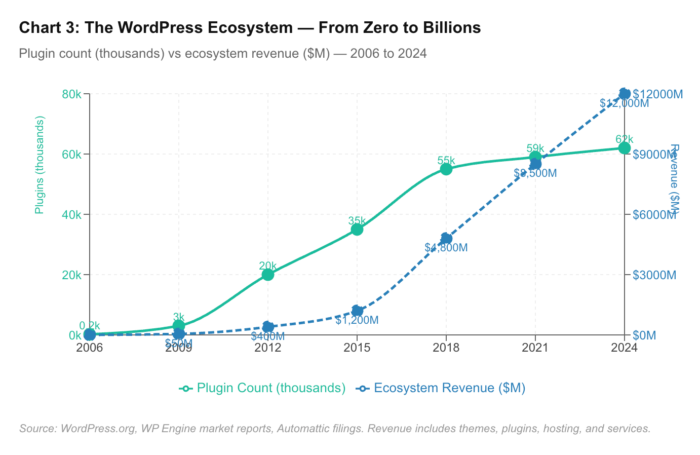
To comprehend the magnitude of the current opportunity, one can look to historical precedents. In 2005, WordPress launched as a free, open-source blogging platform. While many saw it as a tool for writers, a select few recognized its potential as an infrastructure play. They began building on top of the platform, leading to one of the most significant independent wealth-creation events in internet history. By 2024, WordPress powered over 40% of the world’s websites, a testament to the power of a robust plugin ecosystem.
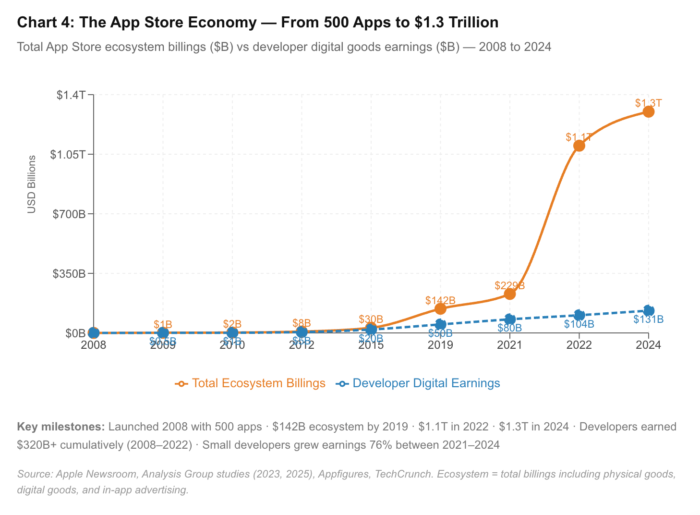
Similarly, the launch of the Apple App Store on July 10, 2008, with 500 applications, presented a similar paradigm shift. While most users downloaded games and utilities, a segment of developers saw the immense potential for building businesses on Apple’s platform. Within a decade, this foresight propelled many into significant financial success, reshaping the software distribution and development landscape. The sheer scale of the App Store’s growth, generating billions in revenue and creating millions of jobs, underscores the transformative impact of open platforms.
The current emergence of the Claude CoWork plugin ecosystem mirrors these historical moments. Anthropic has provided the core platform and a set of foundational plugins, analogous to Apple’s initial app offerings. The opportunity lies in identifying and filling the unaddressed niches within this expanding digital marketplace. Unlike previous technological revolutions, the barrier to entry for plugin development is significantly lowered, requiring industry insight and problem-solving skills rather than extensive coding knowledge.
The Economic Undercurrent: Solopreneurs and AI Adoption
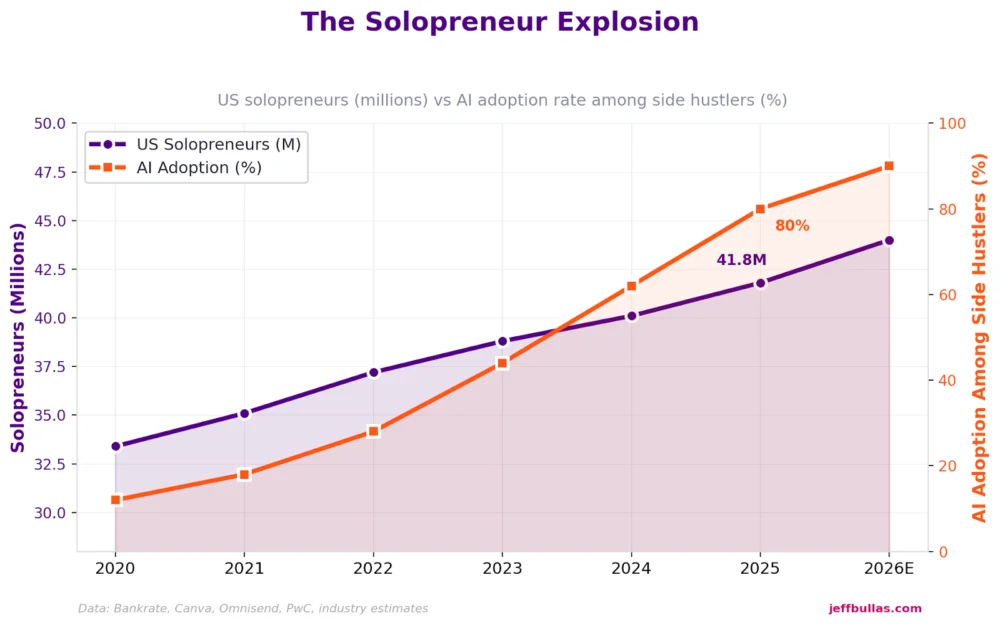
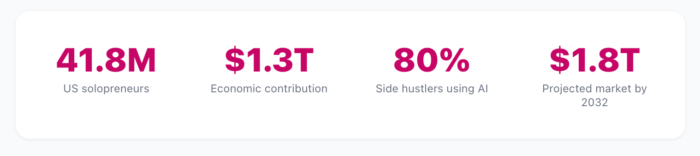
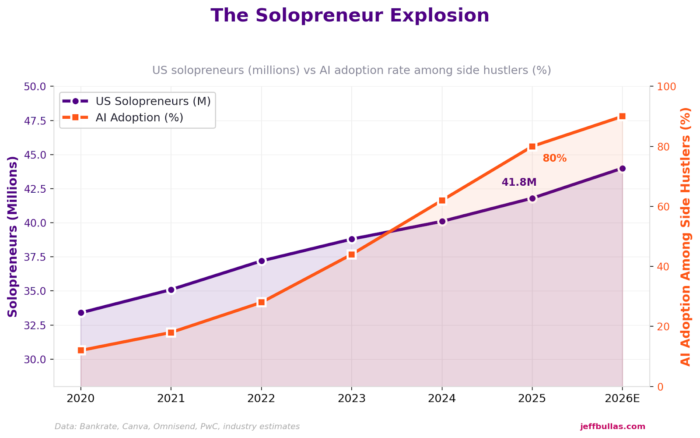
The dramatic market reaction, while appearing sudden, is underpinned by significant economic shifts. The side hustle economy has been on a steep upward trajectory, projected to triple from $556 billion to over $1.8 trillion by 2032. In the United States alone, 41.8 million solopreneurs contribute more than $1.3 trillion annually to the economy. A surprising statistic reveals that 20% of these solopreneurs now earn between $100,000 and $300,000 annually without a single employee. This was the landscape before AI agents began performing the work of entire departments.
Furthermore, AI adoption is rapidly accelerating within the creator and solopreneur communities. 80% of individuals with side hustles have already incorporated AI into their work, with a substantial 74% identifying it as their "secret growth weapon." The AI-in-creator-economy market reached $4.35 billion in 2025, with an anticipated annual growth rate of 31.4%, projected to hit $12.85 billion by 2029. A striking 84% of content creators are now leveraging AI-powered tools.
The economic implications are profound. Businesses integrating AI are reporting productivity increases of 25-55% and generating returns of approximately $3.50-$4.00 for every dollar invested in AI solutions. For solo operators, these economics present a structural advantage previously unimaginable. The rising necessity of side hustles, driven by economic pressures—the percentage of individuals starting them to cover basic bills jumped from 11.8% in 2021 to 21.6% in 2024—further amplifies the demand for powerful, accessible tools.
The Fundamental Shift: From Per-Seat to Per-Task
The core of the "SaaSpocalypse" lies in a fundamental redefinition of software value. For two decades, the SaaS industry operated on the "per-seat" model: customers paid based on the number of individual users accessing the software. This model underpinned the revenue streams of giants like Salesforce, Jira, QuickBooks, and Adobe. The assumption was that software required human operators, and more users meant more revenue.
Claude CoWork and its plugins shattered this assumption. Instead of human employees using a CRM to manage sales, an AI agent can now autonomously execute the entire sales workflow, from prospect research to follow-up. Similarly, an AI agent can handle accounting tasks previously requiring multiple employees and specialized software. The industry’s core question—"How many employees will use this?"—is being replaced by: "How many tasks can this AI complete?"
This shift directly impacts investor confidence. If a single AI agent can perform the work of ten human operators, the traditional per-seat licensing model becomes obsolete. Morgan Stanley analysts have warned that the era of "easy growth" for many SaaS companies may be over, as their fundamental value proposition is being challenged.
The Entrepreneurial Renaissance: A Golden Age for Builders
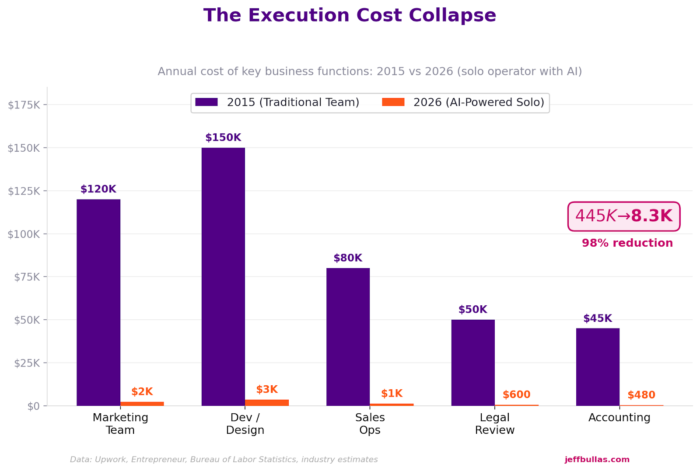
While the market experienced a sharp correction, the implications for entrepreneurs, digital creators, and aspiring side hustlers are overwhelmingly positive. The "SaaSpocalypse" has inadvertently revealed the most significant window of opportunity for independent builders in a generation. The cost of execution has plummeted, the time required to bring an idea to market has compressed, and the value of strategic insight has soared.
1. The Great Equalizer Arrives: For the first time, a solo entrepreneur with a laptop possesses operational capabilities that previously required a well-funded startup with a sizable team. AI agents can now manage marketing campaigns, sales pipelines, legal document analysis, and financial reporting. The infrastructure cost for launching a professional business has been reduced by an order of magnitude. The emergence of AI automation consultants commanding high hourly rates for their services highlights this shift.
2. Closing the "Execution Gap": The primary barrier for aspiring entrepreneurs has historically been execution, not ideas. The inability to afford developers, designers, or marketing teams often meant brilliant concepts remained unrealized. Claude CoWork, with its plugin architecture, can now scaffold entire projects, from business plans to marketing sequences, enabling rapid testing and iteration at an unprecedented speed. Projections suggest that by 2026, AI capabilities will empower solopreneurs to build six- and seven-figure businesses independently.
3. The Birth of New Industries: Collapsing execution costs invariably leads to the emergence of entirely new business categories. AI automation consulting is already a burgeoning field, with practitioners generating significant income by packaging AI capabilities into services for specific clients. Local businesses are actively seeking AI chatbot implementations to streamline operations, and AI-powered data analysis services are demonstrating high profitability. The core opportunity lies not in AI itself, but in translating AI capabilities into tangible solutions for specific customer needs, a task requiring human judgment, domain expertise, and empathy.
The Shadow Side: Risks and Challenges
Despite the immense opportunities, the rapid advancement of AI also presents significant risks:
1. The Race to the Bottom: As AI tools become ubiquitous, the commoditization of tasks like basic content creation, design, and simple coding is inevitable. Businesses and individuals whose value proposition is solely based on performing these tasks risk being outcompeted by AI’s speed and cost-efficiency. Data indicates a potential saturation in some AI-driven freelance markets, with median side hustle incomes showing signs of stagnation despite rising AI adoption.
2. The Authenticity Crisis: The proliferation of AI-generated content, designs, and code poses a challenge to audience engagement and trust. As platforms become saturated with AI-generated output, human authenticity, taste, and originality will become even more critical differentiators, though these qualities are often harder to cultivate and prove.
3. The Dependency Trap: Building a business reliant on third-party AI platforms carries inherent risks. Changes in API pricing, feature deprecation, or model updates can disrupt workflows and business operations. Entrepreneurs must be mindful of platform dependency and develop strategies for mitigating these risks.
4. Displacement and Societal Impact: The widespread adoption of AI agents will inevitably lead to job displacement across various sectors. Gartner predicts a significant increase in enterprise software incorporating agentic AI, potentially eliminating roles and restructuring entire industries. This societal challenge, often overlooked in narratives focused on entrepreneurial opportunity, requires careful consideration and proactive solutions.
Industries Undergoing Transformation
The "SaaSpocalypse" disproportionately affected sectors heavily reliant on traditional software models. These same sectors now represent areas of immense opportunity for innovative entrepreneurs:
- Legal Services: Companies like Thomson Reuters, LegalZoom, and RELX experienced significant stock declines as investors recognized the potential for AI agents to handle tasks such as contract review, compliance tracking, and document analysis at a fraction of the cost of existing software solutions.
- Financial Services and Accounting: Intuit’s substantial drop reflects concerns that AI agents could automate bookkeeping, tax filing, and financial reporting, challenging the need for expensive accounting software suites.
- Sales and CRM: Salesforce’s significant market value erosion stems from the realization that AI agents can manage entire sales pipelines, potentially disrupting the per-seat revenue model that underpins the multi-billion dollar CRM industry.
- Project Management and Collaboration: Atlassian’s sharp decline highlights the potential for custom AI solutions, such as those built with Claude Code, to bypass traditional project management tools like Jira and Confluence.
- Marketing and Content Technology: Major advertising holding companies like Publicis, WPP, and Omnicom saw their stock prices fall as AI agents demonstrated the capability to execute marketing campaigns end-to-end, shifting value towards strategic expertise that knowledgeable individuals can offer.
For entrepreneurs, each of these disrupted industries presents a unique opportunity to bridge the gap between emerging AI capabilities and specific customer needs, operating without the need for traditional venture capital funding.
The True Opportunity: Clarity Over Capability
The most significant misunderstanding surrounding the current AI revolution is the belief that the primary opportunity lies in simply producing more output faster. The "SaaSpocalypse" revealed a deeper truth: when AI can generate virtually anything, the bottleneck shifts from production to clarity. Knowing what to build, whom to serve, and why it matters are the critical differentiators. The individuals who will thrive are not necessarily the most skilled prompt engineers, but those who possess a profound understanding of their own strengths, their audience’s needs, and the specific problems worth solving. This translates to the ability to answer the question: "What is mine to do?" In an economy where execution is becoming nearly free, this strategic clarity is the most valuable commodity.
Navigating the New Landscape: A Call to Action
For entrepreneurs, creators, and aspiring side hustlers observing the market shifts, this moment demands a strategic approach:
- Prioritize Clarity Over Tools: Before adopting any new AI platform, gain a deep understanding of the problem you aim to solve and your target audience. Tools are becoming commoditized; unique insights into specific markets are not.
- Specialize and Deepen Expertise: Successful AI side hustlers are not generalists. They focus on a single industry, problem, or customer segment, building comprehensive solutions around that niche.
- Leverage Existing Experience: Decades of professional experience, domain knowledge, and established networks represent a significant advantage in the AI era. This accumulated expertise forms a powerful competitive moat.
- Act with Urgency, Build for Longevity: The window for early movers in AI-powered services is open but closing. Competition will intensify as AI tools become mainstream. Establishing expertise and client relationships now will yield compounding advantages.
Conclusion: The Migration of Value
The "SaaSpocalypse" was not an endpoint for the software industry, but rather a catalyst for a fundamental restructuring of the value chain. Power is shifting from tool manufacturers to tool users, from platform owners to individuals possessing the clarity and courage to build meaningful solutions. The $285 billion in market value that evaporated on February 3rd, 2026, did not disappear; it migrated. This value is now available to be captured by entrepreneurs who understand that in an era where AI can build anything, the ultimate competitive advantage lies in discerning precisely what is worth building. The question remains: Will you be among those who seize this transformative opportunity?
About the Author