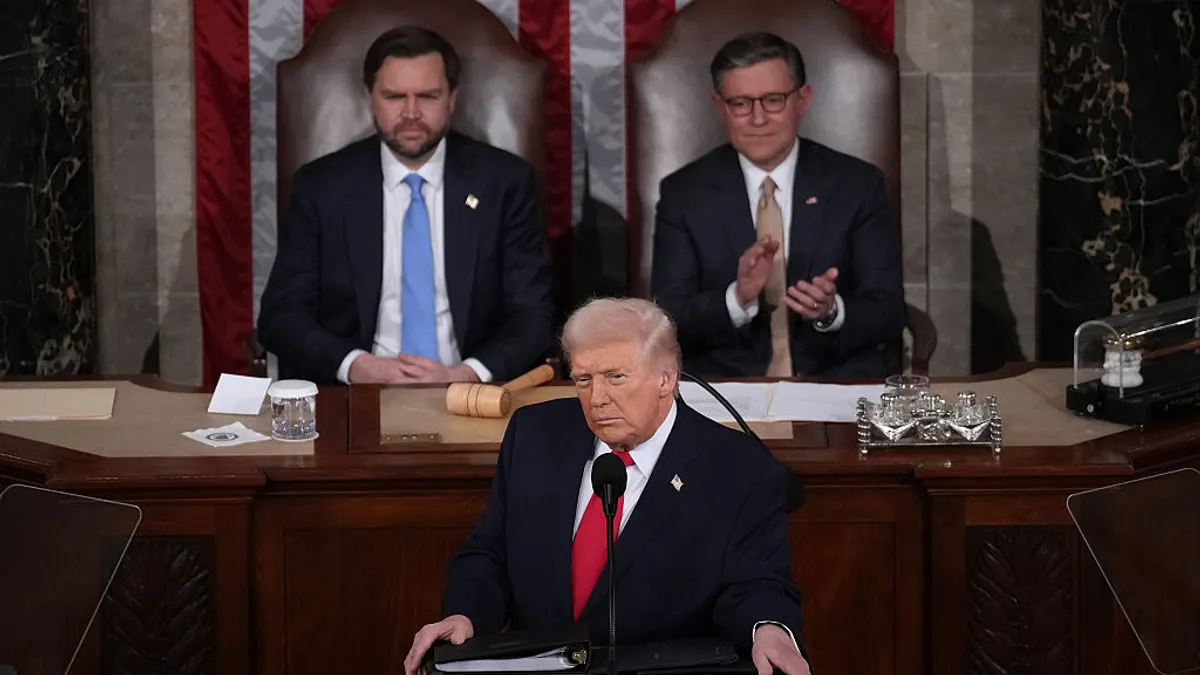
Washington D.C. – President Donald Trump, flanked by Vice President JD Vance and Speaker of the House Mike Johnson, announced a significant new federal initiative aimed at bolstering retirement savings for millions of American workers during his State of the Union address on February 24, 2026. The proposed plan, an extension of the Saver’s Match program established by the Secure 2.0 Act of 2022, seeks to provide a government match of up to $1,000 annually to individuals who participate in retirement savings plans, a move the administration hopes will address a critical gap in financial security for a substantial portion of the American workforce.
Addressing a Growing Retirement Savings Crisis
The announcement comes at a time when concerns about retirement preparedness are at an all-time high. According to a White House official, over 44% of full-time U.S. workers, equating to approximately 40.6 million individuals, currently do not participate in any form of employer-sponsored retirement plan. Compounding this issue, nearly 51% of all workers, or 48.8 million individuals, do not benefit from an employer match on their contributions. This lack of employer-provided benefits leaves a significant portion of the population vulnerable, with many likely foregoing retirement savings altogether.
A February 5 report from the National Institute on Retirement Security (NIRS) underscored the severity of this trend, revealing that among workers with a positive balance in a defined contribution (DC) plan, a staggering 80% had obtained that plan through their primary employer. This data highlights the indispensable role of employer-sponsored plans as the primary gateway to retirement savings for most Americans.
Furthermore, public sentiment reflects a growing anxiety about future financial security. A December report by Betterment at Work, a provider of 401(k) plans, indicated that almost half of U.S. employees believe they will require at least $1 million to retire comfortably. However, the same report found that only a little more than a quarter of these workers are confident they will achieve this financial milestone. This disconnect between perceived need and expected outcome signals a widespread concern that the new initiative aims to address.
The Saver’s Match Program: A Foundation for Expansion
President Trump’s proposed plan builds directly upon the framework established by the Saver’s Match program, a key provision within the Secure 2.0 Act, which was passed in 2022 and is slated to commence operations in 2027. The Secure 2.0 Act itself represented a bipartisan effort to enhance retirement security by making significant reforms to retirement savings laws. These reforms included provisions to increase automatic enrollment, expand access to retirement plans for part-time workers, and introduce new savings incentives.
The Saver’s Match program, as envisioned by the Secure 2.0 Act, is designed to provide a federal matching contribution to low-to-moderate-income individuals who save for retirement. The new proposal by the Trump administration appears to broaden the scope and potential impact of this program, aiming to incentivize a wider range of workers to participate in retirement savings.
Key Features and Potential Impact of the New Initiative
The proposed retirement plan, as described by White House officials, would mirror aspects of the successful Thrift Savings Plan (TSP) offered to federal employees. This would provide participating employees with access to a government-backed match, a crucial incentive for those who might otherwise hesitate to contribute. Moreover, the plan aims to offer participants diversified, index-based investment and portfolio options. This component is vital, as it not only simplifies the investment process for individuals who may lack financial expertise but also promotes a disciplined, long-term investment strategy aligned with market performance.

A significant aspect of the new plan is the potential for private philanthropic contributions. The administration is reportedly exploring avenues for private donors to contribute to these retirement accounts, potentially augmenting the federal match and offering additional support for savers. This collaborative approach, involving both government and private sector entities, could significantly amplify the program’s reach and effectiveness.
Furthermore, the White House is actively working to ensure that these retirement accounts are portable. This means that workers who change jobs or industries would be able to retain their retirement savings and the associated government match, preventing the disruption and loss of accumulated benefits that often occurs when individuals move between employers. Portability is a critical feature in today’s dynamic job market, where frequent career transitions are becoming the norm.
Implementation and Future Outlook
The administration indicated that a substantial portion of the proposed plan can be implemented through existing administrative authorities, suggesting a potential for relatively swift rollout. However, officials also acknowledged that additional legislative action could further enhance the program’s support and scope. The White House is expected to release more comprehensive details regarding the plan’s structure, eligibility criteria, and implementation timeline in the coming weeks.
The initiative’s timing, following the passage of the Secure 2.0 Act and preceding its 2027 launch, suggests a strategic effort to build momentum and public awareness around retirement security. By announcing this expanded vision now, the administration aims to foster a national conversation and encourage greater participation in savings programs.

Broader Economic and Social Implications
The potential implications of a successful large-scale retirement savings initiative are far-reaching. For individuals, increased participation in retirement plans and the availability of a government match can lead to greater financial stability in their later years, reducing reliance on social safety nets and improving overall quality of life. This could translate into a significant reduction in poverty among seniors.
Economically, a broader base of retirement savings can contribute to a more robust and stable financial market. Increased investment in diversified portfolios can support economic growth and capital formation. Moreover, by encouraging long-term saving, the plan could help to moderate consumption patterns and promote a more balanced economic landscape.
However, challenges remain. Ensuring widespread understanding and access to the program, particularly among low-income and less-educated populations, will be crucial. Effective outreach and education campaigns will be necessary to inform individuals about the benefits and mechanics of the new plan. The administration’s commitment to portability also addresses a key barrier to consistent saving for many workers.
The inclusion of private philanthropy, while potentially beneficial, will also require careful structuring to ensure transparency and equitable distribution of funds. The success of the initiative will ultimately depend on its effective implementation, public engagement, and sustained commitment from both governmental and private sectors. As the White House prepares to release further details, the nation will be closely watching this ambitious endeavor to secure the financial future of its working citizens.
About the Author