Bengaluru-based wearable technology innovator Ultrahuman has officially unveiled its latest smart ring, the Ring Pro, marking a significant step in the company’s strategic evolution. This third-generation device boasts an impressive 15-day battery life and a meticulously redesigned form factor, features poised to reignite Ultrahuman’s presence in the critical U.S. market, which faced substantial disruption last year due to an ongoing patent dispute with rival Oura. The launch not only introduces advanced hardware but also integrates a novel real-time biointelligence system named Jade, signifying Ultrahuman’s commitment to proactive, personalized health management.
The Ring Pro: A Leap in Wearable Technology and Strategic Design
The Ultrahuman Ring Pro, priced at $479, represents a substantial upgrade from its predecessor, the Ring Air, which offered four to six days of battery life and launched in July 2023 at $349. The new ring’s extended battery performance is a key differentiator, addressing a common pain point for wearable users and underscoring Ultrahuman’s focus on convenience and uninterrupted health tracking. Pre-orders for the Ring Pro are now open globally, with initial shipments anticipated to commence in March. Notably, the U.S. market is currently excluded from immediate pre-order availability, reflecting the lingering effects of the aforementioned legal challenges.
Beyond its power efficiency, the Ring Pro incorporates a redesigned heart-rate sensing architecture, engineered to deliver superior signal quality, particularly crucial during sleep tracking. This enhancement aims to provide more accurate and reliable data, a cornerstone of effective health monitoring. Powering these advancements is a new dual-core processor, boosting the device’s data accuracy and on-device computing capabilities. The Ring Pro is also equipped to store an extensive 250 days of health data, offering users a comprehensive longitudinal view of their wellness journey without constant syncing. Despite these technological enhancements, the Ring Pro maintains a relatively discreet profile, weighing only about 5% to 6% more than the Ring Air, ensuring comfort for continuous wear.
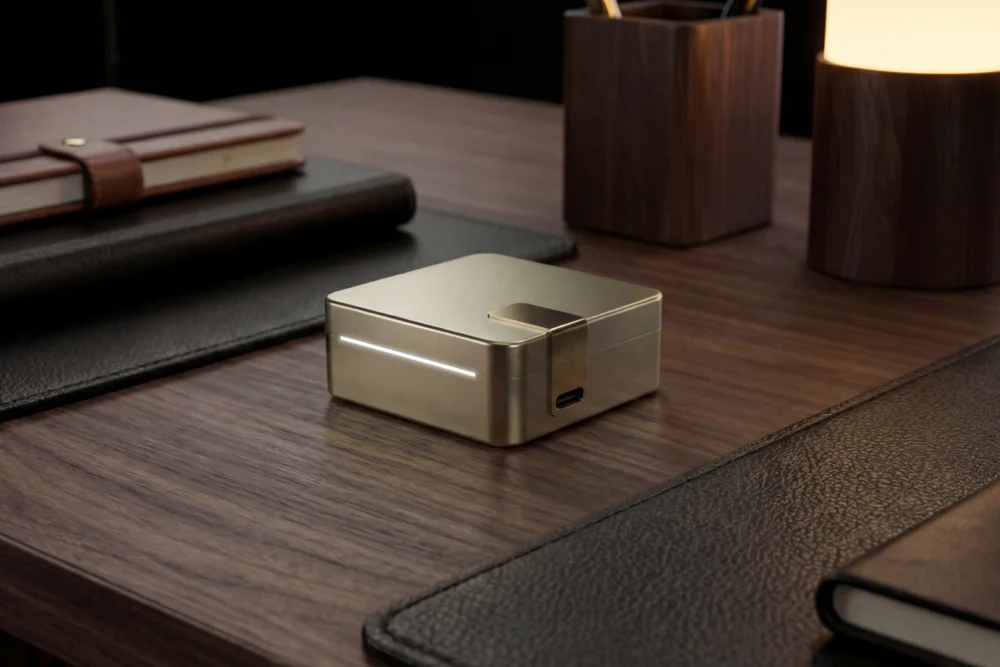
Complementing the Ring Pro, Ultrahuman has also introduced the Pro Charger, a portable charging solution designed for convenience. This innovative charging case extends the Ring Pro’s operational time significantly, offering up to 45 days of additional battery life, ideal for users on the go. The charger also facilitates faster software updates and diagnostics through direct case connectivity and supports universal wireless charging via the Qi standard, aligning with contemporary smartphone charging technologies.
Navigating the Patent Labyrinth: The Oura Dispute
The launch of the Ring Pro comes at a pivotal moment for Ultrahuman, as the company actively works to overcome significant hurdles imposed by a patent infringement dispute with Finnish competitor Oura. In October 2025, the U.S. International Trade Commission (ITC), a federal agency tasked with adjudicating trade disputes, ruled in Oura’s favor. This ruling effectively prevented Ultrahuman from importing new smart ring inventory into the United States, a market that accounted for approximately 45% of Ultrahuman’s global daily active users, numbering around 700,000 at the time, according to co-founder and CEO Mohit Kumar. While existing retail stock continued to be sold, the import ban represented a substantial blow to the company’s U.S. operations and market expansion plans.
In response to the ITC’s decision, Ultrahuman has undertaken a multifaceted strategy. A key element of this approach involves a fundamental redesign of the Ring Pro to circumvent Oura’s patented technologies. Mohit Kumar confirmed to TechCrunch that this new design has been submitted to U.S. Customs and Border Protection for clearance, an essential step to confirm its legal importability into the country. This proactive measure highlights Ultrahuman’s determination to regain full access to the lucrative American market.
The legal battle is not confined to U.S. soil. In August 2025, Ultrahuman filed a separate patent infringement lawsuit against Oura in the Delhi High Court, India, where the matter remains pending. This dual-pronged legal strategy underscores the intensity of the competition in the burgeoning smart ring sector and the critical importance of intellectual property in establishing market dominance. The nature of the patents involved in these disputes typically revolves around specific hardware configurations, sensor integration methods, data processing algorithms, or design aesthetics unique to smart ring technology. Such legal skirmishes are increasingly common in rapidly evolving tech sectors where innovation often leads to overlapping technological advancements.

Strategic Re-entry: The U.S. Market Challenge
The U.S. market holds immense strategic importance for Ultrahuman. As one of the largest and most mature markets for wearable technology, regaining unimpeded access is crucial for the company’s long-term growth trajectory and global market share. The patent dispute forced Ultrahuman to re-evaluate its product development and market entry strategies, leading directly to the redesigned Ring Pro. The company’s proactive engagement with U.S. Customs and Border Protection demonstrates a methodical approach to ensuring compliance and avoiding future import restrictions.
The success of the Ring Pro’s clearance will be a critical determinant of Ultrahuman’s ability to fully capitalize on its new product launch. A favorable outcome would allow Ultrahuman to once again compete directly with Oura and other emerging players in the U.S., leveraging the Ring Pro’s enhanced features and the growing consumer interest in sophisticated health wearables. The temporary disruption, while challenging, has arguably spurred Ultrahuman to innovate further, leading to a product that addresses key consumer demands such as extended battery life and advanced health monitoring capabilities.
Beyond Hardware: Introducing Jade AI and Ecosystem Growth
Ultrahuman’s latest announcement extends beyond hardware to encompass significant advancements in its software ecosystem. The company introduced Jade, a real-time "biointelligence" system designed to revolutionize how users interact with their health data. Unlike many existing AI tools that primarily offer retrospective summaries of health metrics, Jade is engineered to provide real-time, actionable guidance and personalized insights by continuously analyzing data across Ultrahuman devices and services.
Mohit Kumar emphasized Jade’s forward-looking capabilities, stating, "Most AI tools today look backward at your data. Jade is built to react to your health in real time and surface actions users can take." This proactive approach aims to empower users to make immediate, informed decisions about their well-being, moving beyond mere data presentation to practical intervention. For instance, Jade might detect early signs of stress patterns or suboptimal sleep and recommend specific recovery protocols or lifestyle adjustments. Crucially, Jade will be available to all Ultrahuman users, including those with the older Ring Air, and will not currently require a subscription, making advanced AI-driven insights accessible to a broader audience. This strategy could significantly enhance user engagement and the perceived value of the Ultrahuman ecosystem.
Beyond Jade, Ultrahuman continues to diversify its offerings with a suite of subscription-based services. These include PowerPlugs, a coaching and recovery program; the Blood Vision metabolic panel, which offers insights into metabolic health; Ultrahuman Home, likely a broader platform for integrated health management; and a continuous glucose monitoring (CGM) offering. These subscription services currently contribute approximately 16% of Ultrahuman’s total revenue, with Blood Vision accounting for a notable 5% to 6% of the business. This demonstrates Ultrahuman’s strategic pivot towards a more comprehensive health platform, integrating hardware, software, and specialized services to create a holistic wellness solution.
Financial Resilience and Global Ambitions
Despite the operational challenges posed by the U.S. patent dispute, Ultrahuman has demonstrated remarkable financial resilience. Mohit Kumar reported that the company is currently operating at an annualized revenue run rate of approximately $150 million. This figure builds upon a strong performance in the financial year ended March 2025, where Ultrahuman reported $64 million in operating revenue. The startup remains profitable after tax, a testament to its efficient operations and strong market demand. However, Kumar acknowledged that profit margins are expected to narrow due to the combined impact of ongoing litigation costs, potential tariffs, and the significant investment required for the Ring Pro’s redesign effort. This candid assessment highlights the financial strain imposed by competitive legal battles in the tech industry.
Ultrahuman’s growth is not solely reliant on the U.S. market. The company has identified the UK, Canada, Australia, and India as key growth markets. India, in particular, has seen significant investment in local customer support, contributing about 8% to 9% of Ultrahuman’s overall revenue. This global diversification strategy is crucial for mitigating risks associated with market-specific challenges and ensuring sustained growth. The ability to maintain profitability and a robust revenue run rate amidst a major market disruption speaks volumes about Ultrahuman’s underlying business model and consumer appeal.
Ultrahuman’s journey began in 2019, and since its inception, the company has successfully raised approximately $55 million in funding. Its notable investors include Alpha Wave Incubation, Blume Ventures, Steadview Capital, and Nexus Venture Partners. This substantial backing has enabled Ultrahuman to invest heavily in research and development, marketing, and the expansion of its product ecosystem, positioning it as a significant player in the competitive health tech landscape.

The Expanding Smart Ring Landscape
The smart ring category is experiencing rapid growth, driven by increasing consumer demand for discreet, advanced wearables that offer sophisticated health tracking capabilities, particularly for sleep analysis, and extended battery life. According to Anshika Jain, a senior analyst at Counterpoint Research, global smart ring shipments surged by nearly 80% year-over-year in 2025. Oura currently leads this burgeoning market, holding more than two-thirds of the market share, while Ultrahuman has established itself as the second-largest player. Jain further anticipates that future leaders in the category will be defined by superior sensor accuracy, advanced AI-driven insights, and seamless integration within a broader health ecosystem.
Separate data from IDC corroborates this growth trend, indicating that global smart ring shipments rose by approximately 30% year-over-year in Q3 2025, reaching nearly 1 million units. This growth is partly attributed to a rising preference for screenless fitness trackers that offer unobtrusive health monitoring. During this period, IDC data suggests Ultrahuman captured roughly 25% of the market, showcasing its strong competitive position despite the challenges. The smart ring market is also attracting attention from larger tech companies, with rumors periodically surfacing about potential entries from giants like Apple and Samsung, signaling a recognition of the segment’s future potential.
A particularly interesting demographic trend for Ultrahuman is the strong adoption of its products among women. Mohit Kumar noted that women now account for about 68% of Ultrahuman’s user base, an increase from roughly 65% a year earlier. This growth is largely attributed to the successful integration and appeal of the startup’s women’s health features, highlighting a strategic advantage in catering to specific demographic needs within the health tech market. Features tailored to menstrual cycle tracking, fertility insights, and hormone balance monitoring can create a strong loyalty base among female users.
Technological Advancements in the Ring Pro
A deeper dive into the Ring Pro’s technical specifications reveals Ultrahuman’s commitment to pushing the boundaries of smart ring technology. The redesigned heart-rate sensing architecture is not merely an incremental improvement; it signifies an optimized layout and component choice aimed at minimizing noise and maximizing signal integrity, especially during periods of low physical activity like sleep. Accurate heart rate variability (HRV) and resting heart rate (RHR) measurements are foundational for advanced sleep stage detection and recovery analysis, making this architectural change crucial for the device’s overall performance.
The integration of a new dual-core processor is another significant upgrade. This allows for more complex algorithms to run directly on the device, enhancing the accuracy of various biometric measurements and enabling faster processing of data. On-device computing reduces reliance on constant cloud connectivity, potentially improving privacy and responsiveness. The ability to store up to 250 days of health data locally on the device further underscores this independence, providing a robust buffer for data logging even during extended periods without syncing.
The Pro Charger, while an accessory, also embodies thoughtful design. Its 45-day battery life addresses the need for extended travel or situations where regular charging might be inconvenient, cementing the Ring Pro as a truly "always-on" health companion. The direct case connectivity for faster updates and diagnostics is a clever engineering solution that streamlines maintenance and troubleshooting, enhancing the user experience. The inclusion of Qi wireless charging standard ensures broad compatibility, removing the need for proprietary charging solutions and simplifying the user’s charging ecosystem.
Looking Ahead: Production and Market Positioning
Looking forward, Ultrahuman is not resting on its laurels. Mohit Kumar indicated that the company is actively building additional production capacity to meet the anticipated demand for the Ring Pro in the coming months. This proactive measure suggests strong confidence in the new product’s appeal and the company’s ability to navigate the complex global supply chain.
The launch of the Ring Pro and the Jade AI system represents a bold strategic maneuver by Ultrahuman. It demonstrates a company actively innovating its product line, diversifying its service offerings, and aggressively addressing market access challenges through legal and design-led solutions. While the patent dispute with Oura presents ongoing hurdles, Ultrahuman’s resilience, financial performance, and commitment to technological advancement position it as a formidable competitor in the rapidly expanding smart ring and broader health tech sectors. The success of the Ring Pro, particularly in its eventual re-entry into the U.S. market, will be a key indicator of Ultrahuman’s long-term trajectory and its ability to shape the future of personalized biointelligence.
About the Author