The recruitment arena is undergoing a significant transformation, marked by a discernible shift from rapid hiring to a more deliberate and strategic approach. A recent comprehensive survey conducted by Monster, a prominent global employment website, reveals that while the volume of hiring may appear to have decreased, the underlying intent and execution are becoming far more focused. This recalibration is largely driven by a confluence of factors, including persistent skills shortages, the accelerating integration of artificial intelligence (AI) into the workplace, and evolving employee expectations regarding work arrangements.
The "Intentional Hiring" Paradigm
The core finding of Monster’s report, which surveyed 800 U.S.-based hiring decision-makers, is that "hiring has not stopped, it is becoming more intentional." This statement encapsulates a nuanced reality: organizations are not necessarily freezing recruitment, but rather scrutinizing each hire with greater precision. This strategic pivot is characterized by a commitment to retaining existing talent, fostering internal skill development, and thoughtfully adopting new technologies like AI.
The survey data underscores the challenges employers face in finding suitable candidates. A substantial 64% of respondents indicated that sourcing qualified applicants remains a significant hurdle. This difficulty in the talent market directly correlates with the observed trend of increased investment in internal development and skills-building initiatives. Companies are recognizing that cultivating talent from within can be a more reliable and cost-effective strategy than perpetually searching for external hires who may possess the exact skill sets needed.
The Shadow of the Skills Crisis
This emphasis on internal development is particularly pertinent given the broader context of a widening skills gap. A report released earlier in February 2026 by Isolved, a human capital management technology firm, highlighted that nearly half of HR leaders are grappling with what it terms a "self-inflicted skills crisis." This crisis, the Isolved report attributes, stems from a slow pace of adaptation to rapid technological advancements and evolving industry demands. The Monster survey’s findings align with this sentiment, suggesting that employers are acutely aware of the need to bridge these skill discrepancies, whether through upskilling existing staff or by being exceptionally targeted in their external recruitment.
The implications of this skills gap are far-reaching. For businesses, it can translate into project delays, reduced productivity, and a struggle to innovate. For employees, it means a constant need for learning and adaptation to remain competitive in the job market. The intentional hiring approach, therefore, can be seen as a direct response to this challenge, prioritizing candidates who demonstrate a capacity for learning and growth, or who already possess the specialized skills in high demand.
Artificial Intelligence: A Dual-Edged Sword in Hiring
The rapid integration of artificial intelligence into various business functions is another defining characteristic of the current hiring landscape. Monster’s survey indicates a strong employer awareness of AI’s potential, with 74% planning to invest in AI training or upskilling for their employees in 2026. Furthermore, a significant 41% of employers are already leveraging AI in their hiring or workforce management processes, with an additional 31% planning to adopt such tools in the near future.
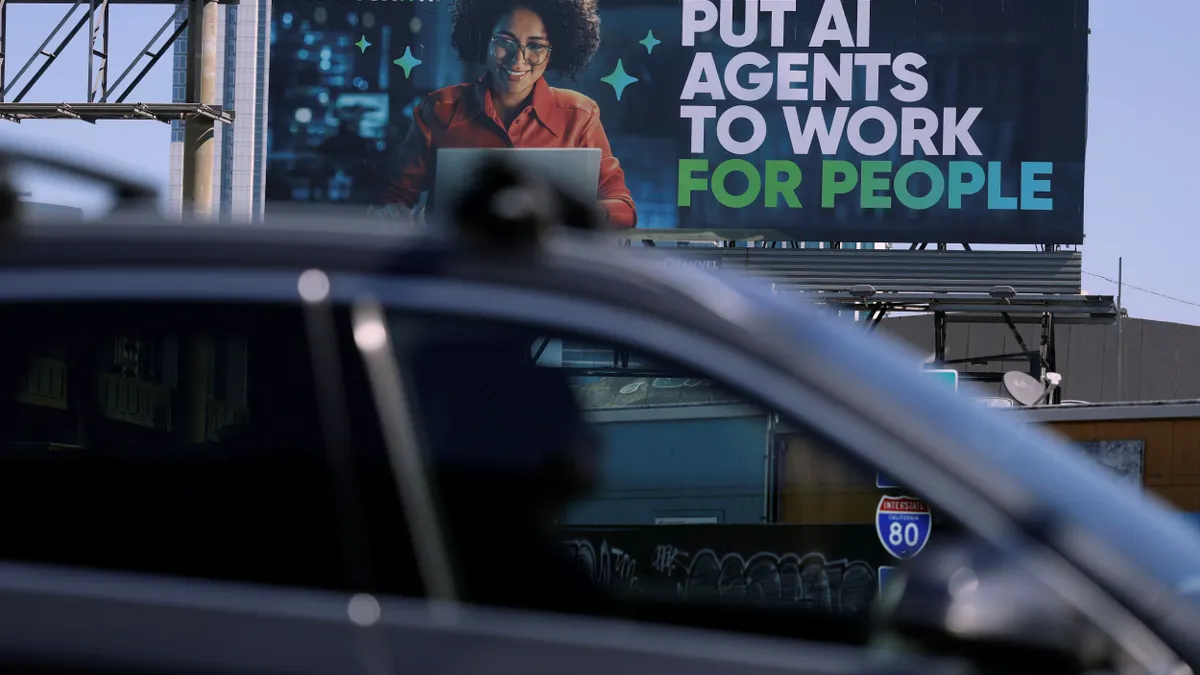
This proactive stance on AI adoption suggests a dual motivation: to enhance operational efficiency and to equip the workforce with the skills necessary to thrive alongside AI technologies. The image accompanying this report, depicting a billboard advertising an AI company, serves as a visual testament to the growing prominence of AI in the business world. The text on the billboard, "Put AI agents to work for people," encapsulates the aspiration to harness AI as a tool to augment human capabilities rather than replace them entirely.

However, the integration of AI also presents its own set of challenges and considerations for hiring. While AI can streamline the recruitment process by automating tasks like resume screening and initial candidate outreach, it also raises questions about bias in algorithms and the ethical implications of AI-driven decision-making. Companies investing in AI are likely to face the dual task of implementing these technologies effectively while also ensuring fairness and transparency in their hiring practices. The emphasis on intentional hiring suggests that employers are seeking to integrate AI not as a shortcut, but as a means to achieve more precise and effective recruitment outcomes, potentially by identifying candidates with a strong aptitude for working collaboratively with AI systems.
Evolving Workforce Expectations: The Hybrid and Remote Work Conundrum
Beyond skills and technology, the persistent debate and evolving landscape of remote and hybrid work models continue to influence hiring decisions. While not explicitly detailed as a primary driver of "intentionality" in the same vein as skills gaps or AI, it remains a significant factor that can slow down or complicate the hiring process. The report indicates that 54% of employers found that return-to-office mandates made hiring more difficult. This suggests that rigid or unpopular policies regarding work location can deter potential candidates, forcing employers to either reconsider their mandates or become more adept at attracting talent within the constraints of their policies.
Despite the challenges posed by return-to-office mandates, the survey also revealed a degree of stability in existing work arrangements. A notable 72% of employers anticipate their current hybrid or on-site policies will remain unchanged. Concurrently, 22% of employers are planning to increase in-office requirements. This suggests a divided sentiment within the employer community, with some doubling down on traditional office-centric models while others maintain or even embrace more flexible arrangements. For job seekers, this dichotomy means navigating a diverse range of workplace cultures and expectations, further emphasizing the need for intentionality in their own job searches to find roles that align with their preferences.
The Broader Economic Context and Future Outlook
The trends identified by Monster are occurring against a backdrop of a dynamic global economy. While specific economic indicators from early 2026 are not detailed in the provided excerpt, general economic sentiment often influences hiring decisions. Periods of economic uncertainty can lead to more cautious hiring, reinforcing the "intentional" approach. Conversely, periods of robust growth might see a return to more aggressive recruitment, though likely still tempered by the lessons learned regarding skills development and technological integration.

The insights from Monster’s report suggest a sustained shift in how organizations approach talent acquisition. The era of broad-stroke hiring to fill immediate needs appears to be giving way to a more refined strategy focused on long-term workforce planning, employee development, and the strategic deployment of technology. Companies that successfully navigate this new paradigm will likely be those that prioritize adaptability, invest in their people, and embrace a thoughtful integration of AI and evolving work models. The future of hiring, as painted by this research, is one of deliberate action, continuous learning, and a keen understanding of the complex interplay between human capital and technological innovation. The ability to attract, develop, and retain talent will depend not just on offering competitive compensation, but on fostering an environment that supports continuous skill enhancement and embraces the evolving nature of work. This intentionality is not merely a trend; it appears to be a fundamental reorientation of how businesses build and sustain their workforces in an increasingly complex and rapidly changing world.
About the Author