
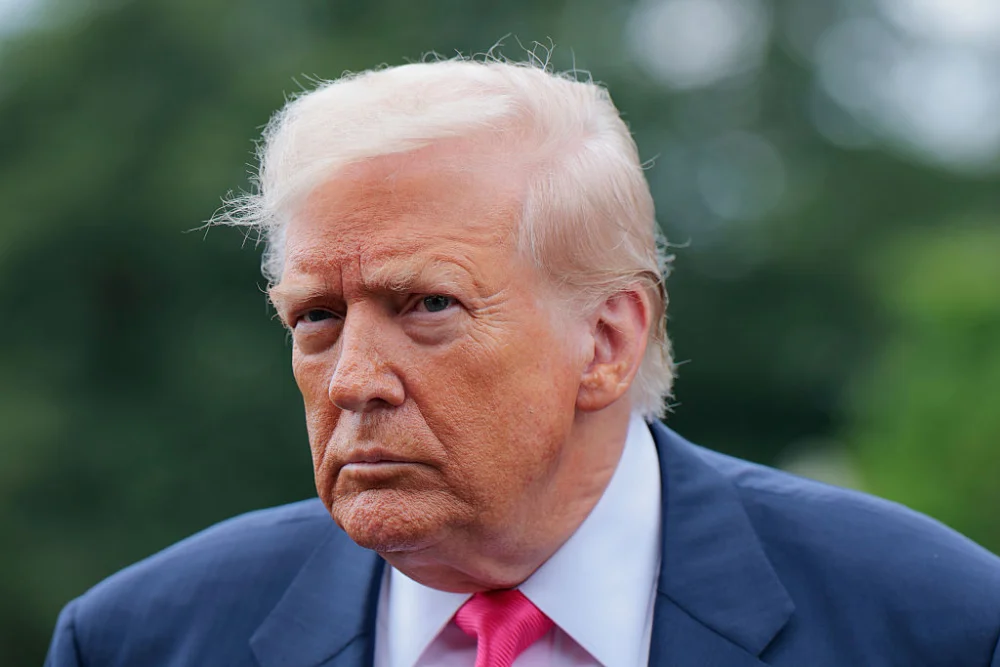
Boston, MA – June 9, 2026 – President Donald Trump has issued a sweeping directive mandating federal agencies to immediately cease all use of products developed by Anthropic, the prominent artificial intelligence company. The order, disseminated via a post on the social media platform Truth Social, comes in the wake of a significant public disagreement between Anthropic and the Department of Defense (DoD) regarding the ethical parameters for AI deployment in military applications. While a six-month grace period has been allocated for departments to transition away from Anthropic’s services, the President emphatically declared that the company would no longer be considered a welcome federal contractor.
“We don’t need it, we don’t want it, and will not do business with them again,” President Trump stated in his public announcement, leaving no room for ambiguity regarding the administration’s stance. This decisive action signals a sharp departure from previous engagement with AI technology providers and underscores the administration’s growing concerns over the ethical boundaries of artificial intelligence in sensitive governmental functions.
Escalation of Tensions: From Dispute to Sanctions
The executive order stems from a contentious debate that erupted over Anthropic’s refusal to permit its AI models from being utilized for two specific applications: mass domestic surveillance and the development of fully autonomous weapons systems. Secretary of Defense Pete Hegseth publicly voiced his dissatisfaction with Anthropic’s stipulations, characterizing them as “unduly restrictive” and potentially hindering critical national security capabilities.
This disagreement culminated in a direct threat to designate Anthropic as a supply chain risk to national security. While President Trump’s initial post did not explicitly mention this designation, Secretary Hegseth promptly followed up with a tweet confirming the escalation. “In conjunction with the President’s directive for the Federal Government to cease all use of Anthropic’s technology, I am directing the Department of War to designate Anthropic a Supply-Chain Risk to National Security,” Secretary Hegseth declared. He further stipulated, “Effective immediately, no contractor, supplier, or partner that does business with the United States military may conduct any commercial activity with Anthropic.” This move effectively cuts off Anthropic from any entity operating within the defense industrial base, imposing a broad economic and operational restriction.
Anthropic’s Stance: Ethical Red Lines Maintained
Anthropic’s CEO, Dario Amodei, has consistently maintained the company’s ethical stance. In a public statement released on Thursday, Amodei reiterated his commitment to the principles that led to the dispute. “Our strong preference is to continue to serve the Department and our warfighters – with our two requested safeguards in place,” Amodei wrote. He acknowledged the potential ramifications of the disagreement, stating, “Should the Department choose to offboard Anthropic, we will work to enable a smooth transition to another provider, avoiding any disruption to ongoing military planning, operations, or other critical missions.” This measured response highlights Anthropic’s dual objective of upholding its ethical framework while minimizing disruption to national security operations during a potential contract termination.
Broader Industry Implications and Shifting Alliances
The fallout from the Pentagon dispute has reverberated throughout the AI industry, prompting reactions and strategic realignments. Notably, OpenAI, a leading competitor to Anthropic, has reportedly expressed solidarity with Anthropic’s decision. According to the BBC, OpenAI CEO Sam Altman circulated a memo to his staff affirming shared “red lines” and indicating that any OpenAI defense contracts would similarly reject uses deemed “unlawful or unsuited to cloud deployments, such as domestic surveillance and autonomous offensive weapons.”
This sentiment was echoed by Ilya Sutskever, co-founder of OpenAI, who has since established his own AI venture. Sutskever publicly lauded Anthropic’s steadfastness and OpenAI’s parallel stance on his X platform, writing, “It’s extremely good that Anthropic has not backed down, and it’s significant that OpenAI has taken a similar stance.” This alignment suggests a nascent consensus among some major AI developers regarding the ethical boundaries of AI in military contexts.
However, the landscape shifted rapidly. Within hours of President Trump’s directive, OpenAI announced a new deal with the Pentagon. Altman characterized this agreement as one that preserved the same core principles Anthropic had championed, specifically prohibiting domestic surveillance and autonomous weapons. The New York Times reported that discussions between OpenAI and the government regarding this potential partnership commenced as early as Wednesday of the current week, indicating a swift response to fill the void left by Anthropic’s potential exclusion.
Background and Precedent: The AI Contract Landscape
This situation arises within a broader context of significant investment in AI technologies by the U.S. Department of Defense. In July of the preceding year, Anthropic, alongside OpenAI and Google, was awarded substantial contract funding from the DoD, totaling up to $200 million each. These awards underscored the Pentagon’s strategic commitment to integrating advanced AI capabilities across various defense sectors.
While some employees within Google have publicly supported Anthropic’s position, the tech giant and its parent company have remained notably silent on the unfolding events. The implications of this silence, and Google’s potential future role, remain a subject of speculation. The swiftness with which OpenAI moved to secure a new agreement with the Pentagon, following Anthropic’s exclusion, suggests a highly competitive environment where strategic partnerships are constantly being negotiated and renegotiated.
Analysis of Implications: Ethical AI and National Security
The President’s directive and the subsequent designation of Anthropic as a supply chain risk carry significant implications for both the federal government and the AI industry. For federal agencies, the immediate challenge will be to identify and integrate alternative AI solutions that meet their operational needs without compromising ethical guidelines. The six-month phase-out period, while providing some breathing room, will necessitate rapid procurement and deployment strategies.
For Anthropic, the ban represents a substantial blow to its federal contracting business. The company’s commitment to ethical AI, while commendable from a moral standpoint, has now resulted in direct governmental sanctions. This case highlights the complex and often tense intersection between technological advancement, corporate ethics, and national security imperatives. The government’s reliance on private sector AI innovation means that disagreements over ethical frameworks can have profound geopolitical and economic consequences.
The swift pivot by OpenAI, while ostensibly upholding ethical principles, also raises questions about market dynamics and potential opportunism. The ability of a company to rapidly step into a void created by a competitor’s sanction suggests a dynamic where even ethical stances can be navigated through strategic business maneuvering.
The broader implications extend to the ongoing debate about the regulation of artificial intelligence. The Pentagon’s concerns about “unduly restrictive” parameters could signal a governmental push for AI technologies that offer greater operational flexibility, potentially at the expense of certain ethical safeguards. Conversely, companies like Anthropic and, to an extent, OpenAI, are demonstrating a willingness to draw firm lines, suggesting a future where ethical considerations might become a significant factor in the development and deployment of AI, even within the defense sector.
The role of independent voices, such as Ilya Sutskever, in commenting on these developments adds another layer to the narrative, indicating internal industry debates and differing perspectives on the responsible development of AI.
As the dust settles, the long-term consequences of this standoff will likely shape the future of AI procurement within the U.S. government and influence the ethical standards adopted by AI developers worldwide. The intricate dance between innovation, ethics, and national security is far from over, and further developments are anticipated as agencies navigate this new operational landscape and other AI providers position themselves to meet evolving governmental demands.
This story has been updated with additional reporting.
About the Author:
Russell Brandom has been covering the tech industry since 2012, with a focus on platform policy and emerging technologies. He previously worked at The Verge and Rest of World, and has written for Wired, The Awl and MIT’s Technology Review. He can be reached at [email protected] or on Signal at 412-401-5489.
About the Author





