New research published in The Accounting Review suggests that common accounting practices for determining wage increases may inadvertently perpetuate gender-based pay disparities. The study, conducted by researchers at the McCombs School of Business at the University of Texas at Austin and Emory University, proposes that framing pay raise budgets in dollar amounts rather than percentages could be a crucial step towards achieving greater pay equity and mitigating legal risks for organizations.
The findings come at a time when discussions around diversity, equity, and inclusion (DEI) and their impact on compensation have intensified. Following a shift in federal policy under the Trump administration that signaled a move away from certain DEI initiatives, conversations about pay equity have gained renewed urgency. This has prompted a deeper examination of the very mechanisms companies use to manage and adjust employee compensation, with researchers now scrutinizing how seemingly neutral accounting methods can have disproportionately unfair outcomes.
The Mechanics of Pay Raise Budgets
The core of the research, titled "Un-Nudging Pay Gaps: The Role of Pay Raise Budget Framing," delves into the subtle yet significant impact of how compensation increases are calculated. Led by Professor Emily Gunnell of the McCombs School of Business, along with collaborators Karl Schuhmacher and Kristy Towry from Emory University, the study highlights a pervasive assumption in many organizations: that percentage-based raises are inherently fair.
"There’s this assumption implicit in percentage raises that the baseline is an appropriate amount on which to base the increase," Gunnell explained in a report from the McCombs School. This means that when a company offers a 3% raise, for example, it is applied to an employee’s current salary. If two employees, one male and one female, are in similar roles but have historically earned different salaries due to systemic biases, a 3% raise will result in a larger absolute dollar increase for the higher-earning individual. Over time, this compounding effect can widen existing pay gaps.
For instance, consider two employees: Employee A earns $60,000 annually, and Employee B earns $50,000 annually. If both receive a 3% raise, Employee A will receive an additional $1,800, bringing their salary to $61,800. Employee B will receive an additional $1,500, bringing their salary to $51,500. While both received the same percentage increase, the absolute dollar difference between their salaries has actually grown from $10,000 to $10,300. This mathematical reality, when applied across an entire workforce over years, can entrench and exacerbate pay disparities, particularly along gender lines, where historical and societal factors have often led to women earning less than their male counterparts.
Research Methodology and Findings
The research involved a series of experiments designed to simulate real-world compensation decisions. Participants were tasked with allocating pay raise budgets under different framing conditions. The study’s key finding is that when pay raise budgets are presented as fixed dollar amounts, decision-makers tend to allocate them in a way that promotes greater equity. Conversely, when presented as percentages, the existing salary structure, which may already reflect pay gaps, unduly influences the distribution of raises, thereby reinforcing those gaps.
"Different accounting techniques could improve pay equity and help managers avoid potential legal risks or even shareholder pushback that could ensue from giving across-the-board raises to women," Gunnell stated, underscoring the dual benefit of shifting to dollar-based allocations: fostering fairness and mitigating organizational liability.
The research paper, published in the January 2024 issue of The Accounting Review, aims to provide actionable insights for HR professionals and organizational leaders. The study’s authors contend that by re-framing the conversation around compensation adjustments, companies can proactively address and dismantle the unconscious biases that often permeate hiring, promotion, and salary review processes.
Addressing Unconscious Bias Through Structural Changes
Gunnell emphasized that the goal is not necessarily to change deeply ingrained personal biases, which are notoriously difficult to alter. Instead, the research advocates for structural interventions that can guide decision-making towards fairer outcomes.

"A lot of the bias that pervades organizations is subconscious and unintentional," Gunnell noted. "It’s really hard to change people’s biases and opinions. But we can change our default and build structures that frame decisions in a different way. One way to perpetuate fairness is to reframe how you approach the pay raise process."
This approach aligns with broader strategies in HR and organizational psychology that focus on designing systems and processes that minimize the influence of subjective judgment and promote objective, equitable outcomes. By moving away from percentage-based increases, companies can break the cycle where historical inequities are compounded with each salary adjustment. For example, if a company has a total pool of $100,000 to distribute as raises, framing it as a fixed sum allows managers to consider the specific needs and contributions of individuals more holistically, rather than simply applying a blanket percentage that disproportionately benefits those already earning more.
Broader Context and Implications for HR
The findings of Gunnell and her colleagues are particularly relevant in the current landscape of HR practices. The push for pay equity has been a significant focus for many organizations, driven by both ethical considerations and increasing regulatory scrutiny. Reports from the U.S. Bureau of Labor Statistics have consistently shown a gap in median weekly earnings between men and women, with women earning approximately 82 cents for every dollar earned by men in the third quarter of 2023. While this gap has narrowed over time, it remains a persistent issue.
Experts speaking at the American Bar Association’s annual labor and employment law conference in November also highlighted the critical role of HR professionals in advancing pay equity. These discussions underscored the importance of conducting thorough pay equity assessments, ensuring transparency in compensation structures, and actively working to identify and rectify any disparities. The research by Gunnell and her team offers a concrete, data-driven method to supplement these efforts.
The implications of this research extend beyond mere compliance. Organizations that successfully implement fairer compensation practices are likely to see benefits in employee morale, retention, and overall employer branding. A reputation for pay equity can attract top talent and foster a more engaged and motivated workforce. Conversely, companies that fail to address these issues risk legal challenges, damage to their reputation, and a decline in employee trust.

Future Research Directions
Looking ahead, Gunnell indicated that his future research will explore the impact of different raise mechanisms on employee satisfaction. Understanding how employees perceive the fairness of their compensation adjustments is crucial for building a positive and equitable work environment. This includes examining how transparent communication about compensation policies can influence employee perceptions and engagement.
"Accountants focus on the structures in organizations that measure and manage performance," he stated. "We’re interested in how all those management controls work. We have the ability to pull levers and make things just a little more fair." This perspective positions accounting and finance professionals not just as record-keepers, but as key architects of fair and ethical organizational practices.
The study’s recommendations are practical and accessible for most organizations. The shift from percentage-based to dollar-based raise allocations requires a re-evaluation of internal accounting procedures and a conscious effort to train managers on the implications of this change. However, the potential benefits—reduced pay gaps, minimized legal exposure, and enhanced employee trust—make it a worthwhile endeavor. As companies continue to navigate the complexities of DEI and compensation, this research provides a valuable tool for building a more equitable future for all employees.
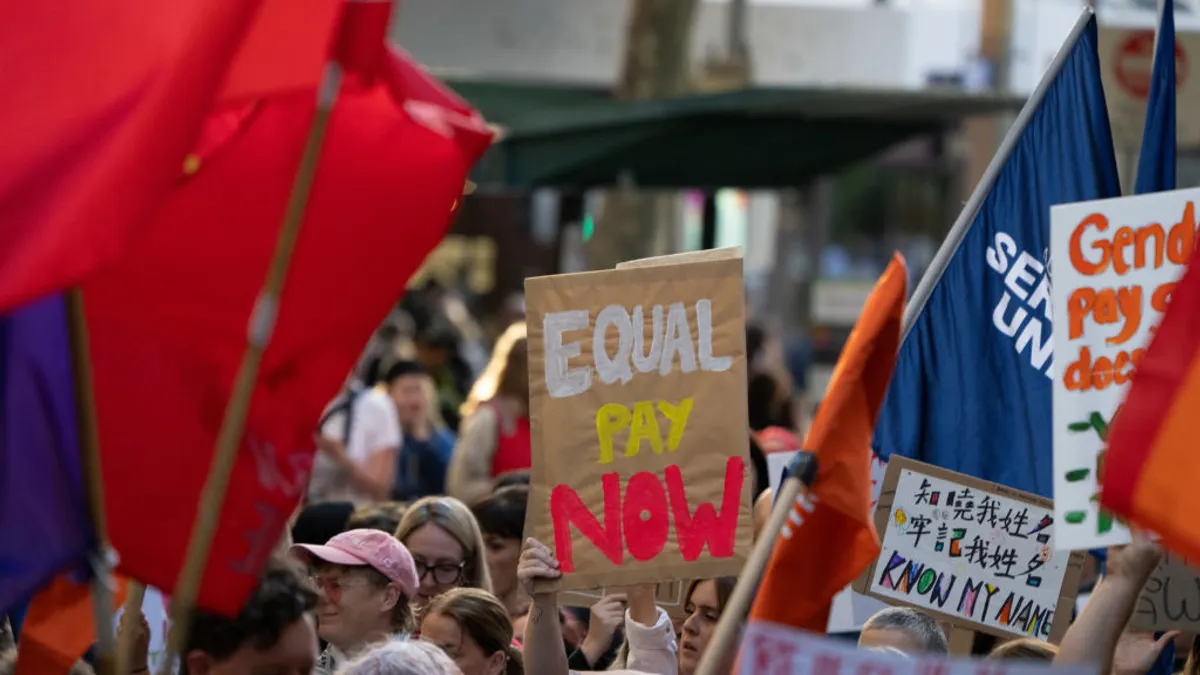
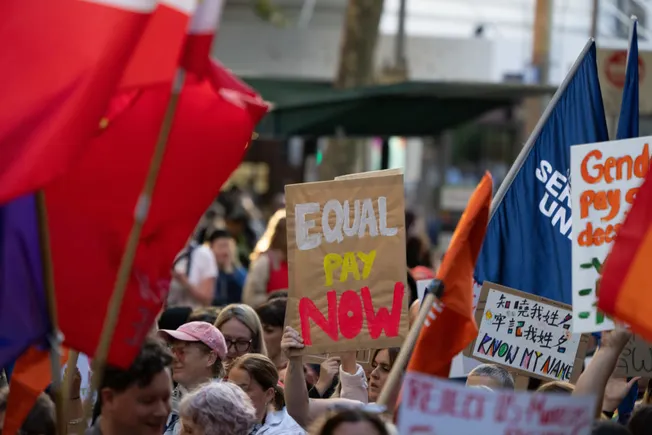
The visual accompanying the original article, depicting a protest for equal pay, serves as a stark reminder of the real-world consequences of pay disparities. The research by Gunnell, Schuhmacher, and Towry offers a scientific and practical approach to address these issues from within the organizational structure, aiming to proactively prevent the perpetuation of gendered inequities through thoughtful adjustments in how compensation is managed. The journey towards true pay equity is multifaceted, involving policy changes, cultural shifts, and, as this research suggests, a critical examination of the accounting tools we employ.
About the Author