Mulvaney’s transition into this advocacy role is informed by his own legislative history and personal affinity for the poker table. Having represented South Carolina in the U.S. House of Representatives, Mulvaney was a vocal proponent of sports betting, arguing for its legalization and regulation within his home state. He identifies as a pragmatist who can distinguish between a financial investment and a speculative wager. His central argument rests on the "duck test"—a common-sense heuristic suggesting that if a platform allows users to wager money on the outcome of a sporting event for a payout, it functions as a sportsbook regardless of its technical classification by federal agencies.
The formation of Gambling Is Not Investing signals a growing ideological rift within the Republican Party. While many conservatives champion deregulation and the growth of fintech, a vocal contingent led by Mulvaney, former New Jersey Governor Chris Christie, and current Utah Governor Spencer Cox argues that the current federal approach provides a "regulatory loophole" that allows prediction markets to bypass consumer protections and state tax obligations inherent in the gambling industry.
The Evolution of Prediction Markets and Federal Oversight
To understand the current conflict, one must examine the regulatory framework established by the Commodity Futures Trading Commission (CFTC). Historically, the CFTC has overseen markets for commodities like oil, gold, and agricultural products. However, the rise of "event contracts"—where participants trade on the likelihood of a specific occurrence, such as an election result, a weather event, or a sports score—has pushed the agency into uncharted territory.
Under federal law, these contracts are currently treated as derivatives. A traditional sportsbook might offer "odds" on a game, whereas a prediction market like Kalshi or Polymarket offers "shares" in an outcome that pay out a fixed amount (usually $1.00) if the event occurs. Critics, including Mulvaney’s coalition, argue that this distinction is purely semantic. They contend that the underlying mechanics—risking capital on an uncertain future event for profit—align perfectly with the legal definition of gambling.
The shift in the CFTC’s stance has been stark across presidential administrations. During the Biden administration, the agency took a defensive posture. In 2022, the CFTC issued a $1.4 million fine against Polymarket, a decentralized platform, for failing to register as a designated contract market and ordered it to wind down its U.S. operations. At the time, the agency emphasized that "all derivatives markets must operate within the bounds of the law regardless of the technology used."
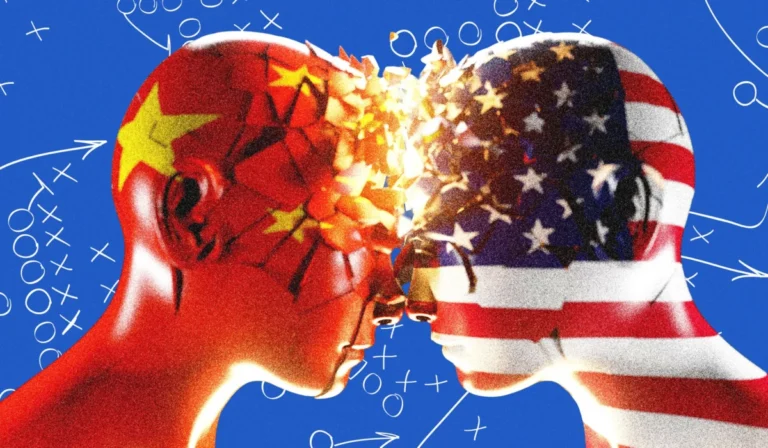
However, the current leadership at the CFTC, headed by Michael Selig, has pivoted toward a more permissive and protective stance toward these platforms. Selig has recently asserted that the agency has exclusive jurisdiction over prediction markets, even going so far as to file a brief in support of Crypto.com in a legal battle against Nevada regulators. This federal-state friction is the primary catalyst for Mulvaney’s new coalition.
Chronology of the Regulatory Conflict
The timeline of the current dispute illustrates the rapid acceleration of the industry and the corresponding legal pushback:
- January 2022: The CFTC penalizes Polymarket, signaling a crackdown on unregistered prediction platforms.
- May 2024: The CFTC proposes a formal rule that would explicitly ban event contracts involving "gaming" and "contests," which many viewed as a death knell for sports-related prediction markets.
- September 2024: A federal judge rules in favor of Kalshi in a landmark case against the CFTC, allowing the platform to list election-related contracts. This decision effectively opens the floodgates for mainstream prediction market activity in the U.S.
- November 2024: During the U.S. General Election, Polymarket sees a record-breaking $3.6 billion in trading volume, highlighting the massive scale and influence of the industry.
- Early 2025: Michael Selig and the CFTC shift toward defending prediction markets against state-level lawsuits, prompting a backlash from both Democratic senators and conservative advocacy groups.
- Current Period: Mick Mulvaney launches "Gambling Is Not Investing," uniting groups like Moms for America and Consumer Action for a Strong Economy to lobby for state-level oversight.
Supporting Data: The Scale of the Market
The urgency behind Mulvaney’s coalition is driven by the sheer volume of capital flowing into these platforms. Data from the 2024 election cycle revealed that prediction markets often outpaced traditional polling in terms of public attention and perceived accuracy.
- Trading Volume: Polymarket’s $3.6 billion election volume represented an increase of over 1,000% compared to previous cycles.
- User Demographics: While traditional gambling attracts a broad demographic, prediction markets have seen a surge in participation from younger, tech-savvy "retail investors" who view these platforms as a hybrid of social media and finance.
- State Revenue Loss: Proponents of state regulation point out that legal sports betting generated over $4 billion in state tax revenue in 2023. Prediction markets, operating under federal derivative rules, often bypass these specific state-level excise taxes.
Mulvaney argues that the lack of state oversight creates an uneven playing field. "If you’re a casino in Atlantic City or a sportsbook in Las Vegas, you’re paying taxes, you’re verifying ages, and you’re following strict consumer protection laws," Mulvaney told reporters. "Prediction markets are essentially running the same business without the same responsibilities."
Official Responses and Political Reactions
The push for tighter regulation has created unusual political bedfellows. While Mulvaney leads the charge from the right, 23 Democratic Senators, including Elizabeth Warren and Bernie Sanders, recently sent a stern letter to the CFTC. The senators expressed concern that "election gambling" could undermine public trust in democratic processes and urged the agency to allow state-level lawsuits against these platforms to proceed.
Conversely, the prediction market industry has significant allies within the current administration’s orbit. Donald Trump Jr. serves as an advisor to both Kalshi and Polymarket, and his venture capital firm has actively invested in the space. Furthermore, the Trump family’s social media entity, Truth Social, is reportedly developing "Truth Predict," a platform intended to integrate prediction markets directly into the social media experience.
Michael Selig of the CFTC has remained defiant in the face of criticism. In a recent public address, Selig warned that the agency would vigorously defend its jurisdiction in court against any entity—state or federal—that challenges its authority to regulate event contracts. The CFTC’s decision to support Crypto.com in its dispute with Nevada is seen as a clear signal that the agency intends to preempt state gambling laws.
Broader Impact and Industry Implications
The outcome of this regulatory war will have profound implications for the future of finance and entertainment in the United States. If Mulvaney and his coalition succeed in reclassifying these markets as gambling, the industry would likely fragment into a state-by-state patchwork of regulations, similar to the current sports betting landscape. This would increase compliance costs for platforms like Kalshi and likely lead to the banning of certain types of contracts in more conservative or restrictive states.
On the other hand, if the CFTC maintains its exclusive jurisdiction, prediction markets could continue to evolve into a legitimate "third pillar" of the financial system, sitting alongside the stock market and the commodities market. Proponents argue that these markets provide valuable data—the "wisdom of the crowd"—that can help businesses and policymakers hedge against future risks.
Mulvaney, however, remains skeptical of the "investing" label. He insists that his goal is not to ban the activity but to ensure it is called by its right name and regulated accordingly. By aligning with consumer advocacy groups like Frontiers of Freedom and Moms for America, the "Gambling Is Not Investing" coalition is framing the issue as a matter of family protection and local sovereignty.
"I respect the desire to regulate less," Mulvaney noted, acknowledging the general Republican preference for limited government. "But common sense must prevail. When you are betting on a football game or an election result, you aren’t hedging a commodity risk; you’re gambling. And in this country, we have a long-standing tradition that states regulate gambling to protect their citizens."
As the legal battles move through the courts and the lobbying efforts intensify in Washington, the fate of prediction markets remains uncertain. The clash between federal innovation and state-level traditionalism represents a defining moment for the digital economy, with Mick Mulvaney positioned at the center of a debate that is as much about the definition of "risk" as it is about the law.
About the Author