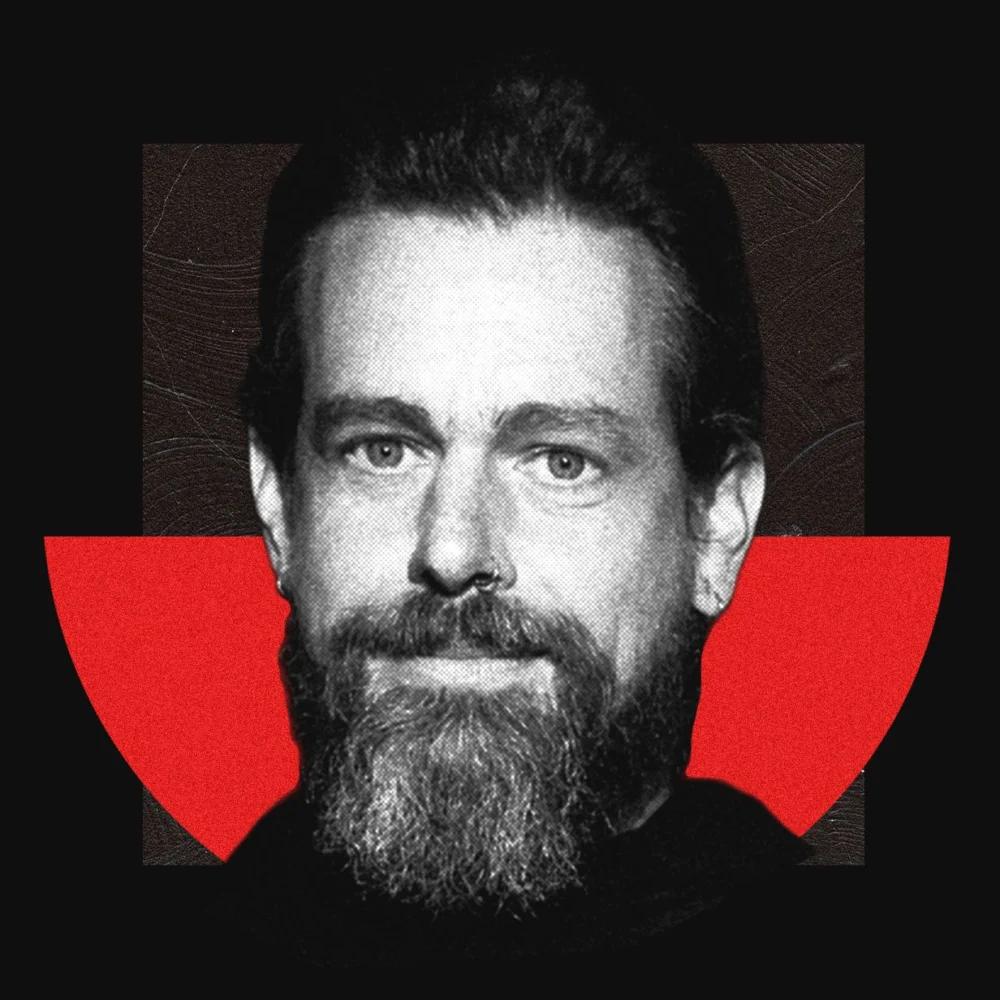
The technology sector is currently witnessing a radical shift in corporate philosophy, spearheaded by one of its most enigmatic figures, Jack Dorsey. The CEO of Block Inc., formerly known as Square, recently executed a sweeping reduction in force that has sent shockwaves through the fintech industry. By discharging nearly half of his workforce, Dorsey is not merely trimming expenses but is attempting to fundamentally rewire the nature of a multi-billion-dollar corporation. This move, framed as a transition toward an "intelligence-led" entity, marks a significant departure from traditional management structures that have dominated the business world since the early 20th century. Dorsey’s thesis is clear: the rapid advancement of artificial intelligence has rendered the conventional corporate hierarchy not only obsolete but existential to the survival of modern technology firms.
The Great Contraction: Block’s Strategic Pivot
Until recently, Block was a sprawling enterprise employing approximately 10,000 individuals, boasting a market capitalization of $39 billion and reporting nearly $3 billion in quarterly profit. Despite these robust financial indicators, Dorsey took the drastic step of laying off a significant portion of the company’s staff. While critics have characterized the move as "AI-washing"—a term used to describe using artificial intelligence as a convenient excuse for corrective measures following pandemic-era overhiring—Dorsey maintains that the decision was proactive rather than reactive.
The metrics used by Block to justify this contraction focus on gross profit per employee. According to internal data, Block’s efficiency was previously in line with or ahead of its industry peers. However, Dorsey argues that the current sophistication of AI tools, specifically citing advancements in late 2023 such as Anthropic’s Opus 4.6 and OpenAI’s Codex 5.3, has fundamentally changed the capacity for automated code generation and system management. These tools have evolved from assisting with "greenfield" projects to managing large, complex codebases, allowing a smaller team to maintain and scale products that previously required thousands of engineers.
A Chronology of Leadership and Exile
To understand Dorsey’s current trajectory, one must examine the timeline of his career, which has often been defined by periods of exile and unconventional returns. In 2009, following his initial departure from the day-to-day operations of Twitter, Dorsey participated in a U.S. State Department delegation to Baghdad. At the time, he was a figure in transition, watching from afar as his co-founders celebrated the burgeoning success of a platform he helped conceive. This period of "exile" served as the incubator for his next major venture, Square, which sought to democratize mobile payments.
By 2015, Dorsey reclaimed the mantle of leadership at Twitter while simultaneously running Square, an unprecedented feat in Silicon Valley. This dual-CEO role lasted until 2021, when he stepped down from Twitter shortly before its eventual acquisition by Elon Musk. Throughout this journey, Dorsey has consistently gravitated toward decentralization and open-source protocols, a philosophy that now informs his vision for an AI-integrated Block.
The Intelligence Layer: Replacing the Hierarchy
The core of Dorsey’s new vision for Block is the implementation of an "intelligence layer" that serves as the organizing principle of the company. In this model, the traditional management hierarchy is discarded in favor of a flatter structure where an internal Artificial General Intelligence (AGI) serves as the primary interface for work artifacts. Dorsey envisions a company that functions as a "mini AGI," where any employee—or eventually, even customers—can query the system, build intent, and scale products through a conversational interface.
This concept, often referred to in developer circles as "vibe-coding," suggests a future where the barrier between a customer’s need and a functional product is virtually eliminated. Instead of a multi-layered approval process involving product managers, designers, and software engineers, an intelligence layer would allow for the rapid, personalized customization of fintech products. Dorsey argues that this shift is necessary because customers no longer desire more features; they desire "peace of mind" and products that adapt specifically to their individual needs.
Supporting Data and Industry Context
The layoffs at Block mirror a broader trend across the technology landscape. Data from the 2023 and 2024 fiscal years show that major tech firms, including Meta, Amazon, and Google, have collectively shed hundreds of thousands of jobs. While many of these cuts were attributed to post-pandemic economic cooling, a growing number of CEOs are citing AI-driven efficiency as a long-term structural goal.
Dorsey’s approach, however, is more radical in its dismissal of the "1900s management structure." While Elon Musk’s layoffs at X (formerly Twitter) were largely driven by debt obligations and a shift in business models during a transition from public to private, Dorsey’s actions at Block are occurring while the company is publicly traded and profitable. This suggests that the "AI-first" restructuring is a deliberate choice of "intelligence-led" growth over traditional human-capital expansion.
Official Responses and Internal Sentiment
The internal reaction at Block has been a mixture of frustration and philosophical debate. During a recent all-hands meeting, employees questioned the optics of the layoffs, with some pointing to Dorsey’s choice of attire—a hat emblazoned with the word "LOVE"—as being out of touch with the gravity of the job losses. Dorsey defended the approach, stating that the company provided generous severance packages while in a position of financial strength, rather than waiting until the company was in crisis.
Externally, the tech community remains divided. Some analysts see Dorsey as a visionary who is correctly identifying the "existential" threat that AI poses to slow-moving corporations. Others remain skeptical, suggesting that the removal of human oversight in favor of an "intelligence layer" could lead to systemic risks in financial services, where regulatory compliance and nuanced judgment are paramount.
Broader Implications for the Future of Work
Dorsey’s perspective aligns with predictions made by AI researchers like Anthropic’s Dario Amodei, who have suggested that a significant portion of white-collar work could be automated within the decade. However, Dorsey expresses a cautious optimism, suggesting that while the "role of a company" will be markedly different, human agency will shift toward new types of creative and sovereign roles.
This sovereignty is a recurring theme in Dorsey’s philosophy. It is why he has distanced himself from projects like Bluesky, which he feels have become too reliant on traditional venture capital and corporate structures. It is also why he remains a staunch advocate for Bitcoin, viewing it not just as an asset, but as an open protocol for money that exists outside the control of any single gatekeeper.
Conclusion: The Existential Gamble
As Block moves forward with its leaner, AI-centric model, the technology industry will be watching closely to see if Dorsey’s "intelligence layer" can truly replace the human-centric management of the past. For Dorsey, the risk of "irrelevance" is greater than the risk of radical change. He believes that the speed at which AI is compounding requires a total rethink of how organizations are funded, built, and operated.
Whether Block emerges as a more nimble and innovative leader in fintech or suffers from the loss of institutional knowledge remains to be seen. What is certain is that Jack Dorsey has once again positioned himself at the bleeding edge of a technological shift, challenging the very definition of what it means to lead a corporation in the 21st century. His gamble is that by stripping away the "bloat" of 20th-century management, he can create a company that is not just a tool for commerce, but a living, breathing intelligence capable of evolving at the speed of the internet itself.
About the Author