The evolving landscape of snowboard binding technology has long been defined by a persistent trade-off: the precise control and secure hold of traditional two-strap systems versus the speed and convenience of strap-less or hybrid designs. For years, snowboarders have grappled with the inconvenience of traditional bindings, which often require bending or sitting to secure and release, much to the amusement of their skiing counterparts. Conversely, early iterations of strap-less systems, while offering near-instantaneous entry, necessitated proprietary boots, potentially compromising fit and control for those who valued their existing boot footwear. In this arena of compromise, a new contender has emerged, promising to bridge the gap: the Fast Entry System (FASE), with the Jones Mercury FASE binding serving as a flagship example. This innovative technology, licensed to prominent snowboard brands like Jones, Rome, Bataleon, and ThirtyTwo for the 2025-26 season, aims to deliver the rapid entry and exit of hybrid systems without sacrificing the responsive feel and universal boot compatibility that seasoned riders demand. This review delves into the performance, design, and implications of the Jones Mercury FASE binding after extensive testing across a variety of conditions.
The Genesis of FASE: Addressing the Speed vs. Security Dilemma
The snowboard industry has seen a consistent drive towards simplifying the process of getting on and off the mountain. The introduction of Burton’s Step-On system in recent years marked a significant step towards eliminating straps altogether, allowing riders to simply stomp into their bindings. However, this innovation came with the caveat of requiring specific Step-On compatible boots. While this solution offered unparalleled speed, it also presented a challenge for riders who had invested in preferred boot models or found that the proprietary boots did not offer an optimal fit, potentially leading to control issues.
Recognizing this market gap, the FASE system emerged as a potential game-changer. Unlike the fully strap-less approach, FASE retains a two-strap design but re-engineers the mechanism for speed and ease of use. This technology’s licensing to multiple established brands signals a concerted effort to standardize and popularize a more versatile fast-entry solution. The Jones Mercury FASE binding, as a product of this initiative, embodies the brand’s reputation for robust, performance-oriented equipment. Jones Snowboards, known for its commitment to freeride and all-mountain performance, has integrated the FASE technology into its well-regarded Mercury binding chassis, a model historically favored for its blend of responsiveness and all-mountain versatility.

Unpacking the FASE Mechanism: Innovation in Design
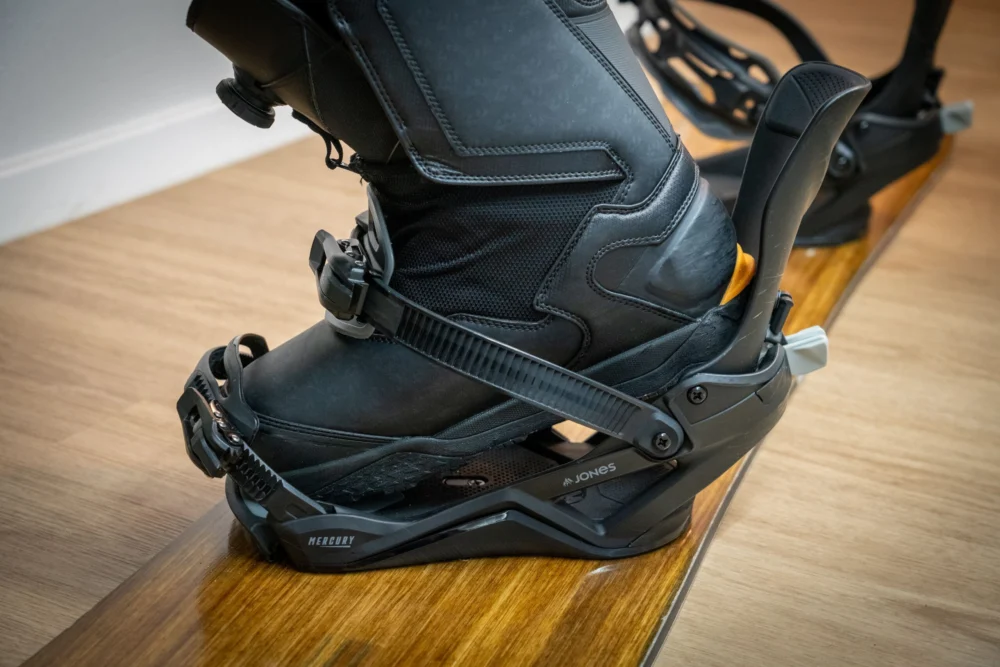
At first glance, the Jones Mercury FASE binding might appear to be a conventional two-strap system. However, a closer inspection reveals key design modifications that facilitate its rapid entry and exit. The most notable innovation lies in the highback, termed the "AutoBack" within the FASE system. This component is engineered to lean significantly further back than traditional highbacks when disengaged. Crucially, integrated onto the inner side of the AutoBack is a sturdy plastic lever.
When a rider steps into the binding, their boot’s heel presses down on this lever. This action automatically pivots the highback into its upright, secured position, mirroring the support provided by a standard binding. The process is then completed by tightening the ankle strap, securing the boot. For egress, the system reverts to a familiar mechanism: releasing the ratchet on the ankle strap allows the rider to lift their heel and step out.
The ankle strap itself, referred to as the "FastStrap" by FASE, is also a departure from the norm. It features an extended length and a smooth surface, save for a subtle bump near the end. This design ensures the strap remains connected to the binding, forming a continuous loop, which is essential for the step-in and step-out functionality. This design element directly addresses the inconvenience of fumbling with separate straps when speed is of the essence. The toe strap, while seemingly conventional, incorporates a locking mechanism. Once adjusted to a rider’s preference, it remains fixed, eliminating the need for repeated adjustments and contributing to the overall speed of entry.
Performance Review: On-Mountain Experience with the Jones Mercury FASE
Testing of the Jones Mercury FASE binding was conducted throughout a full season, spanning diverse terrains and conditions in British Columbia, Canada. This included extensive use in deep powder, steep backcountry lines accessed via cat-skiing and heli-skiing, groomed slopes, and challenging icy conditions. The bindings were paired with both the Jones Hovercraft 2.0 and the Jones Flagship Pro snowboards, both known for their freeride and all-mountain capabilities, along with ThirtyTwo BOA X Sweetin boots, lauded for their comfort and support in stiff footwear.

Entry and Exit Efficiency:
The FASE system’s primary promise is speed, and in this regard, it largely delivers. The process of stepping into the binding, once accustomed to the mechanism, becomes remarkably efficient. The automatic engagement of the highback upon heel placement is intuitive and responsive. The ability to quickly secure the ankle strap allows for rapid transitions, a significant advantage when dealing with rapidly changing weather or the need to regroup with ski partners.
In deep powder, where many quick-entry systems falter due to difficulty in achieving a secure click, the FASE system generally performed well. The heel lever’s engagement was consistent, minimizing the usual frustration associated with mounting in soft snow. The step-out process is equally swift, requiring only the release of the ankle strap’s ratchet. This ease of egress proved invaluable during backcountry excursions where frequent dismounts were necessary for traversing or navigating complex terrain.
Riding Dynamics and Responsiveness:
The Jones Mercury FASE binding inherits much of the performance DNA from its traditional Mercury counterpart. It offers a relatively stiff flex profile, making it ideally suited for freeride applications, including off-piste exploration and powder riding, while also functioning competently as an all-mountain binding. The binding’s construction provides a locked-in feel, ensuring precise power transmission to the board.
A notable aspect of the FASE system is its departure from Jones’ proprietary "SkateTech" technology, which utilizes a fulcrum on the binding’s sides to enhance edge control. While the absence of SkateTech was initially a point of consideration, the Mercury FASE bindings still delivered excellent responsiveness. The stiff highback and robust construction ensured that edge-to-edge transitions were quick and decisive, even when paired with the aggressive Jones Flagship Pro. The integrated foam padding in the footplate effectively dampened vibrations, contributing to a smooth ride and providing cushioning during hard landings.

Boot Compatibility and Fit:
A critical element of any binding system is its compatibility with various boot models. The FASE system’s design accommodates a wide range of snowboard boots, a significant advantage over systems that mandate specific footwear. However, achieving the optimal fit proved to be a nuanced process. Early testing with medium-sized bindings revealed that even with comfortable boots, an overly tight fit could impede the intended ease of entry and exit. Swapping to a large size for size-11 boots resolved this, highlighting the importance of precise sizing. When properly fitted, the bindings offered a secure, wobble-free connection to the boot, instilling confidence in aggressive riding.
Challenges and Considerations
Despite its advancements, the FASE system is not without its minor drawbacks. Stepping into the binding can occasionally be challenging on very steep slopes where maintaining an ideal angle is difficult. In such instances, the option to disengage the toe strap and utilize a more traditional sitting approach remains available, offering a fallback mechanism. Similarly, exiting the binding could sometimes present minor hurdles, particularly on uneven terrain, in deep snow, or if the boot became inadvertently wedged.
A recurring issue encountered during testing was the accumulation of snow and ice on the footbed. This buildup could impede the boot’s proper contact with the binding, potentially affecting control. While often resolvable by clearing the debris with gloved hands, occasional use of a stick or ski pole was necessary. This is a concern common to many binding designs but is more noticeable when prioritizing rapid entry and exit.
The extended portion of the FastStrap, while facilitating easy entry, sometimes missed its intended guides, leaving it hanging loose. This raised a minor concern about potential snagging on branches or dragging in deep powder, though no actual incidents occurred during the testing period.

Comparative Analysis: FASE in the Fast-Entry Market
To fully appreciate the FASE system’s position, it’s essential to compare it with other prominent fast-entry technologies.
-
Nidecker Supermatic System: Introduced in 2022, the Supermatic system also offers two-strap versatility with any boot. Its unique design features a full footbed as the entry lever, allowing riders to step in completely with both straps already secured. The highback opens wider, offering a very streamlined entry. However, in testing, the Supermatic bindings were found to be bulky and heavy. Achieving a secure fit often required looser straps, resulting in a less connected feel and a perceived lack of solid engagement.
-
Burton Step-On System: This system represents the pinnacle of strap-less design, emphasizing minimal weight and the utmost simplicity in entry. It utilizes a cleat system on proprietary boots that clicks directly into the binding. The primary advantage is the significant energy savings due to reduced bending. However, its reliance on specific boots is a major limitation for many riders. Furthermore, the lack of straps means control is solely dictated by downward pressure from the boots. Achieving a secure feel often necessitates overtightening boots, and the clicking mechanism can be problematic in deep snow or on steep inclines, making it a less reliable option for demanding terrain.
The Jones Mercury FASE binding emerges as a compelling middle ground. It successfully navigates the compromise between rapid entry, universal boot compatibility, and secure, responsive performance. While not as instantaneous as the Burton Step-On, its advantages in terms of boot choice and on-snow feel are substantial. Compared to the Nidecker Supermatic, the FASE system offers a more refined and locked-in riding experience.

Conclusion: A Trusted Partner for Any Terrain
The Jones Mercury FASE bindings have proven to be a standout in the evolving category of fast-entry snowboard bindings. They not only deliver on their promise of speed and convenience but also provide a level of performance and reliability that instills confidence across a wide spectrum of riding conditions. While minor improvements could be made, such as the reintegration of SkateTech technology and enhancements to the footbed’s snow-shedding capabilities, these bindings represent a significant leap forward.
The occasional challenges with entry and exit on steep or uneven terrain are infrequent enough that they do not detract from the overall positive experience. The system’s reliability and the secure, responsive feel it provides make it a compelling option not just for resort riders seeking convenience, but for experienced freeriders who demand dependable performance in the backcountry. The Jones Mercury FASE binding has transitioned from a promising new technology to a trusted piece of equipment, capable of handling the most demanding lines and offering an efficient, enjoyable riding experience from the first chair to the last.
About the Author