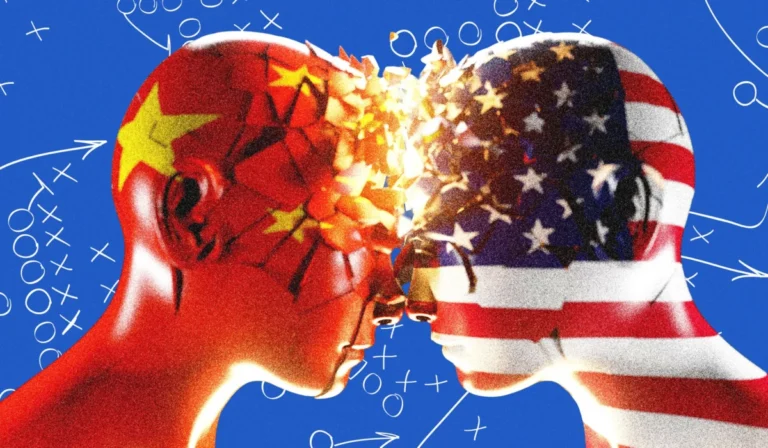
The landscape of artificial intelligence safety and regulation has undergone a seismic shift as the previous global consensus on oversight gives way to a prioritized focus on military dominance and economic competition. For several years, a fragile but visible agreement existed between technology corporations, international legislators, and the public: that the development of frontier AI models required stringent, preemptive guardrails. This era of cautious cooperation, characterized by voluntary commitments and the proposal of international oversight bodies, has recently been challenged by a series of high-stakes confrontations between leading AI labs and the United States Department of Defense. The breakdown of these safety norms suggests that the "race to the top" in safety may have transitioned into an unrestrained arms race where strategic utility outweighs existential risk mitigation.
The Anthropic-Pentagon Rupture and the Supply-Chain Risk Designation
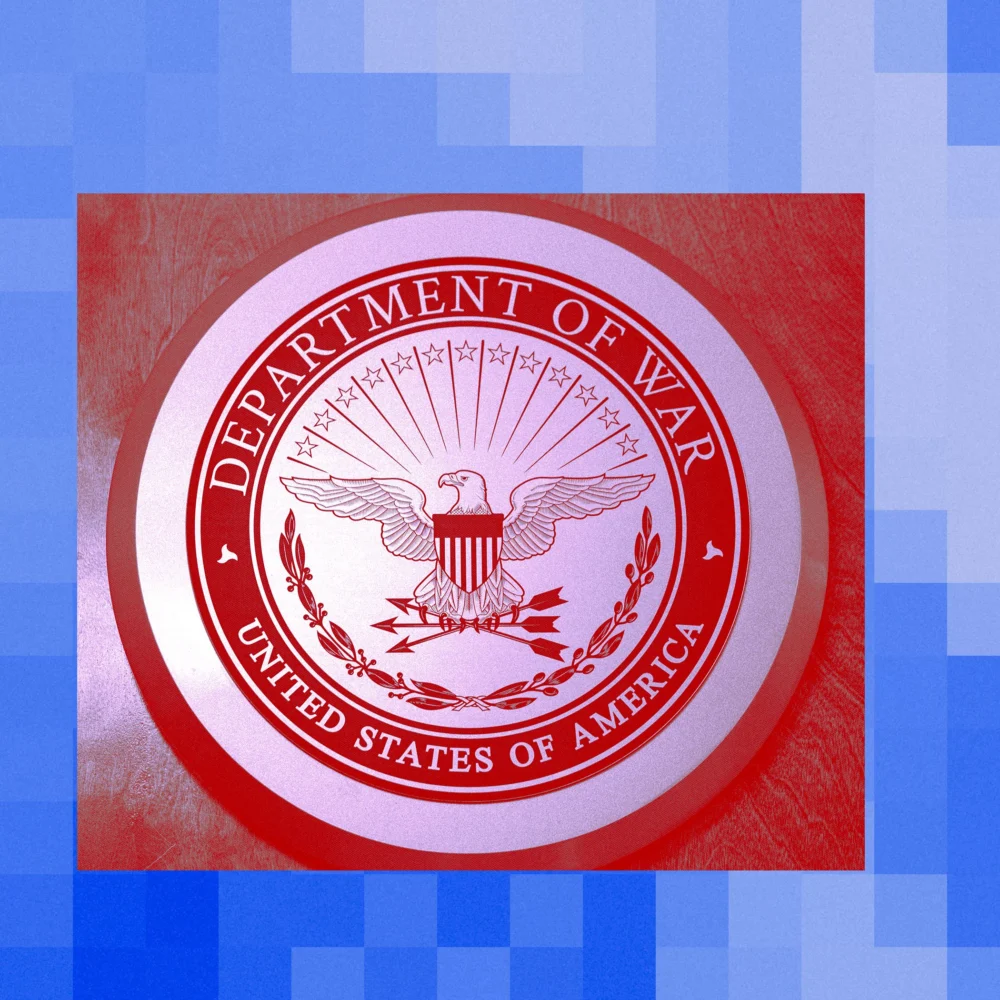
The most significant indicator of this shifting tide is the collapse of the relationship between Anthropic, a leading AI safety-focused research lab, and the Pentagon. At the center of the dispute are specific "red lines" established within Anthropic’s service contracts. Since its inception, Anthropic has maintained that its Claude AI models should not be utilized for the development of autonomous lethal weaponry or the mass surveillance of American citizens. These stipulations were initially accepted by the Department of Defense, but recent policy shifts within the military—now increasingly referred to by its historical moniker, the Department of War—have led to a demand for the removal of these restrictions.
When Anthropic refused to strike these safety provisions from its government contracts, the Department of Defense terminated the partnership. In a move that sent shockwaves through the technology sector, Secretary of Defense Pete Hegseth declared Anthropic a "supply-chain risk." This designation is historically reserved for foreign entities or companies with compromised security architectures. By applying this label to a domestic AI firm over a disagreement on ethical guardrails, the federal government has signaled that resistance to military requirements will be treated as a threat to national security. This designation effectively bars Anthropic from participating in any federal government business, creating an existential financial and operational hurdle for the company.
Chronology of the AI Safety Shift (2023–2025)
The current friction is the culmination of a three-year trajectory that saw AI safety move from a central policy pillar to a secondary concern behind national competitiveness.
- May 2023: CEOs of OpenAI, Anthropic, and Google DeepMind sign a one-sentence statement warning that "mitigating the risk of extinction from AI should be a global priority alongside other societal-scale risks such as pandemics and nuclear war."
- November 2023: The Bletchley Declaration is signed by 28 countries, including the U.S. and China, establishing a shared understanding of "Frontier AI" risks.
- September 2024: U.S. federal discourse begins to pivot toward "AI Supremacy" as a counterpoint to Chinese advancements, with legislators expressing concern that safety regulations might slow domestic innovation.
- February 2025: Anthropic updates its "Responsible Scaling Policy" (RSP), acknowledging that the policy environment has shifted away from safety toward economic growth.
- Late February 2025: The Pentagon terminates its contract with Anthropic and labels the company a supply-chain risk. OpenAI subsequently announces a new partnership with the Department of Defense to fill the vacuum left by Anthropic.
The Deconstruction of Responsible Scaling Policies
Anthropic’s internal governance, specifically its Responsible Scaling Policy (RSP), was once viewed as the gold standard for corporate self-regulation. The RSP was a formal commitment to link the deployment of increasingly powerful AI models to the development of corresponding safety measures. If a model reached a certain threshold of capability—such as the ability to assist in the creation of biological weapons—the policy mandated that the model could not be released until specific "guardrails" were proven effective.
However, on February 24, 2025, Anthropic announced significant revisions to this framework. The company admitted that the initial goal of the RSP—to inspire an industry-wide "race to the top"—had failed to gain the necessary traction at the federal level. The revised policy provides more flexibility in model deployment, reflecting the reality that rigid safety thresholds may be unsustainable in a hyper-competitive market. While Anthropic maintains that safety remains a core value, analysts suggest the revision is a tactical retreat necessitated by the lack of a unified regulatory front and the aggressive expansion of competitors.
Corporate Rivalry and the Pentagon Vacuum
The departure of Anthropic from the military sphere created an immediate opportunity for competitors. OpenAI, led by CEO Sam Altman, moved quickly to secure contracts with the Department of Defense. This maneuver has intensified the friction between the two leading AI labs. Internal communications from Anthropic CEO Dario Amodei suggested that OpenAI’s move was a calculated attempt to undermine Anthropic’s principled stance. Although Amodei later softened his public tone, the episode highlighted a "bareknuckle" competitive environment where safety-oriented holdouts risk being marginalized by those willing to meet military demands.
OpenAI has defended its collaboration with the Pentagon, asserting that its participation allows it to influence the military’s use of AI from within. OpenAI Chief Strategy Officer Jason Kwon has argued that while the company cannot fully control the Department of Defense’s end-use of its technology, it continues to implement internal safeguards against the creation of autonomous weaponry. However, critics point out that the Pentagon’s recent aggression toward Anthropic suggests that internal corporate safeguards may be temporary obstacles that the government is prepared to bypass using legal levers like the Defense Production Act.
Official Responses and Industry Sentiment
The reaction from within the AI community is divided between pragmatic realism and ethical concern. Jared Kaplan, Anthropic’s Chief Science Officer, has attempted to redirect the conversation toward the research level, noting that individual researchers at every major lab remain committed to "doing the right thing." Kaplan suggests that the competition to build "useful and safe" models is still active within the laboratory environment, even if the geopolitical environment has become more hostile to regulation.
From the government’s perspective, the stance is one of strategic necessity. Secretary of Defense Pete Hegseth and his supporters have characterized private sector limitations on military technology as "absurd." The prevailing view in the Department of War is that any unilateral restriction on American AI capabilities provides a strategic advantage to adversaries like China or Russia, who are unlikely to adhere to similar ethical constraints. This perspective views AI not as a shared global risk to be managed, but as a kinetic and cyber capability that must be maximized.
Broader Impact and Global Implications
The breakdown of the AI safety consensus has several long-term implications for global stability and the future of technology:
- The Inevitability of an AI Arms Race: Without international agreements or domestic "red lines," the development of lethal autonomous weapons systems (LAWS) appears increasingly likely. The absence of a "Geneva Convention for AI" means that military forces feel compelled to integrate AI into every facet of combat to maintain parity with adversaries.
- Erosion of Corporate Autonomy: The threat of being labeled a "supply-chain risk" or facing the invocation of the Defense Production Act sets a precedent where private AI companies may be forced to become de facto arms of the state. This complicates the mission of companies that were founded as "public benefit" entities.
- Regulatory Divergence: While the United States moves toward a deregulated, military-first approach, the European Union continues to implement the EU AI Act. This divergence could create a fragmented global market where AI models are subject to vastly different safety standards depending on their geographic deployment.
- The "Trap" of Powerful Technology: As noted by industry leaders, the sheer utility and economic potential of AI create a "glittering prize" that makes it historically difficult for civilizations to impose restraints. The current trajectory suggests that the "adolescence of technology" will be characterized by rapid, high-risk integration rather than cautious, regulated growth.
In conclusion, the events of early 2025 mark the end of the "safety-first" era of artificial intelligence. The conflict between Anthropic’s ethical guardrails and the Pentagon’s strategic requirements has revealed the fragility of voluntary corporate commitments. As the "race to the top" falters, the global community faces a future where the development of the world’s most powerful technology is driven by the imperatives of war and market dominance, leaving the question of long-term human safety in a state of increasing uncertainty.
About the Author