The digital landscape in the United States underwent a significant transformation in late January 2025 as Apple began deploying sophisticated technical restrictions to prevent users within U.S. borders from downloading or updating applications developed by the Chinese technology conglomerate ByteDance. While the flagship platform TikTok continues to operate under a newly established ownership structure, a wide array of other ByteDance-owned applications—ranging from artificial intelligence tools to social media platforms designed for the Chinese domestic market—have been systematically blocked on iOS devices located in the United States. This move marks a departure from traditional App Store management, shifting from account-based restrictions to rigorous, location-based enforcement.
ByteDance, the parent organization of TikTok, maintains an extensive ecosystem of digital products that extend far beyond the viral short-video format familiar to Western audiences. Among these is Douyin, the Chinese counterpart to TikTok, which boasts a monthly active user base exceeding one billion people. Historically, iPhone users globally could access these region-specific applications by registering an Apple ID in the corresponding country, such as China. This allowed expatriates, travelers, and tech enthusiasts to bypass regional store limitations without the need for sophisticated location-spoofing tools. However, confirmed reports and technical analysis indicate that Apple has now closed this loophole for users physically situated within the United States, regardless of their App Store registration status.
The Technical Architecture of Modern Geoblocking
The mechanism Apple is utilizing to enforce these restrictions appears to be more advanced than simple IP address filtering. Reports from technical analysts and software developers suggest the integration of a system internally referred to as "countryd." First identified by researchers in 2023, this system is designed to provide a high-fidelity determination of a user’s physical location by synthesizing data from multiple sources, including GPS coordinates, Wi-Fi router country codes (SSID information), and SIM card data.
Unlike previous iterations of regional locking, which relied heavily on the billing address or credit card information associated with an Apple ID, this new system operates at the device level. When a user attempts to download or update a ByteDance-owned application, the device performs a background check to verify its "eligibility" based on its current geographic coordinates. If the device is detected within the land or maritime borders of the United States, the App Store returns a notification stating, “This app is unavailable in the country or region you’re in.”
This technical shift is largely seen as a response to the evolving regulatory environment. A similar mechanism was deployed in the European Union to comply with the Digital Markets Act (DMA), which required Apple to allow third-party app stores while ensuring those features remained exclusive to users within EU jurisdictions. The application of this technology in the U.S. to block specific developers represents one of the first instances of Apple using its "countryd" infrastructure for targeted, developer-specific exclusion on national security grounds.
Chronology of the TikTok Divestiture and the Resulting Ban
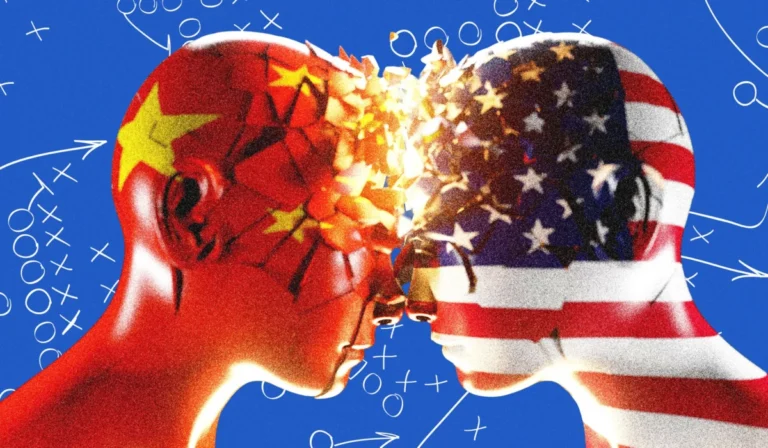
The current restrictions are the culmination of a multi-year legislative effort to address perceived national security risks associated with Chinese-owned software. To understand the current blockade, it is necessary to examine the timeline of events that led to the January 2025 enforcement:
- April 2024: The U.S. Congress passes the Protecting Americans from Foreign Adversary Controlled Applications Act. The law mandates that ByteDance divest its U.S. operations of TikTok or face a nationwide ban. Crucially, the law also prohibits "distributing, maintaining, or updating" any application majority-owned by a "foreign adversary-controlled" entity.
- September 2024: President Donald Trump issues an executive order extending the original divestiture deadline to January 23, 2026, providing more time for a complex corporate restructuring.
- January 19, 2025: The original deadline set by the 2024 Act arrives. Apple briefly publishes a support page (later archived) explaining that ByteDance apps would no longer be available for download or updates in the U.S.
- January 22, 2025: TikTok announces a landmark deal to transfer its U.S. operations to the TikTok USDS Joint Venture, a new entity controlled by a consortium of investors including Silver Lake, Oracle, and MGX. This deal secures the continued availability of TikTok, CapCut, and Lemon8 in the U.S. App Store.
- Late January 2025: While TikTok remains available, users begin reporting that other ByteDance apps not explicitly covered by the USDS Joint Venture—such as Douyin and the AI assistant Doubao—are being blocked via geofencing.
The Breadth of the ByteDance Portfolio Under Restriction
The "Protecting Americans from Foreign Adversary Controlled Applications Act" contains broad language that applies to any application where a "foreign adversary" maintains a majority stake. While public discourse focused almost exclusively on TikTok, ByteDance’s portfolio includes dozens of applications that have now been caught in the crossfire of the new enforcement strategy.
Among the blocked applications is Doubao, ByteDance’s primary artificial intelligence chatbot, which has seen rapid growth in China as a competitor to OpenAI’s ChatGPT. Also affected is Fanqie Novel, a massive fiction-reading platform that utilizes a unique ad-supported model. Even niche productivity tools and specialized video editors owned by ByteDance that were never intended for a primary U.S. audience are now inaccessible to users within the country.
The restriction appears to be uniquely targeted at ByteDance. Other major Chinese tech firms, such as Tencent (owner of WeChat) and Alibaba, have not yet seen their applications subjected to similar geoblocking measures in the U.S., despite also being subject to various levels of regulatory scrutiny. This suggests that the current enforcement is specifically tied to the divestiture requirements outlined in the 2024 Act and the subsequent joint venture agreement that failed to encompass ByteDance’s entire software catalog.
Official Responses and Corporate Silence
Despite the significant impact on user access, the primary actors involved have maintained a high degree of discretion. Apple and ByteDance have both declined to provide formal comments on the technical specifics of the geoblocking. The TikTok USDS Joint Venture, which now oversees the flagship app’s U.S. presence, has also remained silent regarding the status of ByteDance’s non-divested applications.
However, the legal framework provides a clear rationale for Apple’s actions. Under the 2024 Act, app store providers face significant civil penalties if they are found to be distributing or updating prohibited software. By implementing automated geoblocking, Apple is effectively shielding itself from legal liability, ensuring that it does not inadvertently "distribute" ByteDance software to users within U.S. territory.
The removal of the "Learn More" button from the App Store pop-up window in late January further suggests a desire by Apple to keep the technical implementation of these bans as low-profile as possible. The archived support page, however, remains a smoking gun, explicitly citing the Protecting Americans from Foreign Adversary Controlled Applications Act as the legal basis for the removals.
User Impact and the Erosion of Digital Borderlessness
The implementation of these restrictions has had an immediate impact on the Chinese diaspora in the United States, as well as business professionals and researchers who rely on Chinese-market apps for information and communication. For many, Douyin is not merely an entertainment platform but a vital link to cultural trends and commerce in mainland China.
While Android users can theoretically circumvent these restrictions by "sideloading" apps (installing them via direct file downloads rather than the official Google Play Store), iPhone users are confined by Apple’s "walled garden." The transition from account-based restrictions to location-based geofencing makes it nearly impossible for the average user to access these apps without utilizing advanced VPNs or hardware-level location spoofing, neither of which are officially supported or guaranteed to work.
Legal experts, including Friso Bostoen of Tilburg University, suggest that this move could signal a broader trend in how global tech giants manage conflicting national laws. "If Apple gets more sophisticated about blocking access in a way that cannot simply be circumvented with a VPN, obviously citizens in those places are now left with much less liberty," Bostoen noted in a recent analysis. This creates a "splinternet" effect, where the digital experience of a user is strictly dictated by their physical coordinates rather than their personal choices or account settings.
Broader Implications for National Security and Digital Sovereignty
The geoblocking of ByteDance apps raises critical questions about the future of digital sovereignty and the role of private corporations in enforcing government mandates. By automating the enforcement of federal law through device-level tracking, Apple has set a precedent for how future "foreign adversary" apps might be managed.
From a national security perspective, proponents of the ban argue that these measures are necessary to prevent the collection of bulk data on U.S. citizens by entities that could be compelled to share that data with the Chinese government. Even if an app like Doubao or Fanqie Novel has a small U.S. user base, the aggregate data collected from those users—including location, contacts, and usage patterns—is viewed as a potential risk.
Conversely, critics argue that the use of GPS and Wi-Fi data to enforce app bans is an invasive solution that grants tech companies and governments even more granular control over individual devices. The irony of using precise location tracking to "protect" users from foreign data collection has not been lost on privacy advocates.
As the TikTok USDS Joint Venture settles into its role, the fate of the remaining ByteDance portfolio remains uncertain. Unless further divestitures occur or the political climate shifts, the "Great Firewall" of the United States—at least as it pertains to ByteDance—appears to be firmly in place, enforced not by the government directly, but by the code and hardware of the world’s most valuable technology company.
About the Author