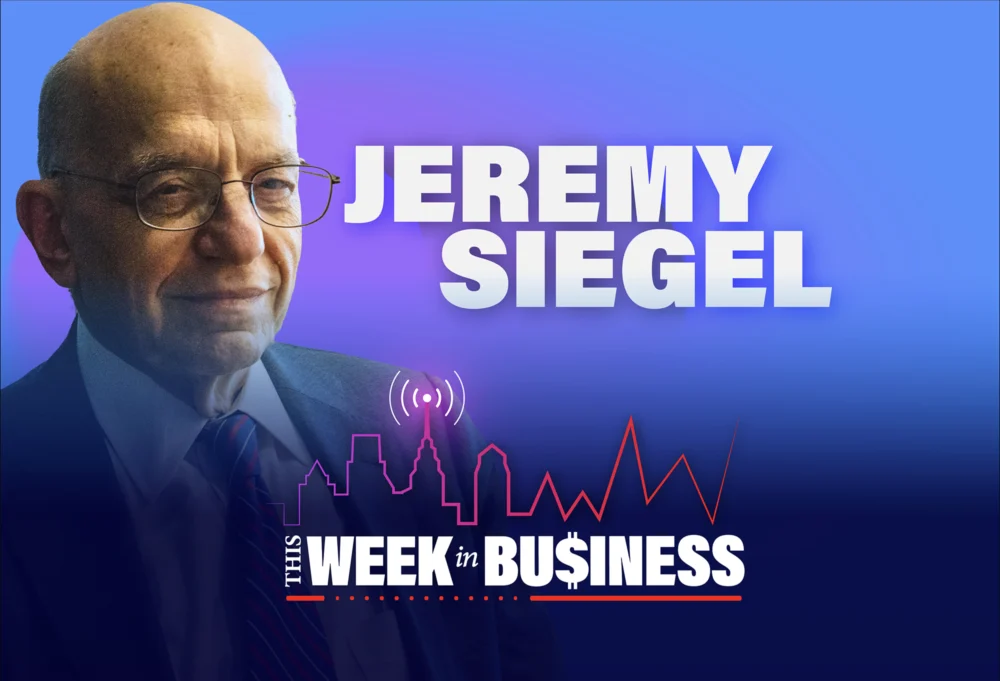
Jeremy Siegel, professor emeritus of finance at the Wharton School and senior economist at Wisdom Tree, recently offered a comprehensive analysis of several critical economic and geopolitical forces poised to shape global markets. His insights delved into the U.S. Supreme Court’s recent ruling concerning tariffs, the remarkable resilience displayed by financial markets amidst persistent policy uncertainty, the potential ramifications of a Kevin Warsh appointment as Federal Reserve Chair, and the far-reaching influence of geopolitical tensions with Iran on global interest rates and economic growth. This detailed examination highlights the intricate interplay between legal precedent, economic policy, political appointments, and international relations, providing a crucial framework for understanding the evolving financial landscape.
The Supreme Court’s Tariff Ruling: A Pillar in Trade Policy
The Supreme Court’s rulings on trade and tariffs are foundational, often delineating the boundaries of executive power in international commerce. Historically, the U.S. Constitution grants Congress the power "to regulate Commerce with foreign Nations" and "to lay and collect Taxes, Duties, Imposts and Excises." However, Congress has frequently delegated authority to the President, particularly in matters of national security or unfair trade practices. Recent cases reaching the high court often scrutinize the extent of this delegated authority, specifically under statutes like Section 232 of the Trade Expansion Act of 1962, which allows the President to impose tariffs on imports deemed a threat to national security, or Section 301 of the Trade Act of 1974, targeting unfair trade practices.
Background and Chronology:
A notable instance illustrating this judicial oversight involves challenges to presidential authority, such as those that arose during the previous administration’s use of Section 232 tariffs on steel and aluminum imports. While the courts have generally shown deference to the executive branch on national security grounds, the specific legal challenges often revolve around procedural adherence and the scope of discretionary power. For instance, a ruling might clarify whether certain findings by the Commerce Department are sufficiently robust to justify tariffs or if the President exceeded the statutory intent. In past decades, the Supreme Court has occasionally weighed in on the interpretation of trade agreements or the implementation of specific tariff schedules, shaping the legal framework for international trade. For example, in J.W. Hampton, Jr., & Co. v. United States (1928), the Court upheld Congress’s ability to delegate tariff-setting authority to the President, provided there was an "intelligible principle" guiding such delegation. More contemporary cases might address the application of anti-dumping or countervailing duties, or the validity of generalized system of preferences (GSP) withdrawals.
Implications for Trade and Economy:
The economic implications of such rulings are substantial. A decision that broadly affirms presidential authority can embolden future administrations to use tariffs as a tool for economic leverage or industrial policy, potentially leading to increased trade disputes and retaliatory tariffs from other nations. Conversely, a ruling that curtails executive discretion could force a return to more Congressional engagement on trade policy, potentially introducing greater predictability but also more political gridlock. For industries, tariffs mean higher input costs for importers and potentially higher domestic prices for consumers. For example, a 25% tariff on specific industrial components could add billions of dollars to manufacturing costs across various sectors, impacting profitability and consumer purchasing power. Data from the Congressional Budget Office (CBO) and independent economic think tanks often project that broad tariffs lead to a reduction in real income for most households and a net loss of jobs in sectors reliant on imports. Siegel’s analysis likely touched upon how such a ruling could influence global supply chain strategies, encouraging reshoring or nearshoring efforts in some cases, while increasing the cost of doing business for multinational corporations in others. The clarity or uncertainty emanating from the Supreme Court can, therefore, send ripples through global commerce, affecting investment decisions, trade flows, and the overall competitiveness of U.S. industries.
Market Resilience Amidst Policy Uncertainty: A Paradox Explained
Financial markets have repeatedly demonstrated a remarkable capacity to absorb and often shrug off significant policy uncertainty, ranging from fiscal cliff debates to regulatory overhauls and geopolitical flashpoints. This resilience, a recurring theme in recent years, suggests that underlying economic strengths or a robust adaptive capacity within the market itself might be at play. Siegel’s observation points to a deeper trend where investors, while sensitive to immediate headlines, often look past short-term volatility toward longer-term fundamentals.
Sources of Uncertainty and Market Performance:
Policy uncertainty can stem from various sources: congressional gridlock over budget ceilings, shifting regulatory frameworks for technology or finance, evolving trade postures, or even the unpredictable nature of executive orders. For instance, the U.S. political landscape often features intense debates over national debt, tax policy, and environmental regulations, each capable of introducing significant unknowns for businesses. Despite these headwinds, major U.S. equity indices like the S&P 500, Dow Jones Industrial Average, and Nasdaq Composite have frequently achieved new highs or recovered swiftly from downturns. For example, following significant policy shifts or contentious elections, the S&P 500 has, on average, tended to recover initial losses within weeks or months, often driven by strong corporate earnings reports. The CBO estimates that policy uncertainty can reduce GDP growth by a fraction of a percentage point annually, yet market participants appear to factor this into their risk assessments without capitulating. The VIX index, a common measure of market volatility, often spikes during periods of heightened uncertainty but tends to revert to its mean relatively quickly unless a systemic crisis emerges.
Underlying Factors and Investor Behavior:
Several factors contribute to this resilience. First, robust corporate earnings growth, driven by technological innovation and global demand, often provides a strong fundamental bedrock. U.S. corporations, particularly those in the technology and healthcare sectors, have shown consistent profitability, often exceeding analyst expectations, thereby attracting sustained investment. Second, relatively low interest rates for an extended period have made equities more attractive compared to fixed-income assets, fostering a "TINA" (There Is No Alternative) effect for investors seeking higher returns. Third, the adaptive nature of businesses, which have become adept at navigating complex regulatory environments and supply chain disruptions, plays a role. Companies often diversify their production bases or implement hedging strategies to mitigate policy risks. Fourth, global capital flows are increasingly diversified, meaning localized policy uncertainty in one major economy might be offset by positive developments elsewhere, or simply absorbed by the sheer volume of global investment capital. Lastly, central banks, particularly the Federal Reserve, have demonstrated a willingness to intervene with monetary policy tools (like interest rate adjustments or quantitative easing/tightening) to stabilize markets during periods of stress, instilling a degree of confidence among investors that major systemic collapses will be averted. This implicit backstop, often referred to as the "Fed put," can temper extreme bearish sentiment.
The Potential Influence of a Kevin Warsh Fed Chairmanship
The appointment of a Federal Reserve Chair is one of the most consequential decisions for the U.S. and global economies, as the individual steers monetary policy that impacts interest rates, inflation, employment, and financial stability. Jeremy Siegel’s consideration of Kevin Warsh in this role underscores the potential for a significant shift in the Fed’s direction.
Kevin Warsh’s Profile and Monetary Philosophy:
Kevin Warsh is a prominent figure in economic policy, having served as a member of the Federal Reserve Board of Governors from 2006 to 2011, under Chairmen Alan Greenspan and Ben Bernanke. During his tenure, he played a critical role in the Fed’s response to the 2008 financial crisis. Prior to his Fed role, he served as Special Assistant to the President for Economic Policy and Executive Secretary of the National Economic Council under President George W. Bush. Warsh is generally perceived as a monetary hawk, often advocating for a more rules-based approach to monetary policy and expressing skepticism about the efficacy and potential long-term risks of large-scale quantitative easing (QE) programs. He has consistently emphasized the importance of financial stability and the need for the Fed to maintain credibility through clear, predictable policy actions. His views suggest a preference for tighter monetary conditions, particularly in periods of perceived inflationary risk, and a leaner central bank balance sheet.
Policy Implications and Market Reactions:
Should Kevin Warsh be appointed Fed Chair, his leadership would likely signal a more hawkish stance compared to recent chairs.
- Interest Rates: A Warsh-led Fed would likely be more inclined to raise interest rates proactively to pre-empt inflationary pressures, potentially leading to a faster pace of rate hikes than markets might anticipate under a more dovish chair. This could translate to higher borrowing costs for consumers and businesses.
- Balance Sheet Reduction: He would likely favor a more aggressive or sustained reduction of the Fed’s balance sheet, unwinding the effects of past quantitative easing more quickly. This would drain liquidity from the financial system, potentially pushing up longer-term interest rates and impacting asset prices.
- Inflation Targeting: While the Fed has an explicit 2% inflation target, Warsh might emphasize a stricter adherence to this target, potentially prioritizing inflation control even at the expense of maximum employment in certain scenarios.
- Forward Guidance: His communication style might be more direct and less ambiguous, potentially reducing the Fed’s reliance on open-ended forward guidance that characterized the post-crisis era.
Market reactions to such an appointment would be significant. Bond markets would likely price in higher interest rates, leading to increased Treasury yields. The U.S. dollar could strengthen as higher yields attract foreign capital. Equity markets might experience initial volatility, particularly growth stocks sensitive to rising interest rates, as investors adjust to a potentially less accommodative monetary environment. Economists and market analysts would scrutinize every statement for clues about the pace and magnitude of future policy shifts. Historically, transitions in Fed leadership, such as Paul Volcker’s appointment in 1979, have sometimes marked turning points in economic policy and market cycles, demonstrating the profound impact of the Chair’s philosophy.
Geopolitical Tensions with Iran: Ramifications for Global Economy
Geopolitical tensions, particularly those emanating from critical energy-producing regions like the Middle East, have an immediate and often dramatic impact on global commodity markets and, by extension, on inflation, interest rates, and economic growth. Jeremy Siegel’s focus on Iran underscores the enduring vulnerability of the global economy to disruptions in this strategically vital region.
Context of Tensions:
Tensions with Iran frequently revolve around its nuclear program, regional proxy conflicts (e.g., in Yemen, Syria, Iraq), and its influence over key maritime chokepoints, most notably the Strait of Hormuz. The Strait of Hormuz is a narrow waterway through which a significant portion of the world’s seaborne oil and liquefied natural gas (LNG) transits daily – estimates often place this at 20-25% of global crude oil consumption. Any perceived threat to this shipping lane, whether through military exercises, naval incidents, or political rhetoric, sends immediate jitters through energy markets. Furthermore, international sanctions regimes, often led by the U.S., on Iran’s oil exports and financial system contribute to market volatility and supply concerns.
Impact on Energy Markets and Inflation:
The primary channel through which Iranian tensions affect the global economy is crude oil prices. When tensions escalate, the market perceives an increased risk of supply disruption. Traders and speculators react by bidding up oil futures prices. For example, during significant flare-ups in the Persian Gulf, Brent crude and West Texas Intermediate (WTI) oil benchmarks have seen sharp percentage increases within days or weeks. Historically, events like the 1973 oil crisis or the Iran-Iraq War in the 1980s led to dramatic oil price spikes, causing global recessions. Even smaller incidents can add several dollars per barrel.
Higher crude oil prices translate directly into higher prices for gasoline, diesel, and jet fuel, impacting transportation costs for businesses and consumers alike. This "energy shock" feeds into headline inflation across the economy, as the cost of producing and transporting goods increases. Businesses face higher input costs, potentially passing these on to consumers, thereby reducing purchasing power. Energy-intensive industries, such as manufacturing, agriculture, and logistics, are particularly vulnerable. A sustained increase in oil prices by, for example, $10-$20 per barrel can add several tenths of a percentage point to annual inflation rates in major economies.
Influence on Interest Rates and Economic Growth:
The inflationary impact of rising energy prices presents a significant challenge for central banks. To combat higher inflation, central banks, including the Federal Reserve, might be compelled to raise interest rates more aggressively or maintain a tighter monetary policy for longer. This is a classic dilemma: raising rates to curb inflation can simultaneously dampen economic growth, especially if the higher energy costs are already acting as a drag on consumer spending and business investment. This situation, often termed "stagflationary pressure," forces policymakers to choose between combating inflation and supporting growth. Higher interest rates, in turn, increase borrowing costs for governments, businesses, and households, further slowing economic activity.
Beyond monetary policy, geopolitical tensions create broader economic headwinds. Increased uncertainty leads to a decline in investor and consumer confidence, prompting businesses to delay investment decisions and consumers to reduce discretionary spending. Supply chain disruptions, if maritime routes are affected, can exacerbate existing bottlenecks, further pushing up costs and hindering production. Furthermore, a "flight to safety" often occurs during periods of heightened geopolitical risk, with investors moving capital into perceived safe-haven assets like U.S. Treasury bonds and gold. This increased demand for Treasuries can temporarily suppress bond yields, but the overarching inflationary pressure from oil usually dominates, leading to a net upward pressure on long-term interest rates. Overall, sustained geopolitical tensions with Iran have the potential to significantly curtail global GDP growth by increasing energy costs, fueling inflation, and prompting tighter monetary policies, thereby acting as a critical determinant of the global economic trajectory.
About the Author