In a move that signals a seismic shift in the relationship between Silicon Valley and the federal government, President Donald Trump announced on Friday that he has directed every federal agency to "immediately cease" the use of artificial intelligence tools developed by Anthropic. The executive directive follows weeks of intensifying friction between the AI startup and high-ranking defense officials over the ethical boundaries of military technology. The confrontation, which has played out both in private negotiations and on public social media platforms, centers on the Pentagon’s demand for unrestricted use of AI models in combat and surveillance operations—a demand Anthropic has resisted on the grounds of safety and humanitarian concerns.
The President’s announcement was delivered via Truth Social, where he characterized the company’s leadership as "Leftwing nut jobs" and accused them of attempting to "STRONG-ARM the Department of War." While the order for cessation is immediate, the administration has granted a six-month phase-out period for agencies currently integrated with Anthropic’s systems. This window is intended to provide a buffer for the government to transition to alternative providers, though some analysts suggest it may also serve as a final period for potential, albeit unlikely, renegotiation.
The Designation of a Domestic Supply Chain Risk
Following the President’s statement, Secretary of Defense Pete Hegseth escalated the administration’s stance by officially designating Anthropic a "supply chain risk." This classification is historically reserved for foreign entities, such as Huawei or ZTE, that are deemed a threat to American national security. By applying this label to a prominent San Francisco-based company, the administration has effectively barred the U.S. military, its primary contractors, and its sprawling network of suppliers from any future collaboration with Anthropic.
In a post on X (formerly Twitter), Hegseth criticized Anthropic’s CEO, Dario Amodei, and the company’s foundational philosophy of "effective altruism." Hegseth argued that the company’s refusal to modify its service terms was a "cowardly act of corporate virtue-signaling" that prioritized "Silicon Valley ideology" over the lives of American service members. The Secretary’s rhetoric reflects a growing sentiment within the Trump administration that civilian technology companies should not have the authority to dictate the parameters of military readiness or the deployment of advanced weaponry.
The Conflict Over "All Lawful Use"
The root of the dispute lies in a July 2025 agreement between the Department of Defense and several leading AI laboratories, including Anthropic, OpenAI, and Google. The Pentagon has recently sought to overhaul these contracts, replacing specific restrictive clauses with a broad mandate allowing for "all lawful use" of the technology.
Anthropic has emerged as the primary holdout against this change. The company’s leadership argues that removing specific guardrails could lead to the deployment of AI in ways that violate its core safety principles. Specifically, Anthropic has raised concerns that its models could be used to:
- Provide autonomous control for lethal weapon systems without human intervention.
- Facilitate mass surveillance programs targeting U.S. citizens.
- Automate decision-making in high-stakes kinetic warfare where the risk of unintended escalation is high.
While the Pentagon maintains it has no current plans to use AI for fully autonomous lethal strikes or illegal domestic spying, administration officials argue that the government must have the legal flexibility to use its purchased tools as it sees fit within the bounds of the law. The clash highlights a fundamental disagreement over whether AI safety is a technical requirement to be managed by developers or a policy decision to be managed by the state.
Chronology of the Escalation
The relationship between Anthropic and the Department of Defense has deteriorated rapidly over the last several months. To understand the current ban, it is necessary to examine the timeline of events that led to this rupture:
- July 2025: Anthropic signs a landmark $200 million deal with the Pentagon to provide "Claude Gov," a version of its large language model tailored for government use with enhanced security protocols.
- Late 2025: Anthropic becomes the only major AI lab integrated into classified military systems, operating through platforms provided by Palantir and Amazon Web Services (AWS).
- February 13, 2026: Reports surface via Axios indicating that U.S. military planners utilized Claude to assist in the logistics and planning of a high-stakes operation in Venezuela aimed at capturing President Nicolás Maduro.
- Mid-February 2026: Friction emerges after a Palantir employee reportedly conveys concerns from an Anthropic staffer to military leadership regarding the specific application of the model during the Maduro operation. Anthropic denies interfering, but the incident sows distrust within the Pentagon.
- February 23, 2026: Secretary Hegseth meets with CEO Dario Amodei. Hegseth issues an ultimatum, giving the company until Friday to agree to the "all lawful use" clause.
- February 27, 2026: Anthropic maintains its refusal. President Trump issues the federal ban and Hegseth applies the "supply chain risk" designation.
Technical Integration and the Impact on Intelligence Operations
Anthropic’s Claude Gov is not merely a chatbot used for administrative tasks; it has become deeply embedded in the U.S. defense infrastructure. According to sources familiar with the matter, the model is used for sophisticated intelligence analysis, the summarization of classified cables, and military planning simulations. Its integration via Palantir’s Impact Level 5 and 6 environments allowed it to process highly sensitive data that other AI models were not yet cleared to handle.
The six-month phase-out period poses a significant logistical challenge for the intelligence community. Replacing a core analytical engine requires not only the procurement of a new model but also the re-calibration of existing workflows and the ensuring of data compatibility. While competitors like OpenAI and Elon Musk’s xAI have signed similar deals, Anthropic’s specific focus on "constitutional AI"—a method of training models to follow a set of written principles—made it a preferred choice for certain types of nuanced analytical work.
Industry Reaction and the "Red Line"
The ban has sent shockwaves through the technology sector, forcing other AI giants to clarify their own stances on military cooperation. Several hundred employees at Google and OpenAI recently signed an open letter supporting Anthropic’s position and criticizing their own companies’ willingness to relax military restrictions.
In an internal memo obtained by The Wall Street Journal, OpenAI CEO Sam Altman expressed a degree of solidarity with Anthropic’s concerns, stating that OpenAI also views mass surveillance and fully autonomous lethal weapons as a "red line." However, Altman’s approach appears more conciliatory; he indicated that OpenAI would continue to negotiate with the Pentagon to find a middle ground that allows for continued military partnership while maintaining essential safety boundaries. This suggests that while Anthropic has taken a hardline stance leading to its expulsion, other firms may attempt to navigate the administration’s demands through compromise.
Analysis of Broader Implications
The decision to blacklist Anthropic carries profound implications for the future of the "Defense Tech" boom. For the past several years, Silicon Valley has shifted from a posture of "tech-neutrality" or outright refusal of defense contracts (as seen in the 2018 Google Project Maven protests) to an active embrace of the Department of Defense as a primary customer. The Trump administration’s move signals that this partnership comes with a requirement of total alignment with executive policy.
Furthermore, the use of the "supply chain risk" designation against a domestic company sets a significant legal and economic precedent. It suggests that the administration is willing to use national security mechanisms to discipline American firms that do not comply with its strategic objectives. This could lead to a bifurcation of the AI industry: one segment that adheres to strict government mandates for defense work, and another that focuses exclusively on civilian applications to avoid federal entanglement.
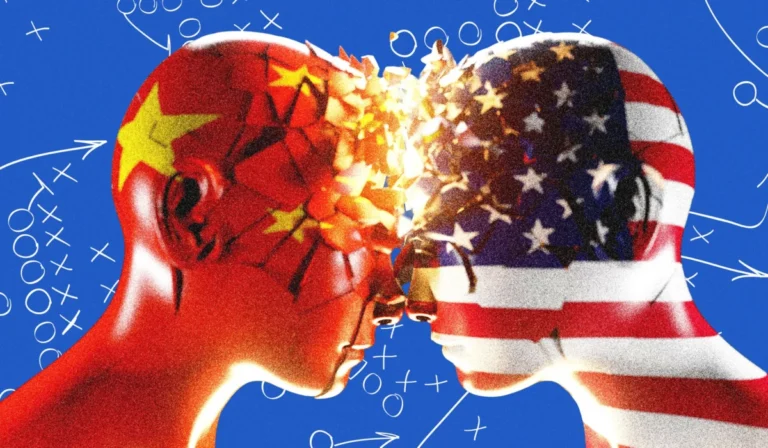
The dispute also underscores a growing tension in the global AI race. Proponents of the administration’s "all lawful use" policy argue that overly restrictive safety guardrails could hamper the U.S. military’s ability to compete with adversaries like China, which are unlikely to impose similar ethical constraints on their own AI development. Conversely, AI safety advocates warn that removing these guardrails increases the risk of catastrophic system failures or the erosion of democratic norms through automated surveillance.
As the six-month phase-out begins, the focus will turn to how quickly the Pentagon can scale its use of alternative models from xAI, OpenAI, and Google. For Anthropic, the loss of a $200 million contract and the "supply chain risk" label represents a major financial and reputational hurdle, testing whether a "safety-first" AI company can survive without the support of the world’s largest purchaser of advanced technology.
About the Author