
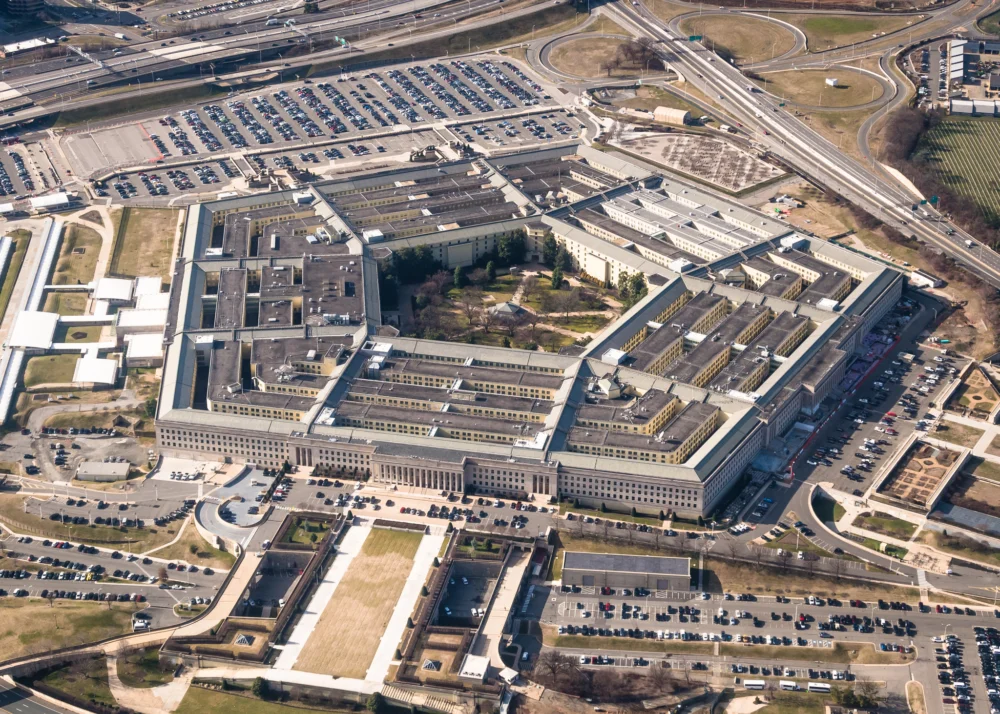
In a whirlwind of rapidly unfolding events over the past week, the intricate relationship between cutting-edge artificial intelligence companies and the U.S. Department of Defense has been thrust into the public spotlight, igniting fierce debate and raising critical questions for startups eyeing government contracts. Negotiations between the Pentagon and Anthropic, a leading AI developer known for its Claude technology, reportedly collapsed in just over a week. This abrupt end was swiftly followed by the Trump administration’s designation of Anthropic as a "supply chain risk," a move the AI company has vowed to challenge in court.
Meanwhile, OpenAI, a direct competitor, announced a significant deal with the Department of Defense, a development that triggered a strong public backlash. The repercussions were immediate and stark: a reported 295% surge in ChatGPT uninstalls as users expressed their disapproval, while simultaneously, Anthropic’s Claude application rocketed to the number two spot in app store charts, a testament to public sentiment shifting in its favor. The fallout from OpenAI’s agreement extended to its internal ranks, with at least one executive reportedly resigning due to concerns that the deal was rushed and lacked sufficient ethical guardrails.
These dramatic developments were the subject of an in-depth discussion on the latest episode of TechCrunch’s "Equity" podcast. Host Anthony Ha, alongside reporters Kirsten Korosec and Sean O’Kane, delved into the potential ramifications for other technology startups seeking to engage with federal government contracts, particularly those involving the Pentagon. Korosec posed a pivotal question: "Are we going to see a changing of the tune a little bit?" suggesting a possible shift in how startups approach such opportunities.
Sean O’Kane elaborated on the unique nature of this situation, highlighting that both OpenAI and Anthropic produce AI technologies that have captured widespread public attention and are subjects of constant discussion. Crucially, the dispute centers on the ethical implications of their technologies being used, or not used, in contexts that could lead to loss of life. This inherently sensitive aspect amplifies public scrutiny far beyond typical government contracting scenarios.
Despite the high-profile nature of these AI companies, Korosec emphasized that the events should serve as a cautionary tale, urging any startup to "give pause" before diving into similar engagements.
The Shifting Landscape of Government AI Contracts
The recent turmoil surrounding Pentagon deals with AI giants Anthropic and OpenAI has cast a long shadow, prompting serious consideration among emerging technology firms about the prudence of pursuing federal funding. Kirsten Korosec, a seasoned reporter covering the tech industry, articulated this growing concern, observing, "I’m wondering if other startups are starting to look at what’s happened with the federal government, specifically the Pentagon and Anthropic, that debate and wrestling match, and [take] pause about whether they want to be going after federal dollars. Are we going to see a changing of the tune a little bit?"
Sean O’Kane offered a nuanced perspective, suggesting that while some hesitation might emerge in the short term, a wholesale retreat from government contracts by startups is unlikely. He pointed out that a vast array of companies, from nascent startups to established Fortune 500 corporations, already engage with the U.S. government, particularly the Department of Defense, often without significant public notice.
"I wonder about that, too," O’Kane stated. "I think no, to some extent, in the near term, if only because when you really try to think about all the different companies, whether they’re startups or even more established Fortune 500s that do work with the government and in particular with the Department of Defense or the Pentagon, [for] a lot of them, that work flies under the radar."
He provided the example of General Motors, a company with a long-standing relationship with the Army, producing defense vehicles, including advanced electric and autonomous versions. Such extensive collaborations, O’Kane noted, "just never really hits the zeitgeist."
The critical distinction, according to O’Kane, lies in the public’s direct engagement with the products of companies like OpenAI and Anthropic. "I think the problem that OpenAI and Anthropic ran into within the last week is like, these are companies that make products that a ton of people use – and also more importantly, [that] no one can shut up about." This pervasive public awareness, he argued, naturally amplifies the scrutiny of their involvement with the Pentagon to a degree that most other defense contractors do not experience.
Ethical Dimensions and Public Perception
A significant factor amplifying the public discourse is the inherently sensitive nature of the AI technologies involved. O’Kane elaborated on this, stating, "The only caveat I’ll add to that is a lot of the heat around this discussion between Anthropic and OpenAI and the Pentagon is very specifically about how their technologies are being used or not being used to kill people, or in parts of the missions that are killing people." This direct link to lethal applications, he explained, differentiates the situation from that of, for example, a defense contractor like General Motors, where the end-use implications might be less immediately abstract for the general public.
He further suggested that companies like Applied Intuition, which position themselves as offering "dual-use" technologies, are less likely to alter their strategies significantly due to this perceived lack of widespread public spotlight and a more generalized understanding of their impact.
A Timeline of Disruption
The events of the past week have unfolded with unprecedented speed, creating a dynamic and evolving situation:
- Early March 2026: Reports emerge of ongoing, intensive negotiations between the Pentagon and Anthropic regarding the use of its Claude AI technology. Simultaneously, OpenAI is reportedly in advanced discussions with the Department of Defense for a separate, significant partnership.
- Mid-March 2026 (Specific Date Unclear): Negotiations between the Pentagon and Anthropic reportedly collapse abruptly.
- March 1, 2026: Following the breakdown of Anthropic talks, OpenAI publicly announces its new deal with the Department of Defense. This announcement immediately sparks controversy and a wave of negative public reaction.
- March 1-2, 2026: Reports indicate a dramatic surge in ChatGPT uninstalls. Concurrently, Anthropic’s Claude application begins a significant climb in app store rankings, reaching the number two position.
- March 2, 2026: The Trump administration officially designates Anthropic as a "supply chain risk," a move that carries significant implications for its ability to secure government contracts and potentially its broader business operations.
- March 5, 2026: Anthropic publicly declares its intention to legally challenge the "supply chain risk" designation, signaling a protracted legal battle.
- March 7, 2026: At least one executive from OpenAI resigns, citing concerns about the hasty finalization of the Pentagon deal without adequate ethical oversight and safeguards.
- Early to Mid-March 2026: Tech journalists and analysts, including those at TechCrunch, begin dissecting the implications of these events for the broader tech industry and its relationship with government entities.
Unpacking the Nuances of the Dispute
Anthony Ha, reflecting on the broader context, noted the emergence of numerous "interesting thought pieces" concerning the role of technology, and AI in particular, within government. He acknowledged the value of these discussions but cautioned that the current situation presents a "very curious lens" through which to examine these broader questions.
Ha highlighted a key point of divergence from a simplistic "pro-government" versus "anti-government" narrative. "It’s not like one company is saying, ‘Hey, I don’t want to work with the government’ and one is saying, ‘Yes, I do.’ Or one is saying, ‘You can do whatever you want’ and [the other is] saying, ‘No, I want to have restrictions.’ Both of them, at least publicly, are saying, ‘We want restrictions on how our AI gets used.’"
The critical distinction, according to Ha, appears to be the degree of rigidity in their stances. "It just seems like Anthropic is digging in their heels a lot more about: You cannot change the terms in this way." This suggests a fundamental disagreement over contract modifications or specific usage parameters, rather than an outright rejection of government collaboration.
Adding another layer to the unfolding drama is a perceived personal dynamic. Ha alluded to potential friction between the CEO of Anthropic and Emil Michael, who is identified as the Chief Technology Officer for the Department of Defense and is a figure familiar to TechCrunch readers from his tenure at Uber. Reports, including a notable piece in The New York Times, have suggested a personal animosity between the two, which may have influenced the negotiations.
Sean O’Kane concurred, acknowledging the "very big ‘girls are fighting’ element here that we should not overlook." However, he quickly pivoted back to the more substantial implications.
Kirsten Korosec underscored that while personal dynamics might play a role, the underlying issues carry significant weight. She reiterated that despite Anthropic’s apparent loss in the immediate dispute, its technology remains in use by the military and is considered vital. The subsequent entry of OpenAI into a more prominent role is a developing story, subject to further evolution.
The significant public backlash against OpenAI, exemplified by the substantial increase in ChatGPT uninstalls, underscores the potent influence of public opinion on corporate-government partnerships.
Korosec concluded by emphasizing what she views as the most critical and potentially dangerous aspect of the entire affair: "The Pentagon was seeking to change existing terms on an existing contract. And that is really important and should give any startup pause because the political machine that’s happening right now, particularly with the DoD, appears to be different. This isn’t normal. Contracts take forever to get baked in at the government level and the fact that they’re seeking to change those terms is a problem." This suggests a concern that the Department of Defense may be deviating from established procurement processes, introducing an element of unpredictability that could unsettle the broader ecosystem of companies reliant on government contracts.
Broader Implications for the Tech Industry
The events surrounding Anthropic and OpenAI’s dealings with the Pentagon offer a stark case study with far-reaching implications for the technology sector. For startups, particularly those with innovative AI capabilities, the allure of substantial government funding and the prestige of contributing to national security initiatives are undeniable. However, the recent controversies highlight a complex landscape fraught with ethical considerations, public scrutiny, and the potential for unpredictable shifts in government contracting.
The designation of Anthropic as a "supply chain risk," a move that has been met with legal challenges, could set a precedent for how the government evaluates and potentially restricts access to technologies from companies perceived as having potential vulnerabilities or disagreements with national security objectives. This raises questions about the balance between technological innovation and national security imperatives, and how such designations are applied and contested.
Furthermore, the public outcry against OpenAI’s deal, evidenced by the surge in app uninstalls, demonstrates the growing influence of public sentiment on corporate behavior, especially concerning the ethical deployment of advanced technologies. This suggests that companies engaging with the government, particularly in sensitive areas like defense, must not only navigate regulatory frameworks but also manage public perception and ethical concerns proactively.
The perceived personal animosity between key figures, while seemingly secondary, could also underscore the human element within high-stakes negotiations. Such dynamics, if they influence policy or contract outcomes, introduce an unpredictable variable into what should ideally be a process governed by objective criteria and national interest.
The core issue raised by Kirsten Korosec—the Pentagon’s alleged attempt to alter existing contract terms—is perhaps the most significant takeaway for the broader startup community. Government contracts are typically characterized by lengthy and rigorous processes, with established terms and conditions. Any deviation from this norm can create an environment of uncertainty, making long-term planning and investment more challenging for businesses. This suggests a need for greater transparency and stability in government procurement processes, especially for novel technologies.
As the legal battles and public discourse continue, the tech industry will be closely watching how these events shape future collaborations between AI companies and the U.S. government. The lessons learned from this turbulent period could significantly influence strategic decisions, risk assessments, and the very nature of how innovation intersects with national security in the years to come. The call for startups to "give pause" appears to be a prudent one, urging a thorough understanding of the multifaceted risks and rewards involved in such high-stakes partnerships.
About the Author





