Marketing is poised for its most significant evolution in decades, according to a comprehensive analysis of artificial intelligence trends shaping the industry. As reported by the HubSpot 2026 State of Marketing report, the current marketing landscape is grappling with pervasive challenges including fragmented customer journeys, dwindling consumer attention spans, escalating acquisition costs, and often disappointing campaign outcomes. The integration of AI promises to revolutionize how brands forge connections with consumers by leveraging real-time data processing and sophisticated predictive analytics.
Currently, over 64% of organizations are already employing AI in their operations, a figure that is projected to surge dramatically in the coming year. This accelerated adoption is fueled by advancements in AI-driven content creation, the emergence of AI agents, the proliferation of hyper-personalized campaigns, and a host of other innovations. Consequently, marketing professionals are facing a critical imperative: to evolve into more strategic and analytical roles, delegating routine and time-consuming tasks to AI-powered tools. This article delves into the most impactful AI predictions for 2026 and extends the outlook to the future, offering insights for teams aiming to proactively integrate AI into their strategies. Resources such as the HubSpot AI Agent Playbook are becoming indispensable for navigating this transition, providing frameworks for automating workflows and deploying AI agents across marketing campaigns.
The Shifting Sands of Search: From SEO to Answer Engines
A pivotal AI prediction for 2026 is the imminent disruption of traditional Search Engine Optimization (SEO) by a new paradigm encompassing Search Everywhere Optimization (SEvO), Generative Engine Optimization (GEO), and Answer Engine Optimization. The fundamental nature of online search is transitioning from a quest for links to a demand for direct answers. Consumers are increasingly bypassing traditional search engines like Google in favor of AI-powered platforms such as Perplexity, Claude, Gemini, and ChatGPT, seeking immediate, conversational responses.
This fragmentation necessitates that brands achieve discoverability across a diverse range of platforms, not solely on established search engines, but crucially within AI-generated summaries and conversational interfaces. Consequently, brand mentions across trusted sources like customer reviews, online forums, podcasts, and social media are acquiring greater significance than traditional backlinks. AI systems are increasingly surfacing brands based on "AI authority"—a metric reflecting the frequency and credibility of a brand’s references across the digital ecosystem. This elevates the importance of online reputation management and the consistent delivery of high-quality content for achieving visibility.
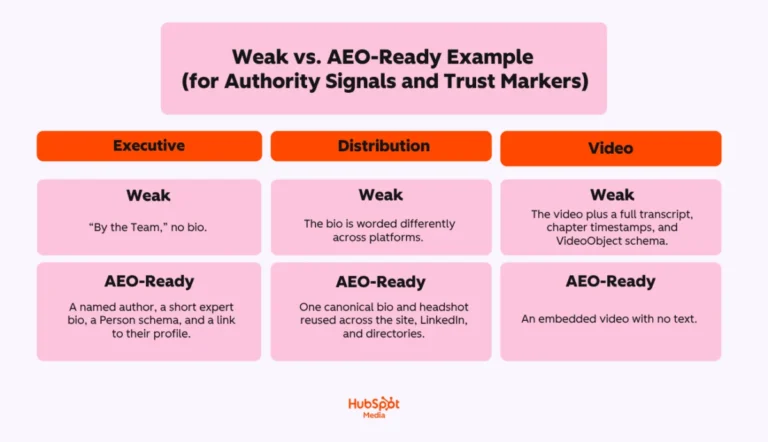
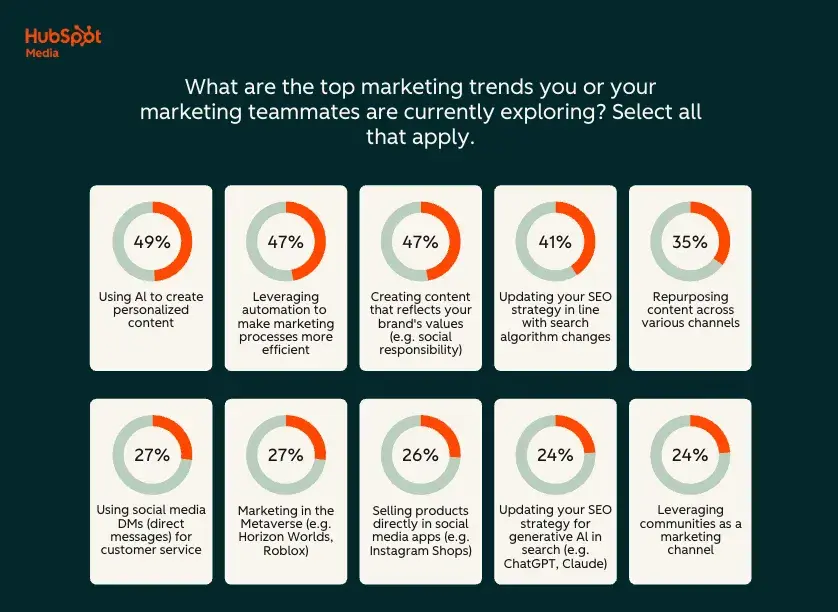
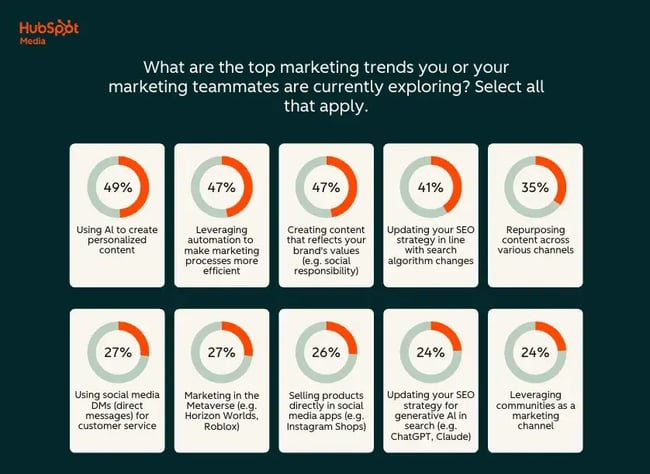
In essence, a fundamental shift in SEO strategy is required, evolving into Answer Engine Optimization (AEO). Content must be meticulously structured to be comprehensible by both Large Language Models (LLMs) and human users, ensuring brands maintain their voice in the evolving digital conversation. Businesses must adeptly communicate in the language of AI models and human audiences simultaneously to be recognized as authoritative sources. Data from the HubSpot 2026 State of Marketing report indicates that 40.6% of marketers are actively updating their SEO strategies to accommodate AI-powered search engines, while an additional 48.57% are intermittently utilizing AI for personalized content creation.
The strategic implications of this shift are profound. Brands can no longer afford to rely solely on keyword density and backlink profiles. Instead, the focus must expand to encompass the quality, credibility, and contextual relevance of their brand’s presence across the entire digital landscape, including user-generated content and conversational AI interactions. This demands a more holistic approach to content strategy, emphasizing thought leadership, authentic engagement, and the provision of genuinely valuable information that AI models can readily interpret and surface.
The Ascent of AI Agents: From Assistants to Autonomous Orchestrators
Another significant AI prediction for 2026 is the mainstream integration of AI agents into marketing workflows. These autonomous systems, capable of thinking, acting, and optimizing independently, are set to redefine operational efficiency. AI agents are evolving from mere assistants to sophisticated, autonomous decision-makers. By the close of 2026, agentic AI systems are expected to manage and optimize entire marketing campaigns with minimal human intervention, seamlessly operating across platforms, managing budgets, conducting creative testing, and refining strategies in real-time.
This evolution is not confined to the brand side. Consumers are also increasingly utilizing personal AI agents for product research and purchasing decisions. With a substantial 24% of AI users already leveraging AI shopping assistants, marketers face the imperative of optimizing their presence not only for human audiences but also for "agent-to-agent" interactions. This requires structuring product data to be accessible via APIs and readily interpretable by AI systems, ensuring seamless integration into agent-driven commerce.
The future of commerce and advertising is increasingly mediated by AI agents. A key prediction is that AI agents will engage in direct media buying negotiations, circumventing traditional human intermediaries. This agent-to-agent trading promises faster, more scalable transactions and enables the development of novel ad formats that are incompatible with existing programmatic pipelines. Similarly, consumers are leveraging AI agents to compare products, check inventory, and complete purchases, often without direct engagement with a brand’s website. Emerging protocols such as the Agentic Commerce Protocol (ACP) and the Model Context Protocol (MCP) are facilitating the embedding of interactive, transactional experiences directly within AI chat interfaces.

While AI was primarily employed for content drafting in 2025, 2026 will see its application in orchestrating entire campaigns. AI agents will operate with predefined goals, handling tasks such as prospecting and lead qualification in the background, awaiting human commands for strategic direction. The HubSpot 2026 State of Marketing report reveals that 19.20% of marketers are already utilizing AI agents for end-to-end marketing automation, a figure anticipated to grow significantly.
The implications for marketing teams are substantial. Marketers will transition from executing tasks to defining objectives and overseeing AI agent performance. This necessitates a deeper understanding of AI capabilities and strategic planning to leverage these autonomous systems effectively. The ability to design and manage AI agent workflows will become a critical skill, ensuring that automated processes align with overarching business goals and ethical considerations.
Generative AI: From Content Drafting to Creative Co-Piloting
A primary AI prediction for 2026 is that generative AI will transcend its role as a mere content-drafting tool and emerge as a creative co-pilot. Marketers will leverage AI to produce multimodal content—spanning text, images, audio, and video—at an unprecedented scale, facilitating rapid localization and personalization. However, as AI-generated content floods the digital landscape, authenticity and human creativity are becoming crucial differentiators. Brands are finding a delicate balance between AI-driven efficiency and human-led storytelling to maintain emotional resonance and consumer trust.
As previously noted, nearly half of marketers surveyed in HubSpot’s report have already employed AI for personalized content creation, with 35.08% repurposing content across various channels. In 2026, AI will not only generate content but will also drive "living campaigns"—dynamic entities that self-adjust messaging, formats, visuals, and tones based on real-time performance signals across platforms. Traditional static advertisements are expected to largely yield to dynamically evolving creative assets tailored to specific audience segments.
Brands are likely to adopt AI-generated images, videos, and copy as standard practice rather than experimental endeavors. This will empower marketers to utilize AI tools for generating thousands of creative variations for A/B testing, allowing human marketers to concentrate on strategy and creative direction over execution. Consumers increasingly desire fluid content formats that align with their immediate needs. Therefore, future AI predictions for 2026 include the rise of AI tools capable of generating multimodal content by seamlessly adapting a single asset into audio, visual, and text formats.
The implication here is a fundamental shift in content production workflows. Instead of rigid, linear content creation processes, marketers will embrace a more agile and iterative approach. A single piece of foundational content, such as a blog post, can serve as the source material for a suite of derivative assets, ensuring comprehensive reach across diverse audience segments and consumption preferences. This not only maximizes content utility but also allows for a more consistent and pervasive brand presence.
Hyper-Personalization and Predictive Analytics: Anticipating Consumer Needs
A significant AI prediction for 2026 highlights the evolution of AI-driven personalization, moving beyond broad user segmentation to real-time, cross-channel individualization. By analyzing behavioral signals, contextual information, and user intent, AI tools will tailor content, product offers, and entire customer journeys for each individual user, dynamically adjusting emails, advertisements, and website experiences. Predictive analytics will enable anticipatory marketing, allowing brands to present offers to consumers before they consciously realize their own needs. Tools like Google Analytics 4’s AI Insights are already predicting churn, purchase likelihood, and optimal next actions, empowering marketers to act proactively.
The HubSpot 2026 State of Marketing report indicates that 32.96% of marketers are extensively using AI for data analysis and automated reporting, while an additional 33.24% are extensively employing AI for market research and competitor analysis. The future of AI in marketing will empower professionals to deliver true one-to-one personalization, driving higher engagement and conversion rates. Marketing will transcend basic segmentation to offer genuinely individualized experiences. AI will enable brands to create unique content, product recommendations, and messaging for each customer in real-time, meticulously analyzing behavioral patterns, purchase history, and contextual signals to deliver precisely what resonates with each individual.
The strategic advantage of this approach lies in its ability to foster deeper customer relationships and loyalty. By anticipating needs and offering relevant solutions proactively, brands can move beyond transactional interactions to build enduring partnerships. This requires a robust data infrastructure and sophisticated AI capabilities to process and interpret vast amounts of customer information in real-time, ensuring that personalization efforts are both timely and impactful. The ethical considerations surrounding data usage and privacy become paramount in this hyper-personalized environment, necessitating transparency and robust consent mechanisms.
The Evolving Landscape of Marketing Teams and Roles
A major AI prediction for 2026 is the profound transformation of marketing roles driven by AI. As routine tasks become automated, marketers will increasingly focus on strategy, creativity, and ethical oversight. Emerging roles are likely to include AI Strategists, AI Ethics Officers, Prompt Engineers specializing in creative applications, and AI Workflow Designers. Leadership must cultivate AI literacy and implement human-in-the-loop processes to ensure AI augments, rather than replaces, human judgment.

The "30% Rule" suggests that AI should automate approximately one-third of the routine workload, freeing up 30% of a marketing team’s time for reinvestment in high-leverage creative activities. Moreover, 2026 AI marketing predictions point to the rise of new roles such as "Vibe Marketing," inspired by trends like "Vibe Coding." In this model, marketers will not necessarily need to be technical experts in specific software but rather possess a strong grasp of broader strategy. This shift aims to alleviate "tool fatigue" within growing teams, allowing "Vibe Marketers" to define the strategic direction, while AI handles the execution. This empowers junior marketers to potentially execute senior-level campaigns, provided their strategic acumen is sound.
According to the HubSpot 2026 State of Marketing report, 32.82% of respondents indicated that AI tools are saving their marketing teams between 10 to 14 hours per week, with 41.81% reporting a moderate increase in productivity due to AI. AI’s presence is permanent. Marketers must proactively upskill and master AI tools to secure their positions and identify AI-proof career paths.
The implication for professional development is clear: continuous learning and adaptation are essential. Marketers who embrace AI as a partner, rather than a threat, will be best positioned for success. The focus will shift from proficiency in specific tools to strategic thinking, creative problem-solving, and the ability to guide and leverage AI effectively. This represents an opportunity for marketing professionals to elevate their roles and contribute at a more strategic level.
Privacy-First Data Strategies: The Foundation of Trust
Privacy-focused data operations for AI systems stand as a critical AI prediction for 2026. With the phasing out of third-party cookies and the increasing stringency of global privacy regulations, first-party and zero-party data have become foundational. Brands are transitioning to consent-based data models, directly collecting customer preferences through surveys, loyalty programs, and preference centers. AI plays a crucial role in extracting value from this limited data by utilizing intent-based signals and contextual targeting, thereby reducing reliance on personal identifiers. The responsible use of AI not only ensures compliance with regulations but also builds consumer trust, transforming data strategy into a competitive advantage.
As AI adoption accelerates, ethical considerations such as data privacy, bias mitigation, transparent decision-making, and responsible use are escalating from optional considerations to strategic imperatives. Brands that prioritize trusted and explainable AI will gain a significant competitive edge. HubSpot’s State of Marketing survey reveals that 40.13% of marketers express concerns about data privacy and security, identifying it as the primary barrier to AI adoption in marketing.
The increasing emphasis on data privacy necessitates a fundamental reevaluation of how customer data is collected, stored, and utilized. Brands must prioritize transparency and obtain explicit consent from consumers for data usage. This shift fosters a more ethical and sustainable approach to marketing, building stronger, more trusting relationships with customers. The development of AI tools that inherently incorporate robust privacy safeguards will become a key differentiator, empowering marketers to leverage AI responsibly and effectively.
Preparing for the AI-Powered Future
The window for marketers to proactively adapt to the impending AI revolution is rapidly narrowing. To navigate the future of AI successfully, professionals must take immediate action. This includes investing in continuous learning and skill development, focusing on strategic and creative capabilities that AI cannot replicate, and embracing AI tools as collaborative partners rather than replacements. Understanding the ethical implications of AI and prioritizing data privacy will be paramount.
AI Predictions Beyond 2026: A Glimpse into the Future
Looking beyond 2026, AI marketing predictions for 2030 envision intelligent, ethical, immersive, and human-first brands powered by AI but fundamentally guided by empathy. By 2050, in the era of Artificial General Intelligence (AGI), marketing will transcend the mere selling of products to focus on designing intelligent relationships between humans and the systems that serve them.
Marketing in 2030: Predictive, Personalized, and Empathetic
By 2030, marketing will operate through predictive AI systems that anticipate customer needs before explicit intent is expressed, shifting from reactive campaigns to adaptive, real-time, and deeply human experiences. All marketing campaigns will be AI-powered but empathy-led. This means marketing will become inherently predictive, moving beyond traditional segmentation to hyper-personalization at the identity level. The rise of zero-party data and trust economics will be critical, driven by stricter privacy laws and a cookie-less ecosystem. AI co-marketers will become the norm, with humans focusing on strategic oversight, ethical governance, and creative ideation, while AI handles execution. Content will evolve into immersive experiences, with static formats giving way to interactive and engaging formats.
The 2050 Vision: Marketing in the Age of AGI
By 2050, marketing will no longer be defined by tools, channels, or data alone. In the age of AGI, marketing will transform into a co-evolutionary system where human values, machine intelligence, and consumer intent continuously adapt to each other in real time. The focus will shift from optimization to understanding, with AGI systems delving into the "why" behind consumer behavior. Campaigns will be replaced by "living brands" that continuously adapt and evolve. Marketers will evolve into philosophers, curators, and governors, exercising judgment and ethical oversight. Ultimately, the shift will be from an attention economy to a meaning economy, where value is derived from genuine connection and shared purpose.
Frequently Asked Questions About AI Predictions
What is the best AI predictor?
The efficacy of AI predictors is use-case dependent. HubSpot Breeze AI offers integrated predictive capabilities for marketing attribution, lead scoring, and revenue forecasting, analyzing historical data to inform campaign strategy.
What are the future predictions of AI?
Future AI predictions include the proliferation of AI search engines, the integration of AI agents, advanced AI-generated content, hyper-personalization, evolving job roles, and the adoption of privacy-first protocols. By 2030, marketing is expected to be more predictive, with AI co-marketers becoming commonplace and content evolving into immersive experiences.
What is the 30% rule for AI?
The 30% rule posits that AI should automate approximately 30% of a workflow, focusing on repetitive, data-intensive tasks. This allows humans to dedicate the remaining 70% to critical thinking, creativity, and ethical judgment, positioning AI as an assistive tool rather than a replacement.
What jobs will be eliminated by 2030?
Certain roles, particularly those involving repetitive tasks and data processing, such as telemarketing, bookkeeping, and certain administrative functions, may be significantly impacted or eliminated by AI by 2030. However, strategic marketing roles emphasizing creativity, ethics, and cultural understanding are anticipated to remain essential.
AI in 2026: The Bottom Line
The transformative impact of AI in 2026 will not be marked by a single, singular event but by the pervasive, quiet efficiency it brings to marketing operations. Organizations that strategically integrate AI into their core workflows will experience compounding benefits. While ongoing advancements in AI capabilities will continue to push boundaries, the true success stories will emerge from the practical, day-to-day integration of AI into marketing workflows, fostering greater efficiency, deeper customer engagement, and ultimately, more impactful business outcomes.
About the Author