
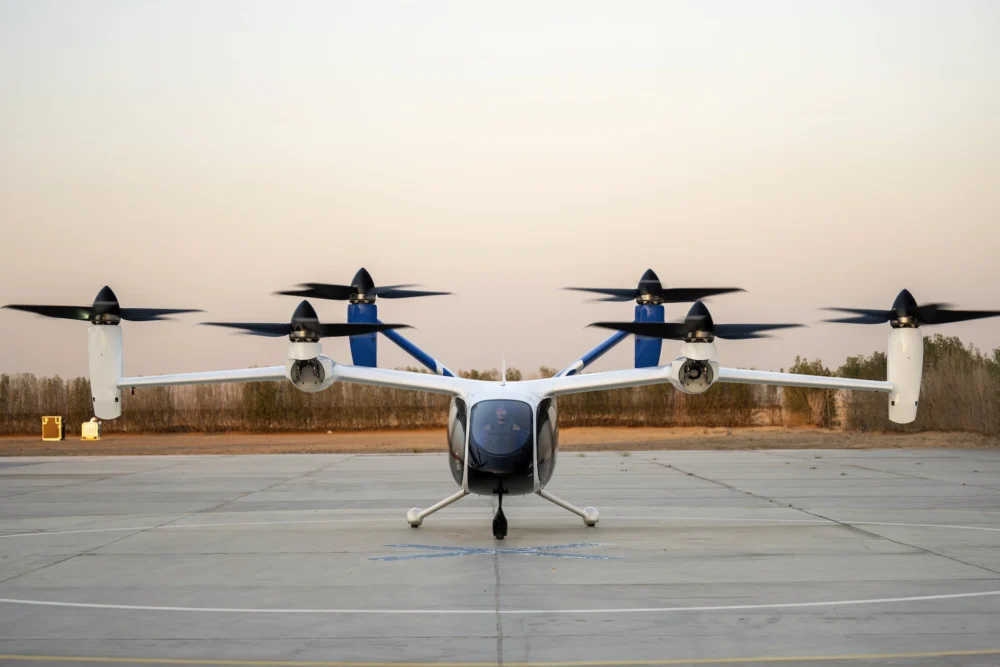
The Federal Aviation Administration (FAA) has officially greenlit eight ambitious pilot programs, paving the way for a select group of pioneering companies, including Archer Aviation, Beta Technologies, Joby Aviation, and Wisk, to commence widespread testing of electric aircraft as early as this summer. This significant initiative, spanning three years and encompassing 26 states, marks a pivotal step in accelerating the development and integration of next-generation aircraft for a diverse range of applications, from personal travel and regional transportation to vital cargo logistics and emergency medical services.
A New Era for Aviation Takes Flight
The U.S. Department of Transportation, under the leadership of Secretary Sean Duffy, has championed this initiative, aiming to solidify American leadership in the burgeoning field of advanced air mobility (AAM). Secretary Duffy articulated the program’s core objective: to ensure that the United States remains at the forefront of innovation in a sector poised to redefine how people and goods move. The Advanced Air Mobility and Electric Vertical Takeoff and Landing (eVTOL) Integration Pilot Program, as it is formally known, was first announced last year via an executive order signed by President Donald Trump. The executive order signaled a clear intent to expedite the development and deployment of these futuristic aircraft, which promise quieter, more sustainable, and potentially more efficient air travel solutions.
The emergence of numerous eVTOL companies in recent years has fueled optimism about the future of urban air taxis and regional electric flight. However, the path from concept to commercial reality has historically been arduous, demanding years of rigorous development, substantial financial investment, and a complex, multi-year certification process overseen by the FAA. The current pilot program represents a crucial departure from this traditional model, allowing participating companies to test their eVTOL aircraft in real-world operational environments even before they have achieved full regulatory certification. This accelerated timeline is expected to not only bolster the operational capabilities of these companies but also to positively impact their market standing and share prices, particularly for those that have already gone public.
Industry Reactions and Early Market Impact
The announcement has already elicited enthusiastic responses from industry leaders. Kyle Clark, founder and CEO of Beta Technologies, expressed his company’s anticipation, stating that selection for the program will enable them to commence aircraft operations a full year ahead of their initial projections. This positive outlook was mirrored in the market, with Beta Technologies’ stock price experiencing a notable surge of nearly 12% on the day of the announcement. Publicly traded companies Archer Aviation and Joby Aviation also witnessed positive market reactions, underscoring the financial significance of this regulatory development for the sector.
Archer Aviation drew parallels between the eVTOL testing program and the development of autonomous robotaxi services, highlighting the program’s potential to build public trust and establish best practices for the safe scaling of electric air taxi operations. The company, currently developing its four-passenger piloted eVTOL, the "Midnight," views this initiative as instrumental in preparing for air taxi services, notably in anticipation of the 2028 Olympic Games in Los Angeles.

FAA’s Vision for Integration and Safety
The FAA views this program as a critical learning opportunity. FAA Deputy Administrator Chris Rocheleau emphasized in a prepared statement that these partnerships are designed to foster a deeper understanding of how to safely and efficiently integrate these novel aircraft into the National Airspace System. "The program will provide valuable operational experience that will inform the standards needed to enable safe Advanced Air Mobility operations," Rocheleau stated, acknowledging the significant interest demonstrated by the 30 proposals submitted to the agency. This collaborative approach, requiring companies to partner with state, local, tribal, or territorial governments, is central to the program’s design, ensuring a broad and inclusive integration strategy.
Diverse Applications and Geographic Reach
The approved pilot programs showcase a remarkable diversity in their proposed applications and geographic scope. These projects are not confined to a single type of operation but are exploring the full spectrum of advanced air mobility, from intra-city air taxis to long-haul regional transport and specialized cargo delivery.
In the bustling metropolitan area of New York, the Port Authority of New York and New Jersey is collaborating with Archer, Beta, Electra, and Joby. This partnership will investigate a dozen distinct operational concepts, including ambitious plans for services originating from a Manhattan heliport, signaling a direct move towards integrating air taxis into a major urban transportation network.
Across the country, the Texas Department of Transportation is joining forces with Archer, Beta, Joby, and Wisk. Their focus will be on testing regional flight routes connecting major Texan cities such as Dallas, Austin, and San Antonio, with future expansion envisioned to include Houston. This initiative aims to build robust networks of air taxis, extending regional connectivity and potentially transforming inter-city travel within the state. The Department of Transportation has indicated that this program will involve the development of infrastructure to support these expanding air taxi networks.
Beyond these specific urban and regional hubs, several projects possess the potential for widespread geographic implications. A notable initiative led by Utah will conduct tests across the Pacific Northwest, the Rocky Mountains, and the Plains of Oklahoma. This project is designed to evaluate a broad array of next-generation aircraft and operational concepts in varied terrains and airspace conditions. Another significant undertaking, spearheaded by the Pennsylvania Department of Transportation, will involve 13 states with the objective of revitalizing regional air travel across the nation.
Furthermore, the pilot program is also addressing critical needs in cargo delivery, emergency medical response, and autonomous operations. Companies like Beta and Elroy Air are slated to conduct flights for cargo and personnel transportation into the Gulf of Mexico region and to energy industry sites in Louisiana, Texas, and Mississippi. These operations are vital for supporting remote industrial locations and ensuring efficient supply chain management in challenging environments.

The states of Florida, Louisiana, and North Carolina are also taking the lead on their own projects, highlighting the decentralized yet coordinated approach to advancing AAM. In a move towards greater automation, the city of Albuquerque is partnering with Reliable Robotics to specifically test autonomous flight operations, a key area of development for the future of aviation.
The Road Ahead: Certification and Scalability
While the pilot programs are designed to accelerate testing and operational experience, the ultimate goal remains the full certification of these aircraft and their safe integration into the broader aviation ecosystem. The data and insights gathered from these three-year pilot programs will be instrumental in shaping the FAA’s regulatory framework for AAM. This includes developing standards for aircraft design, pilot training, air traffic management, and operational procedures.
The success of these pilot programs is not merely about technological advancement; it is also about building public confidence. By demonstrating the safety and reliability of electric aircraft through rigorous testing and real-world operations, these initiatives aim to pave the way for widespread public acceptance and adoption of these transformative transportation solutions. The program’s emphasis on partnerships with state and local entities underscores a commitment to understanding and addressing the unique needs and challenges of different communities, ensuring that the benefits of advanced air mobility are realized equitably.
The timeline for this ambitious undertaking is set to unfold over the next three years, with the initial phase of testing commencing this summer. The selection of eight programs out of thirty proposals indicates a highly competitive and carefully curated process, designed to maximize the learning potential and accelerate progress towards a future where electric aircraft play a significant role in the nation’s transportation infrastructure. As these programs take flight, the world will be watching to see how these innovative technologies evolve and reshape the landscape of aviation.
About the Author





