
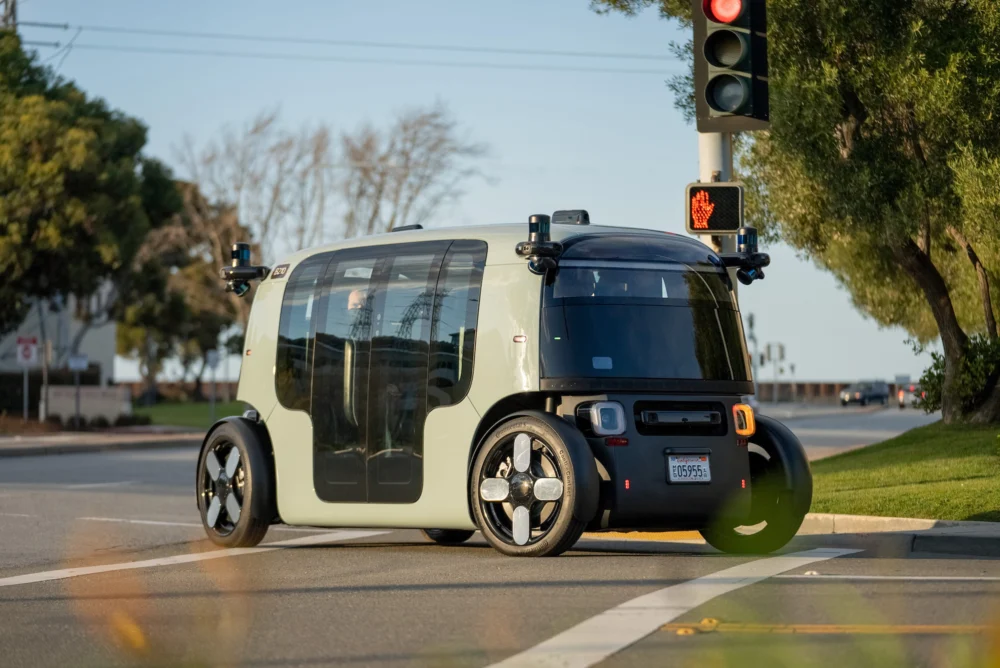
Amazon-owned Zoox is poised to integrate its autonomous taxis onto the Uber platform in Las Vegas by the end of this year, a significant step forward in the company’s commercial rollout strategy. This announcement, made jointly by Zoox and Uber on Wednesday, signals a deepening collaboration between a leading ride-hailing giant and a prominent player in the autonomous vehicle (AV) sector. However, the ambitious timeline hinges on crucial federal regulatory approval, specifically exemptions from the Federal Motor Vehicle Safety Standards (FMVSS) for Zoox’s steering-wheel-less and pedal-less vehicles.
Regulatory Hurdles and the Path to Commercialization
The immediate prerequisite for Zoox’s public deployment is obtaining the green light from the National Highway Traffic Safety Administration (NHTSA). On Wednesday, NHTSA initiated a 30-day public comment period for Zoox’s application seeking exemptions from several FMVSS. These exemptions are essential for vehicles that deviate from traditional automotive design, particularly those lacking manual controls like steering wheels and pedals, which are central to current safety standards.
Currently, Zoox operates its custom-built robotaxis under a demonstration permit, allowing for testing and limited public rides but not full commercial service. This existing exemption facilitated the company’s current free ride offerings in Las Vegas and San Francisco. The new application aims to secure the necessary waivers for broader commercial operations, which would enable their integration into ride-sharing platforms.
The specific FMVSS from which Zoox is seeking exemptions include those mandating windshield defrosting systems and windshield wipers. This highlights the unique design considerations of Zoox’s vehicles, which are engineered from the ground up as autonomous mobility solutions, prioritizing passenger experience and safety through advanced sensor technology rather than traditional driver interfaces.
A Multi-Year Strategic Partnership and Expansion Plans
The collaboration between Zoox and Uber is described as a "multi-year strategic partnership," with plans extending beyond Las Vegas. Following the initial launch on Uber’s app, Zoox intends to make its vehicles available in Los Angeles in 2027. This phased approach allows for a controlled rollout, learning from initial operations, and refining the service before wider expansion.
This marks Zoox’s inaugural third-party partnership with a major ride-hailing platform. For Uber, however, this is a continuation and expansion of its long-standing strategy to integrate AV technology into its network. The company has cultivated relationships with over 25 AV companies globally, demonstrating its commitment to a future where autonomous vehicles play a significant role in ride-sharing.
Notable among Uber’s existing AV partnerships is its collaboration with Waymo, which already offers robotaxi services on the Uber platform in Austin and Atlanta. Uber has also engaged with Chinese AV companies, including Baidu, with plans to test their self-driving cars in London this year. Other significant partnerships include those with Volkswagen, May Mobility, and Pony AI, underscoring Uber’s multifaceted approach to embracing autonomous transportation across various markets and technological providers.
Uber’s Evolving Role in the Autonomous Ecosystem
Uber is not merely a passive platform for AV deployment; it is actively investing in and developing services to support its autonomous vehicle partners. In January, TechCrunch reported on the establishment of "AV Labs," a division dedicated to collecting real-world driving data. This data is crucial for training and refining the sophisticated AI systems that power autonomous vehicles, thereby enhancing the safety and reliability of its partners’ AV fleets.
More recently, in February, Uber announced the creation of "Uber Autonomous Solutions." This new division is designed to offer comprehensive support services to AV partners, encompassing operational management, software integration, and technical assistance. This strategic move positions Uber as a more integrated partner, providing essential infrastructure and expertise to facilitate the scaled deployment of autonomous fleets.
The Broader Regulatory Landscape and the Future of Mobility
The timeline for Zoox’s commercial launch and integration with Uber is intrinsically linked to the pace of regulatory approvals. NHTSA’s decision on Zoox’s exemption applications will set a precedent for other AV companies seeking similar waivers. The agency’s willingness to adapt safety standards for novel vehicle designs will be a critical determinant of how quickly the AV industry can scale.
NHTSA chief Jonathan Morrison’s remarks at a recent autonomous vehicle safety hearing indicated a forward-looking approach. He expressed an eagerness to move beyond preliminary discussions and establish a clear, robust regulatory framework for self-driving cars. Morrison stated, "We think it’s past time to get past the hand-waving and hype, and are finally doing the necessary, hard policy work to provide appropriate and robust oversight over this sector while removing unnecessary and unintended barriers to innovation that currently exists." He further emphasized the agency’s commitment to addressing these challenges with urgency, acknowledging that the task "will not be easy."
This proactive stance from NHTSA suggests a potential for more streamlined regulatory processes in the future, which could accelerate the deployment of AVs across various applications, including ride-hailing, delivery, and logistics.
Zoox’s Strategic Vision and Market Expansion
Zoox’s expansion efforts are not limited to its partnership with Uber. The company is actively mapping and building its presence in eight additional U.S. cities, including Dallas and Phoenix, as announced earlier this week. This parallel expansion strategy indicates Zoox’s ambition to establish a widespread operational footprint independent of its platform partnerships. The company’s current free ride services in Las Vegas and San Francisco serve as valuable testing grounds, allowing for real-world data collection and service refinement.
The robotaxi market is experiencing significant investment and development, with numerous companies vying for dominance. Zoox, backed by Amazon, possesses substantial resources to pursue its ambitious goals. The company’s focus on a purpose-built, bidirectional vehicle designed specifically for autonomous operation differentiates it from competitors that are retrofitting existing vehicle platforms. This foundational design approach is intended to optimize for safety, efficiency, and passenger comfort in an all-electric, driverless environment.
Analysis of Implications
The potential integration of Zoox’s robotaxis onto the Uber app carries several significant implications for the future of urban mobility and the broader transportation industry:
- Accelerated AV Adoption: Successful integration with a major ride-hailing platform like Uber could significantly accelerate the public’s exposure to and adoption of autonomous vehicles. This familiarity is crucial for widespread acceptance and eventual normalization.
- Enhanced Ride-Sharing Options: For consumers in Las Vegas, this partnership promises an expansion of ride-sharing options, potentially offering more convenient, cost-effective, and novel transportation experiences.
- Data Generation and Improvement: The data generated from these commercial operations will be invaluable for Zoox, Uber, and regulatory bodies. Continuous data collection and analysis are essential for improving AV performance, safety algorithms, and mapping accuracy.
- Competitive Landscape Shifts: The entry of Zoox into the ride-sharing market, particularly through a prominent platform like Uber, will intensify competition among AV developers and ride-hailing services. This could drive further innovation and price efficiencies.
- Regulatory Evolution: The outcome of Zoox’s exemption requests and NHTSA’s subsequent rulings will have a profound impact on how AVs are regulated in the U.S. A favorable decision could pave the way for other companies with similar innovative vehicle designs.
- Economic Impact: The widespread deployment of robotaxis could lead to shifts in the labor market, potentially impacting professional drivers while creating new jobs in AV maintenance, operations, and oversight.
- Urban Planning and Infrastructure: As AVs become more prevalent, cities may need to adapt their infrastructure, including dedicated lanes, charging facilities, and traffic management systems, to accommodate this new mode of transportation.
The partnership between Zoox and Uber represents a critical juncture in the development and deployment of autonomous vehicles. While regulatory approvals remain a significant hurdle, the strategic alignment and shared vision between these two industry leaders suggest a strong commitment to realizing the promise of driverless transportation in the near future. The coming months will be crucial in observing the progress of Zoox’s regulatory applications and the subsequent steps toward transforming urban mobility in cities like Las Vegas.
About the Author





