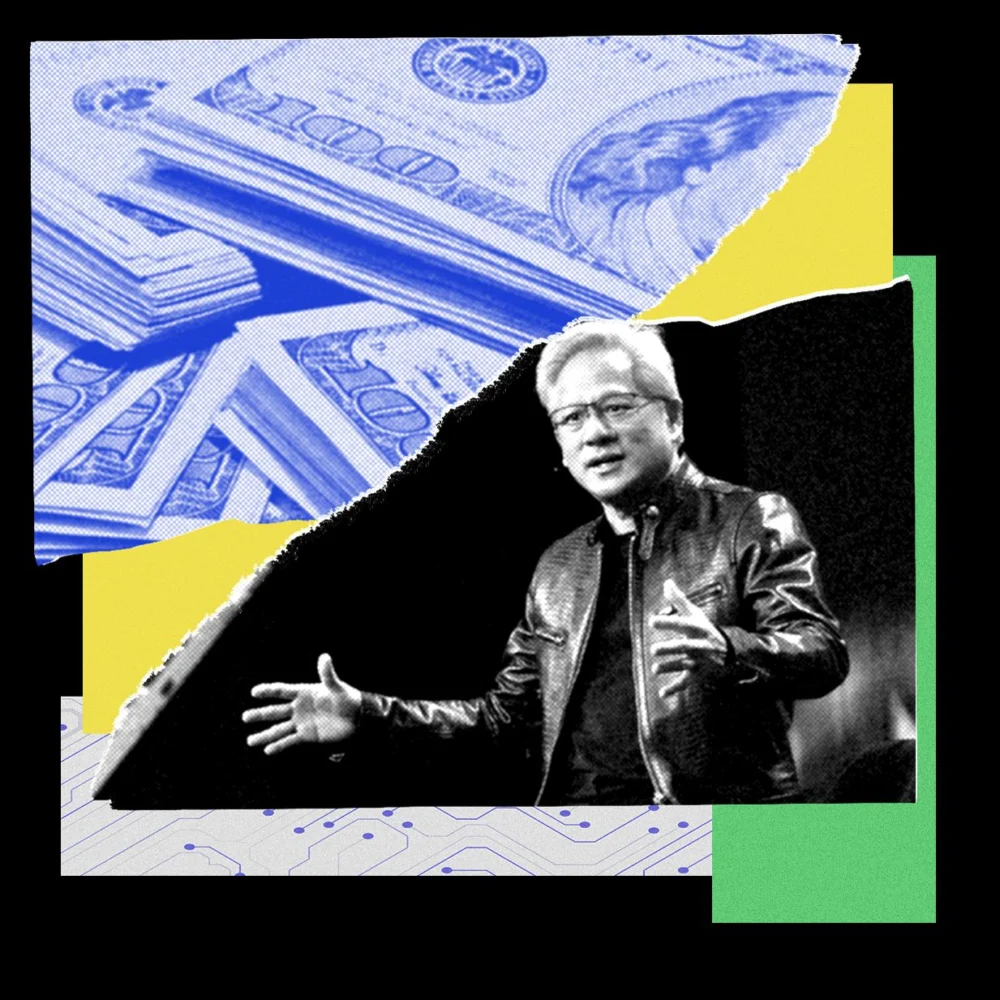
Nvidia has formally disclosed a plan to invest $26 billion over the next five years into the development of open-source artificial intelligence models, a move that signals a fundamental transformation for the world’s most valuable semiconductor company. According to a 2025 financial filing with the Securities and Exchange Commission (SEC), the Santa Clara-based firm intends to channel this capital into large-scale research, model training, and the release of open-weight architectures. This strategic pivot, confirmed by senior executives in recent briefings, positions Nvidia not merely as a supplier of the "shovels" for the AI gold rush, but as a primary architect of the AI ecosystem itself, potentially rivaling established frontier labs such as OpenAI, Google, and the surging AI sector in China.
The investment represents one of the largest single-purpose capital allocations in the history of the software and hardware industry. By dedicating $26 billion to open-source initiatives, Nvidia is attempting to standardize the global AI landscape around its proprietary hardware and software stacks. While Nvidia has long dominated the market for AI training chips—controlling an estimated 80% to 95% of the high-end data center GPU market—this move into high-level model development suggests the company seeks to insulate itself against the rise of rival hardware and the growing influence of open-source models originating from international competitors.
The Evolution of a Silicon Giant into an AI Frontier Lab
For over a decade, Nvidia’s primary value proposition has been its hardware, specifically its Graphics Processing Units (GPUs), paired with its CUDA software platform which allows developers to program those chips efficiently. However, the $26 billion commitment marks a shift toward becoming a "frontier lab." Historically, the term has been reserved for organizations like OpenAI, Anthropic, and DeepMind, which focus on pushing the boundaries of what large language models (LLMs) can achieve.
By developing its own state-of-the-art models, Nvidia ensures that the next generation of AI innovation is optimized specifically for its Blackwell and Hopper architectures. This vertical integration creates a powerful "moat." If the world’s most capable open-source models are built by Nvidia, they will naturally run most efficiently on Nvidia hardware, making it difficult for competitors like AMD, Intel, or custom silicon efforts from Amazon and Google to gain a foothold.
Executives at the company have emphasized that this is a natural progression of their mission. Bryan Catanzaro, Vice President of Applied Deep Learning Research at Nvidia, noted that the company is taking open model development with a new level of seriousness. The goal is to provide the "weights"—the numerical parameters that determine how an AI processes information—to the public, allowing researchers and enterprises to build specialized applications without the restrictive costs or privacy concerns associated with closed-loop proprietary APIs.
The Launch of Nemotron 3 Super and Technical Benchmarks
Coinciding with the announcement of the investment, Nvidia released Nemotron 3 Super, its most sophisticated AI model to date. Featuring 128 billion parameters, Nemotron 3 Super is designed to compete directly with the world’s leading open-weight and proprietary models. In the context of AI, parameters are a proxy for a model’s complexity and learning capacity; for comparison, this puts Nemotron 3 Super in the same size class as the largest versions of OpenAI’s GPT-OSS.
Nvidia’s internal testing suggests that Nemotron 3 Super outperforms several industry benchmarks. On the Artificial Intelligence Index, a composite score derived from 10 distinct performance metrics, Nemotron 3 Super achieved a score of 37. This surpassed GPT-OSS, which scored 33. However, the company acknowledged that several high-performing models from Chinese firms currently hold higher scores on specific linguistic and mathematical tests.
To further validate the model’s utility, Nvidia utilized a new benchmark known as PinchBench. This test evaluates an AI’s ability to interact with and control OpenClaw, a specialized software interface for robotic and system-level automation. Nemotron 3 Super reportedly ranked first on this benchmark, highlighting Nvidia’s focus on "embodied AI"—intelligence that can interact with the physical world through robotics and industrial automation.
The technical architecture of Nemotron 3 includes several innovations aimed at solving common LLM limitations. These include:
- Enhanced Reasoning: New training techniques that allow the model to break down complex multi-step problems more effectively.
- Long-Context Handling: The ability to process and "remember" vast amounts of information in a single session, crucial for legal and scientific research.
- Reinforcement Learning Optimization: Improvements in how the model responds to human feedback, reducing hallucinations and improving the relevance of its outputs.
A Chronology of Nvidia’s AI Strategy
Nvidia’s journey from a gaming-centric company to an AI powerhouse has been defined by several key milestones:
- 2011: Bryan Catanzaro and other researchers spearhead the shift toward using GPUs for general-purpose deep learning, recognizing that the parallel processing required for graphics was ideally suited for neural networks.
- 2016: CEO Jensen Huang delivers the first "AI supercomputer in a box," the DGX-1, to OpenAI, cementing the relationship between hardware and the birth of modern LLMs.
- November 2023: Nvidia releases the first iteration of the Nemotron model, signaling its intent to enter the software model space.
- January 2025: The release of DeepSeek’s cutting-edge open model in China creates a market shift, demonstrating that high-performance models can be trained more efficiently and cheaply than previously thought.
- Late 2025: Nvidia’s SEC filing reveals the $26 billion commitment, alongside the release of Nemotron 3 Super and the announcement of an upcoming 550-billion-parameter model currently in the final stages of pretraining.
Geopolitical Implications and the "China Factor"
The $26 billion investment is not occurring in a vacuum. It is a direct response to the shifting geopolitics of artificial intelligence. In recent years, the balance of "open" AI innovation has shifted toward China. While American leaders like OpenAI and Google have kept their most powerful models behind proprietary "black box" interfaces, Chinese companies such as Alibaba, DeepSeek, Moonshot AI, and MiniMax have aggressively released their model weights for free.
Alibaba’s "Qwen" series, for instance, has become a global standard for developers due to its ease of modification and high performance. More concerning for US interests is the rise of DeepSeek. Rumors within the industry suggest that upcoming DeepSeek models may have been trained exclusively on hardware from Huawei, a company currently under heavy US sanctions. If Chinese open-source models become the global default, they could drive the adoption of Chinese-made hardware, undermining the market dominance of US firms like Nvidia.
By funding American-led open-source models, Nvidia is providing a "Western alternative" to Chinese software. This allows startups in Europe, India, and the United States to build on a high-performance foundation that is legally and technically aligned with American standards and hardware.
Strategic Benefits and Industry Reactions
The decision to give away high-value intellectual property for free might seem counterintuitive for a for-profit corporation. However, Kari Briski, Nvidia’s Vice President of Generative AI Software for Enterprise, explained that building these models serves as a "stress test" for the company’s own infrastructure. To train a 550-billion-parameter model, Nvidia must push its networking, storage, and compute limits to the absolute edge. The lessons learned during this process are then used to refine the hardware architecture for the next generation of chips.
Industry experts have largely reacted with optimism to Nvidia’s massive capital injection. Nathan Lambert, an AI researcher at the Allen Institute for AI (Ai2) and leader of the ATOM (American Truly Open Models) Project, praised the move but noted that private investment should be matched by government support. "I’m a huge Nemotron fan," Lambert stated, emphasizing that open models are essential for transparency and safety research.
Andy Konwinski, a computer scientist and entrepreneur leading the Laude Institute, described the $26 billion figure as an "unprecedented signal." He noted that because Nvidia sits at the intersection of almost every major AI project globally, their commitment to openness could force other closed-source labs to reconsider their "walled garden" strategies to remain competitive.
Conclusion: The Future of the AI Ecosystem
Nvidia’s $26 billion gamble represents a bet that the future of AI will not be dominated by a single "God-like" proprietary model, but by a diverse ecosystem of specialized, open-source tools. By providing the foundational models for robotics, climate modeling, and protein folding, Nvidia is positioning itself as the indispensable platform for the next industrial revolution.
As the company moves toward the release of its 550-billion-parameter model, the focus will shift from simple text generation to complex system-level reasoning. For the broader industry, Nvidia’s move suggests that the era of "hardware only" dominance is over. In the new landscape of 2025 and beyond, the leaders of the AI era will be those who can successfully fuse the world’s most powerful silicon with the world’s most accessible and capable intelligence. Through this $26 billion commitment, Nvidia is ensuring it remains at the center of that fusion, regardless of whether the models are used in a research lab in San Francisco or an industrial plant in Shenzhen.
About the Author