
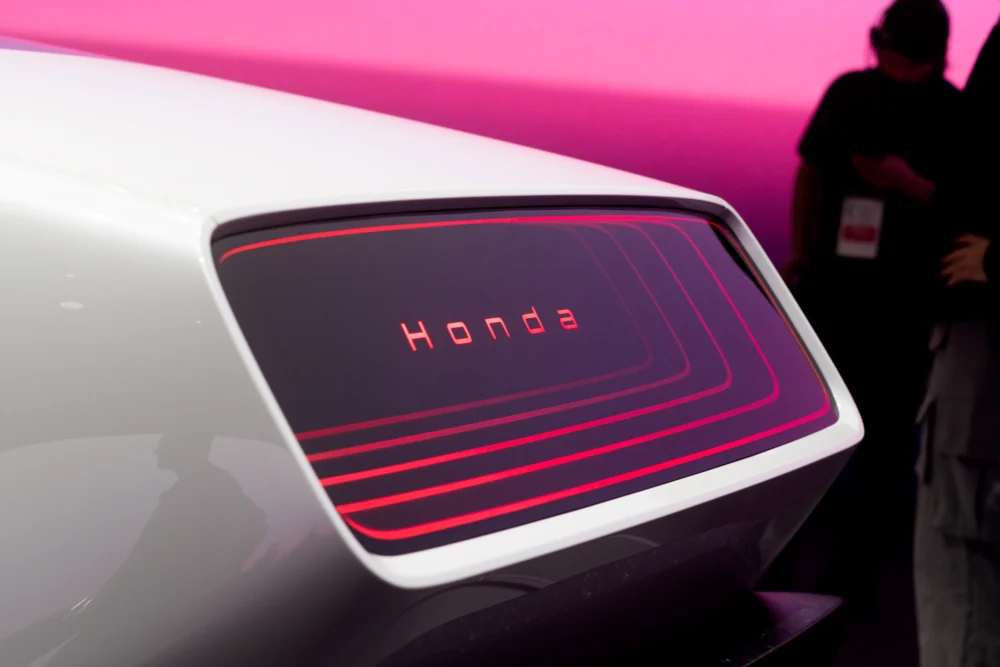
Honda’s recent, decisive dismantling of its nascent electric vehicle (EV) programs marks a significant turning point for the storied automaker, raising profound questions about its future competitiveness in an automotive landscape rapidly transforming under the pressure of electrification and advanced digital technologies. The decision, announced this week, effectively halts development on several key EV models, including the ground-up electric Acura RDX, the Honda 0 sedan and SUV, and signals the discontinuation of the Honda Prologue, a vehicle developed in partnership with General Motors. This strategic pivot, framed by Honda executives as a response to challenging market conditions including U.S. tariffs and intensifying Chinese competition, is viewed by many industry analysts as a potentially fatal misstep that could leave the company further behind in two of the most critical automotive shifts of the 21st century: the transition to electric powertrains and the rise of software-defined vehicles.
The company’s announcement on Thursday revealed the immediate cessation of development for the electric Acura RDX and the Honda 0 series (sedan and SUV). These were positioned as Honda’s first truly bespoke EV platforms, designed from the ground up to leverage electric architecture. However, details regarding these projects had been scarce, leading to speculation about their development progress and market readiness. The following day, Automotive News reported that Honda would cease production of the Prologue. This model, a crucial component of Honda’s initial EV strategy, was notably based on General Motors’ Ultium platform, with GM handling the design and manufacturing. The abrupt shelving of these initiatives suggests a swift and perhaps uncharacteristic reassessment of Honda’s commitment to electrification.
This strategic retreat is particularly concerning given the accelerated pace of change within the global automotive industry. Legacy automakers are grappling with the dual challenges of investing heavily in new EV technologies while simultaneously managing the decline of their established internal combustion engine (ICE) businesses. For Honda, a company with a long and proud history of engineering excellence in traditional powertrains, this transition presents a unique set of challenges. The decision to backtrack on its EV ambitions, rather than navigating the complexities of this evolving market, could have far-reaching consequences for its market share, brand perception, and long-term viability.
The Rationale Behind the Retreat: Tariffs, Competition, and a Lack of Viable Strategy
Honda’s official statements attribute the cancellation of its EV programs to external pressures. The company has pointed to the impact of U.S. tariffs on imported vehicles and components, which increase production costs and reduce profit margins. Furthermore, the aggressive pricing and rapid innovation demonstrated by Chinese automakers, particularly in the EV segment, have created a highly competitive environment. In its recent earnings report, Honda acknowledged its struggles in the Chinese market, stating, "Honda was unable to deliver products that offer value for money better than that of newer EV manufacturers, resulting in a decline in competitiveness." This statement directly links its underperformance in China to a lack of compelling value propositions compared to emerging EV players. The financial implications of this struggle are stark; Honda reported nearly $16 billion in losses last year, a significant portion of which is attributed to challenges in the Chinese market and broader headwinds in the automotive sector.
However, industry observers suggest that while these external factors are undoubtedly present, they may serve as convenient justifications for a deeper, more fundamental issue: Honda’s perceived lack of a coherent and competitive EV strategy from the outset. Critics argue that the company’s approach to electrification has been tentative, characterized by reliance on partnerships and a failure to develop proprietary EV architectures with the same fervor it applied to its ICE powertrains. The development of the Prologue, a vehicle entirely engineered and built by GM, exemplifies this approach. While strategic alliances can be beneficial, an over-reliance on them can hinder the development of in-house expertise and the creation of unique brand identity within the EV space.
The Missed Opportunity: Rethinking the Automobile from the Ground Up
The core of the critique against Honda’s decision lies in its apparent misunderstanding of what an electric vehicle truly represents. For many legacy automakers, an EV is still viewed primarily as a car with a different powertrain – a transitional step rather than a fundamental reimagining of the automobile. This perspective, often expressed internally by executives, assumes that once battery technology and electric motors are fully mature, ICE vehicles can be easily retrofitted with these components. This, however, is a flawed premise.
Dropping batteries and motors into platforms originally designed for internal combustion engines often results in vehicles that are heavier, less efficient, and more expensive to produce. These vehicles frequently compromise on packaging, weight distribution, and overall aerodynamic efficiency, all of which are critical for optimizing the performance and range of EVs. For instance, Ford’s Mustang Mach-E, while a sales success, has faced profitability challenges, partly attributed by CEO Jim Farley to legacy engineering decisions. The Mach-E’s wiring harness, significantly heavier than that of its Tesla counterparts, is cited as an example of how ingrained ICE-era design philosophies can impede EV development.
Conversely, when EVs are conceived and developed as original products, automakers gain the opportunity to fundamentally rethink the automobile’s architecture. This allows for optimized battery placement, improved weight distribution, and the integration of advanced features that are integral to the EV experience. This ground-up approach can lead to vehicles that are not only more efficient and performant but also potentially more cost-effective to manufacture in the long run.
Beyond engineering, Honda’s decision means forfeiting invaluable learning opportunities. The "learning by doing" principle is crucial in both the development and manufacturing of new technologies. By halting its EV programs, Honda misses out on critical experience in cultivating new supplier relationships and supply chains specifically tailored for EV components. Furthermore, it forfeits the chance to gather essential customer feedback on what consumers truly value in electric vehicles. Understanding evolving consumer preferences, from charging infrastructure expectations to desired in-car technology, is paramount for long-term success in the EV market.
The Road Not Taken: The Software-Defined Vehicle Era
Honda’s retreat from EVs also signals a potential surrender in the race to develop software-defined vehicles (SDVs). The concept of an SDV, where a vehicle’s core capabilities can be continuously upgraded and improved through software, is rapidly becoming a defining characteristic of the modern automobile. Consumers, particularly those who have experienced the seamless integration and over-the-air (OTA) update capabilities of EVs from companies like Tesla, Rivian, BYD, Nio, and Xiaomi, have come to expect advanced infotainment systems, sophisticated driver-assistance technologies, and the ability for their vehicles to evolve over time.
While an SDV does not strictly require an electric powertrain, the two concepts are intrinsically linked. The large battery capacity of EVs provides ample power to support the sophisticated computing systems necessary for advanced software features. It also facilitates seamless over-the-air updates, allowing manufacturers to push improvements and new functionalities to vehicles even when they are parked and "off." While it is technically possible to create a software-defined internal combustion engine vehicle, the inherent advantages of EVs in powering these digital ecosystems make them the natural platform for this evolution.
Honda’s current product portfolio, and its apparent strategic direction, suggests a significant lag in developing these critical software competencies. The company has yet to demonstrate substantial progress in areas like advanced driver-assistance systems (ADAS) or integrated infotainment software that can rival those offered by leading EV manufacturers. By stepping away from EV development, Honda not only delays its entry into the SDV space but also risks being perceived as a manufacturer of technologically lagging vehicles, a perception that could severely damage its brand image and market appeal. The decision to prioritize the perceived immediate profitability of ICE vehicles over the long-term strategic imperative of SDV development could prove to be a costly miscalculation.
An Identity Crisis at Honda: What Does the Brand Stand For?
At its core, Honda has long been recognized as a company synonymous with exceptional internal combustion engines. This engineering prowess has been a cornerstone of its brand identity for decades, earning it a reputation for reliability, efficiency, and performance in traditional vehicles. However, as the automotive industry pivots away from fossil fuels, this foundational strength is diminishing in relevance.
Furthermore, other traditional hallmarks of Honda vehicles are also being challenged. The company has historically prided itself on producing "driver’s cars" – vehicles that are lightweight, agile, and offer engaging handling. But in an era where autonomous driving capabilities are advancing rapidly, and the concept of the driver is evolving, the definition of a "driver’s car" becomes increasingly ambiguous. While the pursuit of enjoyable driving dynamics remains a desirable attribute, its significance may be overshadowed by other factors in the purchasing decisions of a growing segment of consumers.
Indeed, the market for cars solely defined by their driving dynamics might be more niche than previously assumed. Honda’s historical success has largely been built on its reputation for reliability and reasonable pricing. The enjoyable driving experience has often served as a secondary benefit, a tie-breaker for consumers deliberating between comparable models. However, the landscape is shifting. Electric vehicles, by their nature, promise greater mechanical simplicity and thus potentially enhanced reliability compared to complex ICE vehicles. Concurrently, as Chinese automakers demonstrate, the cost of battery technology is declining, leading to more affordable overall vehicle prices. If Honda can no longer compete on the core pillars of reliability and price, its ability to attract and retain customers will be severely tested. The company’s reliance on its traditional strengths may no longer be a sufficient strategy for future success.
The Implications of Honda’s EV Stumble
Honda’s decision to halt its EV development and the discontinuation of the Prologue project carry significant implications for its future. The company risks alienating a growing segment of environmentally conscious consumers who prioritize electric mobility. Furthermore, its competitors, both established automakers and agile startups, will continue to advance their EV and SDV technologies, widening the gap and making it increasingly difficult for Honda to catch up.
The company’s performance in China serves as a potent warning. The admission of an inability to offer competitive value for money directly impacts its global competitiveness. Without a robust and forward-looking EV strategy, Honda faces the very real possibility of diminishing relevance and market share in key global markets. The challenges encountered in China are likely to be replicated elsewhere if the company does not fundamentally alter its approach to electrification and the integration of advanced digital technologies into its vehicles. The coming years will be a critical test of Honda’s ability to adapt and reinvent itself in the face of unprecedented industry transformation. The question remains whether this strategic retreat is a temporary pause for recalibration or a definitive pivot away from the future of mobility.
About the Author





