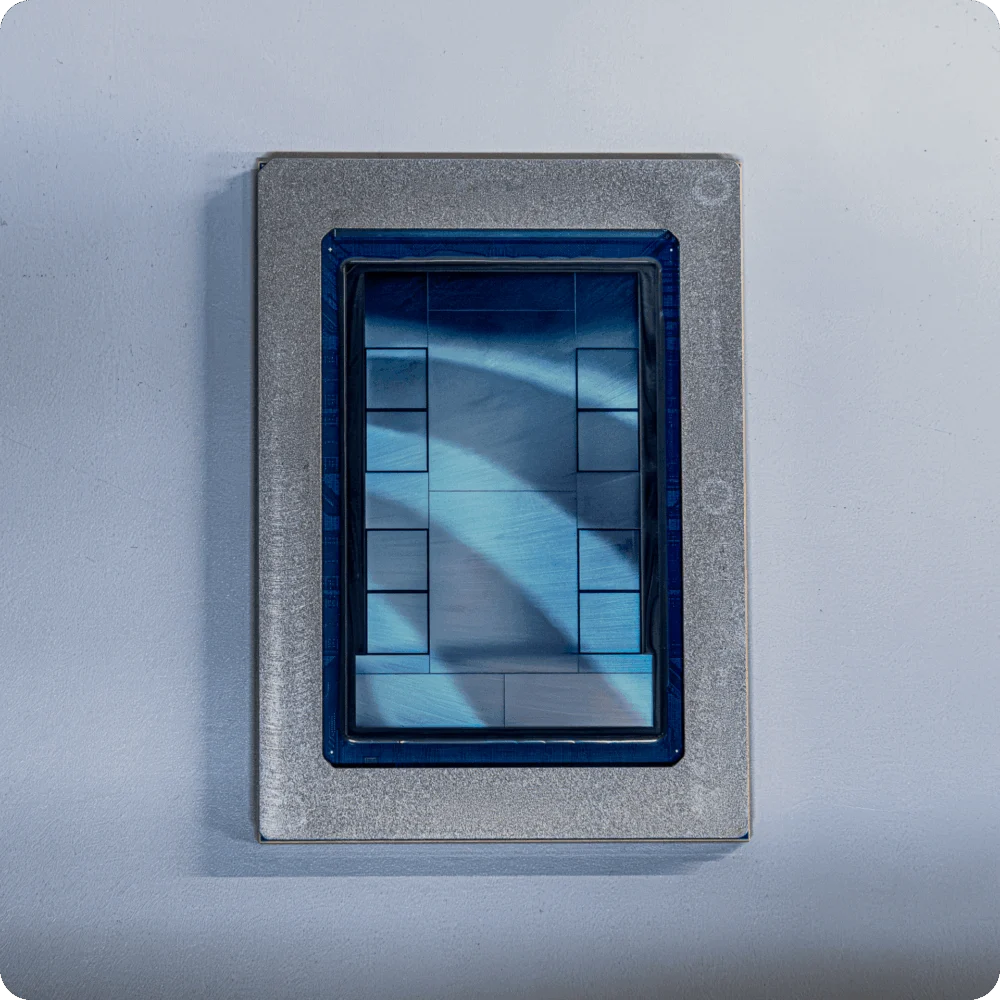
Meta announced on Wednesday a significant expansion of its internal hardware capabilities, unveiling four new custom-designed computer chips engineered to power the company’s increasingly complex generative artificial intelligence features and content recommendation engines. These semiconductors represent the latest evolution of the Meta Training and Inference Accelerator (MTIA) program, a multi-year initiative designed to reduce the social media giant’s reliance on third-party hardware providers while optimizing the efficiency of its massive data centers.
The announcement marks a pivotal shift for the parent company of Facebook, Instagram, and WhatsApp, which is transitioning from a software-centric organization into a vertically integrated technology powerhouse capable of designing its own physical computing infrastructure. By developing bespoke silicon, Meta aims to gain a competitive edge in the high-stakes AI race, tailoring its hardware to the specific requirements of its proprietary algorithms and massive user base of over three billion people.
A New Roadmap for the MTIA Ecosystem
The newly announced hardware includes the MTIA 300, which is currently in production, followed by three successive generations: the MTIA 400, 450, and 500. This aggressive roadmap is designed to keep pace with the rapid evolution of large language models (LLMs) and recommendation systems, which have historically outpaced traditional semiconductor development cycles.
The MTIA 300 is specifically optimized for training algorithms that handle content ranking and recommendations. These systems are the backbone of the "Discovery Engine" across Meta’s apps, determining which Reels, posts, and advertisements are shown to users. By utilizing custom silicon for these high-volume tasks, Meta can achieve higher throughput and lower power consumption compared to using general-purpose graphics processing units (GPUs).
Looking further ahead, the MTIA 400, 450, and 500 series are slated for delivery between early and late 2027. These future iterations will shift their focus toward "inference"—the process of running a pre-trained AI model to generate real-time outputs such as text, images, or video. Meta claims the MTIA 400 will offer performance levels competitive with leading commercial products currently available on the market. The subsequent MTIA 450 and 500 models will feature significant upgrades in high-bandwidth memory (HBM) and specialized innovations in low-precision data processing, which are critical for maintaining the speed of generative AI applications without sacrificing accuracy.
Strategic Partnerships and Technical Architecture
To bring these sophisticated designs to life, Meta has deepened its strategic collaboration with Broadcom, a veteran in the custom application-specific integrated circuit (ASIC) market. Broadcom’s role involves helping Meta integrate its custom logic with the necessary physical components and high-speed interconnects required for modern data centers. This partnership mirrors a similar move by OpenAI, which recently tapped Broadcom to assist in developing its own custom AI accelerators.
The underlying architecture of the new MTIA chips is built upon RISC-V, an open-source instruction set architecture (ISA). By choosing RISC-V over proprietary alternatives like ARM, Meta gains greater flexibility in customizing the hardware to its specific software stack while avoiding licensing fees and potential vendor lock-in. This open-source approach allows Meta’s engineers to modify the chip’s core functions to better suit the unique workloads of the Llama model family and other internal AI initiatives.
Manufacturing for the MTIA line is being handled by Taiwan Semiconductor Manufacturing Company (TSMC), the world’s preeminent foundry. Utilizing TSMC’s cutting-edge fabrication processes ensures that Meta’s chips can achieve the transistor density and energy efficiency required for large-scale AI deployment.
The Engineering Philosophy: An Iterative Approach to Silicon
The decision to announce four chips simultaneously reflects a change in how Meta views hardware development. YJ Song, Meta’s Vice President of Engineering, emphasized that the company has moved away from traditional, long-term betting on a single hardware generation. Instead, the company has adopted a modular, iterative approach.
"Rather than placing a bet and waiting for a long period of time, we deliberately take an iterative approach," Song stated in a recent technical briefing. "Each MTIA generation builds on the last, using modular chiplets and incorporating the latest AI workload insights and hardware technologies."
This "chiplet" strategy allows Meta to mix and match different components of the processor—such as memory controllers and compute cores—to create specialized versions of the hardware for different tasks. It also significantly reduces the time required to bring a new chip from the design phase to the data center floor, a necessity in an era where AI model requirements can change in a matter of months.
Economic Context and the Multi-Billion Dollar Infrastructure Pivot
Meta’s push into custom silicon is part of a broader, massive capital expenditure (Capex) strategy. For the 2024 fiscal year, Meta has projected capital expenditures in the range of $37 billion to $40 billion, with the vast majority of that spending directed toward AI infrastructure, including servers, data centers, and networking equipment.
While the MTIA program is a critical component of Meta’s long-term self-sufficiency, the company is not abandoning its relationships with external chipmakers. In fact, Meta recently confirmed multibillion-dollar deals to purchase hundreds of thousands of H100 GPUs from Nvidia and Instinct MI300 accelerators from AMD. CEO Mark Zuckerberg has previously stated that by the end of 2024, Meta’s infrastructure will include the equivalent of 350,000 Nvidia H100s.
The development of the MTIA line serves as a strategic hedge. By designing its own chips, Meta can optimize for its specific software—such as the PyTorch machine learning framework, which Meta originally created—while also gaining leverage in price negotiations with external vendors. Even a small percentage of workloads shifted to internal silicon can result in hundreds of millions of dollars in savings across Meta’s global data center footprint.
Industry Implications and the Race for Custom Silicon
Meta is not alone in its quest for custom hardware. The move signals a broader trend among "Hyperscalers"—the small group of tech giants that operate massive cloud infrastructures. Google has led the way for years with its Tensor Processing Units (TPUs), which have been instrumental in training its Gemini models. Amazon Web Services (AWS) offers its Trainium and Inferentia chips, and Microsoft recently entered the fray with its Maia 100 AI accelerator.
Analysts suggest that Meta’s decision to develop four chips concurrently is a direct response to reports earlier this year that its internal chip efforts had hit technical roadblocks. By unveiling a clear, aggressive roadmap through 2027, Meta is signaling to investors and the industry that it has overcome those hurdles and is fully committed to the "silicon-first" philosophy.
The implications for the broader semiconductor industry are profound. As the world’s largest buyers of chips begin to design their own hardware, traditional chipmakers like Nvidia may face a future where their primary customers also become their secondary competitors. However, for the foreseeable future, the demand for AI compute is so high that there is likely room for both merchant silicon (like Nvidia) and bespoke silicon (like MTIA) to coexist.
Challenges and Future Outlook
Despite the optimistic roadmap, Meta faces significant challenges. Developing custom silicon is notoriously difficult, involving high research and development costs and the risk of hardware becoming obsolete before it even reaches production. Furthermore, the global semiconductor supply chain remains tight, and securing manufacturing capacity at TSMC is a competitive and expensive endeavor.
Meta’s ability to successfully deploy the MTIA 400, 450, and 500 will depend on its capacity to synchronize its hardware development with its software advancements. As generative AI moves from text-based models to multimodal systems that process audio, video, and 3D environments, the demands on memory bandwidth and interconnect speeds will only intensify.
In the near term, the MTIA 300 will begin to play a larger role in how users experience Facebook and Instagram. By improving the efficiency of content ranking, Meta hopes to increase user engagement and advertising revenue—the primary engines of its business. In the long term, the MTIA program represents Meta’s ambition to control its own destiny in the age of artificial intelligence, ensuring that the company has the raw computing power necessary to build the next generation of digital experiences.
As the first MTIA 400 units begin to arrive at Meta’s data centers, the industry will be watching closely to see if Meta’s iterative, modular approach to silicon can truly compete with the specialized offerings of the world’s leading chip manufacturers. For now, the message from Menlo Park is clear: the future of social media is built on custom-designed silicon.
About the Author