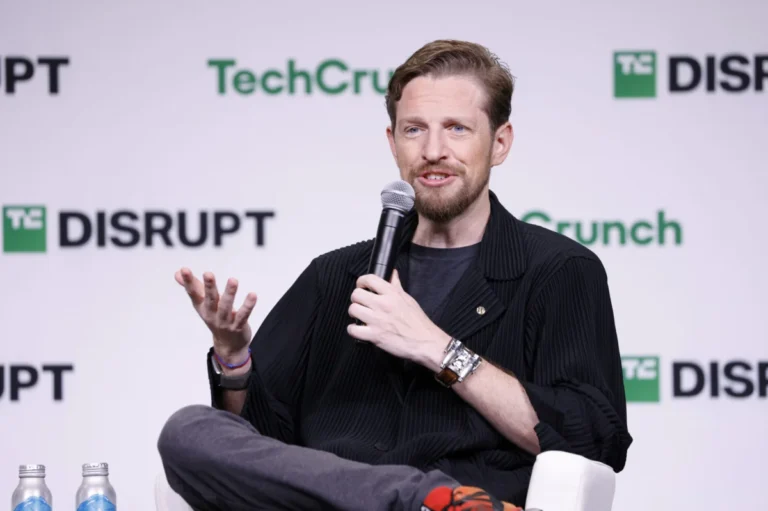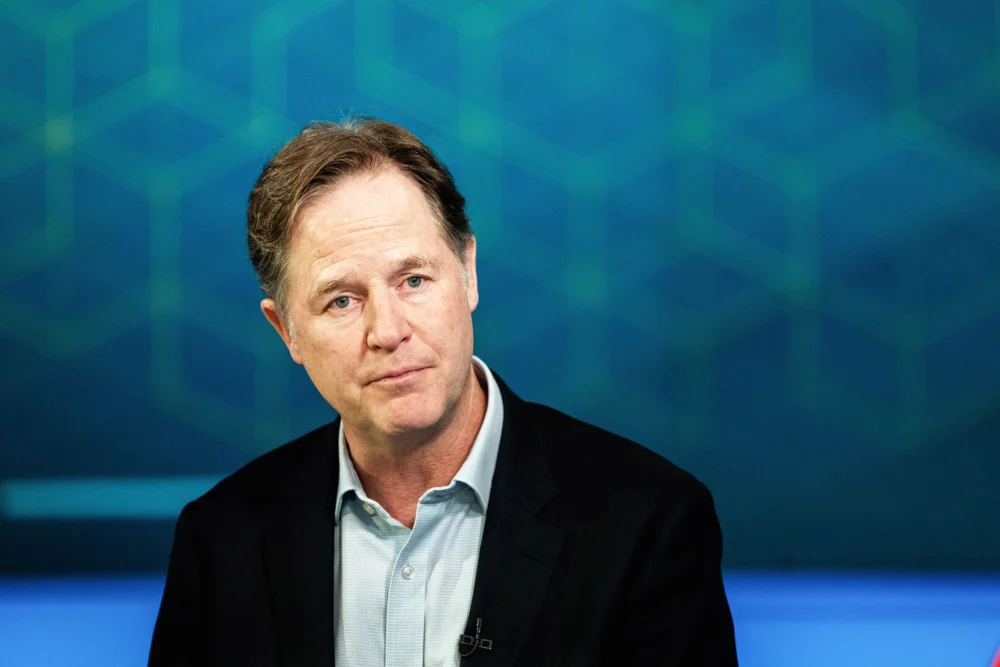
Nick Clegg, the former UK Deputy Prime Minister and long-serving president of global affairs at Meta, has officially transitioned into the private AI sector following his departure from the social media giant in January 2025. His exit from Meta, which occurred just days before Donald Trump’s return to the White House, marked the end of a seven-year tenure during which he navigated the company through some of its most turbulent regulatory and political challenges. This week, Clegg broke his recent silence to announce his appointment to the boards of two prominent AI-driven firms: the British data center infrastructure company Nscale and the educational technology startup Efekta.
The move signals a strategic shift for Clegg, who is moving away from the direct management of a social media behemoth toward the underlying infrastructure and practical applications of generative artificial intelligence. At Efekta—a spinout of the Swiss education conglomerate EF Education First—Clegg will oversee the deployment of an AI-based teaching assistant designed to provide personalized, one-to-one instruction to millions of students globally. The platform currently serves approximately 4 million users, with a primary focus on emerging markets in Latin America and Southeast Asia, where chronic teacher shortages have long hindered educational outcomes.
A Pragmatic Approach to AI Discourse
In his first major public comments since leaving Meta, Clegg has positioned himself as a centrist in the polarizing debate between "AI doomers"—who fear existential risks from superintelligence—and "boosters," who claim the technology is the most significant human invention since fire. Clegg dismisses both perspectives as "hype," suggesting that such extreme rhetoric is often a marketing tool used by those with vested interests in the industry.
Clegg’s skepticism toward the concept of "superintelligence" or Artificial General Intelligence (AGI) is particularly notable given his previous proximity to the cutting edge of research at Meta. He argues that the technology, while exceptionally proficient at specific tasks like coding or data processing, remains "very stupid" in many other human contexts. This "uncanny quality" of AI, he suggests, leads people to anthropomorphize the software, creating a fundamental misunderstanding of its actual capabilities and limitations.
The Education Pivot: Addressing the Teacher Shortage
The appointment to Efekta’s board highlights Clegg’s belief that the classroom will be one of the first sectors to undergo a radical transformation through AI. The Efekta platform utilizes adaptive learning models that adjust to a student’s individual pace and ability, providing the kind of personalized attention that is often impossible in traditional classroom settings.
According to data from UNESCO, the world needs an additional 69 million teachers to reach the goal of universal primary and secondary education by 2030. Clegg views AI as a "democratizing force" that can bridge this gap. He notes that a child in a rural province in Brazil could, in theory, receive the same quality of interactive tutoring as a student in an affluent London neighborhood. By serving as a teaching assistant, the AI handles the repetitive and administrative aspects of education, allowing human teachers to focus on more complex pedagogical tasks.
However, the introduction of AI into schools is not without controversy. Critics argue that reliance on chatbots could erode foundational skills, such as mental arithmetic or critical essay writing. Clegg likens these concerns to the initial resistance against calculators and whiteboards, arguing that while the tools change, the net effect on educational performance remains positive. He emphasizes that the goal is not to replace teachers but to provide them with a "teacher-controlled experience" that prevents the kind of emotional dependency or "surreptitious relationships" that can occur with more agentic, general-purpose AI assistants.
The Power Paradox and the Infrastructure Race
Beyond the classroom, Clegg’s analysis of the AI landscape is stark. He identifies what he calls a "power paradox": while AI empowers individuals by providing them with sophisticated tools, it simultaneously concentrates unprecedented power in the hands of a few corporations. This concentration is driven by the "physics of large language models" (LLMs)—the astronomical costs associated with building and maintaining the necessary infrastructure.
Clegg estimates that the industry is currently spending upwards of £130 billion (approximately $165 billion) annually on AI infrastructure alone. This includes the procurement of high-end GPUs, the construction of massive data centers, and the energy required to power them. This high barrier to entry ensures that only a handful of players in Silicon Valley and China can compete at the frontier of the technology. Clegg warns that a "shakeout" is inevitable, as the current level of spending is unsustainable for most companies.
This infrastructure reality explains his interest in Nscale, the data center firm where he also holds a board seat. As the demand for compute power continues to surge, the companies that control the "plumbing" of the AI era—the servers and cooling systems—will hold significant geopolitical and economic leverage.
Regulatory Critique: The EU AI Act and the US Volte-Face
One of Clegg’s most scathing critiques is reserved for European policymakers. He describes the European Union’s approach to AI regulation as a "textbook example of how not to regulate." Specifically, he targets the EU AI Act, which was drafted before the widespread emergence of ChatGPT and generative AI. Clegg argues that the legislation is a "ludicrous act of self-harm" that penalizes European entrepreneurs and stifles innovation by holding foundation model developers responsible for every potential downstream use of their technology.
In Clegg’s view, this regulatory environment betrays smart European founders who wish to build global competitors, effectively ensuring that Europe remains dependent on American and Chinese technology. He contrasts this with the current climate in the United States, where the tech elite have undergone a "total volte-face" regarding government relations.
The return of Donald Trump to the White House has seen a shift in Silicon Valley’s political strategy. Clegg observes that many "tech bros" who once championed content moderation and social responsibility are now "prostrating themselves" at the feet of the new administration to protect their business interests. He notes that the term "censorship" has been "infantilized" and "fetishized" by the MAGA movement to delegitimize any form of content moderation.
Clegg also points to the irony of the US position on free expression. While American advocates often claim that Europe is the sole practitioner of heavy-handed regulation, Clegg cites the recent US government pressure on companies like Anthropic as an example of regulatory intervention that even "dirigiste" Brussels bureaucrats would find extreme.
The Meta Legacy and the Oversight Board
Reflecting on his time at Meta, Clegg remains a staunch defender of the Facebook Oversight Board, an independent body he helped establish to adjudicate complex content moderation decisions. Despite criticism from those who believe the board lacks the power to "clip Mark Zuckerberg’s wings," Clegg insists it has been effective in making binding decisions that the company’s internal teams were forced to implement, often to their own frustration.
However, Clegg expresses disappointment that the Oversight Board has not become a broader industry blueprint. He attributes this failure to the shifting political winds in the US, particularly after Elon Musk’s takeover of Twitter (now X), which led to a widespread retreat from organized content moderation. Meta’s own shift toward crowdsourced moderation, replacing some independent fact-checkers, is viewed by Clegg as a pragmatic response to the reality that half of the US population views traditional fact-checkers as ideologically biased.
Chronology of Key Events
- 2018: Nick Clegg joins Facebook (later Meta) as VP of Global Affairs and Communications.
- 2020: The Oversight Board is launched as an independent body to review Meta’s content decisions.
- 2022: The release of ChatGPT triggers a global AI arms race and prompts the EU to accelerate the AI Act.
- 2024: The EU AI Act is officially adopted, creating a tiered risk-based framework for AI applications.
- January 2025: Clegg leaves Meta following the inauguration of Donald Trump and a shift in the US regulatory landscape.
- February 2025: Clegg announces his board roles at Nscale and Efekta, signaling a focus on infrastructure and education.
Analysis of Global Implications
Clegg’s transition from a major platform operator to a strategic advisor for AI infrastructure and education highlights a broader trend in the tech industry. As the "frontier" of AI moves from pure research to implementation, the focus is shifting toward where the technology can provide the most immediate utility.
His advocacy for open-source AI is perhaps his most significant policy stance. Clegg argues that open-sourcing models is the only way to break the oligopolistic power of proprietary model owners. He points out the irony that China is currently a leader in facilitating democratized access to AI tools through open source, whether by strategic design or as a byproduct of its competitive landscape.
For the education sector, Clegg’s involvement suggests that AI-driven personalized learning is moving from the experimental phase to large-scale deployment. If Efekta and similar platforms can successfully address the teacher shortage in developing nations, it could represent one of the most tangible "wins" for generative AI outside of the productivity tools used in the West.
As the AI race continues, Clegg’s move suggests that the real battleground will not just be in the development of more powerful models, but in the governance of the infrastructure they run on and the ethics of the settings where they are deployed. His critique of both "Brussels bureaucrats" and "Silicon Valley elites" underscores the ongoing struggle to find a middle ground between innovation and accountability in an era of unprecedented technological change.
About the Author