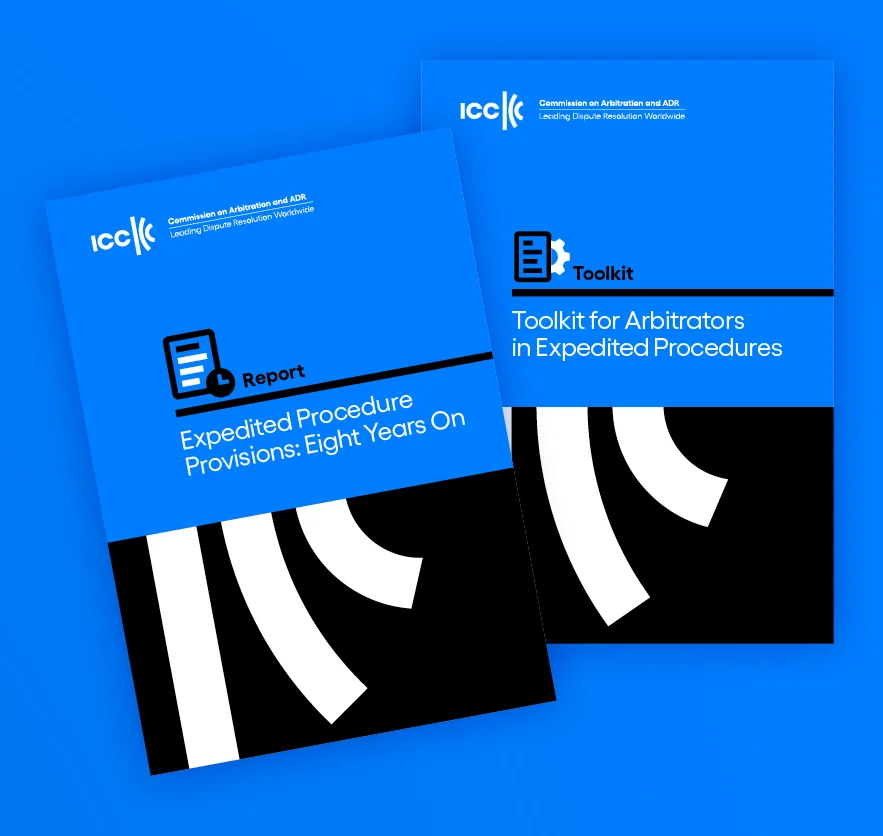
The International Chamber of Commerce (ICC) Commission on Arbitration and ADR has released a landmark suite of publications designed to evaluate and enhance the application of its Expedited Procedure Provisions (EPP). This comprehensive release comprises three distinct but interconnected documents: a detailed analytical report, a practical toolkit for arbitrators, and a statistical factsheet. Together, these resources represent the most significant review of the ICC’s fast-track arbitration mechanisms since their inception nearly eight years ago. By providing a deep dive into the evolution of expedited procedures, the ICC aims to offer legal practitioners, arbitrators, and corporate entities a roadmap for navigating high-speed dispute resolution without compromising the core principles of fairness and due process.
The "ICC Report: Expedited Procedure Provisions – Eight Years On" serves as the centerpiece of this initiative, offering an exhaustive review of cases administered since the provisions were first integrated into the ICC Rules of Arbitration. Accompanying this is the "ICC Toolkit for Arbitrators," which provides granular guidance on managing the compressed timelines inherent in expedited cases. Finally, the "ICC Expedited Procedure Provisions Factsheet" offers a data-driven overview of the program’s growth and success rates, highlighting a significant uptick in adoption by the global business community.
The Evolution of Expedited Arbitration: A Chronological Overview
The journey toward institutionalized expedited arbitration at the ICC began as a response to growing concerns within the international business community regarding the rising costs and increasing duration of traditional arbitration. While arbitration was originally conceived as a flexible and efficient alternative to litigation, by the early 2010s, many practitioners felt it had become overly formalistic and slow.
In response, the ICC introduced the Expedited Procedure Provisions on March 1, 2017. At the time, these rules were automatically applicable to all arbitrations where the amount in dispute did not exceed US$2 million, provided the arbitration agreement was concluded on or after the effective date. The introduction of these rules marked a paradigm shift, as they granted the ICC International Court of Arbitration the authority to appoint a sole arbitrator, even if the parties’ agreement specified a three-member tribunal. Furthermore, the rules empowered the tribunal to limit document production, witness testimony, and even dispense with oral hearings in favor of a "documents-only" proceeding.
A significant milestone occurred on January 1, 2021, when the ICC updated its rules to increase the threshold for the automatic application of the EPP from US$2 million to US$3 million for arbitration agreements concluded on or after that date. This change reflected the ICC’s confidence in the procedure and a recognition that even mid-value disputes could benefit from the efficiency of the expedited track. By the end of 2023, the ICC had registered a record 189 new EPP cases in a single year, bringing the total number of cases administered under these provisions to 865 since 2017.
Strategic Analysis of the Three New Publications
The release of these three publications is a strategic move by the ICC Commission to demystify the expedited process and address lingering skepticism among some practitioners who fear that speed might come at the expense of procedural rigor.
The ICC Report: Lessons from Emerging Practices
The report "Eight Years On" is an analytical deep dive into the practical application of Articles 30 and Appendix VI of the ICC Rules. It identifies key takeaways from nearly a decade of case law, focusing on how tribunals have balanced the mandate for speed with the necessity of a high-quality, enforceable award. The report clarifies how the ICC Court exercises its discretion when parties attempt to opt out of the EPP or when the complexity of a case suggests that the expedited track may no longer be appropriate. It also provides guidance on how to handle the transition from an expedited procedure back to a standard procedure should the amount in dispute increase during the proceedings.
The Toolkit for Arbitrators: Managing the Six-Month Deadline
One of the most challenging aspects of the EPP is the requirement that the final award be rendered within six months from the date of the Case Management Conference. The new Toolkit for Arbitrators is designed to be a practical manual for handling this pressure. It includes templates for procedural orders, strategies for narrowing the issues in dispute, and advice on conducting "active" case management. The toolkit emphasizes the arbitrator’s role not just as a judge, but as a manager of the process, encouraging a proactive approach to prevent the "dilatory tactics" that can often plague international disputes.
The Factsheet: Success by the Numbers
The one-page factsheet provides the empirical evidence needed to support the continued use of the EPP. By showcasing statistics from 2017 through 2024, the ICC demonstrates that the expedited procedure is no longer an "alternative" or "niche" offering, but a mainstream tool. The data reveals that the vast majority of EPP cases result in awards that are issued on time and withstand the scrutiny of the ICC Court’s award scrutiny process. This statistical transparency is intended to build trust among corporate counsel who must justify the choice of arbitration to their boards.
Official Perspectives on the New Guidance
The leadership of the ICC Commission on Arbitration and ADR has been vocal about the importance of these new resources in shaping the future of the industry. Hélène van Lith, Secretary of the ICC Commission, framed the initiative as a "return to the fundamentals." She noted that the work highlights the efficiency, cost-effectiveness, and flexibility of the EPP while maintaining the highest standards of fairness. According to van Lith, the guidance is grounded in the lived experience of over 800 arbitrations, making it a reflection of real-world practice rather than theoretical ideals.
Rogier Schellaars, Co-Chair of the Working Group, emphasized that the ICC’s Expedited Procedure is now "tried and tested," asserting that it delivers on party expectations regarding the quality and speed of service. His co-chair, Yasmine Lahlou, addressed the initial skepticism that met the EPP in 2017. She noted that despite early doubts, the procedure has undeniably met user needs. Lahlou expressed her conviction that the EPP will eventually become the "default rule" for all but the most complex and high-value disputes, as corporations seek to scale these efficiencies across their entire portfolio of legal conflicts.
Lara Hammoud, also a Co-Chair of the Working Group, pointed out that streamlined arbitration is becoming a "central feature of modern dispute resolution." She suggested that the lessons learned from these hundreds of cases allow the legal community to use expedited procedures with a level of confidence that was not possible a few years ago. Adding a broader perspective, Philippe Cavalieros, Vice-Chair of the ICC Commission, expressed hope that the efficiency of the EPP would inspire "regular" arbitral processes, fostering a general trend toward more cost-efficient justice across the board.
Broader Impact on Global Trade and Legal Practice
The implications of the ICC’s latest guidance extend beyond the immediate sphere of arbitration practitioners. For Small and Medium Enterprises (SMEs), which often find the costs of international litigation prohibitive, the continued refinement of the EPP offers a more accessible path to justice. By providing a predictable timeline and a capped-fee structure for arbitrators in many instances, the ICC makes it feasible for smaller companies to engage in cross-border trade with the assurance that they can resolve disputes without exhausting their resources.
Furthermore, the "active case management" encouraged by the EPP is influencing the behavior of counsel in standard arbitrations. The focus on identifying core issues early and limiting unnecessary evidence is becoming a best practice that transcends the $3 million threshold. This "cultural shift" in arbitration is perhaps the most significant long-term impact of the EPP.
From a geopolitical standpoint, the ICC’s commitment to expedited procedures strengthens the position of Paris and other ICC seats as competitive hubs for dispute resolution. In an era where regional arbitration centers are proliferating, the ICC’s ability to prove that it can handle cases both with "Big Law" sophistication and "startup" speed is crucial for its market dominance.
Conclusion and Future Outlook
As the ICC moves toward the end of 2024, the data suggests that the demand for expedited procedures will only continue to grow. The record 189 cases in 2023 indicates a trajectory that could see the EPP accounting for an even larger percentage of the ICC’s total caseload in the coming years.
The release of the report, toolkit, and factsheet provides the necessary infrastructure to support this growth. By documenting "lessons learned" and providing "concrete guidance," the ICC is ensuring that the next 800 cases are handled with even greater precision than the first. For the global legal community, these publications signify that the "experimental" phase of expedited arbitration is officially over; it is now a mature, essential component of the international legal architecture. The focus now shifts to how these principles of speed and efficiency might be scaled further, potentially influencing the management of even the largest and most complex global disputes in the decade to come.
About the Author