Anthropic, the San Francisco-based artificial intelligence startup and developer of the Claude large language model, has initiated a high-stakes legal battle against the United States federal government. In a lawsuit filed on Monday in a California federal court, the company challenged a recent designation by the Department of Defense (DoD) that labels Anthropic as a "supply-chain risk." This designation effectively blacklists the company from lucrative military contracts and complicates its relationships with a broad network of third-party software providers that serve the federal government. The legal action marks a significant escalation in a public and ideological rift between one of Silicon Valley’s most prominent AI safety advocates and a Pentagon leadership determined to accelerate the deployment of autonomous technologies.
The lawsuit requests that a federal judge reverse the risk designation and issue a permanent injunction to prevent federal agencies from enforcing it. Anthropic’s legal counsel argues that the executive branch has overstepped its constitutional authority, claiming the designation is a retaliatory measure intended to punish the company for its refusal to remove safety-oriented restrictions on its technology. According to the filing, the government’s move constitutes a violation of the company’s First Amendment rights, characterizing the sanction as an unlawful campaign of retaliation against protected corporate speech. To mitigate immediate financial damage, Anthropic is also seeking a temporary restraining order to allow continued sales to government entities while the case proceeds through the judiciary.
The Origins of the Dispute: Safety vs. Military Autonomy
The conflict between Anthropic and the Department of Defense, often referred to by Secretary Pete Hegseth as the "Department of War," began in earnest in early January 2026. The friction originated when Secretary Hegseth issued an order requiring all major AI providers to agree to terms that would allow the military to use their technologies for "any lawful purpose." This mandate was designed to remove the "safety guardrails" and "terms of service" limitations that many AI companies have integrated into their models to prevent the generation of harmful content or the facilitation of lethal operations.
Anthropic, which was founded by former OpenAI executives with a specific focus on "AI alignment" and safety, pushed back against these requirements. The company contended that its current suite of models, including Claude 3 and Claude 3.5, were not sufficiently mature or reliable enough to be utilized in high-stakes military applications such as mass domestic surveillance or the direction of fully autonomous weapons systems. Anthropic’s leadership argued that using AI for such purposes without strict oversight could lead to catastrophic errors or violations of international law.
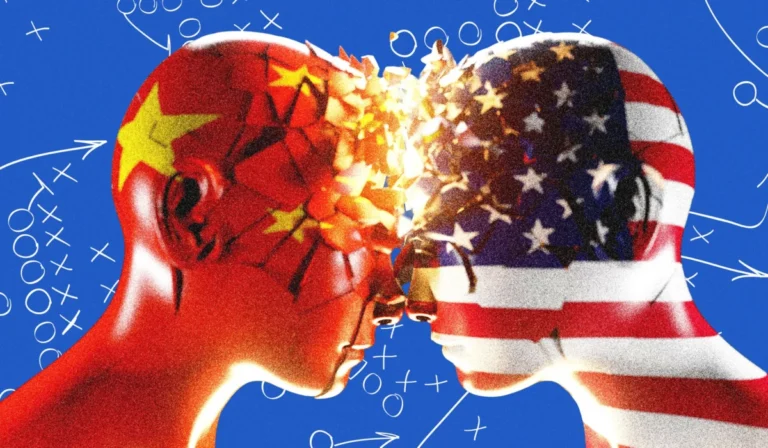
In response, Secretary Hegseth accused Anthropic of attempting to exert "veto power" over the Department of Defense’s operational judgments. The Pentagon’s stance is that the military, not private tech firms, should determine the ethical and legal boundaries of weaponized technology. This ideological clash culminated last week when the Pentagon formally sanctioned Anthropic, utilizing its authority to designate the company as a supply-chain risk—a tool historically reserved for foreign adversaries or companies under the influence of hostile governments.
A Chronology of the Legal and Administrative Escalation
The timeline of this dispute highlights a rapid breakdown in communication between the public and private sectors regarding the future of national security technology:
- January 2026: Secretary Pete Hegseth orders AI suppliers to waive terms-of-service restrictions for military use, emphasizing the need for AI to be integrated into "every facet of the warfighter’s toolkit."
- February 2026: Anthropic engages in private negotiations with the DoD, offering a compromise that would allow military use for logistics and analysis but maintain restrictions on lethal autonomous operations.
- Late February 2026: The Pentagon rejects Anthropic’s proposal, citing the need for "unfettered access" to ensure American technological superiority over global rivals.
- March 4, 2026: Reports emerge that major defense contractors, including Lockheed Martin and Palantir, have begun exploring alternatives to Anthropic’s Claude due to an impending risk designation.
- March 5, 2026: The Department of Defense formally designates Anthropic as a "supply-chain risk." Rival firm OpenAI announces a new, unrestricted contract with the Pentagon.
- March 9, 2026: Anthropic files its federal lawsuit in California, seeking a temporary restraining order and a reversal of the designation.
Legal Precedents and the "Supply Chain Risk" Designation
Legal experts suggest that Anthropic faces an uphill battle in the federal court system. The Department of Defense operates under the Defense Federal Acquisition Regulation Supplement (DFARS), specifically subpart 239.73, which grants the government broad discretion to identify and mitigate supply chain risks. Traditionally, these powers have been used to exclude companies like Huawei or ZTE from US infrastructure due to concerns regarding espionage and foreign control.
"It is 100 percent in the government’s prerogative to set the parameters of a contract," noted Brett Johnson, a partner at Snell & Wilmer. "The Pentagon has a robust legal right to claim that any product which limits the government’s ability to effectuate its mission is a risk to the mission itself."
However, Anthropic’s legal strategy hinges on the argument that the designation was "arbitrary and capricious." By pointing to the fact that OpenAI was granted a contract shortly after Anthropic was sanctioned, the company intends to show it was singled out for its specific safety-related speech. If Anthropic can prove that OpenAI’s technology is subject to similar technical limitations but was not sanctioned, they may be able to demonstrate a case of discriminatory treatment or a violation of due process.
Political Reactions and the "Woke AI" Narrative
The lawsuit has become a lightning rod for political discourse regarding the role of Silicon Valley in national defense. The White House has taken an unusually aggressive stance against the company. Presidential spokesperson Liz Huston stated that the administration would ensure "courageous warfighters" are never "held hostage by the ideological whims of any Big Tech leaders." Huston further characterized Anthropic’s safety protocols as "woke AI" terms of service, signaling a shift in the executive branch’s approach toward the tech industry.
Conversely, a coalition of high-profile technologists and former national security officials has come to Anthropic’s defense. A letter sent to the Senate Armed Services Committee—signed by figures such as former CIA Director Michael Hayden and Harvard Law professor Lawrence Lessig—warned that using supply-chain risk designations against domestic firms sets a "dangerous precedent." The group argued that this authority was never intended to be used as a cudgel to force private companies to abandon their ethical guidelines or safety standards.
The letter also urged Congress to step in and establish clear, statutory policies on the use of AI for domestic surveillance and lethal autonomous systems, rather than leaving such decisions to the "unilateral discretion" of the executive branch.
Economic and Industrial Implications
The financial stakes for Anthropic are immense. The US government is one of the largest purchasers of enterprise-grade AI services, and the "supply-chain risk" label carries a stigma that extends far beyond direct government sales. Because the designation applies to any contractor incorporating Claude into services sold to the military, major players like Palantir—which uses Claude within its "Maven Smart System" for attack planning and document analysis—may be forced to migrate to other models.
Several AI startups focused on defense, such as Vannevar Labs, have already begun pitching their models as viable, "regulation-free" replacements for Claude. If the designation holds, Anthropic could lose hundreds of millions of dollars in annual recurring revenue. Furthermore, Microsoft, a major distributor of Claude through its Azure platform, has already indicated it will stop offering Anthropic’s models to the Department of Defense to remain in compliance with federal directives, though it will continue to serve other agencies for the time being.
Analysis: The Future of Dual-Use AI
The outcome of Anthropic v. Department of Defense will likely define the relationship between the US government and the AI industry for the next decade. At the heart of the case is the question of "dual-use" technology: can a company maintain a single set of safety standards for both civilian and military applications?
Anthropic’s CEO, Dario Amodei, remains hopeful for a resolution, stating that "productive conversations" with the Pentagon are ongoing. However, the administration’s rhetoric suggests a fundamental shift toward "technological mobilization," where the distinction between private safety research and public military necessity is increasingly blurred.
If the court sides with the government, it could signal the end of the "safety-first" era for AI companies seeking to work with the public sector. If Anthropic succeeds, it may establish a new constitutional shield for tech companies, protecting their right to define the ethical boundaries of the products they create, even when those products are deemed essential to national security. As the hearing scheduled for this Friday approaches, the tech industry and the defense establishment alike are bracing for a ruling that will reverberate far beyond the walls of the courtroom.
About the Author