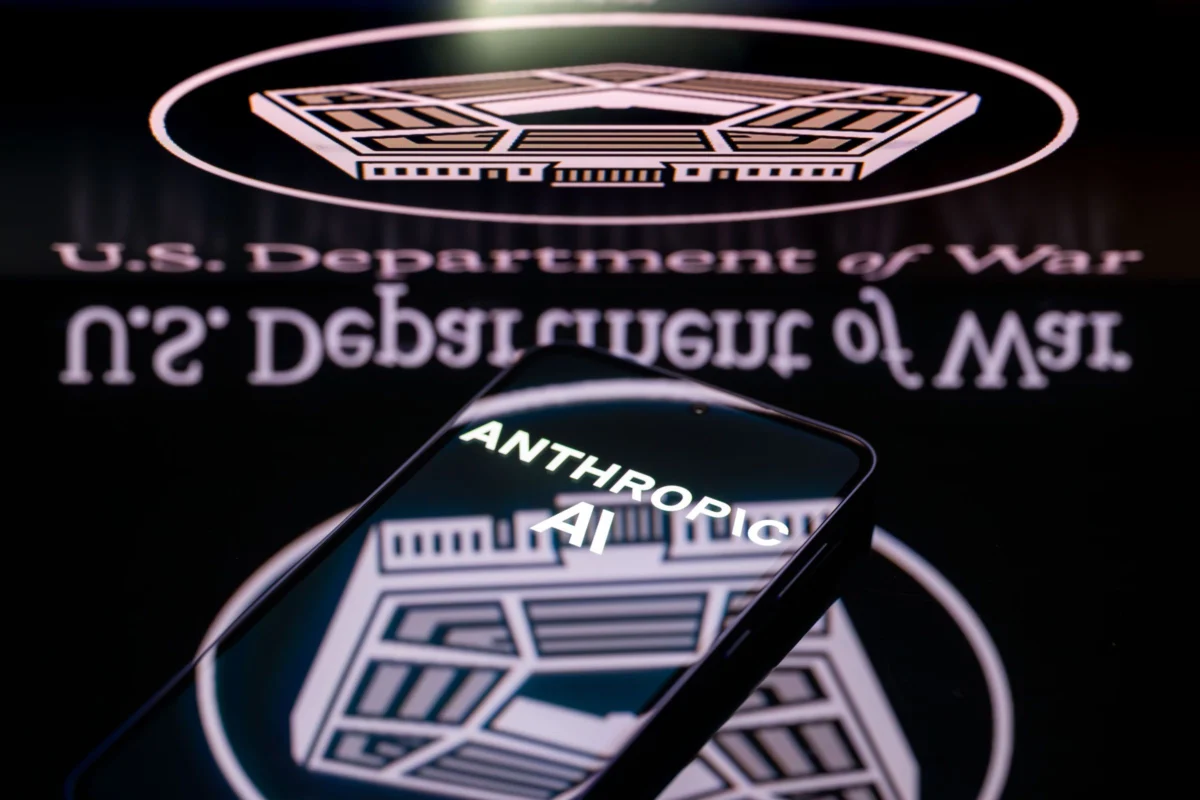
The United States Department of Justice, representing the Trump administration, filed a robust legal defense on Tuesday in a federal court in San Francisco, arguing that its designation of the artificial intelligence developer Anthropic as a "supply-chain risk" does not infringe upon the company’s First Amendment rights. This filing marks a significant escalation in a high-stakes legal confrontation that could redefine the relationship between the federal government and the burgeoning generative AI industry. The government’s legal team characterized Anthropic’s lawsuit as a flawed attempt to use constitutional protections to force its commercial terms onto the Department of Defense (DOD), predicting that the legal challenge is destined for failure.
At the heart of the dispute is the administration’s decision to apply a restrictive "supply-chain risk" label to Anthropic, a move that effectively bars the company from competing for lucrative defense contracts. The Department of Justice (DOJ) attorneys were blunt in their assessment of the company’s claims, stating that the First Amendment does not provide a license for private entities to unilaterally impose contract terms on the government. The government further asserted that Anthropic had cited no legal precedent to support what it described as a "radical conclusion" regarding the intersection of corporate speech and federal procurement policy.
The Origins of the Designation and the Nature of the Sanctions
The legal conflict stems from the Pentagon’s decision to sanction Anthropic based on concerns regarding the company’s internal safety protocols and its potential for non-compliance with military objectives. The designation is a powerful administrative tool that allows the Department of Defense to exclude specific vendors from its supply chain if they are deemed to pose a threat to the integrity or security of national systems. For Anthropic, a company that has positioned itself as a "safety-first" AI developer, the label is not only a reputational blow but a catastrophic financial hurdle.
Internal projections and court filings suggest that if the designation remains in place, Anthropic stands to lose up to billions of dollars in expected revenue within the current fiscal year. The company’s Claude AI models had previously gained significant traction within government agencies, often integrated through third-party platforms such as Palantir’s data analysis software. Anthropic is currently seeking a preliminary injunction to halt the enforcement of the designation and resume "business as usual" while the broader litigation proceeds. Judge Rita Lin, who is presiding over the San Francisco case, has scheduled a critical hearing for next Tuesday to determine whether a temporary reprieve will be granted.
The Government’s Argument: National Security vs. Corporate Autonomy
In Tuesday’s filing, the Justice Department dismissed Anthropic’s claims of "irreparable injury" resulting from lost business, describing such financial concerns as "legally insufficient" to warrant a court-ordered stay. Beyond the financial arguments, the government’s filing provided a rare look into the specific security concerns held by Defense Secretary Pete Hegseth and other high-ranking officials. The administration argued that the decision was driven by "concerns about Anthropic’s potential future conduct" should the company maintain access to sensitive government technology systems.
The crux of the government’s anxiety lies in Anthropic’s "red lines"—the ethical boundaries the company has established to prevent its AI from being used for purposes it deems harmful, such as mass surveillance or the operation of fully autonomous weapons. The Department of Defense contends that these self-imposed restrictions make Anthropic an unreliable partner in high-stakes military environments. According to the filing, Secretary Hegseth "reasonably" determined that Anthropic staff might "sabotage, maliciously introduce unwanted function, or otherwise subvert the design, integrity, or operation of a national security system" if the company’s ethical standards were at odds with military orders.
The government’s lawyers argued that the Pentagon cannot rely on a contractor that might "in its discretion" attempt to disable its technology or alter the behavior of its models during ongoing warfighting operations. "No one has purported to restrict Anthropic’s expressive activity," the attorneys wrote, emphasizing that the government is not censoring the company’s speech but is instead choosing not to purchase services from a provider it no longer trusts.
A Timeline of the Escalating Conflict
The friction between Anthropic and the Department of Defense has developed over several months, evolving from a collaborative partnership into a public legal battle.
- Initial Collaboration: Throughout the previous year, Anthropic’s Claude models became a staple for several federal agencies, particularly those utilizing Palantir’s "AIP" (Artificial Intelligence Platform) to process large datasets and generate strategic insights.
- The Policy Shift: As the Trump administration took office, a more aggressive stance on "woke" corporate policies and technological sovereignty began to influence procurement decisions. Secretary Hegseth and other officials reportedly grew wary of AI companies that prioritized ethical guardrails over absolute military utility.
- The Designation: In early 2024, the Department of Defense officially designated Anthropic a supply-chain risk. This move was unprecedented for a major domestic AI firm and immediately disrupted ongoing contract negotiations.
- The Lawsuit: Anthropic filed suit in two separate venues, including San Francisco, alleging that the administration had overstepped its statutory authority and was engaging in illegal retaliation for the company’s public stances on AI safety.
- The DOJ Response: The filing on Tuesday represents the government’s formal refusal to back down, setting the stage for the upcoming Tuesday hearing.
Supporting Data and the Race for Replacement
The stakes of the litigation are underscored by the Pentagon’s rapid move to diversify its AI portfolio. While Anthropic was previously a primary provider of large language models for classified systems, the Department of Defense is now actively working to replace Claude with technologies from competing firms. According to the Tuesday filing, the department is in the process of deploying AI systems from Google, OpenAI, and Elon Musk’s xAI as viable alternatives.
The government acknowledged the complexity of this transition, noting that it "cannot simply flip a switch" to replace Anthropic, given that Claude is currently the only AI model cleared for use on certain classified systems. This admission highlights the strategic bottleneck the Pentagon currently faces: it views Anthropic as a security risk but remains temporarily dependent on its technology during active combat operations.
Data from market analysts suggests that the broader AI sector is watching this case closely. Anthropic, which has raised billions in funding from tech giants like Amazon and Google, represents a significant portion of the "frontier model" market. A permanent exclusion from government contracts could shift the competitive landscape, providing an opening for OpenAI and xAI to secure a dominant position in the federal defense market, which is projected to spend over $2 billion on AI-related research and procurement in the coming year.
Industry Reactions and Amicus Briefs
The legal battle has prompted a flurry of activity from the tech industry and civil society. Several high-profile organizations have filed amicus briefs in support of Anthropic, arguing that the government’s move sets a dangerous precedent for the entire technology sector.
- Microsoft and Tech Peers: Despite being a competitor, Microsoft has supported Anthropic’s position, likely concerned that the government could use similar "supply-chain risk" designations to punish other companies that implement safety guardrails or refuse specific military requests.
- AI Researchers: A group of prominent AI researchers and former employees from DeepMind and OpenAI filed a brief arguing that penalizing a company for its safety standards undermines the global effort to develop responsible AI.
- Labor Unions: A federal employee labor union also weighed in, expressing concern that the sudden removal of Anthropic’s tools could disrupt the work of thousands of civil servants who have integrated Claude into their daily workflows.
- Former Military Leaders: Interestingly, some former military officials have supported Anthropic, suggesting that a "rogue" designation for a domestic company based on its ethical policies could weaken the U.S. innovation base.
To date, no third-party amicus briefs have been filed in support of the government’s position, leaving the DOJ to stand alone in its defense of the Pentagon’s decision.
Fact-Based Analysis of Legal and Strategic Implications
The outcome of this case will likely hinge on the degree of deference the court grants to the executive branch on matters of national security. Historically, U.S. courts have been reluctant to second-guess the Department of Defense when it identifies a security vulnerability. However, Anthropic’s argument—that the designation is a form of "illegal retaliation"—touches on a sensitive area of administrative law. If the company can prove that the designation was not based on a legitimate technical vulnerability but rather on a political disagreement over AI safety policies, it may find a sympathetic ear in the judiciary.
From a strategic perspective, the conflict reveals a growing "trust gap" between the Silicon Valley elite and the current administration. The Pentagon’s description of Anthropic as a "rogue" contractor suggests that the government is no longer willing to accept the "black box" nature of AI models if they come with strings attached regarding their usage. This could lead to a future where the DOD demands "sovereign" versions of AI models—versions that are stripped of the developer’s ethical filters and placed under total military control.
Furthermore, the mention of xAI and OpenAI as potential replacements indicates a shift toward companies that have signaled a greater willingness to collaborate with military objectives. OpenAI recently removed its blanket ban on "military and warfare" use from its terms of service, while Elon Musk’s xAI is widely seen as being more aligned with the current administration’s "anti-woke" technological agenda.
Next Steps in the Litigation
Anthropic has until Friday to file its counter-response to the government’s latest arguments. This filing will likely attempt to dismantle the DOJ’s claim that the company’s "red lines" constitute a threat of sabotage. Anthropic is expected to argue that its safety protocols are transparent, documented, and intended to prevent the very "malicious function" the government claims to fear.
The hearing on Tuesday before Judge Rita Lin will be a pivotal moment. If Lin grants the preliminary injunction, Anthropic will be able to maintain its current contracts and bid for new ones, providing a temporary lifeline to its revenue streams. If the judge sides with the government, Anthropic may face a long, arduous legal battle while its competitors solidify their hold on the defense department’s AI infrastructure.
As the deadline for the Friday response approaches, the tech and legal communities remain on high alert. The resolution of this case will not only determine the financial future of Anthropic but will also establish the rules of engagement for the next generation of dual-use technology in the United States.
About the Author