
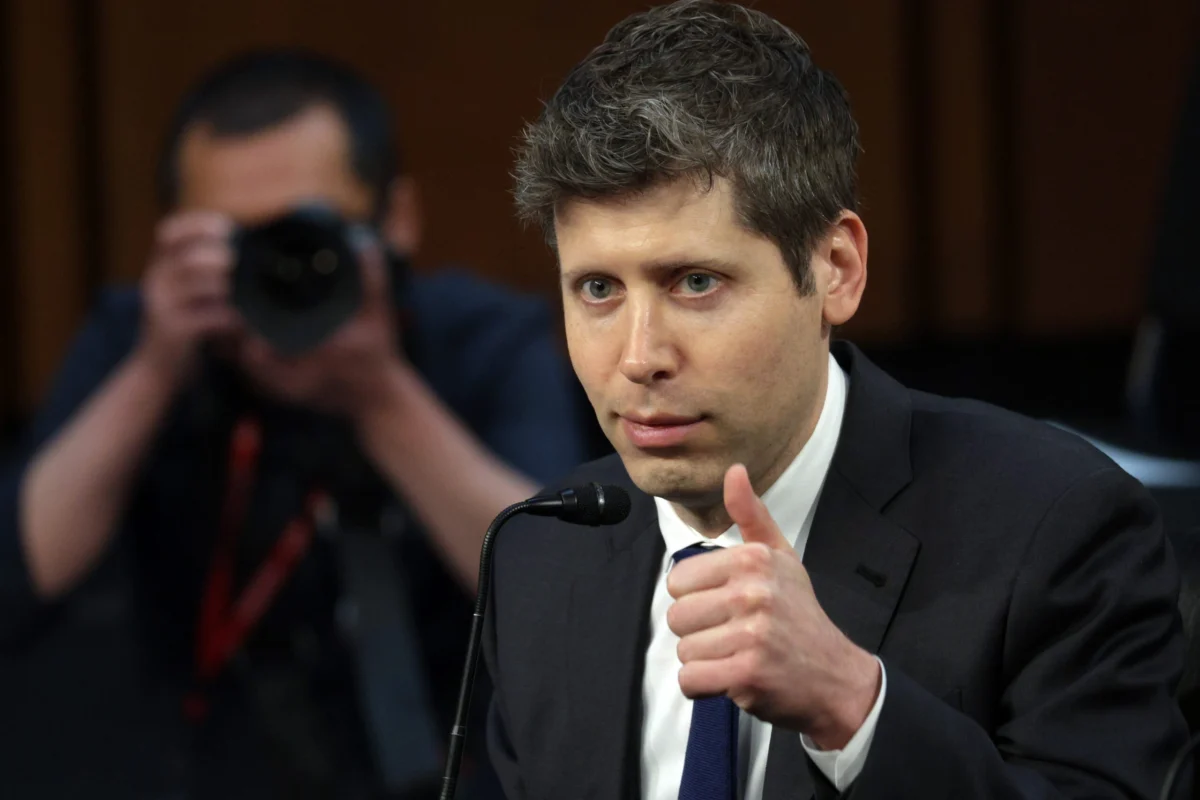
The tech industry is currently grappling with a wave of significant layoffs, with major companies like Amazon, Block, and Atlassian citing the accelerating integration of artificial intelligence as a primary driver for workforce reductions. In the midst of this disruptive period, Sam Altman, CEO of OpenAI, shared a message on the social platform X (formerly Twitter) expressing profound gratitude to the developers who meticulously crafted the complex software that underpins current AI advancements. This sentiment, however, has inadvertently ignited a fervent online discussion, with many interpreting his words as a poignant, and perhaps ironic, acknowledgment of the very individuals whose roles are now perceived to be threatened by the technology OpenAI has helped pioneer.
The controversy unfolded on Tuesday, March 17, 2026, when Altman posted: "I have so much gratitude to people who wrote extremely complex software character-by-character. It already feels difficult to remember how much effort it really took. Thank you for getting us to this point." This message, intended as an expression of appreciation for the foundational work of human programmers, landed with a starkly different resonance for many in the developer community. The timing of his post, following a cascade of layoff announcements across the tech landscape, amplified the perceived disconnect.
Recent data underscores the scale of the current employment shifts. Amazon, at the end of January 2026, announced a substantial reduction of 16,000 employees. This was followed by Block, which, at the end of February 2026, halved its workforce, impacting approximately 4,000 individuals. More recently, in early March 2026, Atlassian confirmed a 10% reduction in its staff. Furthermore, reports have emerged indicating that Meta is contemplating another significant round of layoffs, potentially affecting up to 20% of its workforce, with AI efficiencies being a key rationale. These events have collectively created an atmosphere of anxiety and uncertainty among technology professionals.
The core of the online backlash stems from the perception that OpenAI, a leading force in AI development, is indirectly contributing to the very job displacement it is now publicly acknowledging. Altman’s expression of gratitude, while seemingly benign, has been interpreted by some as a subtle dismissal of the ongoing relevance of traditional software development skills. Critics argue that the massive datasets of code, meticulously written by human developers over years, have been instrumental in training advanced AI models like those developed by OpenAI. The implication, for some, is that Altman’s acknowledgment of past efforts, without a clear articulation of future roles for these developers, feels disingenuous in the current climate of AI-driven automation.
The internet, true to its nature, responded with a torrent of reactions, ranging from direct anger to a characteristic embrace of satire and humor. While some users expressed overt frustration, with one commenter on X stating, "You’re welcome. Nice to know that our reward is our jobs being taken away," a significant portion of the online discourse gravitated towards comedic commentary. This reaction highlights a common coping mechanism within communities facing profound technological and economic shifts.
A Chronology of AI’s Impact on Developer Roles
The current wave of AI-driven workforce adjustments is not an overnight phenomenon but rather the culmination of years of rapid advancements in machine learning and artificial intelligence.
- Early 2020s: The proliferation of large language models (LLMs) and generative AI tools begins to demonstrate capabilities in code generation, debugging assistance, and automated testing. Companies start exploring pilot programs to integrate these tools into their development workflows.
- 2024-2025: As AI models become more sophisticated and accessible, their application in streamlining software development processes intensifies. This period sees increased investment in AI-powered developer tools and platforms, alongside growing discussions about potential productivity gains and the future of coding roles. Reports of fewer junior developer positions emerge, signaling a shift in entry-level opportunities.
- Late 2025 – Early 2026: The economic climate, coupled with demonstrable AI efficiencies, leads to a surge in major layoff announcements across the tech sector. Companies begin to publicly link these reductions to the adoption of AI for enhanced productivity and cost optimization.
- March 2026: Sam Altman’s statement on X, expressing gratitude to developers for their past contributions, ignites widespread debate amidst the ongoing layoff spree, highlighting the complex relationship between AI advancement and human employment in the tech industry.
Analyzing the Underlying Trends and Implications
Altman’s statement, while a direct acknowledgment of past human effort, inadvertently touches upon a critical debate: the evolving role of human developers in an AI-augmented future. The very technologies that OpenAI and similar organizations are developing, powered by vast amounts of code written by human hands, are now being leveraged to increase efficiency and, in some cases, reduce the need for certain types of human labor.
The implication of Altman’s post, for many, is that the intricate, character-by-character coding process, once the bedrock of software engineering, is being rendered analogous to outdated technologies like the rotary telephone – a relic of a bygone era. This perspective, while perhaps not Altman’s explicit intention, resonates with the anxieties of developers who have dedicated their careers to mastering these skills.
The public response, as observed on X, offers a window into the prevailing sentiment:
- Frustration and Resignation: Some users voiced direct anger, feeling that their hard work was being rewarded with job insecurity. The sentiment of "thank you for your service, now you’re not needed" was palpable.
- Sarcastic Commentary: A significant portion of the responses employed dark humor and sarcasm. Memes and witty remarks flooded the platform, reflecting a collective attempt to process the unsettling developments. Examples included:
- A user quipping, "Dear devs You will lose your jobs forever and be forced to work in the coal mines. But you can rest easy knowing Sam Altman is grateful. 🙄 ⛏️"
- Another suggested, "Billion dollar app idea: AI that reads billionaire tweets before they post them and says ‘this is going to make you sound incredibly out of touch, are you sure?’"
- A comment humorously pointed out the irony of gratitude when AI itself could be used to analyze such statements: "This reads like something the Mayans would say right before the ceremony starts."
- Another user humorously highlighted the global implications, stating, "I have gratitude to OpenAI for doing all the AI work so I can have free Chinese open source AI models to use 🤷♀️"
These varied reactions underscore the multifaceted impact of AI on the tech workforce. While the efficiency gains and potential for innovation offered by AI are undeniable, the human cost and the shifting landscape of employment are subjects of intense concern and debate.
Broader Impact and Future Considerations
The current discourse surrounding AI and job displacement extends far beyond the immediate reactions to Sam Altman’s post. It raises fundamental questions about the future of work, the education and retraining required for the evolving job market, and the ethical responsibilities of technology leaders.
The increasing reliance on AI in software development suggests a future where the role of a developer may shift from writing code line by line to more supervisory, strategic, and architectural responsibilities. This could involve guiding AI agents, verifying AI-generated code, focusing on complex problem-solving that requires human intuition and creativity, and ensuring the ethical deployment of AI systems.
However, the transition to this new paradigm is fraught with challenges. The immediate consequence for many experienced developers is the threat of obsolescence for certain skill sets, while aspiring developers may find the traditional entry points to the profession narrowing. The economic implications of widespread job displacement, even if temporary or transitional, could be significant, impacting consumer spending, social stability, and the broader economic growth trajectory.
Moreover, the narrative around AI often oscillates between utopian visions of enhanced productivity and dystopian fears of mass unemployment. Companies like OpenAI, at the forefront of this technological revolution, face the dual challenge of driving innovation while also contributing to solutions that mitigate the negative societal impacts of their creations. The public’s scrutiny of figures like Sam Altman reflects a demand for greater transparency, accountability, and a clear vision for how AI will be integrated into society in a way that benefits humanity broadly, not just a select few.
The ongoing conversations, fueled by statements like Altman’s and the stark realities of the current tech job market, are crucial for shaping the future trajectory of AI development and its integration into the global economy. They highlight the urgent need for proactive strategies, including robust reskilling and upskilling initiatives, ethical AI development frameworks, and a societal dialogue about the equitable distribution of the benefits derived from artificial intelligence. The gratitude expressed by Altman, while a point of contention, serves as a reminder of the human foundation upon which current technological marvels are built, and underscores the ongoing responsibility to navigate the future of work with foresight and consideration for all stakeholders.
About the Author





