
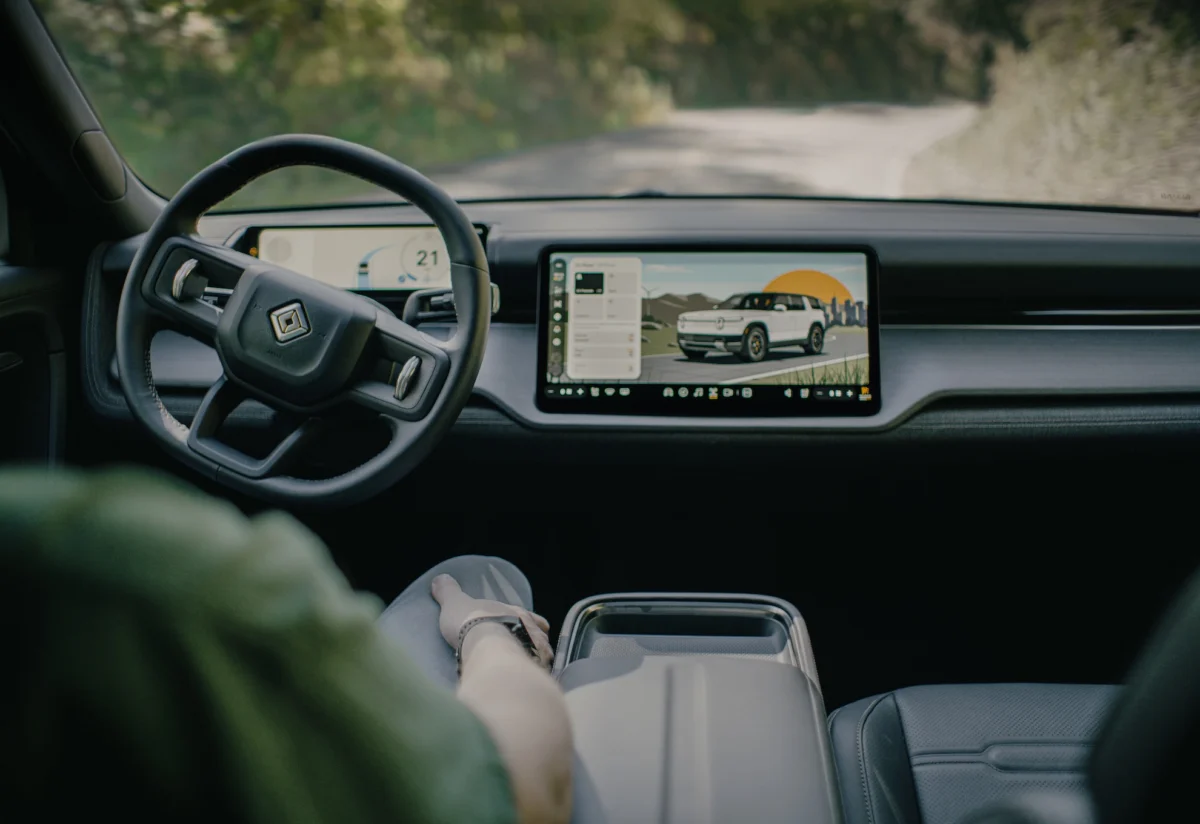
The transportation landscape is undergoing a seismic shift, with Uber strategically positioning itself at the forefront of autonomous vehicle (AV) deployment. In a significant move that underscores this commitment, the ride-hailing giant has announced a groundbreaking partnership with electric vehicle manufacturer Rivian. This alliance, detailed in a multi-billion dollar agreement, will see Uber invest $300 million in Rivian and commit to purchasing an initial fleet of 10,000 fully autonomous R2 robotaxis, slated for deployment in San Francisco and Miami starting in 2028. The deal also includes an option for Uber to acquire an additional 40,000 vehicles from 2030 onwards, with the entire fleet to operate exclusively on Uber’s expansive network.
This strategic pivot from Uber is a testament to its evolving AV strategy. After divesting its in-house autonomous vehicle unit, Uber ATG, in 2020 to focus on its core ride-hailing and delivery businesses, the company never abandoned its interest in AV technology. Instead, it embarked on a multi-pronged approach, forging partnerships with dozens of AV technology firms across diverse sectors, including delivery services, drone operations, trucking, and robotaxis. This global outlook has led to agreements with international players, including Chinese companies for robotaxi launches in Europe and the Middle East, and with innovative startups like the UK-based Wayve. The Rivian deal, however, marks a new chapter, representing Uber’s most significant single investment in a vehicle manufacturer to date and a deep dive into integrated AV development and fleet deployment.
The financial intricacies of the Uber-Rivian deal are substantial, with the total potential value reaching up to $1.25 billion. However, the immediate financial outlay from Uber is relatively modest, suggesting a calculated risk-sharing model where the onus of development and production rests heavily on Rivian. This partnership is unique in Uber’s AV portfolio as it involves a single entity that is both the developer of the self-driving system and the manufacturer of the vehicle.
For Rivian, this agreement presents a monumental opportunity but also carries considerable challenges. The R2 SUV, which will form the basis of the robotaxi, is yet to enter production. Furthermore, Rivian has not yet fully tested or deployed a self-driving system specifically designed for large-scale robotaxi operations. Adding another layer of complexity, the robotaxis are slated to be manufactured at Rivian’s new factory in Georgia, a facility that is still under construction. This ambitious timeline and the reliance on a new manufacturing site highlight the significant hurdles Rivian must overcome. The EV maker has already acknowledged the financial strain of its autonomy ambitions, projecting that it will not meet its 2027 profitability goal due to substantial investments in this area. This underscores the high stakes involved for Rivian in fulfilling its end of the bargain with Uber.
A Little Bird Whispers of Long-Term Negotiations

Sources close to both Uber and Rivian suggest that discussions regarding this robotaxi partnership have been ongoing for a considerable period. One individual with direct knowledge of the negotiations commented that "a deal like this wouldn’t happen overnight," implying a protracted and strategic courtship between the two companies. When pressed for further details, the response hinted at the long-term vision of Rivian’s CEO, RJ Scaringe, suggesting that the company’s strategic planning extends well beyond short-term gains. This points to a deliberate and well-considered approach to integrating autonomous technology into their vehicle offerings.
Nvidia’s Pervasive Influence in Autonomous Vehicle Development
Beyond the Uber-Rivian alliance, the broader autonomous vehicle ecosystem continues to buzz with activity. Nvidia, a titan in the chip manufacturing sector, is aggressively expanding its footprint in the AV space. The company is actively investing in AV technology firms, providing direct capital injections and in-kind chip deals. Concurrently, Nvidia is solidifying partnerships with automakers through its Nvidia Drive Hyperion autonomous vehicle development platform. During its recent GTC conference, CEO Jensen Huang announced new and expanded deals with major automotive players including BYD, Geely, Hyundai, and Nissan. These collaborations add to existing agreements with global giants like GM, Mercedes-Benz, and Toyota, all of whom are leveraging Nvidia’s platform for their AV development.
Nvidia’s strategic focus on AVs has been evident for years, but the current pace and specificity of these deals are particularly noteworthy. Huang articulated a pivotal moment for autonomous driving, stating, "The ChatGPT moment of self-driving cars has arrived. We now know we could successfully autonomously drive cars." He emphasized the significant market share these partner automakers represent, collectively building 18 million cars annually, underscoring the potential reach of Nvidia’s technology.
Significant Funding Rounds and Strategic Acquisitions Across the Mobility Sector
The innovation and investment in the mobility sector are not confined to ride-hailing and chip manufacturing. Several other companies have recently secured substantial funding or undergone strategic acquisitions:

-
Advanced Navigation, an Australian firm specializing in navigation and autonomous systems, successfully raised $110 million in a Series C funding round. The round was led by Airtree Ventures, with strategic participation from Quadrant Private Equity and the National Reconstruction Fund Corporation (NRFC). This funding is intended to accelerate the next era of autonomous systems development.
-
Arc Boat Company, a Los Angeles-based electric boat manufacturer, closed a $50 million Series C funding round. Investors in this round included Eclipse, a16z, Menlo Ventures, Lowercarbon Capital, Necessary Ventures, and Offline Ventures, signaling strong confidence in the electrification of maritime transport.
-
BusRight, a startup focused on school bus routing and technology solutions, has secured over $30 million in a new funding round spearheaded by Volition Capital. The investment will be used to enhance its platform features, aiming to improve the efficiency and safety of school transportation.
-
Jeff Bezos, the founder of Amazon, is reportedly in the process of raising a massive $100 billion fund. This new venture capital initiative is expected to target companies in major industrial sectors, including automotive and aerospace. The strategy involves modernizing these established firms through the application of artificial intelligence, powered by Bezos’s new startup, Project Prometheus.
-
Rivr, a Zurich-based autonomous robotics company renowned for its innovative stair-climbing delivery robot, has been acquired by Amazon. While the financial terms of the acquisition were not disclosed, the move signals Amazon’s continued interest in expanding its last-mile delivery capabilities through advanced robotics.
-
Trevor Milton, the founder of the now-defunct electric truck startup Nikola, who received a presidential pardon, is reportedly seeking to raise $1 billion for a new venture focused on AI-powered aircraft. This ambitious project indicates a continued drive towards innovation in transportation technology, albeit in a different domain.

-
Zenobe Energy, a prominent player in the electric fleet sector, has acquired Revolv, a San Francisco-based fleet charging startup. The terms of this acquisition were not disclosed, but it represents a strategic expansion for Zenobe in the North American market.
Notable Reads and Other Tidbits from the Mobility Frontier
The ongoing developments in the mobility sector extend beyond major deals and funding rounds, with significant news emerging from various corners of the industry:
-
A cyberattack on Intoxalock, a company providing vehicle breathalyzer systems, has led to widespread disruptions across the United States, leaving numerous drivers unable to start their vehicles. This incident highlights the critical cybersecurity vulnerabilities within connected vehicle technology.
-
Kodiak Robotics has expanded its commercial autonomous freight operations to include the Dallas-El Paso corridor. This strategic route expansion is a key component of the company’s network growth roadmap, according to COO Michael Wiesinger, marking another step towards widespread adoption of autonomous trucking.
-
The National Highway Traffic Safety Administration (NHTSA) has elevated its investigation into the performance of Tesla’s Full Self-Driving (Supervised) software. The probe has been upgraded to an "engineering analysis," the highest level of scrutiny, which is a prerequisite for a potential recall order. This intensified scrutiny focuses on the software’s performance in low-visibility conditions.

A Glimpse into the Future of Robotics with RJ Scaringe
In a separate development, Rivian founder and CEO RJ Scaringe shared his insights on the future of robotics in an interview. Scaringe articulated a vision for industrial robotics that diverges from the current industry trend of developing highly complex, acrobatic robots. He believes that the primary focus should be on the functionality of robotic hands, which are crucial for most industrial tasks. "I think what’s missed in industrial [robotics] and this is one of the things we really see clearly, is the work happens with the hands," Scaringe stated. "So, the hands are very, very important. Everything else, from a robotic system point of view, is to get the hands to the right place. And so the ability for the robots to do really complex motions, like, let’s say, like a back flip, that actually just means the robot has a lot of unnecessary complexity in it for the vast majority of tasks." Scaringe’s new startup, Mind Robotics, is expected to reflect this philosophy, prioritizing the development of sophisticated robotic hands over elaborate, multi-functional robotic bodies. This perspective offers a pragmatic approach to advancing robotics, focusing on utility and efficiency for widespread industrial application.
The continued momentum in autonomous vehicle development, coupled with significant investments and strategic partnerships, signals a transformative period for the transportation industry. As companies like Uber and Rivian push the boundaries of what’s possible, the vision of a future dominated by autonomous mobility inches closer to reality, promising to reshape how we travel and transport goods.
About the Author





