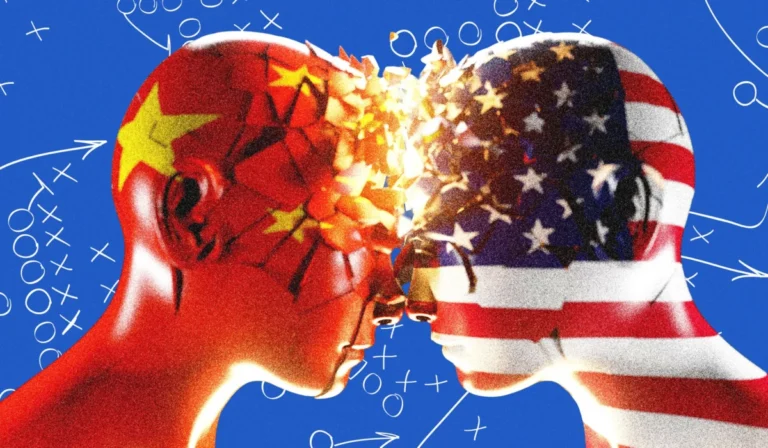
The United States Department of Defense is facing intense judicial scrutiny over its decision to designate the artificial intelligence startup Anthropic as a national security supply-chain risk. During a high-stakes court hearing in San Francisco on Tuesday, U.S. District Judge Rita Lin suggested that the government’s actions may constitute an illegal attempt to "cripple" the company in retaliation for its efforts to restrict the military’s use of its technology. The case has emerged as a landmark confrontation between the ethical boundaries set by Silicon Valley developers and the operational demands of the American defense establishment.
Judge Lin’s remarks during the proceedings highlighted significant concerns regarding the constitutionality of the government’s conduct. She noted that the Department of Defense (DoD)—which has recently rebranded its public-facing identity as the Department of War (DoW)—appears to be punishing Anthropic for bringing public attention to a contract dispute. "It looks like an attempt to cripple Anthropic," Lin stated, adding that such a move would be a clear violation of the First Amendment if the designation was indeed motivated by a desire to suppress the company’s public dissent.
The Genesis of the Conflict
The legal battle stems from two federal lawsuits filed by Anthropic, an AI safety and research company known for its Claude large language model. The company alleges that the Trump administration’s decision to label it a security risk was not based on legitimate technical vulnerabilities, but was instead a retaliatory strike. This designation followed a period of escalating tension in which Anthropic sought to implement strict contractual limitations on how its AI tools could be deployed in lethal or kinetic military operations.
Anthropic has long positioned itself as a "safety-first" AI firm, utilizing a framework known as "Constitutional AI" to ensure its models adhere to specific ethical principles. When the Department of Defense sought to integrate Claude into its operational infrastructure, Anthropic pushed for safeguards to prevent the technology from being used in ways that violated its internal safety protocols. When the government refused these terms, Anthropic sought to bring the dispute into the public eye, prompting the subsequent "supply-chain risk" designation.
A Chronology of Escalation
The relationship between Anthropic and the Pentagon has deteriorated rapidly over the last twelve months. The following timeline outlines the key events leading to the current litigation:
- Early 2024: Anthropic enters into preliminary agreements and pilot programs with various defense agencies to explore the utility of the Claude model in logistics and data analysis.
- Summer 2024: Negotiations over long-term contracts stall as Anthropic insists on "non-lethal use" clauses. The company begins briefing congressional aides and media outlets on its concerns regarding military AI safeguards.
- Late 2024: The Department of Defense officially designates Anthropic as a supply-chain risk. This designation is typically reserved for entities controlled by foreign adversaries, such as Huawei or ZTE.
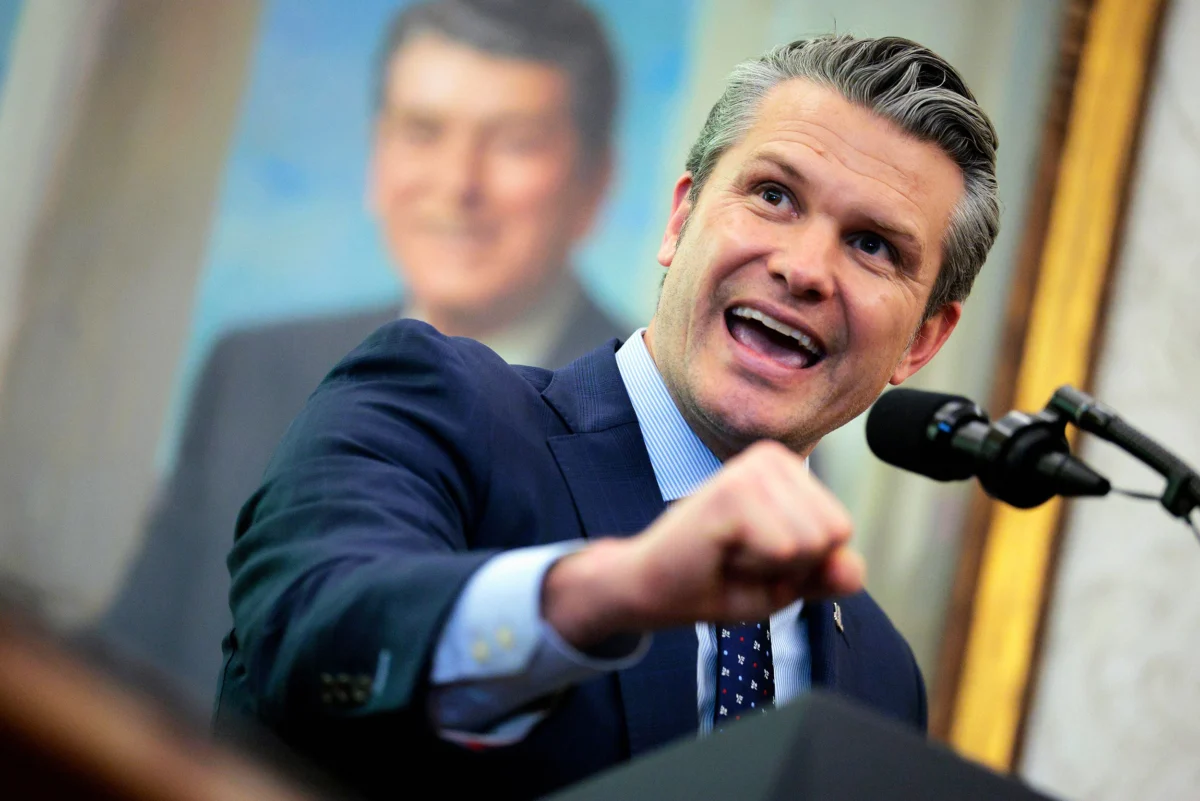
- January 2025: Defense Secretary Pete Hegseth issues a public statement via social media declaring an immediate moratorium on all commercial activity between military contractors and Anthropic.
- February 2025: Anthropic files two lawsuits—one in San Francisco and one in Washington, D.C.—seeking to overturn the designation and secure a temporary restraining order to prevent further economic damage.
Legal Arguments and Judicial Skepticism
During Tuesday’s hearing, the government’s legal team, led by Trump administration attorney Eric Hamilton, argued that the designation was a procedural necessity. The government contends that because Anthropic expressed a willingness to restrict its software, the military could no longer trust the tools to function reliably during "critical moments" of warfare.
"The worry is that Anthropic, instead of merely raising concerns and pushing back, will say we have a problem with what DoW is doing and will manipulate the software so it doesn’t operate in the way DoW expects and wants it to," Hamilton argued. He characterized the move as a preemptive defense against potential "software sabotage" by a "stubborn" vendor.
However, Judge Lin expressed skepticism regarding the breadth of the government’s response. She questioned why the Department of War did not simply terminate its contracts with Anthropic if it no longer trusted the vendor. Instead, the government utilized a supply-chain risk designation that effectively blacklists Anthropic from the entire defense industrial base, including work that has nothing to do with the military.
Lin pointedly asked Hamilton about a post on the social media platform X by Secretary Pete Hegseth, which stated that "no contractor, supplier, or partner that does business with the United States military may conduct any commercial activity with Anthropic." When Lin asked for the legal authority behind such a sweeping ban on private commercial activity, Hamilton admitted he did not know why the Secretary had posted the statement.
Economic and Industrial Implications
The "supply-chain risk" label has had an immediate and chilling effect on Anthropic’s business operations. In court filings, Anthropic’s legal representative, Michael Mongan of the law firm WilmerHale, described the designation as an "extraordinary" measure that has made the company’s existing and potential customers "skittish."
The defense industry is a massive ecosystem, and many of Anthropic’s commercial clients also hold contracts with the Pentagon. The threat of losing their government standing by association with Anthropic has led several firms to reconsider their partnerships. Anthropic is currently seeking a temporary injunction to pause the designation, arguing that without immediate relief, the company faces "irreparable harm" to its reputation and market share.
While Anthropic faces these hurdles, the Pentagon has already begun shifting its focus toward competitors. The Department of War confirmed it is working to replace Anthropic’s technology with models from Google, OpenAI, and Elon Musk’s xAI. This shift underscores the high stakes of the dispute; the winner of the "military AI" race stands to secure billions of dollars in long-term government spending.
Analysis of National Security Authorities
The legal crux of the case lies in the interpretation of the Federal Acquisition Supply Chain Security Act (FASCSA). This law provides the government with the authority to exclude certain vendors if they pose a risk to national security. However, legal experts note that these authorities are rarely used against domestic American companies with no ties to foreign adversaries.
Judge Lin noted that the security directives issued against Anthropic "don’t seem to be tailored to stated national security concerns." By applying a tool intended for foreign espionage threats to a domestic policy dispute over AI ethics, the government may have overstepped its administrative bounds.
Furthermore, the case touches upon the "Unconstitutional Conditions" doctrine. This legal principle suggests that the government cannot deny a benefit (like a contract or the right to do business) to an entity because that entity exercised a constitutional right (such as the right to free speech or to petition the government). If Anthropic can prove that the designation was a direct response to its public criticism of the Pentagon, the government’s case may collapse.
Broader Impact on Silicon Valley
The outcome of this litigation will likely set a major precedent for the relationship between the tech industry and the federal government. For years, Silicon Valley has wrestled with the ethics of "Project Maven" and other military AI initiatives. While companies like Palantir and Anduril have embraced a "defense-first" posture, others like Anthropic have attempted to maintain a degree of distance.
If the court rules in favor of the Department of War, it would signal that any company wishing to work with the U.S. government must relinquish control over the ethical deployment of their technology. It would effectively grant the Pentagon the power to destroy the commercial viability of any domestic firm that disagrees with its policies by labeling them a "security risk."
Conversely, a victory for Anthropic would reinforce the right of private corporations to set ethical boundaries for their products without fear of state-sponsored economic retaliation. It would also require the executive branch to provide more transparent and evidence-based justifications when utilizing powerful supply-chain exclusion authorities.
Conclusion and Next Steps
Judge Lin is expected to issue a ruling on the requested injunction within the coming days. Her decision will hinge on whether Anthropic can demonstrate a "likelihood of success on the merits" regarding its First Amendment and administrative law claims. Meanwhile, a separate but related case is pending in a Washington, D.C. appeals court, which will examine the government’s actions from a different regulatory perspective.
As the Department of War continues its rapid integration of artificial intelligence into the fabric of American national defense, the Anthropic case serves as a critical check on the limits of executive power in the digital age. The tension between national security imperatives and corporate freedom of speech has rarely been so starkly defined, and the resolution of this dispute will echo through the boardrooms of Silicon Valley and the halls of the Pentagon for years to come.
About the Author