
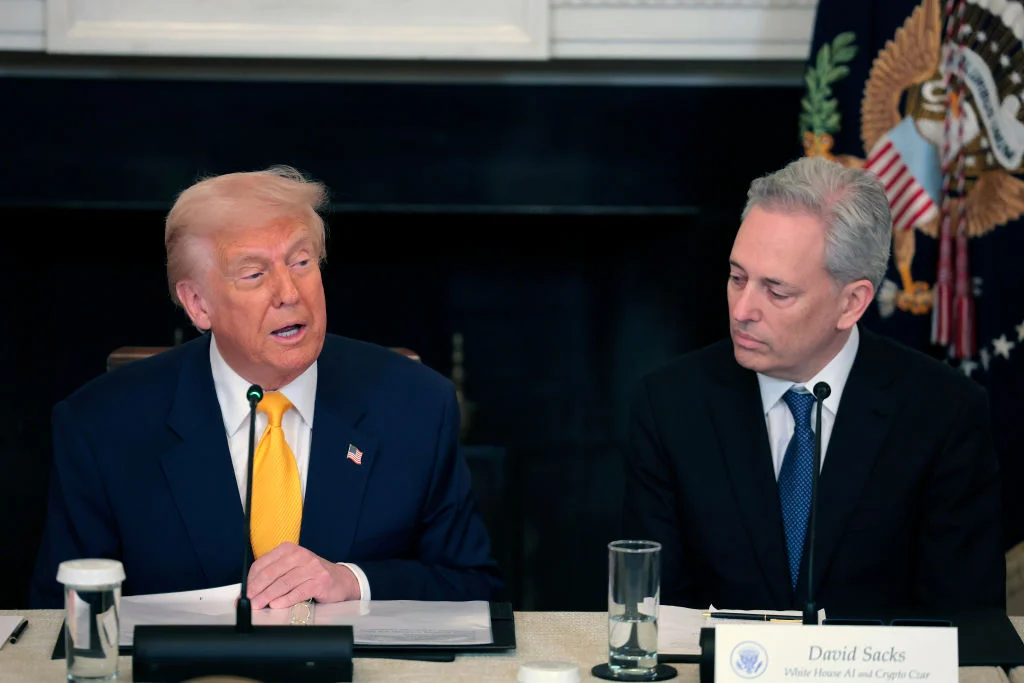
David Sacks, a prominent entrepreneur and investor, has concluded his tenure as Donald Trump’s special government employee focused on artificial intelligence and cryptocurrency. His 130-day term, which concluded on Thursday, saw him acting as a de facto "AI and crypto czar" for the administration. In a statement to Bloomberg, Sacks confirmed his departure from this role and his new position as co-chair of the President’s Council of Advisors on Science and Technology (PCAST), a significant shift in his advisory capacity.
Transition to a Broader Technological Advisory Role
Sacks articulated his strategic reasoning for the transition, telling Bloomberg, "I think moving forward as co-chair of PCAST, I can now make recommendations on not just AI but an expanded range of technology topics." This move signifies a broader scope for his influence, moving from specific domains of AI and crypto to encompass a wider spectrum of technological advancements. His involvement will now be channeled through PCAST, a body tasked with providing expert advice to the President on matters of science and technology policy.
While Sacks’ role as AI and crypto czar afforded him a direct line to President Trump and a tangible influence on policy shaping, his new position within PCAST represents a more indirect, albeit potentially influential, advisory function. PCAST operates as a federal advisory committee, producing studies, reports, and recommendations that are then forwarded through established governmental channels. This structure inherently places Sacks further from the immediate power center in Washington compared to his previous role, where his direct engagement with the President allowed for more immediate policy input.
The Esteemed Composition of PCAST
The President’s Council of Advisors on Science and Technology boasts a rich history, with its origins tracing back to the Franklin D. Roosevelt administration. However, the current iteration, which Sacks will co-chair alongside senior White House technology adviser Michael Kratsios, is notable for its exceptional roster of influential figures. Sacks himself highlighted this distinction, telling Bloomberg, "the most star power of any group like this" has ever been assembled. This assertion is difficult to dispute, given the caliber of individuals appointed to the initial 15-member council.
The council’s membership reads like a who’s who of the technology and business world, including:
- Jensen Huang, CEO of Nvidia, a leader in artificial intelligence hardware.
- Mark Zuckerberg, CEO of Meta Platforms, overseeing a vast social media and virtual reality empire.
- Larry Ellison, Co-founder and Chairman of Oracle, a titan in database and cloud computing.
- Sergey Brin, Co-founder of Google, a key architect of the internet search revolution.
- Marc Andreessen, Co-founder of Andreessen Horowitz, a highly influential venture capital firm.
- Lisa Su, CEO of AMD, a major competitor in the semiconductor industry.
- Michael Dell, Founder and CEO of Dell Technologies, a significant player in personal computers and enterprise solutions.
The inclusion of numerous billionaires and titans of industry underscores the council’s intended impact and its focus on leveraging top-tier private sector expertise for public policy.
Strategic Priorities for PCAST
Sacks outlined several key areas that PCAST will address under his co-chairmanship. These include artificial intelligence, advanced semiconductors, quantum computing, and nuclear power. A significant near-term focus will be on advancing President Trump’s national AI framework, which was released just last week. Sacks described this framework as a crucial step towards rectifying what he characterized as a fragmented and inefficient regulatory landscape at the state level.
"You’ve got 50 different states regulating this in 50 different ways," Sacks explained to Bloomberg, emphasizing the challenges faced by innovators. "And it’s creating a patchwork of regulation that’s difficult for our innovators to comply with." The national framework aims to provide a more cohesive and predictable regulatory environment, fostering innovation and competitiveness in the rapidly evolving AI sector. This initiative reflects a broader governmental push to establish clear guidelines for emerging technologies, ensuring that the United States remains at the forefront of technological development.
Circumstances of the Transition and Unanswered Questions
The timing of Sacks’ transition has also drawn attention, particularly in light of recent public statements he made regarding U.S. foreign policy. Earlier this month, during an appearance on his co-hosted podcast, "All In," Sacks publicly advocated for the administration to seek an exit from the U.S.-backed war with Iran. He detailed a series of escalating potential consequences, including attacks on oil infrastructure, destruction of desalination plants, and even the possibility of nuclear escalation by Israel, urging for a diplomatic resolution.
President Trump publicly responded to these comments, telling reporters that Sacks had not discussed the war with him. This exchange has led to speculation about whether Sacks’ independent policy pronouncements contributed to his departure from the direct advisory role. When questioned by Bloomberg about the podcast episode, Sacks downplayed its relevance to his government service, stating, "I’m not on the foreign policy team or the national security team," and emphasizing that his podcast remarks represented his personal views, not official administration positions.
Historical Context of PCAST’s Influence
Understanding the potential impact of Sacks’ new role requires examining the historical effectiveness of PCAST across different administrations. The council, while a longstanding entity, has seen varying degrees of influence.
The Obama Administration’s Productive Tenure
The Obama administration’s PCAST is often cited as one of its most productive. During his two terms, the council released 36 reports, two of which directly led to significant policy changes. A notable example is an FDA regulation that expanded the market for over-the-counter hearing aids, demonstrating the council’s capacity to translate recommendations into tangible policy outcomes.
The Trump Administration’s Initial Council
In contrast, President Trump’s first-term PCAST experienced a slower start. It took nearly three years to name its initial members, produced a limited number of reports, and did not leave a substantial imprint on policy during that period. This contrasts with the more robust output observed under previous administrations.
The Biden Administration’s Academic Focus
President Biden’s PCAST leaned heavily towards an academic membership, comprising Nobel laureates, MacArthur fellows, and members of the National Academy. While this council issued a modest number of reports, its focus and composition differed from the current iteration.
A New Paradigm for PCAST
The current PCAST, under Sacks’ co-chairmanship, represents a departure from the more academic or traditionally governmental advisory models of the past. Its composition, drawn almost entirely from the executive ranks of leading technology companies, signals a deliberate strategy to harness the insights and practical experience of those at the forefront of technological innovation. This approach suggests a focus on actionable advice and an understanding of the real-world implications of technological policy.
Sacks’ Return to Private Sector Endeavors
With his government service concluded, Sacks is now free to fully resume his active role as an investor and entrepreneur. He is a co-founder of Craft Ventures, a venture capital firm, where he remains a partner. Questions regarding his immediate next steps and potential future ventures have been posed to a spokesperson for Craft Ventures, but no response had been immediately available at the time of reporting.
It is worth noting that Sacks’ prior government service involved obtaining ethics waivers to maintain financial stakes in AI and cryptocurrency companies while simultaneously influencing federal policy in those sectors. This arrangement drew considerable scrutiny and criticism from ethics experts and lawmakers, who raised concerns about potential conflicts of interest. The renewed focus on his private sector activities, particularly in light of these past criticisms, will likely be a subject of continued observation.
The transition of David Sacks from a focused, direct advisory role to a broader, though less direct, capacity within PCAST marks a significant development in the administration’s approach to technology policy. His new position, leading a council populated by some of the world’s most influential tech leaders, positions him to shape the future of technological development and regulation in the United States, albeit through a different, more deliberative pathway. The success of this new iteration of PCAST will depend on its ability to translate the collective expertise of its members into impactful policy recommendations and to navigate the complex intersection of private sector innovation and public interest.
About the Author





