In a seismic shift that has redefined the marketing profession, an overwhelming two-thirds of marketers report that the field has transformed more in the past three years than in the preceding half-century. This rapid evolution underscores the critical necessity for marketers to grasp the fundamental differences between Loop Marketing and traditional marketing frameworks, especially as they navigate the increasingly AI-driven landscape of 2026. These two paradigms diverge significantly in their approaches to reaching, engaging, and retaining customers, a distinction that has become paramount for professional success.
Unlike the linear, straightforward customer journey envisioned by traditional marketing—typically moving from awareness to purchase—Loop Marketing operates as a continuous, adaptive system powered by artificial intelligence. This new framework is not merely an incremental update but a fundamental reimagining of customer interaction, designed to thrive in an environment where information is abundant, fragmented, and often delivered instantaneously by AI.
The Obsolescence of the Traditional Marketing Funnel
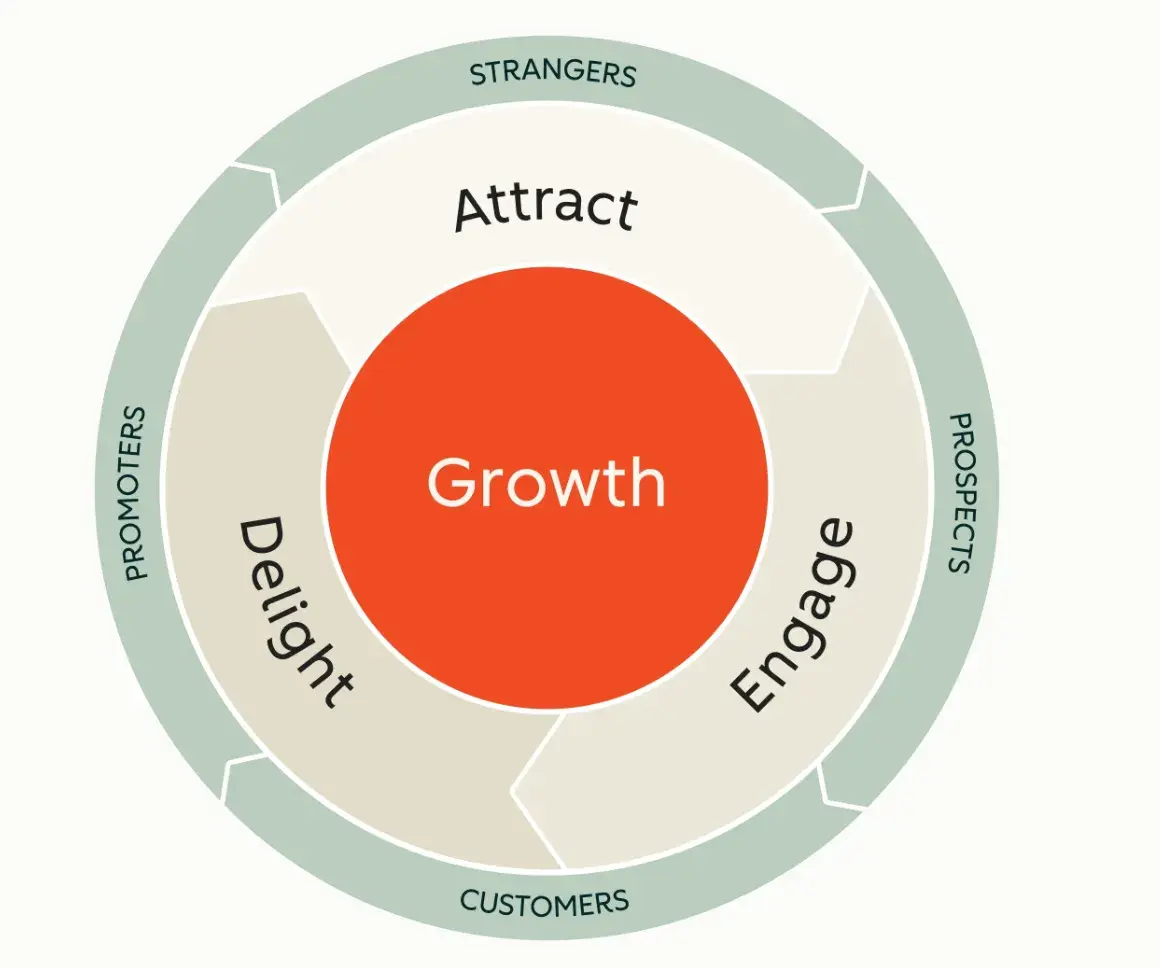
The traditional marketing funnel, long the bedrock of customer acquisition and retention strategies, is facing unprecedented challenges. For decades, this model depicted a predictable, sequential path: attracting strangers, engaging them as leads, and delighting them into loyal customers. Marketers planned campaigns months in advance, crafted content for broad audience segments, and measured success through post-campaign analysis. Optimization was often a slow, deliberate process, if it occurred at all.
However, the very nature of customer discovery has become decidedly non-linear. Tactics that were highly effective just two years ago are now demonstrably losing traction. A significant indicator of this shift is the statistic revealing that up to 60% of searches on major platforms, such as Google, now conclude without a single click. This phenomenon is largely attributed to the burgeoning reliance on AI-powered summaries and chatbots, which provide immediate answers and effectively bypass traditional website visits. Consumers are increasingly turning to these AI tools for instant gratification and comprehensive information, fundamentally altering the initial stages of the buyer journey.
Furthermore, consumer attention is now more scattered than ever, distributed across a multitude of platforms including short-form video sites like TikTok, expansive video libraries like YouTube, and a myriad of online communities. Brands no longer possess the same degree of control over the initial conversation; their role has shifted from dictating the narrative to strategically participating within it. This necessitates a new, iterative approach to marketing, one that is agile and responsive.
Introducing Loop Marketing: An Adaptive Framework for the AI Age
The answer to these evolving challenges, as articulated by industry leaders and platform providers like HubSpot, is Loop Marketing. This framework is presented as an evolution of inbound marketing, specifically tailored for the current AI-driven era. The core distinction between Loop Marketing and the traditional funnel lies in their adaptability: the funnel is static, whereas the loop is designed to be self-improving and dynamic.
Loop Marketing conceptualizes customer engagement not as a linear progression but as a continuous, cyclical process. It is a four-stage growth framework—Express, Tailor, Amplify, and Evolve—meticulously engineered for an era characterized by AI-driven discovery and the fragmentation of search queries. In this paradigm, content is endlessly personalized, campaigns are optimized in real-time, and positive marketing outcomes are fed back into the system to refine future efforts. The advent of readily accessible AI tools has made this once-aspirational vision a tangible reality.
Deconstructing the Traditional Marketing Funnel: Attract, Engage, Delight
To fully appreciate the paradigm shift represented by Loop Marketing, it is essential to revisit the mechanics of the traditional marketing funnel. While the nomenclature may vary slightly, the core stages remain consistent:
- Attract: This initial stage focuses on drawing strangers into a brand’s orbit. Marketers employ tactics such as valuable content creation (blogs, SEO optimization, social media engagement) to increase visibility and drive traffic to their websites. The primary objective is to achieve broad reach and capture initial attention.
- Engage: Once visitors are on the website, the focus shifts to converting them into leads. This involves offering compelling incentives, such as downloadable resources or exclusive content, in exchange for contact information. Lead nurturing workflows and qualification processes are central to this stage, aiming to move prospects further down the consideration path.
- Delight: Following a purchase or conversion, the Delight stage is dedicated to customer satisfaction and retention. This includes providing excellent post-purchase support, educational resources, and fostering a sense of community. The ultimate goal is to transform satisfied customers into advocates for the brand, driving repeat business and positive word-of-mouth referrals.
While customers still conceptually move through stages of awareness, consideration, and decision, the pathway has fundamentally changed. In the AI era, buyers often gain initial brand awareness through third-party sources or AI-generated summaries, rather than directly engaging with a brand’s owned media. By the time they do interact with a brand, they are typically more informed and possess a higher degree of purchase intent than in previous eras.
The Mechanics of Loop Marketing: A Cyclical and Responsive System
In stark contrast to the linear funnel, Loop Marketing operates as a cyclical and inherently responsive system. It acknowledges that the buyer journey is non-linear and that AI plays a pivotal role in the discovery process. Within this framework, marketers leverage AI to automate tasks, articulate brand identity with precision, personalize interactions at scale, amplify their message across diverse channels, and continuously evolve their strategies in real-time.
The Loop Marketing framework is structured around four interconnected stages, each playing a crucial role in the overall effectiveness of the system:
-
Express: Defining the Brand’s Identity and Purpose
This foundational stage involves a deep dive into the brand’s core identity, its target audience, and its unique value proposition. While marketing teams have long established Ideal Customer Profiles (ICPs) and branding guidelines, the Express stage demands a more dynamic approach. These documents must be translated into rich, actionable data that can effectively "train" an AI model on the brand’s messaging, tone, and audience nuances. This involves compiling a comprehensive library of content, including:- Brand guidelines and messaging documents.
- Customer personas and ICPs.
- Product and service documentation.
- Case studies and testimonials.
- Existing marketing collateral.
Teams lacking these foundational assets are advised to invest the time in their creation, as they serve as the essential fuel for all subsequent stages of the loop. While AI can assist in generating and refining this content, it should not be tasked with inventing it. Authentic, business-specific customer insights are paramount.
-
Tailor: Crafting Personalized Messaging at Scale
The Tailor stage is where the strategic decision-making occurs regarding the extent and method of personalization. In a traditional funnel, customer journeys might branch into a limited number of predetermined paths. However, in the AI-driven marketing landscape, customer journeys are deeply influenced by a dynamic interplay of behavioral and contextual data. Loop Marketing empowers brands to establish highly personalized customer journeys at an unprecedented scale.This stage defines precisely what aspects of the customer experience will be personalized, the depth of that personalization, and the scale at which it will be deployed. This provides AI with the critical context necessary to adapt messaging for each individual. Instead of a few potential variations, brands can now generate hundreds of unique, optimized messages. Achieving this requires a robust CRM system populated with rich, accurate data and dynamic audience segmentation capabilities.
-
Amplify: Strategic Distribution and Presence
The Amplify stage encompasses many of the day-to-day operational activities of a marketing team, including content strategy, creation, execution, and distribution. The principle here is to go beyond merely publishing strong content and to actively meet buyers where they are, including within AI-powered conversational interfaces.A key element of this stage is optimizing content for Answer Engine Optimization (AEO). This ensures that brands are not only discoverable through traditional search but are also prominently featured in AI-generated summaries and responses. Furthermore, brands are encouraged to repurpose content across various channels, remixing core insights into formats suitable for short-form video, social media updates, and other relevant platforms. This maximizes the reach and impact of valuable content.
-
Evolve: Real-Time Optimization and Continuous Improvement
The Evolve stage is the critical feedback loop that closes the system. It involves continuously evaluating campaign performance and optimizing strategies in real-time, rather than relying on retrospective analysis. This simultaneous optimization enables marketing teams to replace static post-campaign reports with live, actionable insights. AI tools can be employed to predict campaign outcomes, facilitate rapid experimentation, and refine the entire marketing model for progressively better results.
In this stage, the focus shifts from simply launching campaigns to treating marketing as an ongoing series of experiments. Teams launch quickly, gather data early, and iterate frequently. The Evolve stage provides a structured mechanism for reviewing data from experiments, identifying what worked and what did not, and making informed adjustments before initiating the next cycle. This ensures that the marketing system becomes progressively smarter and more effective with each iteration.
Transitioning to Loop Marketing: A Strategic Evolution
Adopting a Loop Marketing approach does not necessitate abandoning existing strategies entirely. The fundamental principles of effective marketing—defining the audience, understanding pain points, personalizing content, and measuring/optimizing outcomes—remain relevant. Instead, Loop Marketing principles are layered onto existing efforts. The shift is from creating discrete, individual campaigns to building AI-powered systems that personalize and distribute messages at scale.
The transition can be approached strategically:
-
Set Targeted Goals: Identify areas where the current marketing funnel is underperforming, such as low blog-to-lead conversion rates or generic email engagement. These "leaks" highlight the most opportune entry points for implementing loop principles. Establishing specific, measurable goals—e.g., "Increase demo requests by X%" or "Enhance engagement/conversions by Y%"—is crucial. Efficiency gains, such as increased production output or time savings, can also be targeted.
-
Clean and Unify Data: High-quality, clean data is the indispensable foundation of Loop Marketing. Ensuring that the company’s CRM contains accurate, enriched contact records is paramount. Utilizing data integration tools to sync with external data sources, such as spreadsheets or data warehouses, is essential for creating a unified view of the customer.
-
Lay a Strong Foundation: Before launching the first Loop Marketing campaign, teams must establish a solid groundwork. This may involve collaborative "hackathons" to align the entire team on the new framework. Designating specific individuals to champion the Express and Tailor stages can ensure focused effort. Building a robust content library to train AI models and developing test use cases allows for iterative refinement. Setting up test contacts with defined segments and behavioral triggers is vital for thorough testing.
-
Avoid Over-Automation: While AI offers significant automation capabilities, it should always augment, not replace, human oversight and strategy. Every automated action must demonstrably add value for the customer. In the Amplify stage, ensuring that each action is meaningful is critical. Human quality checks on AI-generated output are indispensable for verifying accuracy, maintaining brand alignment, and ensuring emotional resonance.
-
Start with One Quick Win: The transition to Loop Marketing can seem daunting. Instead of attempting a complete overhaul of all marketing workflows simultaneously, it is advisable to target one achievable "quick win." For instance, if website traffic is declining, focus on increasing AI mentions through AEO strategies. If lead generation is strong but conversion to demo requests is weak, concentrate on optimizing follow-up email sequences. Achieving an early success builds team confidence and demonstrates the tangible benefits of the Loop Marketing framework, fostering a culture of continuous iteration and improvement.
Frequently Asked Questions About Loop Marketing
-
Does Loop Marketing replace the funnel?
No, Loop Marketing builds upon the principles of the traditional funnel. It adapts the Attract, Engage, Delight framework for non-linear, AI-influenced buyer journeys. The funnel represents customer flow, while the loop serves as the operating system that optimizes that flow.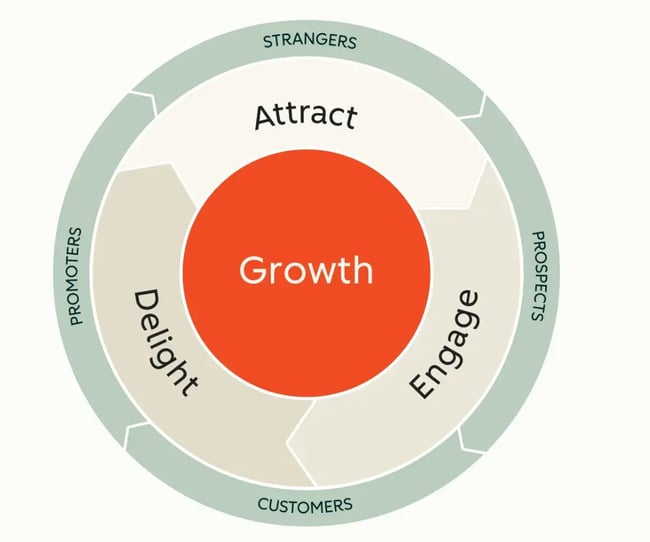
-
How long does it take to see results?
Many teams experience noticeable improvements within 30 to 90 days, particularly when optimizing for AEO or personalizing high-intent communications. The compounding nature of the loop means that each cycle sharpens the effectiveness of subsequent ones. -
Can small teams implement Loop Marketing?
Yes, Loop Marketing is designed with efficiency in mind. Modern marketing tools can empower lean teams to operate with the effectiveness of larger organizations, achieving better results in less time. -
How does Loop Marketing impact sales and service?
Loop Marketing fosters greater alignment across marketing, sales, and service teams. Sales representatives benefit from receiving better-qualified, AI-enriched leads. Service teams may experience a reduction in routine inquiries as AI agents handle common queries. Ultimately, all teams gain a unified, comprehensive view of the customer. -
What is the best starting point for those new to AI?
Resources such as free Loop Marketing playbooks and AEO graders provide accessible entry points for brands, enabling them to assess their current standing and identify the most impactful areas for initial implementation, even without prior AI expertise.
Conclusion: A New Framework for Enduring Goals
In the comparative landscape of Loop Marketing versus traditional marketing, the core objectives remain consistent: connecting with customers and driving business growth. The key difference lies in the methodology. Marketers must now design campaigns that acknowledge and adapt to the fragmented, non-linear manner in which modern customers search for information and engage with brands.
The most significant shift for marketing teams is not necessarily in the creation of single pieces of exceptional content, but in the ability to produce personalized, timely content supported by a data-driven strategy. Loop Marketing transforms human insight and creativity into a scalable system and a compounding growth engine, providing the essential framework for success in the AI era. The future of marketing is not a static funnel, but an intelligent, adaptive loop.
About the Author