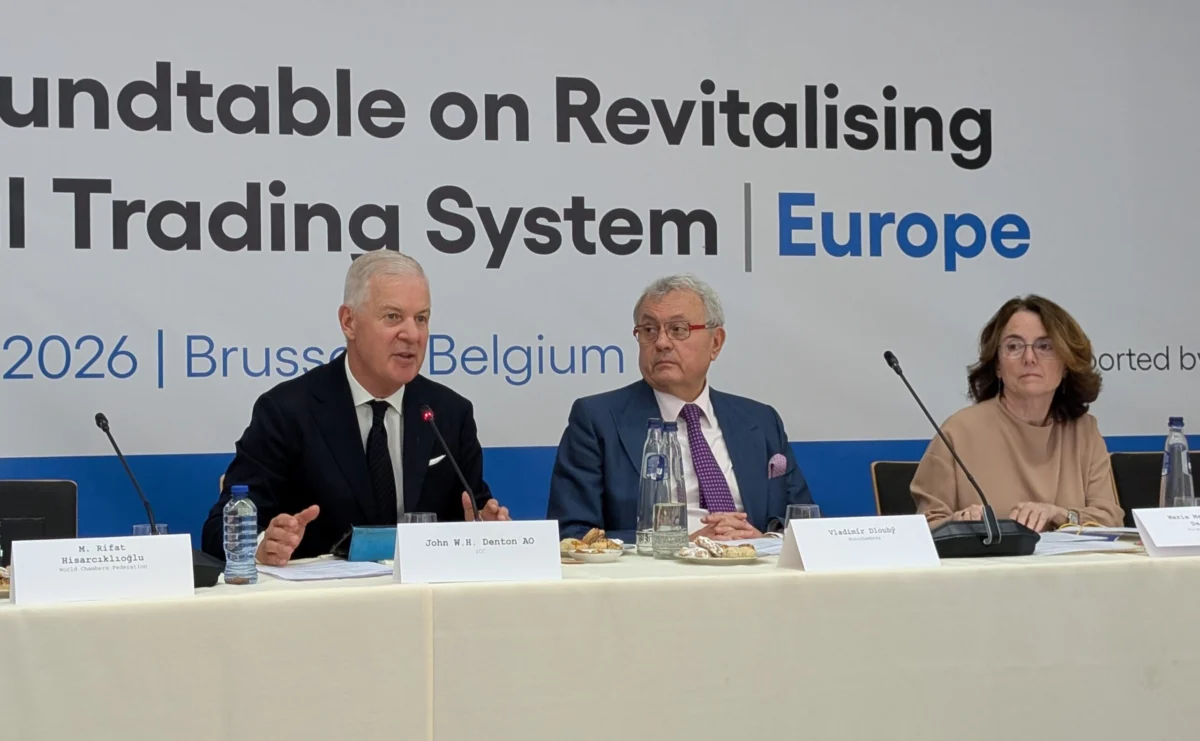
In a high-level diplomatic and economic gathering in Brussels, the International Chamber of Commerce (ICC) and Eurochambres recently co-hosted a strategic roundtable that brought together a diverse cohort of global trade stakeholders. The event featured a keynote intervention by Türkiye’s Minister of Trade, Ömer Bolat, alongside senior representatives from the European Commission, the European Parliament, and national chambers of commerce. The assembly, which included international business leaders and think tank experts, focused on the mounting pressures facing the global trading system, specifically addressing the aftermath of the World Trade Organization’s (WTO) 14th Ministerial Conference (MC14) and the increasing complexity of regulatory frameworks that govern international commerce.
The meeting took place against a backdrop of unprecedented volatility in global markets. As geopolitical tensions continue to reshape economic alliances, the roundtable served as a critical platform for discussing how businesses can navigate a landscape increasingly defined by "geoeconomics"—where trade policy is no longer viewed solely through the lens of economic efficiency but is inextricably linked to national security, environmental sustainability, and technological sovereignty.
The Geoeconomic Shift and the Erosion of Predictability
Setting the tone for the deliberations, ICC Secretary General John W.H. Denton AO provided an assessment of the current global trade environment. He noted that the era of traditional globalization is transitioning into a more fragmented and "contested" operating environment. This shift is characterized by the integration of security concerns into trade agendas, the rapid implementation of green transition policies, and the burgeoning data economy.
Denton emphasized that for businesses to thrive, they require a functioning multilateral system that offers three core pillars: transparency, predictability, and modern regulatory frameworks. He warned that in the absence of these elements, the "real economy"—comprising the producers, shippers, and retailers who facilitate daily commerce—bears the brunt of increased costs and operational uncertainty. The ICC’s stance underscores a growing anxiety within the private sector that the rules-based order, which has underpinned global prosperity since the end of the Cold War, is being sacrificed for short-term political gains.
Türkiye’s Call for Multilateral Revitalization
Minister Ömer Bolat’s keynote address provided a bridge between the interests of emerging markets and the European Union’s regulatory sphere. Bolat highlighted the urgent necessity of revitalizing the multilateral trading system to prevent further fragmentation. Central to his argument was the need to strengthen the WTO’s decision-making processes. While Bolat advocated for the preservation of the consensus-based model, he also stressed that the system must become more agile in addressing modern trade-distorting practices.
A primary concern raised by the Turkish delegation was the restoration of the WTO’s dispute settlement mechanism. The system has been largely paralyzed since 2019 due to the vacancy of its Appellate Body, leaving international trade disputes in a state of legal limbo. Bolat argued that a credible, rules-based system is impossible without a functioning "court of last resort" to resolve conflicts between trading partners. Furthermore, he emphasized that closer regional economic cooperation, particularly between Türkiye and the EU, remains a vital component of strategic resilience.
Chronology of Trade Uncertainty: From MC13 to the Road to MC14
The roundtable dedicated significant time to analyzing the outcomes—or lack thereof—from recent WTO ministerial gatherings. The transition from the 13th Ministerial Conference (MC13) in Abu Dhabi to the upcoming preparations for MC14 has been marked by a widening gap between diplomatic ambition and tangible delivery.
Historically, the WTO has struggled to find common ground on critical issues such as agricultural subsidies, fisheries, and the e-commerce moratorium. The roundtable participants reflected on the growing frustration within the business community regarding the "glacial pace" of WTO reform. While the organization remains the only global body governing trade between nations, its inability to respond effectively to the rise of digital trade and the exigencies of the climate crisis has led many nations to seek bilateral or plurilateral alternatives.
The timeline of these discussions suggests a pivotal moment for international trade. With the rise of "friend-shoring" and "near-shoring" strategies, the multilateral system is at risk of being sidelined by exclusive trade blocs. The roundtable participants noted that the next two years will be decisive in determining whether the WTO can reinvent itself or if it will fade into a secondary role behind regional agreements.
The Rising Burden of Regulatory Compliance and Policy Interventionism
From a corporate perspective, the dialogue shifted toward the practicalities of day-to-day operations. Business leaders pointed to a significant rise in policy interventionism. This is manifested in an accumulation of compliance requirements that span various sectors. Key areas of concern include:
- Carbon Measures: The implementation of the EU’s Carbon Border Adjustment Mechanism (CBAM) was cited as a primary example of how environmental policy is becoming a trade barrier. While the goal of reducing carbon leakage is supported, the administrative burden on non-EU exporters is substantial.
- Export Controls: Increasing restrictions on dual-use technologies and strategic minerals are forcing companies to undergo rigorous vetting of their supply chains.
- Sustainability and Sourcing Obligations: New directives regarding corporate sustainability due diligence require companies to monitor human rights and environmental standards deep within their tier-two and tier-three suppliers.
Data shared during the session suggested that for many Small and Medium-sized Enterprises (SMEs), the cost of compliance has risen by as much as 15% to 20% over the last three years. These costs are often passed on to consumers, contributing to global inflationary pressures.
Rules of Origin: A Strategic Imperative for Modern Supply Chains
A specialized segment of the agenda focused on the technical but critical issue of "Rules of Origin" (RoO). Anna Jerzewska, Founder and Managing Director of Trade and Borders, led this discussion, arguing that origin is no longer merely a customs classification issue. Instead, it has become a strategic tool used by governments to drive industrial policy and competitiveness.
As trade agreements become more complex, the documentation required to prove a product’s origin has grown exponentially. Jerzewska noted that divergent rules across different Free Trade Agreements (FTAs) create a "spaghetti bowl" effect, where companies struggle to keep up with inconsistent interpretations by different customs authorities. This complexity often leads to SMEs opting to pay full tariffs rather than navigating the labyrinthine paperwork required to claim preferential rates—a phenomenon known as "underutilization" of trade agreements.
The roundtable called for greater digitalization of origin certification and standardisation across jurisdictions. The ICC World Chambers Federation was identified as a key player in providing the practical support and training necessary to help businesses manage these requirements.
European Competitiveness and the "Internal Housekeeping" Strategy
The concluding remarks of the roundtable were delivered by Vladimir Dlouhy, President of Eurochambres, who provided a blunt assessment of Europe’s standing in the world. Dlouhy argued that the cost of a non-competitive Europe is rising daily. He outlined a two-pronged strategy for the continent:
First, Europe must be proactive in pursuing global economic cooperation and building strategic resilience with global partners. This involves securing supply chains for critical raw materials and expanding market access through new, modernized trade deals.
Second, Dlouhy emphasized the need for Europe to "get its own house in order." This refers to the completion of the EU Single Market and the reduction of internal bureaucratic hurdles that prevent European companies from scaling effectively. The sentiment reflected a broader realization that Europe’s external influence is directly tied to its internal economic strength.
The ICC Compact: A Roadmap for Growth and Jobs
In response to the challenges identified during the roundtable, the ICC promoted its "Compact for Trade, Growth and Jobs." This document, developed through extensive global consultations, serves as a policy blueprint for governments. The Compact advocates for "quick wins"—such as the permanent extension of the WTO moratorium on customs duties on electronic transmissions—as well as long-term reforms to the global trading architecture.
The Compact places a specific emphasis on SMEs, which represent over 90% of businesses worldwide but often lack the resources to influence trade policy. By focusing on digitalization and the reduction of non-tariff barriers, the ICC aims to democratize access to global markets.
Analysis of Implications: A New Era of Pragmatism
The Brussels roundtable signals a shift toward a more pragmatic, if less idealistic, approach to international trade. The consensus among participants was that while a return to the "golden age" of multilateralism may be unlikely in the current geopolitical climate, a total collapse of the system must be avoided at all costs.
The implications for the coming years are clear: businesses must invest more heavily in trade compliance and supply chain intelligence. For policymakers, the challenge lies in balancing legitimate national security and environmental goals with the need to maintain an open, competitive global economy.
The collaboration between Türkiye and the EU, as highlighted by Minister Bolat, serves as a microcosm of the broader global challenge. As both regions look toward a future defined by the green and digital transitions, their ability to align regulatory frameworks and reduce trade friction will be a litmus test for the viability of regional cooperation in a fragmented world.
As the international community moves toward MC14, the message from the ICC and Eurochambres is one of "decisive, business-grounded action." The time for diagnosis is over; the focus must now shift to the implementation of practical solutions that can sustain trade as a driver of global prosperity amidst the complexities of the 21st century.
About the Author