
In a move poised to significantly propel the nascent commercial fusion industry, Inertia Enterprises announced Tuesday the signing of three pivotal agreements with the esteemed Lawrence Livermore National Laboratory (LLNL). These collaborations are designed to facilitate the market introduction of the groundbreaking laser-based inertial confinement fusion reactor, a technology pioneered at the Californian national laboratory. The strategic partnerships underscore a critical step towards translating decades of scientific research into a viable, clean energy solution.
A Landmark Collaboration for Commercial Fusion
The agreements between Inertia and LLNL represent a multifaceted approach to commercializing inertial confinement fusion (ICF). They encompass two distinct strategic partnership projects and one cooperative research and development agreement (CRADA). Through these frameworks, both organizations will pool their expertise and resources to advance the development of more sophisticated laser systems and refine fuel target designs. The ultimate objectives are to enhance the overall performance of ICF reactors and streamline their manufacturing processes, crucial elements for achieving economic viability at scale.
Furthermore, Inertia has secured licenses for nearly 200 patents originating from LLNL. This extensive patent portfolio likely covers foundational technologies, design principles, and specific innovations related to ICF, providing Inertia with a robust intellectual property foundation for its commercialization efforts. This broad access to LLNL’s intellectual capital is a significant advantage, potentially accelerating Inertia’s path to market and solidifying its position within the competitive fusion landscape.
The Significance of LLNL’s Inertial Confinement Fusion Breakthrough
The National Ignition Facility (NIF) at LLNL holds a unique and historically significant position in the pursuit of fusion energy. It is, to date, the only experimental facility to have unequivocally demonstrated that controlled fusion reactions can produce more energy than is consumed to initiate them – a critical milestone known as "scientific breakeven." This achievement, announced in December 2022, validated the fundamental physics underpinning inertial confinement fusion and provided a powerful impetus for further research and development.
Inertial confinement fusion, the approach championed by LLNL and now being pursued by Inertia, operates on a principle distinct from magnetic confinement fusion. Instead of using powerful magnetic fields to contain superheated plasma, ICF relies on rapidly compressing a small fuel pellet to extreme densities and temperatures. This compression triggers fusion reactions within the fuel.
Deconstructing the NIF’s Laser-Driven Fusion Process
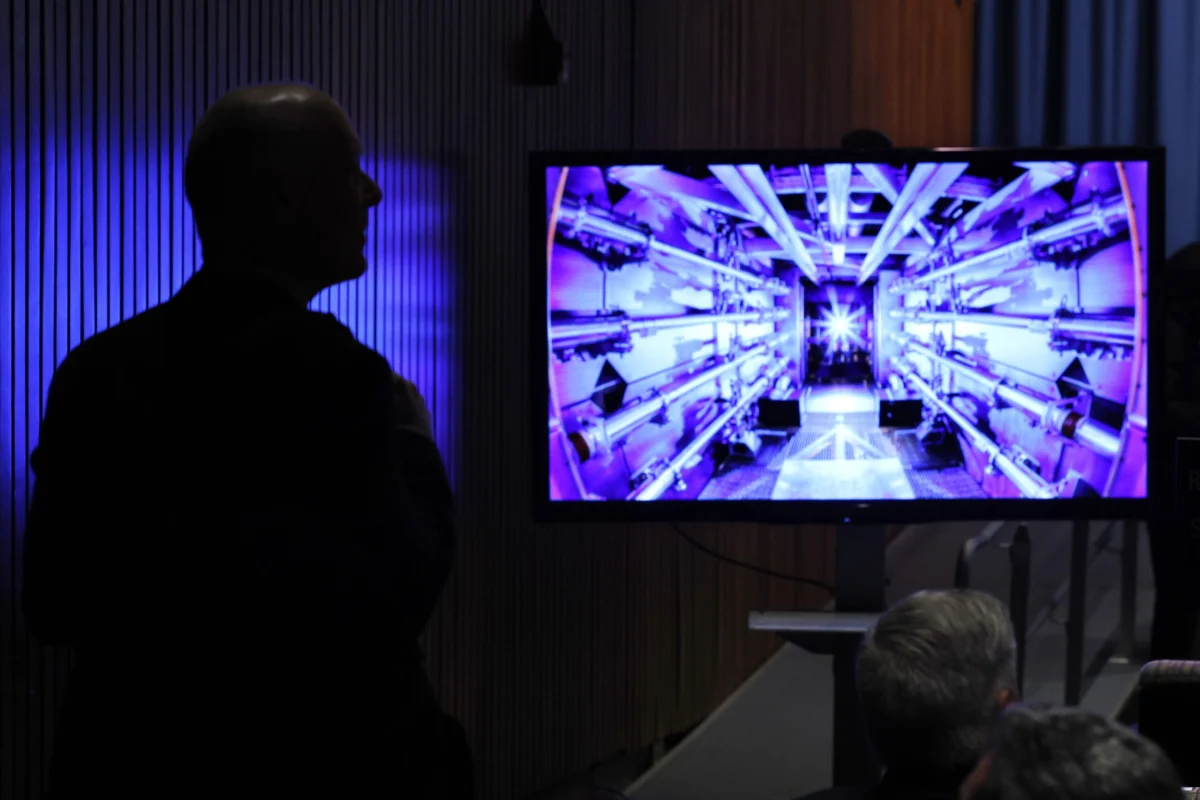
The intricate process at NIF involves an array of 192 high-powered laser beams. These beams are precisely orchestrated to converge within a massive vacuum chamber, focusing their energy onto a tiny gold cylinder known as a hohlraum. Encased within the hohlraum is a minuscule, diamond-coated fuel pellet, typically containing deuterium and tritium – isotopes of hydrogen.
Upon impact, the intense laser energy vaporizes the hohlraum, which then emits a torrent of X-rays. These X-rays, in turn, bombard the fuel pellet. The outer diamond layer of the pellet is instantly transformed into a plasma, which then expands explosively. This outward expansion generates an immense inward pressure, compressing the deuterium-tritium fuel to conditions where atomic nuclei overcome their mutual repulsion and fuse, releasing a substantial amount of energy.
Achieving a continuous and profitable energy output from such a system presents formidable engineering challenges. For ICF technology to be commercially viable for grid-scale power generation, these fusion events would need to occur multiple times per second – a rate that demands exceptional precision, efficiency, and robustness in the system’s components.
A Legacy of Research and Development
The theoretical underpinnings of laser-driven inertial confinement fusion date back to the 1960s. Initially conceived as a method for studying thermonuclear weapon physics in a controlled laboratory setting, scientists soon recognized its profound potential for energy production. The ambitious undertaking of constructing the NIF commenced in 1997, marking the beginning of a quarter-century-long journey of design, construction, and experimental refinement. The culmination of this extensive effort was the achievement of scientific breakeven in 2022, a testament to the perseverance and ingenuity of the scientific community.
Inertia’s Prominent Entry into the Fusion Arena
Inertia Enterprises made a dramatic entrance into the commercial fusion landscape in February, securing a substantial $450 million Series A funding round. This significant financial backing, led by prominent investors such as Bessemer Venture Partners and GV (Alphabet’s venture capital arm), positioned Inertia as one of the most well-capitalized startups in the burgeoning fusion energy sector. This strong financial footing is crucial for undertaking the capital-intensive research, development, and eventual construction of commercial fusion power plants.
The company’s ambitious goals place it at the forefront of a wave of startups aiming to commercialize ICF. Competitors such as Xcimer, Focused Energy, and First Light are also actively pursuing variations of this technology. A key focus for these companies, including Inertia, is the development of next-generation laser technology. The lasers employed at NIF, while groundbreaking, are based on older designs. Newer, more efficient lasers promise to significantly reduce the energy input required to initiate fusion reactions. This improvement is critical for enhancing the energy gain of each reaction and, consequently, for making the construction and operation of profitable commercial-scale power plants feasible.
The Human Element: Bridging Research and Industry
The collaboration between Inertia and LLNL is further strengthened by the integral role of key personnel. Notably, Annie Kritcher, co-founder and chief scientist of Inertia, was a pivotal figure in the LLNL experiment that achieved scientific breakeven at NIF. Her deep understanding of the underlying physics and her direct experience with the successful experimental design are invaluable assets to Inertia.
The passage of the 2022 CHIPS and Science Act played a significant role in enabling individuals like Kritcher to transition from national laboratory research to the private sector. This legislation created pathways for scientists to found companies while maintaining affiliations with their respective labs, fostering a dynamic environment where cutting-edge research can more readily translate into commercial innovation. This synergistic relationship between national laboratories and private industry is essential for accelerating the development of complex technologies like fusion energy.
Broader Implications and the Road Ahead
The agreements between Inertia and LLNL signal a significant step forward in the quest for a sustainable and virtually limitless energy source. Fusion power, if successfully commercialized, holds the potential to revolutionize the global energy landscape. It promises a clean, safe, and abundant alternative to fossil fuels, with a significantly smaller environmental footprint and no long-lived radioactive waste compared to current nuclear fission technologies.
The path to commercial fusion power remains challenging, requiring continued innovation, substantial investment, and robust collaborations between research institutions and private enterprises. The success of Inertia’s venture will depend on its ability to not only scale up the technology demonstrated at NIF but also to engineer it for reliability, cost-effectiveness, and long-term operation.
The implications of successful fusion commercialization are far-reaching:
- Climate Change Mitigation: Fusion power plants would produce zero greenhouse gas emissions, offering a powerful tool in the global fight against climate change.
- Energy Security: A domestic fusion energy supply could reduce reliance on volatile global energy markets and enhance national energy independence.
- Economic Growth: The development and deployment of fusion technology could spur significant economic growth, creating new industries and high-skilled jobs.
- Global Development: Access to abundant and affordable energy is a cornerstone of economic development and improved quality of life worldwide.
While the timeline for widespread commercial fusion power remains uncertain, the strategic alignment between Inertia Enterprises and Lawrence Livermore National Laboratory represents a tangible acceleration of that vision. By leveraging LLNL’s pioneering research and intellectual property, Inertia is positioning itself to make a significant impact on the future of energy. The coming years will be critical in observing how these collaborations translate scientific achievement into a practical, world-changing energy solution.
About the Author





