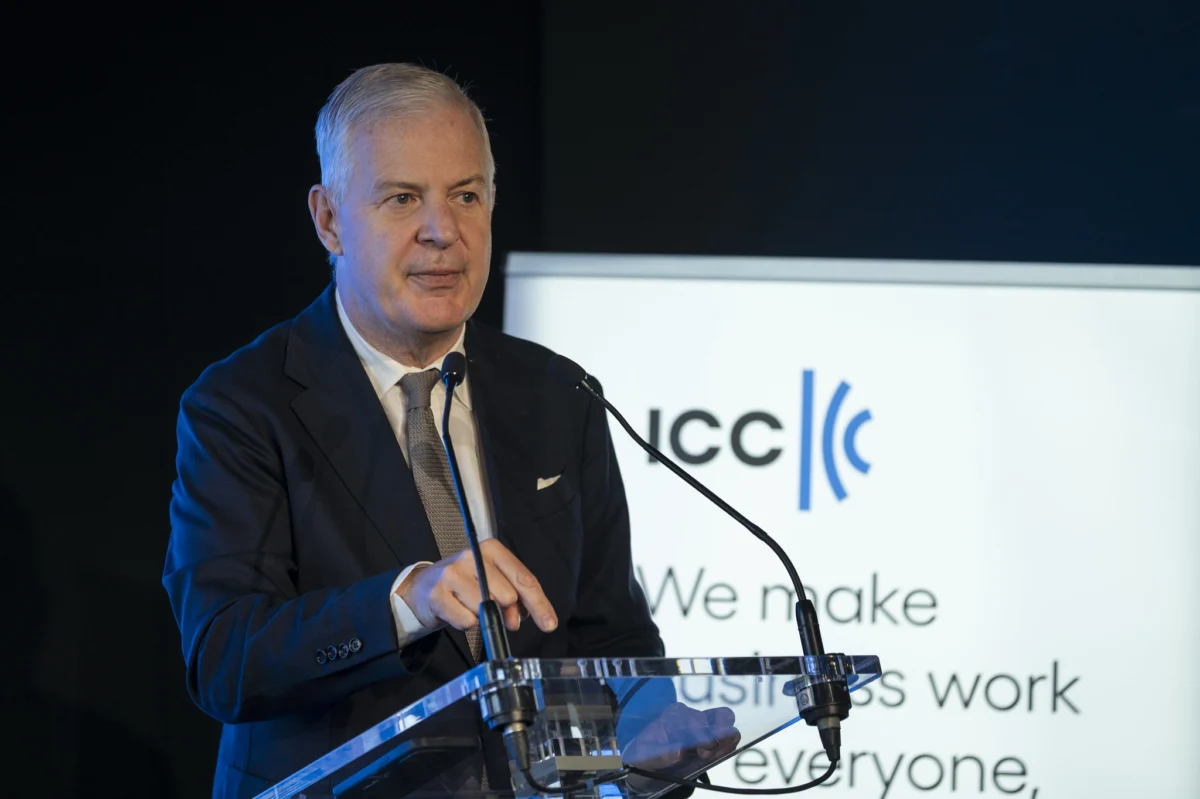
The International Chamber of Commerce (ICC) has issued a stark warning regarding the future of the multilateral trading system following the conclusion of high-level World Trade Organization (WTO) discussions in Yaoundé, Cameroon. As global markets grapple with the lingering effects of inflationary pressures, geopolitical fragmentation, and supply chain disruptions, the inability of WTO member states to secure a definitive political agreement has sent ripples of concern through the international business community. John W.H. Denton AO, the Secretary General of the ICC, characterized the outcome as a missed opportunity that threatens to exacerbate policy uncertainty at a critical juncture for the "real economy."
The stalemate in Yaoundé arrives at a time when the World Trade Organization is facing unprecedented scrutiny over its ability to govern 21st-century commerce. For decades, the WTO has served as the bedrock of global trade, providing a rules-based system that facilitated the era of hyper-globalization. However, the recent failure to bridge the gap between developed and developing nations on key issues—ranging from agricultural subsidies to digital trade—suggests a deepening paralysis within the institution. According to the ICC, the lack of a concrete consensus in Yaoundé does more than just stall progress; it actively undermines the confidence required for long-term corporate planning and cross-border investment.
The High Stakes of the Yaoundé Ministerial Discussions
The ministerial gathering in Yaoundé was intended to be a foundational step toward revitalizing the WTO’s legislative and judicial functions. Historically, these meetings serve as the primary mechanism for updating trade rules and addressing the evolving needs of the global marketplace. The agenda was packed with high-stakes items, including the permanent extension of the e-commerce moratorium, fisheries subsidies, and the long-overdue reform of the WTO’s dispute settlement mechanism.
Business leaders had looked to this ministerial with the hope that a breakthrough would signal a return to multilateral cooperation. Instead, the proceedings were marked by entrenched positions and a lack of political will to compromise. The ICC’s Denton noted that the failure is particularly "concerning" given the current fragility of the global economic landscape. With the International Monetary Fund (IMF) and the World Bank frequently revising growth forecasts downward for several regions, the absence of a clear trade policy framework adds an unnecessary layer of risk for exporters and importers alike.
Chronology of a Growing Impasse: From Geneva to Yaoundé
To understand the gravity of the current deadlock, it is essential to trace the timeline of WTO negotiations over the past several years. The organization has struggled to maintain its momentum since the conclusion of the Bali Package in 2013 and the Nairobi Ministerial in 2015.
- June 2022 (MC12 in Geneva): After years of delays caused by the COVID-19 pandemic, members reached a "Geneva Package," which included a limited waiver on IP rights for COVID-19 vaccines and a deal to curb harmful fisheries subsidies. While celebrated as a success, many critics argued the agreements were "thin" and left the most difficult structural issues unaddressed.
- Late 2023 – Early 2024 (The Road to Yaoundé): Preparatory meetings in Geneva and regional summits highlighted growing friction. Developing nations, led by a coalition of African and South American states, pushed for greater concessions on food security and agricultural domestic support. Meanwhile, the US, EU, and Japan focused on "modern" issues like digital trade and environmental sustainability.
- The Yaoundé Meeting: Billed as a crucial mid-point to finalize texts for upcoming global summits, the discussions instead hit a wall. Key delegations remained divided over the "development" vs. "modernization" narratives, leading to the eventual collapse of a comprehensive political declaration.
The Digital Economy at Risk: The E-commerce Moratorium
One of the most significant points of contention highlighted by the ICC is the future of the WTO e-commerce moratorium. Since 1998, WTO members have periodically agreed not to impose customs duties on electronic transmissions. This moratorium is widely credited with fueling the explosive growth of the digital economy, which now accounts for a significant portion of global GDP.
Data from the United Nations Conference on Trade and Development (UNCTAD) suggests that global digitally delivered services exports reached $3.82 trillion in 2022, representing a nearly fourfold increase since 2005. For businesses, the moratorium provides the certainty that software downloads, emails, digital music, and architectural designs will not be stopped at digital borders by varying tariff regimes.
However, a small but vocal group of member states has begun to question the moratorium, arguing that it results in significant lost customs revenue for developing countries. The ICC has countered this by highlighting that the administrative costs of implementing digital tariffs would likely far outweigh the revenue collected, while simultaneously stifling local innovation and increasing costs for consumers. Denton emphasized that exposing digital services—one of the few remaining "motors of global growth"—to tariff barriers makes "no sense" in the current economic environment.
WTO Reform and the Dispute Settlement Crisis
Beyond specific trade sectors, the overarching shadow looming over the Yaoundé discussions was the ongoing crisis of WTO reform. The organization’s Dispute Settlement Body (DSB), often called the "Supreme Court of World Trade," has been effectively defunct since December 2019. The United States has consistently blocked the appointment of new judges to the Appellate Body, citing concerns over judicial overreach and the erosion of national sovereignty.
Without a functioning appeals process, trade disputes often end in a "void." If a country loses a case, it can simply appeal into a legal vacuum, preventing the implementation of any corrective measures. This "law of the jungle" scenario is exactly what the ICC fears. The Yaoundé package was supposed to provide a roadmap for restoring the DSB by 2024, a goal that now looks increasingly precarious.
The ICC has urged members not to allow the subject of reform to "drift." While the Yaoundé discussions provided some "useful space" to begin the modernization process, Denton warned that the window of opportunity is narrowing. Without a functioning judicial system, the predictability that businesses rely on to invest in foreign markets is fundamentally compromised.
Plurilateralism: A Potential Path Out of Paralysis?
In the midst of the broader failure in Yaoundé, a significant development emerged from a subset of the membership. Sixty-six countries announced their intention to operationalize a plurilateral agreement on e-commerce. Unlike multilateral agreements, which require the consensus of all 164 WTO members, plurilateral agreements are signed by a smaller group of "like-minded" nations.
The ICC pointed to this as a "positive sign" that common-sense trade cooperation remains possible. This group includes major economies that recognize the necessity of standardized rules for digital trade, even if the entire WTO membership cannot yet agree. Denton suggested that this plurilateral approach should be seen as a "potential template" for the future.
This shift toward "variable geometry"—where different groups of countries move at different speeds—could be the only way to bypass the veto power of individual states that have historically blocked progress. However, critics argue that a proliferation of plurilateral deals could lead to a fragmented global trade landscape, creating a "spaghetti bowl" of conflicting rules that increases compliance costs for Small and Medium-sized Enterprises (SMEs).
Economic Implications and the Role of Global Leadership
The failure to reach an agreement has tangible consequences for the global economy. Trade uncertainty is a known deterrent to Capital Expenditure (CAPEX). When firms are unsure about future tariff regimes or the legality of trade barriers, they are more likely to delay expansion plans or repatriate supply chains, a process known as "friend-shoring" or "near-shoring."
Supporting data from the WTO’s own economic research suggests that a full-scale fragmentation of the global economy into rival blocs could reduce global GDP by as much as 5% in the long run. For developing nations, the losses could be even more severe, reaching double digits in some scenarios.
The ICC’s message is clear: the global business community requires stability. The current state of "paralysis" within the WTO is not merely a diplomatic frustration; it is an economic liability. The organization is at a crossroads where it must either adapt its decision-making processes to reflect the realities of modern commerce or risk becoming a relic of a bygone era of trade.
Official Responses and Industry Reactions
While the ICC has been the most vocal in its criticism, other international bodies and national trade departments have echoed similar sentiments. Sources within the European Commission indicated a "deep disappointment" that more progress was not made on environmental trade initiatives, such as the reduction of tariffs on "green" goods.
Conversely, some representatives from the G90 group of developing nations argued that the "failure" in Yaoundé was actually a refusal to accept an imbalanced deal that favored the digital interests of the North over the agricultural needs of the South. This fundamental disagreement over the "development mandate" of the WTO remains the single greatest hurdle to any future consensus.
From the perspective of the private sector, the ICC’s Denton concluded that the ultimate question is one of leadership. The conference in Yaoundé demonstrated that while the technical solutions for trade reform exist, the political coalition needed to implement them is currently absent. The call for a "determined effort" to resume talks in Geneva without delay reflects a sense of urgency that is often missing in the halls of diplomatic power.
Conclusion: The Narrow Window for Action
As the delegates leave Yaoundé and return to Geneva, the pressure on the WTO Secretariat and its Director-General, Ngozi Okonjo-Iweala, continues to mount. The immediate priority remains the restoration of the e-commerce moratorium before its looming expiration date, a move that would provide a much-needed "win" for the system and the global digital economy.
The failure of the Yaoundé ministerial serves as a sobering reminder that the post-war consensus on free trade is under severe strain. The ICC’s intervention highlights the fact that business confidence is not a given; it is a product of a stable and predictable regulatory environment. As the "real economy" faces a period of intense volatility, the cost of institutional drift at the WTO is one that the global community can ill afford. The coming months in Geneva will be a litmus test for whether the world’s governments are prepared to step forward and build the necessary coalitions for reform, or whether the multilateral trading system will continue its slow descent into irrelevance.
About the Author