
Understanding Your Cost Per Lead: A Crucial Metric for Business Growth and Marketing Efficiency
In the relentless pursuit of business expansion, generating quality leads stands as a cornerstone of sustainable growth. This fundamental truth necessitates investment in marketing, a strategic expenditure often summarized by the adage, "You have to speculate to accumulate." However, a critical question often remains unanswered: what is the actual financial outlay required to acquire a single potential customer? Without a clear understanding of this figure, businesses operate in the dark, unable to definitively assess the efficacy of their marketing and sales endeavors. This is precisely where the calculation of Cost Per Lead (CPL) becomes indispensable, offering a vital metric for optimizing business expenses, evaluating campaign performance, and ultimately, driving profitability.
The Significance of Cost Per Lead in Modern Business Strategy
Cost Per Lead (CPL) is a key marketing performance indicator that quantifies the total expenditure associated with generating a single lead. It represents the financial investment made to attract an individual who has demonstrated interest in a company’s products or services. This interest can manifest in various forms, such as filling out a contact form, downloading a whitepaper, subscribing to a newsletter, or requesting a product demonstration. By meticulously tracking CPL, businesses gain the ability to evaluate the success of their digital marketing initiatives, compare the performance of individual campaigns across different channels, and gauge the overall efficiency of their marketing spend.
It is crucial to distinguish CPL from Cost Per Acquisition (CPA). While CPA measures the total cost of acquiring a paying customer or closing a sale, CPL focuses solely on the expense of generating potential customers. The distinction is vital; a lead is an initial point of contact, a prospect for future business, whereas an acquisition represents a finalized transaction. Understanding this difference is fundamental to accurate marketing attribution and financial planning.
The Importance of CPL for Maximizing Business Expenses
Marketing expenditures often constitute a significant portion of a company’s overall operational costs. Therefore, rigorously measuring the effectiveness of these investments and identifying avenues for optimization is paramount. CPL serves as a critical metric in this regard, providing actionable insights into the performance of sales and marketing campaigns.
When businesses understand the precise cost associated with generating each potential customer, they can more strategically allocate their marketing budgets and refine their client management efforts. This data allows for direct comparisons between different marketing channels and strategies, enabling the identification of those yielding the highest Return on Investment (ROI). Consequently, resources can be redirected towards the most cost-effective approaches, while underperforming or inefficient strategies can be phased out.
Furthermore, by integrating CPL data with other marketing metrics, businesses can ascertain whether a particular campaign or channel is attracting the right kind of leads – those with a genuine likelihood of conversion. If a campaign is generating a high volume of leads but a low conversion rate, the CPL calculation can signal a need for strategic adjustment, thereby saving valuable time and financial resources.
CPL also serves as a powerful tool for challenging ingrained assumptions. A high-profile campaign generating significant attention and a large number of leads might be perceived as highly effective. However, a detailed CPL analysis could reveal that a less conspicuous campaign, despite producing fewer leads, might offer a superior ROI due to lower operational costs and a higher conversion rate among its targeted audience. This analytical approach fosters a data-driven culture, ensuring that marketing decisions are based on tangible results rather than perceived success.
Defining a "Good" Cost Per Lead: A Contextual Understanding
The question of what constitutes a "good" CPL is inherently complex and lacks a universal, one-size-fits-all answer. There is no definitive benchmark that applies across all businesses and industries. The optimal CPL is contingent upon a multitude of factors specific to each organization.
Key determinants of CPL include:
- Industry: Highly competitive or high-value industries, such as enterprise software, financial services, or specialized B2B sectors, typically experience higher CPLs. This is due to longer sales cycles, more intricate decision-making processes, and the higher perceived value of each lead.
- Target Audience: The specificity and size of the target market play a significant role. Niche markets may require more targeted and thus more expensive outreach efforts.
- Product/Service Value: The price point of a company’s offerings directly influences what constitutes an acceptable CPL. A business selling low-cost items may need a significantly lower CPL than one selling high-ticket products or services. For instance, a CPL of $80 might be unsustainable for a company selling $20 items, but highly attractive for a business selling $2,000 solutions.
- Marketing Channels Utilized: Different marketing channels have varying cost structures. Paid advertising platforms (e.g., Google Ads, social media ads) often have higher immediate costs compared to organic strategies like content marketing and SEO, which may yield lower CPLs over time as they build organic reach.
- Competition: A crowded marketplace with numerous competitors vying for the same audience can drive up advertising costs and, consequently, CPL.
- Geographic Location: Marketing costs, particularly advertising rates, can vary significantly by region.
- Lead Quality and Conversion Rates: The ultimate value of a lead is determined by its propensity to convert into a paying customer. A higher conversion rate can justify a higher initial CPL, as the potential for revenue generation is greater. The lifetime value of a customer also plays a crucial role in this assessment.
Ultimately, a "good" CPL is one that is lower than the projected revenue or profit expected from an average lead. Conversely, a "bad" CPL occurs when the cost of generating a lead exceeds the anticipated revenue it will generate, resulting in a net loss. Businesses must therefore establish their own benchmarks by considering their average customer spending, conversion rates, and profit margins. Examining industry averages can provide a useful comparative perspective, but internal profitability should remain the primary guiding principle.
Calculating Your Cost Per Lead: A Step-by-Step Approach
The calculation of Cost Per Lead is a straightforward process, requiring a clear understanding of expenditures and lead generation volumes over a defined period.

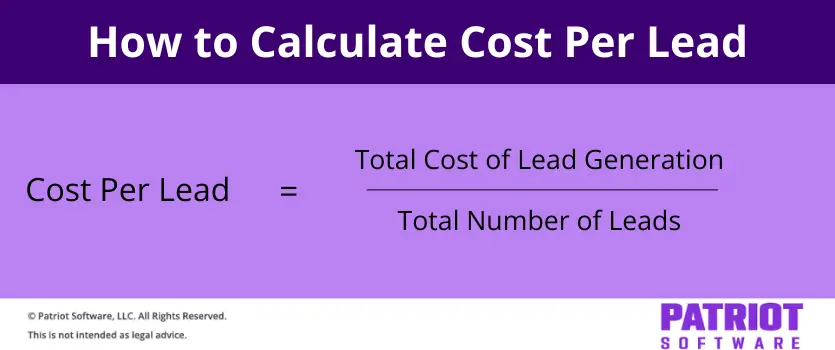
The Fundamental Formula:
Cost Per Lead = Total Cost of Lead Generation / Total Number of Leads
To accurately apply this formula, businesses must meticulously track both their costs and the number of leads generated.
1. Calculating Costs:
The first step involves aggregating all expenses directly attributable to marketing and lead generation activities within a specific timeframe (e.g., monthly, quarterly, annually). This encompasses a wide range of investments, including:
- Advertising Spend: Costs associated with paid advertisements across all platforms (digital, print, broadcast).
- Content Creation: Expenses related to blog posts, articles, videos, infographics, and other marketing collateral.
- Software and Tools: Subscriptions for marketing automation, CRM systems, analytics platforms, design software, etc.
- Agency Fees: Payments to external marketing agencies for services such as SEO, social media management, or PPC campaigns.
- Labor Costs: Salaries or hourly wages for internal marketing staff dedicated to lead generation efforts. This includes time spent on campaign management, content development, and analytics.
- Website Development and Maintenance: Costs associated with landing page creation, website optimization, and hosting.
- Other Marketing Expenses: Costs for events, trade shows, email marketing platforms, and any other promotional activities.
For a more granular analysis, businesses may choose to break down costs further, differentiating between inbound and outbound marketing efforts.
- Advertising Costs = Ad Spend + Ad Management (which includes the cost of personnel managing the campaigns).
- Inbound Costs = External Resources + Internal Resources (covering content creation, SEO, landing page optimization, etc., whether outsourced or handled internally).
The sum of these costs for the chosen period represents the Total Cost of Lead Generation.
2. Calculating Leads:
Next, it is essential to determine the total number of leads generated during the same specified period. This requires a robust tracking system to capture leads from all sources.
- Inbound Leads: This category includes leads generated through organic search, content marketing, social media engagement, referrals, website forms, and newsletter subscriptions.
- Outbound Leads: This category encompasses leads derived from paid advertising campaigns, direct outreach, or any proactive marketing efforts.
Total Leads = Inbound Leads + Outbound Leads
Performing the CPL Calculation:
Once both the total costs and the total number of leads are established, the CPL can be calculated using the formula:
Cost Per Lead = Total Cost of Lead Generation / Total Number of Leads
For example, if a business invests $5,000 in a specific marketing campaign over one month and generates 200 leads from that campaign, the CPL would be $5,000 / 200 = $25 per lead.
To facilitate this process, numerous tools are available. Many advertising platforms, such as Google Ads and Facebook Ads, provide built-in CPL calculators for their respective campaigns. Additionally, specialized CPL calculators, like those offered by Leadfeeder, can assist businesses in streamlining this analysis.
Utilizing Cost Per Lead Data for Strategic Decision-Making
The true power of CPL lies not just in its calculation but in its application. By analyzing CPL across various dimensions, businesses can gain profound insights into their marketing performance and make data-informed decisions.
Beyond the overall business CPL, it is beneficial to calculate CPLs for specific segments:
- Per Marketing Channel: Understanding the CPL for each channel (e.g., SEO, paid social, email marketing, content marketing) reveals which channels are most cost-effective for lead generation.
- Per Campaign: This allows for the evaluation of individual marketing campaigns, identifying top performers and those requiring optimization.
- Per Target Audience Segment: Analyzing CPL for different demographic or psychographic groups helps in understanding which segments are most efficiently acquired.
- Per Product or Service: If a business offers multiple products, calculating CPL for each can highlight which offerings attract leads at the most favorable cost.
Regular monitoring of CPLs over time is crucial. This allows businesses to identify trends, recognize emerging opportunities, and proactively address potential issues. A consistently increasing CPL may indicate a need to re-evaluate marketing strategies, optimize ad spend, or improve targeting. Conversely, a declining CPL suggests that marketing efforts are becoming more efficient.
When CPL data is analyzed in conjunction with other key performance indicators such as conversion rates, customer acquisition costs, and overall ROI, a comprehensive picture of marketing effectiveness emerges. This holistic view enables businesses to not only identify profitable methods and target groups but also to understand the true economic impact of their lead generation efforts.
Strategies for Reducing Cost Per Lead
Minimizing CPL is a strategic objective that directly enhances marketing budget efficiency and maximizes the return on investment. The most effective approach involves refining marketing strategies to attract a higher volume of qualified leads, thereby reducing the cost associated with each individual lead.
-
Align with Business Needs and Market Position: The scale of marketing investment should be proportionate to the business’s size, revenue, and market standing. Large enterprises with substantial revenue streams may be able to sustain higher overall ad spend, especially in highly competitive markets. Smaller businesses, however, should commence with more modest budgets, diligently analyzing campaign analytics to identify optimal moments for scaling investments. This measured approach prevents overspending and ensures resources are allocated where they yield the most impact.
-
Enhance Audience Targeting: Precision in audience targeting is a powerful lever for increasing the number of high-quality leads and, consequently, lowering CPL. Implementing sophisticated retargeting campaigns for individuals who initially showed interest but did not convert can re-engage them with tailored content and compelling offers. If current messaging is not resonating with the intended audience, refining segmentation and focusing on demographics or groups exhibiting higher engagement and conversion rates is essential. This may involve adjusting sales planning templates to reflect these newly identified, high-potential segments.
-
Optimize Website and Landing Pages: Improving a company’s online visibility directly enhances organic reach and contributes to a lower CPL. This can be achieved by:
- Targeting Long-Tail Keywords: Focusing on specific, longer search queries used by users with clear purchase intent can attract highly qualified traffic.
- Maintaining Fresh Content: Regularly updating website content with relevant and valuable information keeps search engines engaged and users informed.
- Optimizing User Experience: Enhancing website navigation, ensuring fast page loading speeds, and designing intuitive landing pages are critical for user engagement and conversion.
- Value-Driven Lead Magnets: Offering compelling lead magnets (e.g., e-books, webinars, checklists) that provide genuine value encourages sign-ups.
- Refining Sign-Up Forms: Incorporating clarifying questions within sign-up forms can help filter out less serious inquiries, ensuring that leads are more likely to be qualified.
-
Leverage A/B Testing: A/B testing is an invaluable methodology for determining which marketing elements resonate most effectively with the target audience, thereby reducing CPL. This involves testing variations of marketing materials, such as:
- Landing Page Elements: Experimenting with different headlines, calls-to-action (CTAs), imagery, and form layouts.
- Ad Creatives: Testing various ad copy, visuals, and offers to identify the most engaging combinations.
- Marketing Channels: Evaluating the performance of different platforms and channels to identify those with the lowest CPL and highest conversion rates.
- Timing of Communications: Determining the optimal times to deploy ads and publish content when the target audience is most active online.
-
Implement the Right Tools and Technologies: Automating manual tasks and leveraging specialized software can significantly boost lead generation efficiency and reduce CPL. While there is an initial investment in these tools, the long-term gains in efficiency and reduced human resource costs often outweigh the expense. Key tools to consider include:
- Lead Generation Software: Platforms designed to identify and capture potential leads.
- Accounting Software: Essential for accurately tracking marketing expenses and calculating CPL.
- Marketing Automation Tools: For streamlining email campaigns, social media posting, and lead nurturing.
- Customer Relationship Management (CRM) Systems: For managing lead and customer data, tracking interactions, and facilitating sales follow-up.
Ensuring that marketing teams are adequately trained on these tools is crucial for maximizing their effectiveness.
-
Continuous Tracking and Analysis: The dynamic nature of the business environment necessitates ongoing CPL tracking and analysis. Regular evaluation of performance across different marketing methods, channels, and campaigns allows for timely adjustments. Factors such as economic shifts, evolving competitive landscapes, and changes in consumer behavior can rapidly impact CPL. Therefore, it is vital to:
- Evaluate CPL in Context: Compare CPL with other sales and marketing metrics, including conversion rates, CPA, and ROI, for a holistic understanding.
- Gather Lead Feedback: Surveying converted leads about their experience with marketing campaigns, potentially using Customer Satisfaction (CSAT) score calculations, can provide qualitative insights into campaign success.
Conclusion: Driving Growth Through CPL Optimization
Calculating Cost Per Lead is not merely an academic exercise; it is a fundamental requirement for maximizing business expenses and ensuring that marketing budgets are deployed strategically. By understanding the precise financial outlay for each potential customer acquired, businesses can effectively identify and divest from underperforming campaigns or channels, concentrating resources on strategies that demonstrably yield a high probability of success.
The comprehensive calculation of CPL must encompass all advertising costs, both inbound and outbound. Establishing clear benchmarks for what constitutes a "good" versus a "bad" CPL, tailored to the unique characteristics of the business and its market, is a critical step. By implementing the strategies outlined above – from refining targeting and optimizing online presence to leveraging technology and maintaining continuous tracking – businesses can effectively reduce their Cost Per Lead. This optimization not only streamlines marketing spend but also fuels sustainable business growth by ensuring a more efficient and profitable acquisition of valuable customer relationships.
About the Author