The subtle tremors of global instability and domestic economic shifts are increasingly registering not just on financial markets, but in the most unexpected corners of American consumer behavior: the "fun economy." From high-end cycling races to local escape rooms and bowling alleys, businesses centered on discretionary entertainment are reporting a significant pullback, signaling a fragile consumer psychology grappling with uncertainty. This phenomenon, which industry leaders describe as a direct reflection of broader economic anxieties, highlights the intricate connections between geopolitical events, household budgets, and the vitality of local economies.
The Early Warning System: High-End Sports Events
For Robert Evans, CEO of Cycling Quests, an organizer of high-end road races, the health of the American consumer is not abstract economic data but a tangible metric tracked through event registrations. Evans observes a direct correlation between major geopolitical announcements and registration patterns, noting, "Every time something major is announced, like tariffs, or an attack on another country, our event registration tracks like the stock market. People pull back for a minute and pause and take a wait-and-see attitude." This immediate, almost reflexive pause in consumer engagement serves as an early warning system, predating broader economic indicators.
The current climate, according to Evans, is distinctly characterized by this "wait-and-see" approach. While some downturns rebound quickly, others persist, with registrations falling by 20-30%. Notably, events with lower entry price points, typically targeting a more down-market demographic, are the first and most severely impacted. These consumers, often operating with tighter budgets, are quicker to defer or cancel discretionary spending. However, Evans cautions that even events with higher price points, traditionally more insulated from economic volatility, are now beginning to experience a downturn, indicating a more widespread hesitation across income brackets.
The ripple effect of reduced participation in sports tourism extends far beyond the event organizers. A single out-of-town participant in a mid-sized sporting event in cities like Boise, Idaho, or Provo, Utah, typically generates an estimated $900 to $1,000 in ancillary economic activity. This figure encompasses spending on meals, lodging, local transportation, incidental shopping, and gas, all in addition to the initial registration fees. Evans highlights that approximately half of participants typically stay at least one night, with 60% traveling more than two hours to compete. When consumers opt out, this spending evaporates, creating a significant economic void for host communities. Local restaurants, hotels, and retailers bear the brunt of this hit, even as promoters’ fixed costs remain. This multiplier effect underscores the critical role of discretionary spending in sustaining vibrant local economies, especially in smaller cities heavily reliant on tourism and event-based revenue.
Broader Impact on Entertainment Venues
The hesitation observed in high-end cycling is mirrored across a spectrum of "fun" activities. Data from Placer.ai, a location analytics firm, reveals a discernible shift in consumer behavior. R.J. Hottovy, Head of Analytical Research at Placer.ai, states, "Placer.ai data confirms a recent shift in consumer behavior: shoppers are decreasing their visits to discretionary retailers and entertainment venues, instead prioritizing consumer staples to stretch their household budgets."
This trend is starkly visible in popular entertainment categories:
- Bowling Alleys: Bowlero, operating over 350 bowling entertainment centers across the U.S., experienced a 10.6% average decline in traffic during March.
- "Eatertainment" Venues: Dave & Buster’s, with 170 adult entertainment locations, saw its traffic slide by 4.5% in March. Its subsidiary, Main Event, which operates over 50 similar outlets, recorded a 7.6% decline in traffic during the same month.
- Escape Rooms: The escape room sector, as a whole, reported an average decline of 6.7% in March.
These figures paint a clear picture of consumers tightening their belts, even for relatively affordable forms of entertainment. The perceived need to conserve funds for essential household expenses, exacerbated by rising costs, appears to be overriding the desire for leisure activities.
Conflicting Economic Signals and Plunging Sentiment
The observed pullback in discretionary spending unfolds against a backdrop of complex and sometimes contradictory economic signals. Bank of America reported a significant 16.5% jump in debit and credit card spending at gas stations in March, contributing to the most substantial overall spending increase in over three years. Excluding gas, spending still saw a respectable 3.6% growth. Furthermore, changes in tax law led to an average IRS refund increase of over 11% this year, potentially injecting some liquidity into household budgets. Bank of America CEO Brian Moynihan, in a recent CNBC interview, conveyed a relatively optimistic outlook: "The consumers are spending, the credit quality is very good and improving. … We all face that same uncertainty, but right now, the U.S. companies and consumers are doing well."
However, this apparent resilience in overall spending masks a deep-seated fragility in consumer psychology. The University of Michigan’s monthly survey of consumer sentiment, a closely watched indicator of household confidence, tumbled to 47.6, a precipitous 10.7% drop from the March survey, reaching its lowest on record. This stark divergence between reported spending and sentiment underscores a growing apprehension among consumers, who, despite maintaining some spending habits, are increasingly wary of the future. High gas prices, inflationary pressures across various sectors, and the pervasive sense of global uncertainty are collectively eroding confidence.
The Geopolitical Catalyst: U.S.-Iran Conflict

While economic pressures have been building for some time, recent geopolitical escalations, particularly the U.S.-Iran conflict, appear to have acted as a significant catalyst for the current consumer pullback. The original article, with its embedded links, refers to an "Iran war" and its impact on the U.S. economy, dating to mid-April 2026. This period saw a heightened risk of wider conflict in the Middle East, directly influencing global oil prices and market stability.
The chronology of events during this period reveals the volatile nature of the situation:
- Mid-April 2026: Reports emerge detailing the initial impacts of the escalating U.S.-Iran conflict on the U.S. economy, including rising gas prices and general market uncertainty.
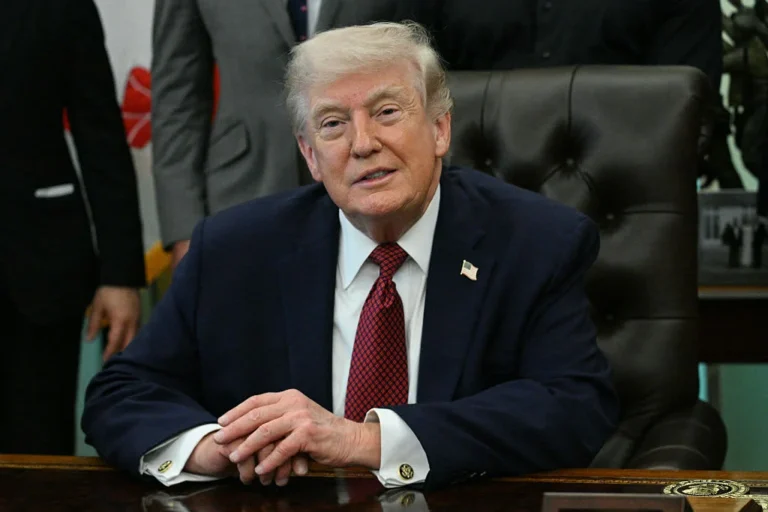
- April 16, 2026: President Trump indicates that the conflict is nearing an end.
- April 17, 2026: Iran temporarily opens the Strait of Hormuz to all traffic, a critical global oil chokepoint. This news sends oil prices down by as much as 9%, offering a brief reprieve to energy markets.
- April 18, 2026: Just as optimism begins to build, Iran re-imposes control over the waterway amid reports of gunfire, swiftly reversing the previous day’s gains in oil markets and reigniting fears of prolonged instability.
These rapid shifts in the geopolitical landscape, particularly concerning a region vital for global energy supplies, create an environment of extreme unpredictability. For the average consumer, such events translate directly into higher costs at the pump and a generalized sense of unease about future economic stability, directly impacting their willingness to spend on non-essential items.
Pre-Existing Weaknesses and Industry Resilience
While the U.S.-Iran conflict undoubtedly exacerbated consumer caution, some entertainment-based businesses were already facing headwinds. Dave & Buster’s stock, for instance, had been under pressure since mid-2024, well before the recent geopolitical flare-up. This suggests that the current challenges are a confluence of macro-environmental factors and potentially company-specific issues, including "past management mistakes" cited by a new leadership team now attempting a turnaround.
During a March 31 earnings call, Dave & Buster’s CFO Darin Harper acknowledged the complex interplay of factors affecting the business: "Obviously, there’s a lot going on from a macro perspective, from gas prices, from consumer sentiment and the like." Harper also noted the difficulty in disentangling the macro impact from calendar shifts in holidays like spring break and Easter, which can significantly affect quarterly traffic patterns. "So as typical for our business, we kind of like to get through this spring break period of time and try to get a better read on things. We certainly know it’s out there, but it’s too early for us to really parse through what impact that’s having," he stated.
Despite the challenging environment, some industry leaders maintain a degree of optimism and a long-term strategic vision. Mark Flint, CEO and co-founder of The Escape Game and The Great Big Game Show, one of the nation’s largest escape room operators, acknowledges the Placer.ai data and the irregular traffic patterns in March. He concedes, "We did anticipate a year-over-year decrease for this time of year, but it does look like some concepts and categories were impacted more than expected." However, Flint emphasizes that his company’s specific impacts are not as pronounced as the overall category data, and they are already seeing year-over-year growth in April. He posits that a superior product and customer experience can create a "buffer from the impact of what we consider temporary ebbs and flows from these types of world events." Reflecting this confidence, Flint’s company is investing $40 million this year in new stores and experiences across the U.S., a plan he states will proceed "regardless of the macro environment." He concludes, "A great game played in a great environment with those you love is valuable to our guests all the time, and even more so when things get tough."
Expert Analysis and Future Outlook
Economists largely concur that the current consumer behavior aligns with textbook responses to rising costs, particularly gas prices. Mark Johnson, faculty fellow in investments and portfolio management at Wake Forest University School of Business, explains, "When people are spending more to fill up their tank, the first things to go are the fun and discretionary items. Those are easy to put off, but rent, a car payment, and groceries are not." Johnson underscores the often-underestimated importance of this discretionary spending to the broader macroeconomy, particularly for local growth.
The good news, according to Johnson, is that this "fun" pullback is typically a pause rather than a permanent shift. A swift resolution to hostilities in the Middle East, leading to a decline in gas prices, would likely see consumers return to their pre-existing entertainment habits. "Once gas prices come down and budgets feel less tight, people tend to come back fairly quickly," Johnson predicts, emphasizing that the desire for social engagement and leisure activities does not disappear; it merely gets delayed.
However, the critical unknown remains the duration of the current geopolitical and economic pressures. Johnson warns, "I think this surge in gas prices could stick around longer than many expect. If that happens, inflation could spread into more parts of the economy and some discretionary spending habits may start to change in ways that are harder to reverse."
A recent consumer sentiment survey by Ernst & Young Parthenon supports this outlook, indicating that 27% of consumers are actively pulling back on discretionary spending. Will Auchincloss, Americas retail sector leader at EY Parthenon, elaborates, "While gas prices aren’t the sole cause of discretionary pullbacks, households are becoming more selective as they prioritize essentials. We’re seeing targeted pullbacks in fitness and entertainment, as dollars shift toward non-negotiables such as groceries and housing." Auchincloss suggests that consumers are growing more adept at managing their budgets amidst elevated stress, and a gradual recovery in spending could occur if broader cost pressures ease.
Back at Cycling Quests, Robert Evans remains watchful, describing a convoluted recovery from the Covid-19 pandemic, only for it to be "stopped cold" by tariffs. "We had events last year that were trending well ahead of previous years, and then the tariffs were announced and registrations just stopped. Stopped," Evans recounts, illustrating weeks where a steady stream of registrations dwindled to a mere trickle. The unpredictable nature of global events continues to define the "fun economy." As Evans concludes, "As long as there is geopolitical chaos, there will be chaos in the fun economy as well, while people hesitate on whether they should save their money or enjoy life as normal. It’s unpredictable." The immediate future of America’s leisure spending hinges precariously on the evolving global landscape and the persistent economic anxieties shaping household decisions.
About the Author