Islamabad, Pakistan – In a diplomatic encounter fraught with peril and punctuated by stark threats, U.S. negotiators are set to arrive in Islamabad, Pakistan, on Monday for a critical second round of peace talks with Iran. This pivotal meeting unfolds against a backdrop of renewed military posturing, alleged ceasefire violations, and an economic chokehold on global energy markets, underscoring the immense stakes for regional stability and international commerce. The two-week ceasefire, a fragile pause in what has been a protracted period of intense hostilities, is slated to expire on Wednesday, amplifying the urgency of these discussions.
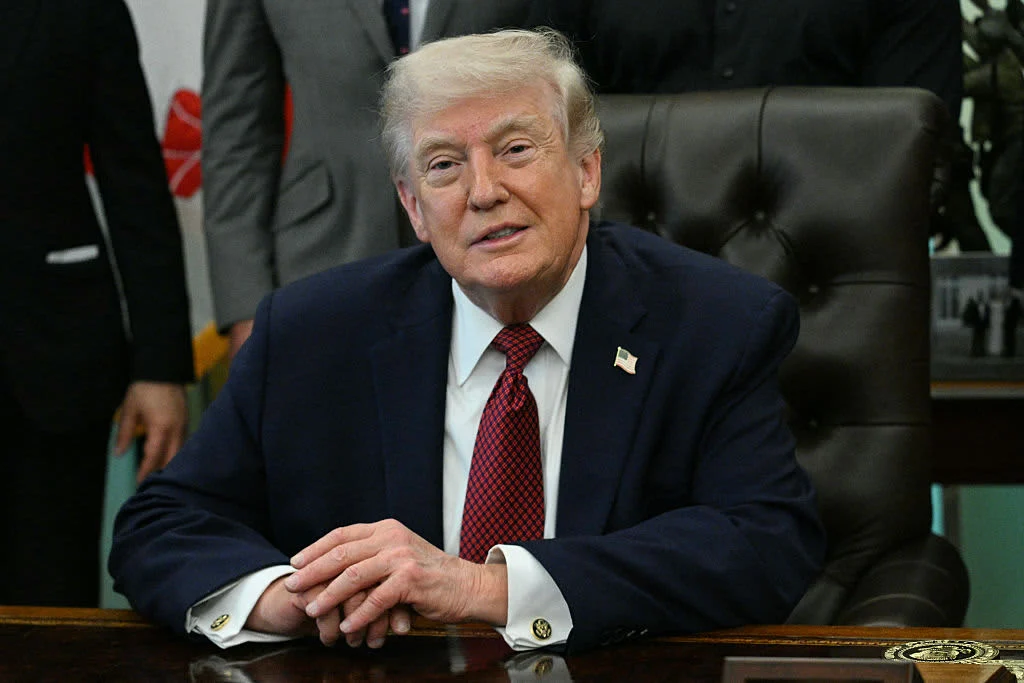
President Donald Trump, known for his unconventional approach to foreign policy, announced the impending negotiations with a mix of olive branches and ultimatums. "My Representatives are going to Islamabad, Pakistan – They will be there tomorrow evening, for Negotiations," Trump declared in a Truth Social post on Sunday. However, this seemingly hopeful statement was immediately overshadowed by a severe warning: "We’re offering a very fair and reasonable DEAL, and I hope they take it because, if they don’t, the United States is going to knock out every single Power Plant, and every single Bridge, in Iran. NO MORE MR. NICE GUY!" The president also asserted that Iran had already violated the terms of the ceasefire, a claim that Iranian officials have vehemently denied, setting a contentious tone for the upcoming talks.
A Volatile Diplomatic Landscape
The U.S. delegation will once again be spearheaded by Vice President JD Vance, confirming earlier reports after an initial period of confusion. Vance’s leadership signals the high-level commitment from Washington to these negotiations, despite the immense security logistical challenges. Accompanying Vance will be key envoys Steve Witkoff and Jared Kushner, President Trump’s son-in-law, whose presence highlights the direct involvement of the White House in shaping these delicate discussions. Their arrival in Pakistan is anticipated with heightened security measures, as two giant U.S. C-17 cargo planes landed at Pakistan’s Nur Khan air base on Sunday afternoon, delivering security equipment and vehicles to secure the delegation’s movements and accommodation. Islamabad authorities have already initiated a partial lockdown, halting public transport and heavy goods traffic, and rolling out barbed wire near the Serena Hotel, the venue for both the previous and upcoming rounds of talks. Guests at the Serena Hotel were instructed to vacate the premises on Sunday, a clear indication of the anticipated security demands.
Pakistan has assumed a crucial intermediary role in this high-stakes diplomatic ballet. Its Foreign Minister, Mohammad Ishaq Dar, engaged in a telephone conversation with his Iranian counterpart, Abbas Araghchi, on Sunday. The Pakistani foreign ministry reported that Dar emphasized "the need for continued dialogue and engagement as essential to resolving the current issues as soon as possible." Further cementing Pakistan’s mediatory efforts, Iran’s President Masoud Pezeshkian is expected to speak with Pakistan’s Prime Minister later on Sunday, underscoring the intense diplomatic flurry preceding Monday’s negotiations.
The Strait of Hormuz: A Global Chokepoint in Crisis

Central to the ongoing crisis and a major point of contention is the Strait of Hormuz, a narrow waterway connecting the Persian Gulf to the open ocean. Approximately one-fifth of the world’s total petroleum liquids, or roughly 21 million barrels per day, passed through this strategic chokepoint before the current conflict escalated. Its closure has triggered the largest oil supply disruption in history, sending shockwaves through global energy markets. On Friday, oil prices plunged more than 10% to below $90 per barrel, driven by speculative hopes that energy supplies might soon resume flowing freely from the region. However, these hopes remain tenuous.
The situation in the Strait has been particularly volatile. On Saturday, the British military’s United Kingdom Maritime Trade Operations center reported that two gunboats from Iran’s Revolutionary Guard opened fire on a tanker transiting the strait. While the tanker and its crew were reported safe, the incident underscored the extreme danger to international shipping. Reuters, citing shipping sources, reported at least two other vessels coming under fire while attempting to navigate the waterway. Video footage from ship-tracking firm Kpler further illustrated the chaos, showing several tankers and cargo ships attempting to exit the waterway on Friday only to turn back, unable or unwilling to risk passage.
President Trump announced a naval blockade of the Strait on April 12, citing Iran’s failure to fully reopen the strait as one of his conditions for the fragile two-week ceasefire. Iran, however, has consistently rejected this blockade. Mohammad Bagher Ghalibaf, Iran’s parliament speaker and top negotiator, explicitly warned the U.S. against enforcing such a measure. "It is impossible for others to pass through the Strait of Hormuz but not us. If the U.S. does not abandon the blockade, traffic in the Strait of Hormuz will certainly be restricted," Ghalibaf stated in televised remarks on Saturday. Iranian Foreign Minister Seyed Abbas Araghchi later clarified on social media that while the Strait was "completely open for the remaining period of ceasefire," vessels must transit through a "coordinated route" announced by Iran’s maritime authorities, raising concerns about potential tolls or restrictions. India, a major energy importer, has already expressed its dismay, summoning Iran’s ambassador in Mumbai after an Indian-flagged vessel carrying crude oil was attacked while attempting to cross the strait.
Nuclear Ambitions and Military Readiness
Beyond the immediate crisis in the Strait of Hormuz, the core issue of Iran’s nuclear program continues to loom large over any potential peace agreement. President Trump has claimed that Iran agreed to hand over its stockpile of enriched uranium and allow the U.S. to "get all the nuclear dust," referring to the estimated 970 pounds (440 kilograms) of enriched uranium believed to be buried under nuclear sites damaged by U.S. military strikes last year. This claim, however, has been swiftly and unequivocally rejected by Iranian officials. Saeed Khatibzadeh, Iranian Deputy Foreign Minister, stated in an interview, "I can tell you that no enriched material is going to be shipped to United States. This is non-starter and I can assure you that while we are ready to address any concerns that we do have, we’re not going to accept things that are nonstarters." Iranian President Masoud Pezeshkian further asserted Iran’s sovereign right to a nuclear program, questioning Trump’s authority to deny a nation its rights.
The military dimensions of the conflict remain a critical, underlying tension. Despite claims from the United States and Israel that they have degraded Iran’s military capabilities over the course of the nearly six-week conflict, Iranian officials project an image of resilience and readiness. Brig. Gen. Seyed Majid Mousavi, commander of the Revolutionary Guard’s Aerospace Force, announced that Iran has been actively rebuilding its stockpile of weapons and munitions during the ceasefire period. "Our speed in updating and refilling missile and drone launch platforms is even greater than before the war," Mousavi claimed, with state media airing a video showcasing missiles and drones in warehouses and mobile launch operations. This rhetoric serves as a clear signal that Iran views the negotiations from a position of strength, ready to resume conflict if diplomatic efforts fail.
Historical Context and The Path to Crisis

The current crisis is deeply rooted in a history of mistrust and escalating tensions between Washington and Tehran. The 2015 Joint Comprehensive Plan of Action (JCPOA), or Iran nuclear deal, which provided Iran with sanctions relief in exchange for curbs on its nuclear program, represented a brief period of diplomatic rapprochement. However, the U.S. withdrawal from the deal in 2018 under the Trump administration, followed by the re-imposition of crippling sanctions, significantly exacerbated hostilities. This move, driven by concerns that the deal did not adequately address Iran’s ballistic missile program or its regional proxy activities, effectively dismantled the diplomatic framework and set the stage for renewed confrontation.
The "six-week war" alluded to in the original reports likely refers to a period of intense military exchanges, including cyberattacks, drone strikes, and missile attacks, that have characterized the last month and a half. These hostilities have seen U.S. and Israeli forces target Iranian nuclear facilities and military infrastructure, while Iran and its proxies, notably Hezbollah in Lebanon, have responded with their own calibrated actions, creating a dangerous cycle of escalation. The recent 10-day ceasefire between Israel and Hezbollah, initiated on Thursday, is a testament to the interconnectedness of regional conflicts and the broader efforts to de-escalate tensions, even as the U.S.-Iran standoff remains unresolved.
Implications and The Road Ahead
The stakes of the Islamabad talks cannot be overstated. A failure to reach a comprehensive agreement carries profound geopolitical and economic implications. Geopolitically, an escalation of the conflict could destabilize the entire Middle East, drawing in other regional and international powers and potentially leading to a wider, devastating war. The current fragile ceasefires could collapse, reigniting conflicts in multiple theaters. The humanitarian cost would be immense, adding to the already significant toll of decades of conflict in the region.
Economically, a sustained closure or restriction of the Strait of Hormuz would continue to wreak havoc on global energy markets. Beyond the immediate impact on oil prices, shipping costs would soar, insurance premiums for vessels transiting the region would become prohibitive, and global supply chains would face severe disruptions. Major oil-importing nations like China, Japan, and South Korea, heavily reliant on Middle Eastern crude, would face significant economic headwinds, potentially triggering a global recession. The uncertainty surrounding energy supplies would deter investment and stifle economic growth worldwide.
Diplomatically, the success or failure of these talks will serve as a crucial test case for conflict resolution in an increasingly multipolar world. The use of public threats and ultimatums by a major power during sensitive negotiations complicates the process, potentially undermining trust and making compromise more difficult. Pakistan’s role as a neutral mediator is vital, yet its influence is limited by the deep-seated animosities and clashing strategic interests of the primary belligerents.
As the U.S. delegation prepares for its arrival in Islamabad, the world watches with bated breath. The path to peace is fraught with challenges, demanding immense diplomatic skill, a willingness for genuine compromise, and a mutual commitment to de-escalation. President Trump’s "NO MORE MR. NICE GUY!" rhetoric, juxtaposed with the fragile ceasefire and the very real threat of military escalation, encapsulates the precarious balance of the moment. The coming days in Islamabad will determine whether diplomacy can prevail over the brinkmanship, steering the region away from the precipice of a potentially catastrophic conflict.
About the Author