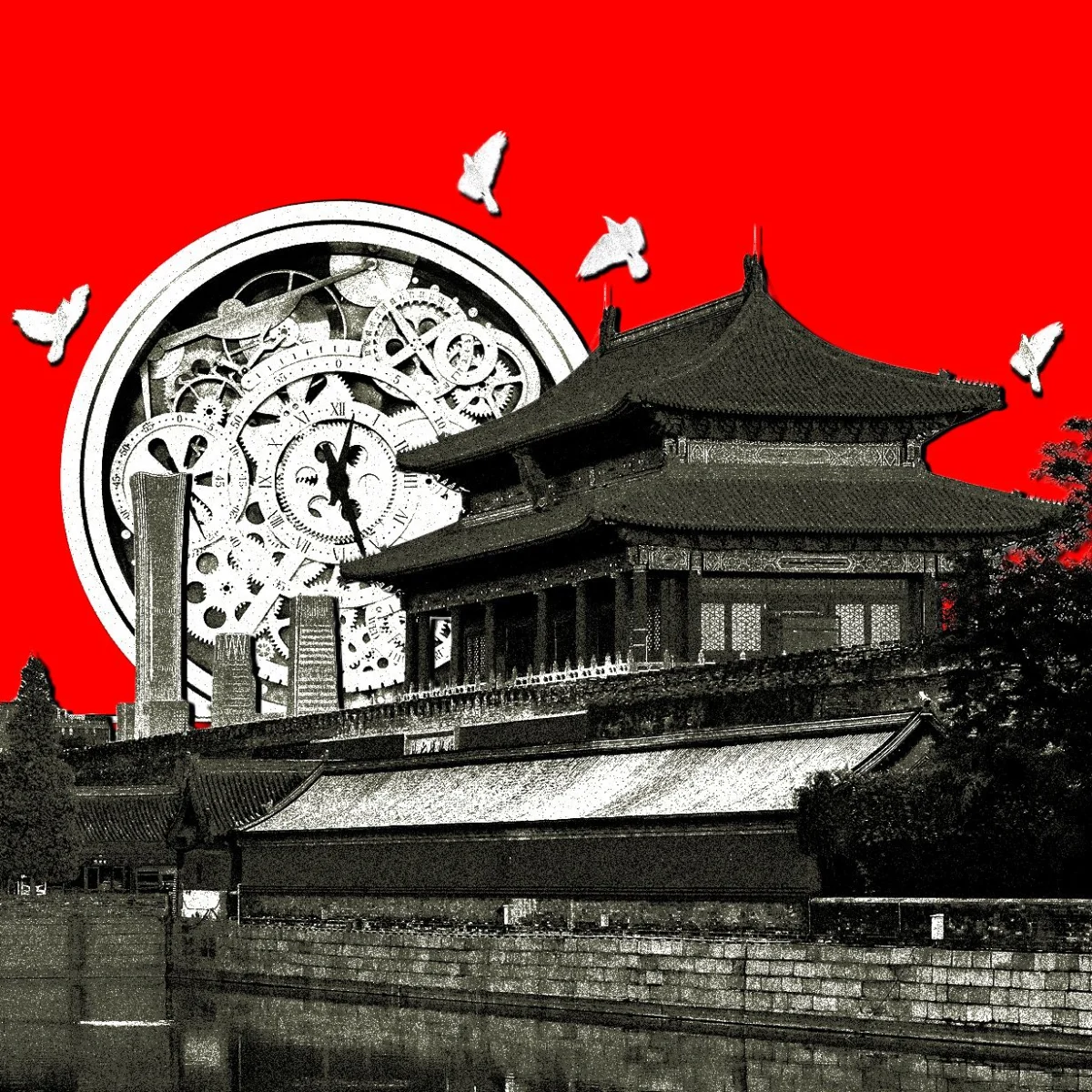
The intersection of digital literature, national identity, and state-sanctioned ideology in China has produced a unique literary phenomenon that challenges traditional Western understandings of science fiction and political dissent. In his recent book, Rongbin Han, a professor of Chinese politics at the University of Georgia, provides a comprehensive analysis of "alt-history" web novels—a genre where protagonists travel back in time to rectify the perceived failures of China’s past. Through an exhaustive study of the 2,100 most popular titles on a leading web novel review platform, Han identifies 238 works specifically focused on rewriting history through the lens of modern technological and political superiority. This literary trend, which Han characterizes as "Make China Great Again" (MCGA) fiction, serves as a significant window into the complexities of popular authoritarianism and the grassroots legitimization of the Chinese Communist Party’s (CCP) historical narrative.
The Scale and Scope of the Web Novel Industry
China’s web novel industry is a massive digital ecosystem that operates on a scale far exceeding Western counterparts. According to data from the China Audio-video and Digital Publishing Association, the domestic digital literature market reached a valuation of approximately 40.43 billion yuan (roughly $5.6 billion USD) in 2023, with a user base exceeding 500 million people. These novels are typically serialized, with authors publishing daily installments that range from several thousand to tens of thousands of characters.
Han’s research highlights the staggering length of these works. The alt-history novels he analyzed averaged 2.88 million Chinese characters—roughly equivalent in volume to the entire Harry Potter series. This format fosters an intense, long-term engagement between authors and readers, who often pay micro-transactions to unlock chapters and participate in vibrant online discussion forums. The genre’s popularity is not merely a commercial success but a cultural movement, with many titles being adapted into high-budget television dramas and films, further embedding these narratives into the national consciousness.
Historical Context: The Quest to Erase "Humiliation"
To understand the appeal of alt-history fiction, one must consider the "Century of Humiliation"—the period between the mid-19th and mid-20th centuries when China was plagued by internal instability and foreign imperialism. Modern Chinese education and state propaganda place a heavy emphasis on this era as a cautionary tale of what happens when the nation is technologically or politically weak.
In the novels studied by Han, the Ming Dynasty (1368–1644) emerges as a primary destination for time-traveling protagonists, appearing in approximately 25% of the analyzed works. This preference is rooted in a common nationalist sentiment that the subsequent Qing Dynasty—ruled by the Manchus rather than the Han majority—was responsible for China’s failure to keep pace with the European Industrial Revolution. By traveling back to the Ming era, protagonists aim to introduce modern steel-making, gunpowder technology, and maritime strategies to prevent the eventual collapse of the dynasty and the subsequent rise of Western hegemony.
Other novels venture further back, such as to the 10th-century Song Dynasty, or forward to the early 20th century. In these stories, the "cheats" or "golden fingers" (a genre term for the protagonist’s special advantages) are usually modern knowledge: advanced metallurgy, economic theories, or even the blueprints for a parliamentary democracy—not as an end in itself, but as a tool to strengthen the state.
Chronology of the Genre and State Regulation
The evolution of alt-history fiction has been closely monitored by the Chinese government, creating a timeline of shifting tolerances and censorship:
- Early 2000s: The rise of chuanyue (time-travel) fiction begins on platforms like Qidian. Early stories often focused on romance or personal gain.
- 2011: The State Administration of Radio, Film, and Television (SARFT) issued a directive discouraging time-travel themes in television and film, arguing they "treat serious history in a frivolous manner." However, this did not halt the proliferation of web novels.
- 2012–Present: Under President Xi Jinping, the concept of the "Chinese Dream" and the "Great Rejuvenation of the Chinese Nation" became the central ideological pillar of the state. Web novels shifted significantly toward nationalist "save the nation" themes.
- 2018–2020: Major "rectification" campaigns by the Cyberspace Administration of China (CAC) led to the removal of thousands of novels. Works that depicted "sensitive" historical periods or challenged the CCP’s official version of events were purged.
Han notes that writers often refer to the censorship apparatus as the "Time and Space Administration." This nickname reflects the reality that certain eras—particularly the first 30 years of the People’s Republic of China (the Mao era)—are largely off-limits for time-traveling intervention, as any fictional "fix" might imply the original leadership was flawed.

Case Studies: From Industrialization to Early Revolution
Two notable examples cited in Han’s research illustrate the genre’s diversity and its alignment with state narratives. The Morning Star of Lingao depicts 500 contemporary Chinese citizens who travel back to the late Ming Dynasty with a massive stockpile of industrial equipment. The novel is famed for its technical rigor, detailing the step-by-step process of building a modern industrial base from scratch. It serves as a fantasy of "leapfrogging" history through collective effort and technological superiority.
Conversely, Red Dawn (Chise Liwu) follows a protagonist who travels to 1905 to accelerate the Communist revolution. Interestingly, the protagonist in this novel implements a peaceful transition of power through democratic elections—yet the victors are characters clearly modeled after Mao Zedong and Zhou Enlai. This suggests that even when authors introduce Western political concepts like elections, they do so to arrive at the same historical conclusion: the inevitability and legitimacy of the CCP’s leadership.
A Gendered Divide in Historical Revisionism
Han’s research reveals a stark gender divide in how time travel is utilized in fiction. Stories written by women for female audiences (nüpin) frequently focus on the "inner palace" or domestic spheres, emphasizing personal agency, romance, and navigating social hierarchies. In contrast, the "national salvation" trope is almost exclusively the domain of male-oriented fiction (nanpin). In these works, the protagonist’s primary goal is rarely personal happiness but rather the transformation of the nation into a global superpower. This suggests that the "Make China Great Again" sentiment is deeply tied to traditional concepts of masculine responsibility and state-building.
Comparative Analysis: MCGA vs. MAGA
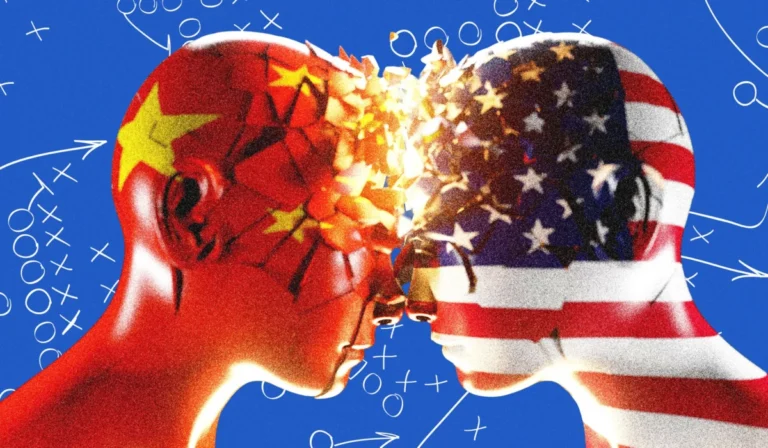
Han draws a deliberate parallel between the Chinese MCGA sentiment and the "Make America Great Again" (MAGA) movement in the West, though he highlights a fundamental difference in their temporal outlooks. Populist movements in the West often look backward because they view the present as a period of decline, particularly in the face of globalization and cultural shift.
In contrast, Chinese MCGA fiction is fueled by a sense of contemporary success. Because many Chinese citizens view the current era as a time of unprecedented national strength, the fiction is not an attempt to return to the past, but an attempt to bring the "greatness" of the present back to the past. The protagonists do not want ancient China to stay ancient; they want to modernize it centuries ahead of schedule. As Han notes, there is almost no desire among readers to return to the actual living conditions of ancient China; the goal is to make the past more like the idealized, powerful version of modern China.
Broader Implications and Popular Authoritarianism
The significance of this genre lies in its role as a mechanism for "popular authoritarianism." Unlike state-mandated propaganda, which is often viewed with skepticism, these novels are consumer-driven. People pay to read them because they find the narratives of national triumph and historical "correction" deeply satisfying.
By voluntarily aligning their stories with the "Great Rejuvenation" narrative, web novel authors and readers participate in a form of self-censorship that reinforces state legitimacy. The novels suggest that China’s rise was not just a historical accident but a destiny that could have—and should have—happened even sooner if not for the interference of "inferior" dynasties or foreign powers.
Furthermore, these works serve as a pressure valve for political discourse. While contemporary political criticism is strictly forbidden, experimenting with parliamentary systems or economic reforms in the 11th century provides a safe space for intellectual exploration, provided the ultimate outcome is a stronger, more unified China.
Conclusion: The Future of the Narrative
As China continues to navigate its role as a global superpower, the "Make China Great Again" genre is likely to evolve. The fusion of technological fantasy with nationalist history creates a potent cultural product that resonates with a generation raised on both high-tech development and patriotic education. Rongbin Han’s research underscores that the digital frontier is not just a place for escapism, but a critical battlefield where national identity is forged and the state’s historical narratives are tested, refined, and ultimately embraced by the public. For observers of Chinese politics, these millions of characters of fiction provide a clearer picture of the nation’s ideological direction than many official policy papers.
About the Author