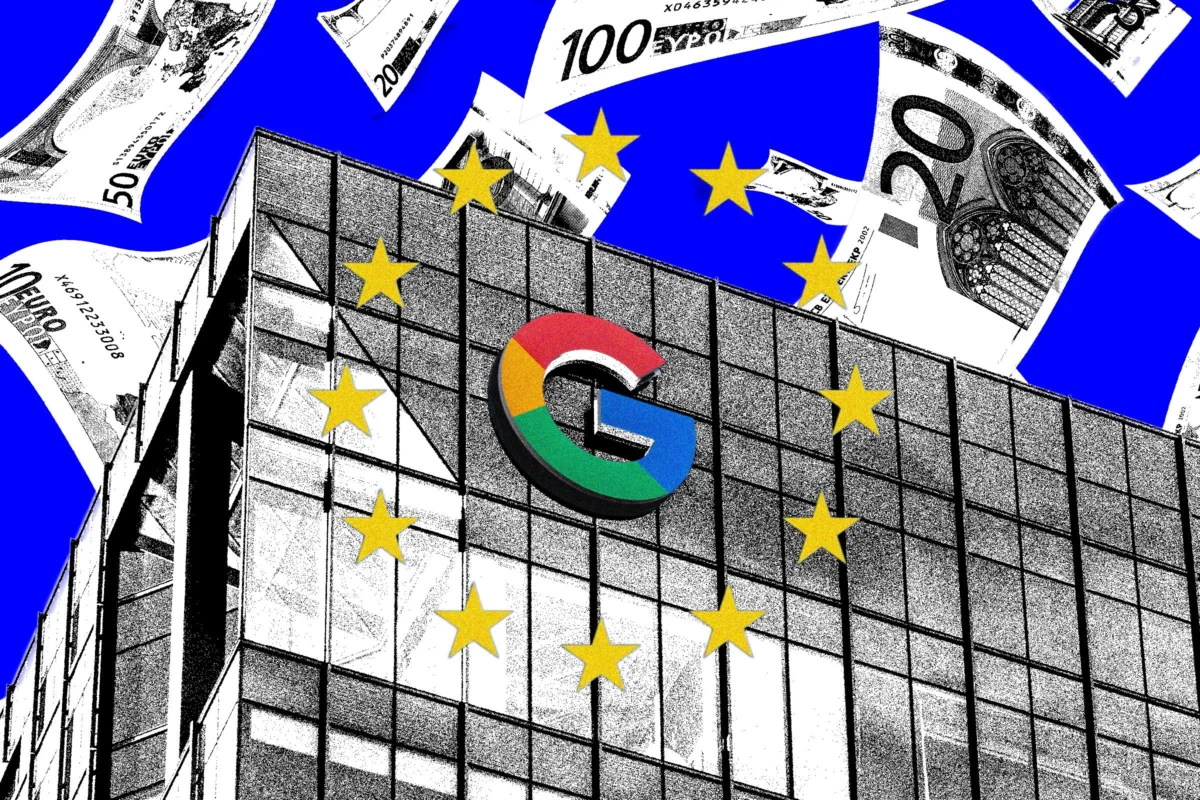
The European Commission has officially levied a $1 billion penalty against Google, the subsidiary of Alphabet Inc., following a comprehensive investigation into alleged violations of competition law and the newly enacted Digital Markets Act (DMA). The decision marks a significant escalation in the regulatory friction between the European Union and American technology giants, as Brussels seeks to curb the perceived dominance of "gatekeeper" platforms. According to the Commission’s findings, Google abused its commanding position in the search engine and mobile application markets to unfairly prioritize its own proprietary services over those of independent competitors, effectively distorting the digital marketplace within the 27-nation bloc.
The core of the Commission’s case rests on the assertion that Google leveraged its ubiquitous search engine and the Android Play Store to funnel users toward its own ecosystem of apps and services. This practice, often referred to as "self-preferencing," is a central target of the Digital Markets Act, which came into full effect earlier this year. The EC has ordered Google to immediately cease giving preferential treatment to its own services—including Google Shopping, Google Flights, and local accommodation and transport results—within its search rankings. Furthermore, the ruling mandates that Google must permit third-party app developers to communicate directly with their users and facilitate transactions outside of the Play Store environment, where Google currently extracts a significant commission on digital sales.
The Regulatory Framework: Understanding the Digital Markets Act
The $1 billion fine is one of the first major financial penalties issued under the framework of the Digital Markets Act (DMA). Unlike traditional antitrust laws, which often require years of litigation to prove harm to competition after it has occurred, the DMA is designed as "ex-ante" regulation. It sets out a list of "dos and don’ts" for large digital platforms designated as gatekeepers. These gatekeepers—which include Alphabet, Amazon, Apple, ByteDance, Meta, and Microsoft—are subject to stricter rules because of their systemic importance to the digital economy.
The DMA’s primary objective is to ensure "contestability" and "fairness." Under the Act, self-preferencing is strictly prohibited. For a search engine like Google, this means that when a user searches for a product or a flight, the platform cannot display its own comparison-shopping service or travel booking tool more prominently than those of rivals unless it is based on objective ranking criteria. The Commission’s investigation concluded that Google’s current interface design inherently steered European consumers toward Google-owned products, stifling the growth of smaller, specialized European tech firms.
Chronology of the Dispute and Google’s Legal History in Europe
The current penalty is the latest chapter in a decade-long legal battle between the European Union’s executive arm and the California-based search giant. To understand the gravity of the $1 billion fine, it is essential to view it within the context of Google’s historical interactions with European regulators:
- 2017: The Shopping Case. The EC fined Google €2.42 billion ($2.7 billion) for using its search engine to give an illegal advantage to its own comparison-shopping service.
- 2018: The Android Case. A record-breaking €4.34 billion ($5 billion) fine was imposed on Google for using the Android operating system to cement the dominance of its search engine. This fine was recently upheld by a European court in July 2024, though slightly reduced to $4.1 billion.
- 2019: The AdSense Case. The EC fined Google €1.49 billion ($1.7 billion) for "anti-competitive" practices in the online advertising market, specifically regarding contracts that prevented rivals from placing ads on third-party websites.
- 2024: DMA Implementation. Following the formal adoption of the DMA, the EC opened several non-compliance investigations into Google, Apple, and Meta. The $1 billion fine announced today is the culmination of the first of these specific DMA-focused probes.
The cumulative total of fines levied against Google by the European Union now exceeds $10 billion, reflecting a persistent effort by EU Competition Commissioner Margrethe Vestager and her successors to reshape the digital landscape.
Technical Violations and Market Impact
The Commission’s investigation highlighted two primary areas of non-compliance. First, in the realm of online search, Google was found to have displayed its own specialized search results (such as Google Hotels) in a manner that overshadowed organic search results from competitors like Expedia, Booking.com, or TripAdvisor. This "vertical integration" allows Google to capture the most valuable "above-the-fold" real estate on mobile and desktop screens.
Second, the investigation focused on the "anti-steering" provisions of the Google Play Store. For years, Google has restricted app developers from informing users about cheaper subscription options or purchase methods available on the developers’ own websites. By forcing all transactions through the Play Store’s billing system, Google secures a commission ranging from 15% to 30%. The EC’s ruling aligns with similar global movements—including the high-profile Epic Games v. Google lawsuit in the United States—which argue that such "walled gardens" are monopolistic.
Teresa Ribera, an Executive Vice President at the European Commission, emphasized the consumer-centric nature of the ruling. "The best products should succeed because they’re better, not because they’re owned by the company running the search engine," Ribera stated. She further noted that European consumers have an inherent right to transparency, particularly regarding where they can find the best financial offers for digital services.
Google’s Defense and the Industry Response
Google has expressed strong disagreement with the Commission’s findings and has indicated it is considering an appeal to the European Court of Justice. Kent Walker, President of Global Affairs at Google, argued that the mandates of the DMA would actually harm the user experience. "This isn’t fair competition; it’s product degradation driven by a small group of self-serving complainants, with European businesses and consumers taking the hit," Walker said. Google maintains that its integrated features, such as showing a map or a flight schedule directly in search results, provide convenience and efficiency that users have come to expect.
Trade associations representing the broader tech industry have echoed these concerns. Daniel Friedlaender, Senior Vice President at CCIA Europe (the Computer & Communications Industry Association), warned that aggressive enforcement could lead to a "fragmented" internet where European users have access to fewer features than those in the U.S. or Asia. "Reducing the quality of what Europeans have access to is not a positive outcome," Friedlaender told reporters.
However, legal experts suggest that the "special responsibility" of dominant firms is a cornerstone of EU law. Kathryn McMahon, an associate professor of law at the University of Warwick, noted that the stakes are incredibly high for the businesses that rely on Google for traffic. "How they are ranked affects their businesses a great deal," McMahon said. "The way EU competition law looks at it, firms in a dominant position—like Google—have a special responsibility not to distort competition."
Geopolitical Implications and Transatlantic Tensions
The timing of the fine is particularly sensitive given the current political climate in the United States. President Donald Trump has recently vowed to impose significant tariffs on European goods if the EU continues what he characterizes as "predatory" targeting of American technology companies. The White House has previously signaled that it views the DMA as a form of protectionism designed to favor European startups at the expense of Silicon Valley’s leaders.
The $1 billion penalty is seen by some analysts as a bold assertion of European sovereignty in the face of these threats. "It shows the commission is willing to be tough," McMahon observed, suggesting that the EC is unlikely to back down despite the risk of a trade war. The tension highlights a growing divide in regulatory philosophy: the U.S. generally favors a "hands-off" approach to tech giants until consumer harm is proven through prices, while the EU prioritizes market structure and the viability of small competitors.
Future Outlook and Compliance Measures
Despite the fine and the rhetoric, there are signs of movement toward a middle ground. The European Commission noted that Google has already proposed several alterations to how it administers the Play Store and presents search rankings. These include new "choice screens" for browsers and search engines on Android devices and redesigned search result layouts that give more prominence to comparison sites. The EC has characterized these proposals as "progress towards compliance," though it remains to be seen if they will satisfy the full requirements of the DMA.
The long-term implications of this ruling extend far beyond Google. If the EC is successful in forcing Google to decouple its services, it sets a precedent that will inevitably affect how Apple manages its App Store, how Amazon promotes its private-label goods, and how Meta integrates its various social media platforms.
For Google, the $1 billion fine is financially manageable—Alphabet reported over $300 billion in annual revenue in 2023—but the structural changes required by the EC could be far more costly in the long run. By opening the door for developers to bypass the Play Store and forcing Google Search to treat competitors as equals, the EU is effectively attempting to dismantle the "gatekeeper" model that has defined the internet’s second decade. As the legal process moves toward the appeals courts, the global tech industry remains on high alert, watching as the European Union attempts to write a new rulebook for the digital age.
About the Author