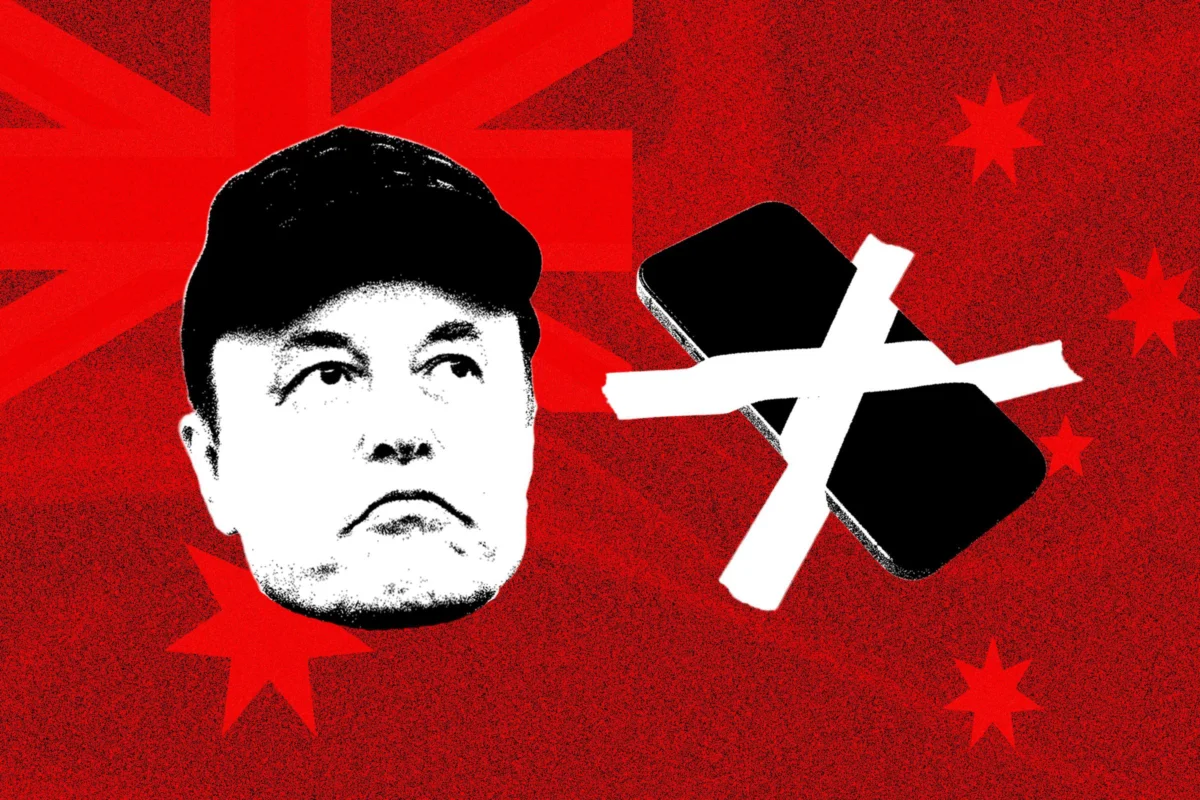
The social media platform X, owned by Elon Musk, has intensified its legal and rhetorical opposition to Australia’s landmark legislation aimed at banning children under the age of 16 from social media. In a comprehensive submission to the Australian Parliament, the company argued that the proposed enforcement mechanisms and information-gathering powers of the Australian government not only threaten the privacy of global users but also infringe upon established principles of international law. This latest challenge marks a significant escalation in the ongoing friction between the tech giant and the Australian government, which has positioned itself at the forefront of global efforts to regulate the digital environment for minors.
The submission, published by the Senate Environment and Communications Legislation Committee, outlines a series of grievances regarding the Australian government’s efforts to strengthen the Online Safety Act. X contends that the proposed amendments, which would grant the eSafety Commissioner broader powers to demand data and compliance evidence from foreign entities, represent an overreach that ignores the complexities of cross-border digital operations. Central to X’s argument is the concept of the "comity of nations," a legal principle suggesting that countries should recognize and respect the legislative and judicial acts of one another. X warns that by demanding sensitive information from non-Australian personnel and entities, the Australian government risks creating diplomatic and legal conflicts that could disrupt international cooperation.
The Legislative Framework: Australia’s Push for a Minimum Age
The conflict centers on the Social Media Minimum Age Bill, which was introduced by the Australian government in late 2024. The legislation, which passed with bipartisan support, mandates a minimum age of 16 for social media usage, placing the onus on platforms to implement "reasonable steps" to prevent underage access. Failure to comply could result in fines exceeding AUD $50 million. This move follows years of public debate in Australia regarding the impact of social media on the mental health and safety of young people, fueled by reports of cyberbullying, exposure to harmful content, and the addictive nature of algorithmic feeds.
The Australian government, led by Prime Minister Anthony Albanese, has defended the ban as a necessary intervention to protect children from the "harms" of the digital world. The government’s approach is supported by various mental health advocacy groups, though it has faced criticism from digital rights organizations and some academic experts who argue that a blanket ban is technically difficult to enforce and may inadvertently isolate vulnerable youth from supportive online communities.
A History of Regulatory Friction
The current dispute is the latest chapter in a long-standing battle between X and Australia’s internet regulator, the eSafety Commissioner, Julie Inman Grant. The relationship soured significantly following Elon Musk’s acquisition of Twitter in late 2022.
In early 2023, the eSafety Commissioner issued a formal notice to X, requesting information on how the platform was addressing the spread of child sexual abuse material (CSAM). The regulator subsequently fined X AUD $610,500 (approximately USD $463,000) for failing to provide a sufficient response. X challenged the fine in court, arguing that the request was "excessive" and that the platform had complied to the best of its ability. However, in May 2024, an Australian court upheld the regulator’s authority, ordering X to pay the fine.
The tension escalated further during the investigation into a high-profile stabbing incident at a Sydney church in April 2024. The eSafety Commissioner ordered X to remove videos of the attack globally, arguing that the content was "gratuitously violent." Elon Musk publicly defied the order, labeling the Commissioner a "censorship commissar" and arguing that one country’s laws should not dictate what users in other countries can see. While X eventually won a temporary reprieve in court regarding the global nature of the takedown, the incident cemented the platform’s reputation as a fierce opponent of Australian regulatory oversight.
Privacy and Information-Gathering Concerns
In its recent parliamentary submission, X characterizes the proposed information-gathering powers as "highly invasive." The company alleges that the eSafety Commissioner possesses "seemingly no understanding" of the technical and operational realities of global social media platforms. X’s primary concern involves the potential for the regulator to demand confidential and commercially sensitive information without what it deems adequate safeguards.
Furthermore, X argues that the requirement for platforms to verify the age of users—potentially through biometrics or government-issued identification—poses a severe risk to user privacy. The company suggests that such measures would create vast databases of sensitive personal information, making them prime targets for cyberattacks. This stance aligns with broader industry concerns that age-verification mandates could effectively end online anonymity, a cornerstone of digital expression for many users worldwide.
"Demanding data, documents, and compliance evidence from non-Australians in other countries could cause issues for the comity of nations," the firm warned in its submission. This legal argument suggests that X may be preparing to challenge Australian enforcement actions in international forums or through diplomatic channels, asserting that Australia cannot unilaterally impose its domestic standards on global corporate structures.
Expert Analysis: Human Rights vs. Jurisdictional Authority
The debate over the social media ban has divided legal and human rights experts. Stefania Di Stefano, a researcher specializing in international law and technologies, suggests that while X’s complaints about information-gathering might be seen as self-serving, the core issue of a blanket ban remains legally contentious.
"For me, the complete ban from social media on children and minors is problematic from an international human rights perspective," Di Stefano said. She noted that such a ban might be viewed as "disproportionate" concerning the rights of children to freedom of expression, access to information, and association, as outlined in the United Nations Convention on the Rights of the Child.
Conversely, other legal scholars believe X’s argument regarding international law is on shaky ground. Julia Hörnle, a professor of internet law at Queen Mary University of London, argues that national regulators have a clear right to oversee business activities conducted within their borders.
"A regulator in Australia ordering X to disclose a document in relation to their business activities in Australia, that’s perfectly fine," Hörnle told WIRED. She emphasized that modern data analytics allow social media companies to distinguish between users based on geography. "From all the data in the possession of the social media company, they can distinguish between Australian and non-Australian children, and therefore keep regulation to Australia."
Elon Musk’s Public Crusade
Elon Musk has used his personal account on X to lead a vocal campaign against the Australian legislation. In late 2024, when the bill was first detailed, Musk described it as a "backdoor way to control access to the Internet by all Australians." His rhetoric has often strayed into personal attacks on world leaders who propose similar measures. When Spanish Prime Minister Pedro Sánchez announced plans to restrict social media access for minors in February 2024, Musk labeled him a "tyrant" and a "true fascist totalitarian."
Musk’s opposition is rooted in a "free speech absolutist" philosophy, though critics point out that X has complied with government takedown requests in other jurisdictions, such as Turkey and India. The specific resistance to Australia appears to be a litmus test for how much control a middle-power nation can exert over a Silicon Valley behemoth.
Global Context and the "Splinternet"
Australia is not alone in its pursuit of stricter social media regulations for youth. The United Kingdom recently implemented the Online Safety Act, which requires platforms to protect children from "priority harms," though it stopped short of a total age ban. In the United States, several states, including Utah and Florida, have passed or proposed laws requiring parental consent for minors to use social media, though many of these are currently tied up in court challenges.
The push for national-level digital regulations has raised concerns about the "splinternet"—a future where the internet is fragmented into different regions with vastly different rules, content, and access. X’s submission highlights this fear, suggesting that if every country implements its own "invasive" data demands and age-verification standards, the cohesive nature of the global web could collapse.
Implications for the Tech Industry
The outcome of this standoff will have significant implications for other major platforms like Meta (owner of Facebook and Instagram), TikTok, and YouTube. While these companies have generally been more conciliatory in their public statements than X, they share many of the same concerns regarding the technical feasibility of age verification and the potential for massive fines.
If Australia successfully enforces its under-16 ban and compels X to comply with its data requests, it could provide a blueprint for other nations to follow. Conversely, if X successfully blocks these measures through legal challenges or by citing international law, it could signal a limit to the power of national governments to regulate global digital entities.
As the Australian Parliament reviews the submissions, the tech industry remains on high alert. The tension between protecting the safety of children and maintaining the principles of a free, open, and private internet remains one of the most complex policy challenges of the 21st century. For X, the battle in Australia is not just about a single law, but about the right of a global platform to operate independently of what it views as "unjustified and disproportionate" national interference.
About the Author