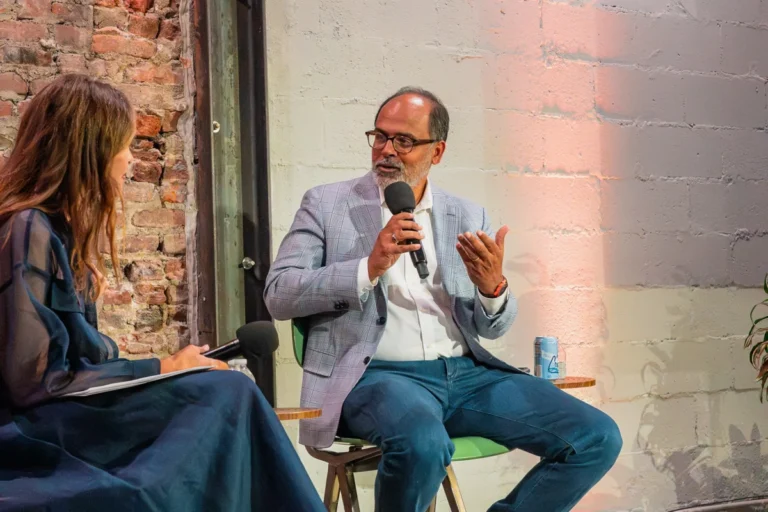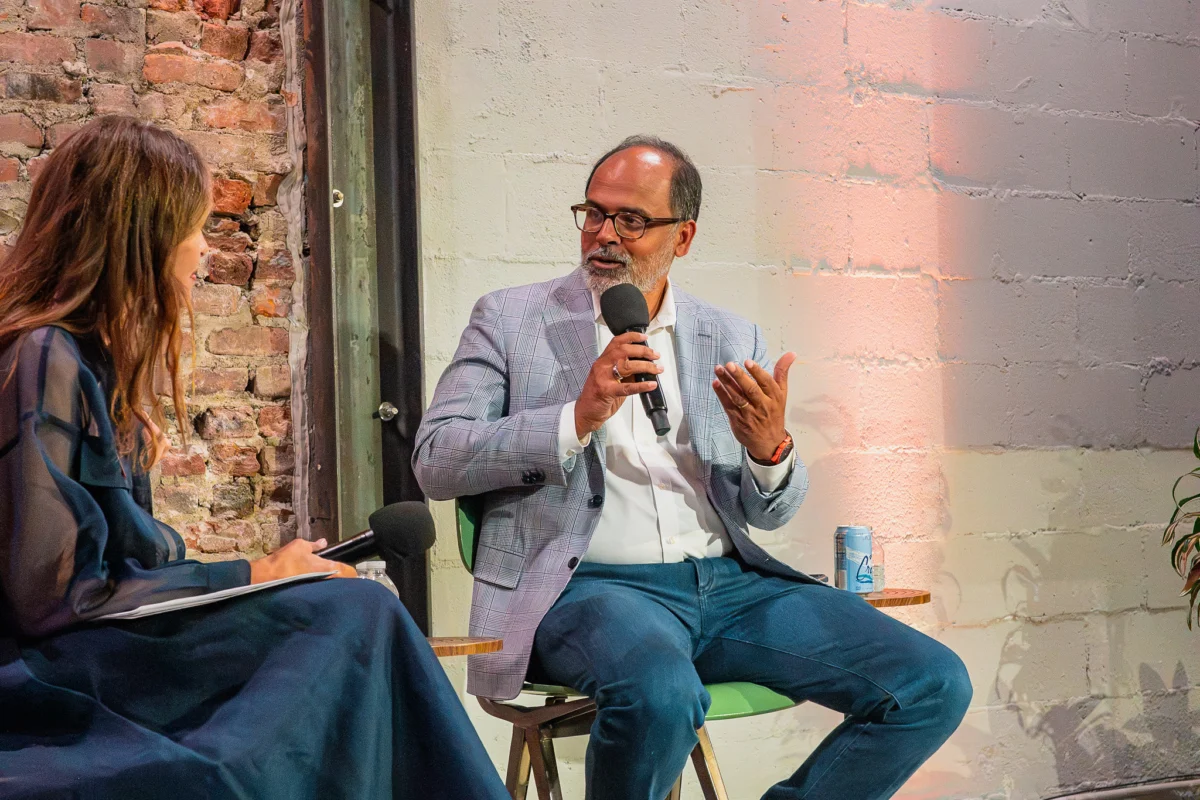
The hushed corridors of Insight Partners, a venture capital titan with $90 billion in assets under management, stand in stark contrast to the boisterous online presence of many in the industry. For 26 years, Deven Parekh, its co-founder, has cultivated a strategy of measured deliberation, allowing the firm’s portfolio performance to speak for itself. In a candid sit-down at TechCrunch’s StrictlyVC event in New York on Thursday night, Parekh offered a rare glimpse into the firm’s investment philosophy, its successes, its near misses, and his perspective on the seismic shifts occurring in the technology landscape, particularly within the artificial intelligence sector.
The conversation, held against the backdrop of a bustling industry gathering that brings together a spectrum of venture capitalists, founders, and tech journalists, touched upon the existential debates surrounding AI, the strategic rationale behind Insight’s diversified approach, and the evolving dynamics of deal-making in a market characterized by both unprecedented innovation and significant volatility. Parekh’s measured responses underscored a long-term vision, one that prioritizes sustainable growth and risk management over fleeting market trends.
Navigating the AI Frontier: Opportunity Outweighs Peril
The rapid advancement of artificial intelligence has ignited both fervent optimism and profound apprehension. A recent widely publicized event involving a researcher’s departure from Anthropic, a leading AI company in which Insight Partners is an investor, highlighted growing concerns about the potential risks associated with self-improving AI. When pressed on whether these concerns constitute "hysteria," Parekh drew a clear distinction between hypothetical existential threats and tangible, immediate benefits.
"Sure, there’s a risk some non-state actor gets access to an open-source model and creates a biological weapon," Parekh acknowledged, referencing the potential for misuse of advanced AI capabilities. "But there’s an even higher probability we get a massive decrease in the time it takes to develop new drugs and cure diseases. I’ll take that bet." This perspective is not merely speculative; Parekh pointed to his role on the board of NYU Langone, a prominent medical institution, where he witnesses firsthand the transformative impact of AI on healthcare. "What AI is already doing with patient data is amazing," he stated. "We can look at 50 million patient records and tell someone walking in for something unrelated that they have a 25% chance of a heart attack. Net-net, I think this is highly positive."
Parekh framed these AI-driven advancements within a historical context, drawing parallels to the introduction of new technologies throughout human history. "Every generation has new risks, and somehow, over time, the world still raises living standards," he observed. The increasing demand for healthcare services, exacerbated by an aging global population and a shortage of medical professionals, underscores the critical need for scalable solutions that AI can provide. "We’re going to need AI to scale healthcare – the population is aging and there aren’t enough medical professionals to go around."
The Insight Partners Philosophy: Performance Over Publicity
In an era where venture capital firms often cultivate a strong public persona through active engagement on social media platforms and frequent podcast appearances, Insight Partners has maintained a comparatively lower profile. With $90 billion in assets under management, the firm commands significant influence, yet Parekh suggested this quietude is a deliberate strategic choice.
"Every venture capitalist thinks they’re an expert on everything now – epidemiology during COVID, geopolitics during the Iran war," Parekh remarked, subtly critiquing the tendency for some in the industry to opine on a wide range of subjects. "I’m not sure we’re all experts on everything. Our attitude has been: Let the portfolio do the talking. We’re investing in founders and companies. We have to communicate enough that people know who we are, but our performance should speak for itself – and that’s driven by the portfolio, not by us being loud."
This emphasis on demonstrable results aligns with the long-term perspective of institutional investors (Limited Partners, or LPs) who entrust firms like Insight Partners with substantial capital. The firm’s sustained success over more than two decades, navigating multiple economic cycles, attests to the efficacy of this understated approach.
A Diversified Portfolio: Adapting to Market Dynamics
Insight Partners’ investment strategy is characterized by its breadth, encompassing early-stage ventures, growth-stage companies, and buyouts, alongside secondary market transactions. This multi-pronged approach allows the firm to adapt to shifting market conditions and capitalize on opportunities across different stages of a company’s lifecycle.
"It’s temporal, not fixed – we invest globally, so there’s no set geographic or strategy allocation," Parekh explained when asked about the breakdown of their investment activities. He highlighted the current challenges in the buyout market, attributing them to elevated interest rates and a less receptive debt market for software companies, which has led to lower exit multiples. "Buyouts aren’t great right now – rates are high, debt markets aren’t receptive to software, exit multiples have come down. We haven’t done a major buyout since 2024."
Conversely, the venture capital landscape, particularly in the realm of AI, has seen valuations escalate rapidly, reminiscent of the pre-correction market of 2021. Parekh cautioned against this trend, noting that the speed of recent funding rounds often outpaces the generation of new data, thereby increasing risk without a commensurate reduction in valuation. "Normally, a follow-on round means more data, so you pay a higher price for lower risk. Right now, rounds move so fast there’s almost no incremental data, so you’re paying more without reducing risk."
Insight’s strategic response to this environment has been to lean into earlier-stage investments where its scale allows for smaller, more targeted bets. "The logical response is to go earlier. With a scale fund, you can make smaller bets – write a $20-25 million check instead of $500 million – and double down on the winners," Parekh elaborated. He cited the firm’s experience with Wiz, a cybersecurity company, where initial and subsequent investments significantly amplified returns. "With Wiz, we wrote a Series A and kept writing checks, so our gain was much larger than if we’d stopped at the first check. And if Wiz hadn’t worked out, it would have barely dented a fund our size." This approach allows for substantial upside potential in successful ventures while mitigating the impact of failures on the overall fund performance.
Global Reach and Local Nuances in Talent Acquisition
While talent has become increasingly distributed globally, certain sectors exhibit distinct geographic concentrations. Parekh acknowledged that while Insight actively pursues opportunities worldwide, as evidenced by a partner’s trip to Stockholm to pitch the AI legal-tech company Legora (which ultimately went to General Catalyst), specific expertise remains localized.
"Talent has gone flat globally," Parekh stated. "We competed for Legora – my partner Jeff Horing flew to [Stockholm] to pitch the company, because that’s where the founder was. We lost that one to General Catalyst." However, he quickly qualified this by noting that "AI infrastructure talent is genuinely concentrated in San Francisco – my 23-year-old son, also a VC, is moving there because he says you can’t invest in AI without being there."
This phenomenon extends to other verticals. "Talent density varies by vertical: Ramp is financial services, and that talent is concentrated in New York," Parekh added, illustrating how sector-specific knowledge often dictates geographical focus. "So vertical AI investing can be more geographically diverse than pure AI infrastructure."
Navigating Conflicts of Interest: The OpenAI and Anthropic Conundrum
Insight Partners’ investment in both OpenAI and Anthropic, two of the leading AI companies that are also direct competitors, represents a departure from traditional venture capital norms that often frowned upon such dual investments. Parekh addressed this directly, framing the internal debate not as a concern about conflicts of interest, but rather about the timing of their entry into these ventures.
"The internal debate was more about whether we should have gotten into earlier rounds," Parekh revealed. "It’s very stage-dependent. Khosla did OpenAI’s Series A, and there’s no way they could have then invested in Anthropic, and if we’d done Anthropic’s Series A, we likely couldn’t have done OpenAI either. Once you’re at a later stage, off the board, not driving governance, you’re just buying a great stock."
He elaborated on the firm’s initial strategic rationale: "We saw OpenAI as the dominant consumer play and Anthropic as having a clear enterprise strategy; that’s shifting in real time." The sheer capital requirements of these burgeoning giants, Parekh noted, have altered the landscape of exclusivity in funding rounds. "As these companies needed to raise $30-100 billion, they stopped being able to dictate exclusivity." Nevertheless, at earlier stages, Insight maintains strict information-sharing protocols and avoids investing in directly competing companies, acknowledging that even minor revenue overlaps can be a point of sensitivity for some founders.
The Future of Venture Capital: Liquidity, Diversification, and IPOs
The current venture capital environment is characterized by a significant amount of capital raised in recent years, leading to a heightened focus on liquidity and portfolio management. Parekh emphasized the importance of returning capital to LPs, a metric that he believes is often overlooked by newer funds.
"The bigger issue is a lot of funds raised a lot of money and haven’t returned any of it to LPs," he stated. "Many first- and second-time funds won’t raise a next fund because they didn’t prioritize liquidity. I tell fund managers I advise: if Anthropic’s going to triple from here, fine – take your basis out anyway. LPs want to know you can turn positions into cash; that’s the job." Insight Partners has actively engaged in this practice, returning over $20 billion to LPs through strategic sales and IPOs in the past two years, underscoring the continued relevance of Distributions to Paid-In Capital (DPI) even for seasoned funds.
Parekh also addressed the growing trend of concentrated bets on a few high-profile companies, particularly in the AI space. He reiterated Insight’s commitment to diversification as a cornerstone of its long-term strategy. "We’re on fund 13, so we have to think in terms of ten funds, not one." While acknowledging that concentrated strategies can yield exceptional returns for firms like Founders Fund and Thrive, he maintains that diversification offers a more robust path to sustained success across multiple fund cycles.
The anticipated IPOs of major AI companies like Anthropic and OpenAI are poised to reshape the public markets and set new benchmarks for valuations. Parekh anticipates a wave of significant IPOs in the coming months, including SpaceX, Anthropic, and OpenAI, each potentially commanding trillion-dollar valuations. The success of these offerings will be a key indicator for the broader market’s capacity to absorb such large-scale listings and will influence the investment appetite for subsequent companies. "The real question is when the next tier of companies goes public, and what bar that sets," he mused. "If you’re a public-market investor watching something go from zero to $65 billion in four years, ‘double, double, triple, triple’ no longer looks that exciting by comparison."
Strategic Exits and Founder Conversations
Parekh also touched upon the delicate balance of advising founders on exit strategies, particularly in a frothy market. He acknowledged the validity of the argument for founders to consider selling into peak valuations, but stressed a pragmatic approach. "We’re always having that conversation, though founders listen to me about as much as my kids do," he quipped. "It’s case by case, but when a founder gets an offer at a frothy valuation, I ask them what happens when the market corrects, because it will, even if I can’t tell you when." The recommendation is often to de-risk a portion of their holdings, rather than a complete divestment.
The firm’s approach to portfolio management is highly active, involving rigorous reviews of hundreds of companies to identify inflection points for further investment, secondary purchases, or, in some cases, strategic divestments. Parekh highlighted Armis, a security company, as a prime example of Insight’s strategic patience and ability to capitalize on opportunities, even after initially missing out on an early deal. By maintaining a relationship and making a modest initial investment, Insight was eventually able to acquire the entire cap table and achieve a significant exit.
As the venture capital landscape continues to evolve at a breakneck pace, Deven Parekh and Insight Partners remain steadfast in their commitment to a disciplined, diversified, and performance-driven approach, proving that in the world of venture capital, quiet conviction can often be the loudest statement.
About the Author