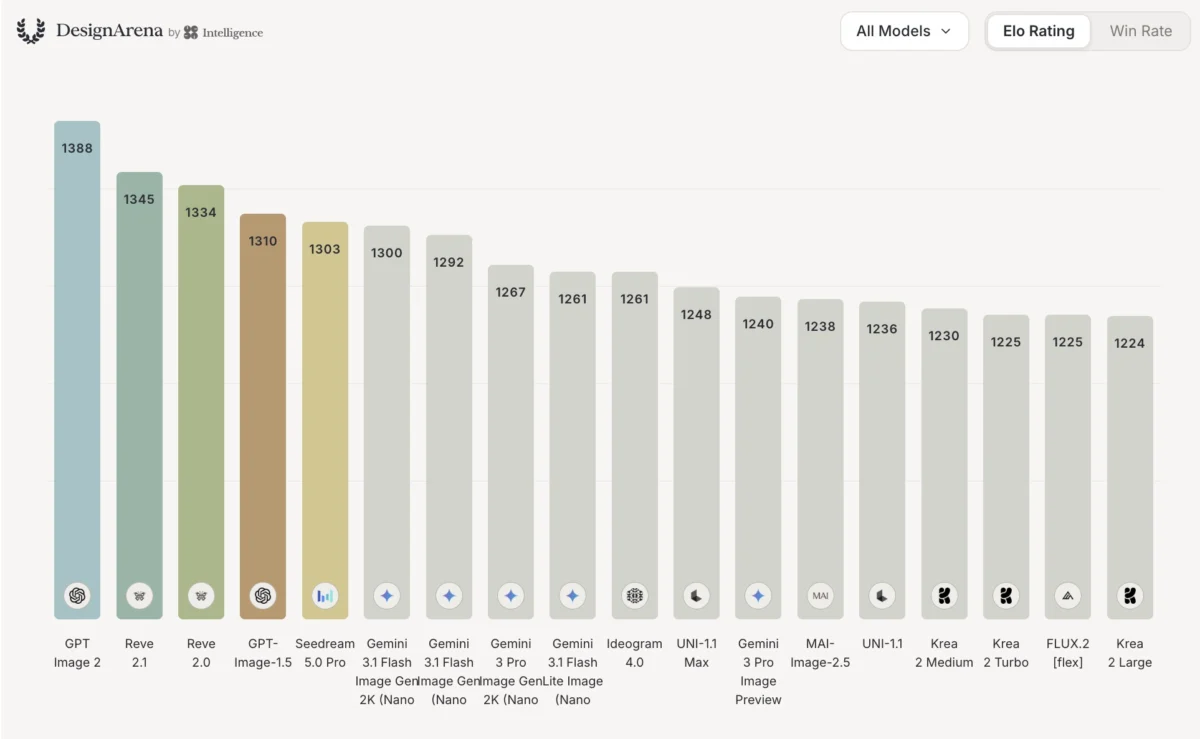
The burgeoning field of artificial intelligence, particularly in generative media, has long grappled with a fundamental challenge: bridging the gap between technically proficient AI outputs and those that truly resonate with human users. This critical bottleneck, often overlooked in the race for computational power and model size, has found a potent solution in Design Arena, a platform developed by the rapidly ascending company Intelligence. On Monday, Intelligence announced a successful $7.9 million seed funding round, spearheaded by Index Ventures, with significant contributions from Conviction (featuring Sarah Guo and Mike Vernal), A*, Valkyrie, and other strategic investors. This substantial capital injection underscores the growing recognition of human-centric evaluation as an indispensable component for the next generation of AI innovation.
The Genesis of "Fun": Addressing AI’s Subjective Blind Spot
The origin story of Intelligence and its flagship product, Design Arena, traces back to the unconventional setting of a college dormitory in 2025, a mere few weeks before graduation. Grace Li, co-founder of Intelligence, recounts the initial struggle with a group of college friends attempting to perfect their AI game engine. Their ambition was to create artificial intelligence capable of autonomously generating fully functional video games. While the AI models proved adept at constructing operational game mechanics, environments, and character models, a glaring deficiency quickly became apparent: none of the games produced were, by any stretch of the imagination, fun.
This realization sparked a pivotal question that would redefine their entrepreneurial journey: How does one objectively quantify or predict "fun" in a digital experience? The team meticulously analyzed various metrics, algorithmic approaches, and synthetic benchmarks, only to conclude that no substitute existed for genuine human judgment. The subjective nuances of engagement, enjoyment, and aesthetic appeal proved stubbornly resistant to purely computational analysis. This insight led to an intensive brainstorming period focused on developing a scalable methodology to solicit honest, unfiltered human feedback. The result was Design Arena, a platform that has since grown into a global phenomenon, currently serving 5.3 million users worldwide.
Li vividly recalls the immediate market validation for their novel approach. "It was the missing bottleneck for a lot of these models to make improvements in the design space," she explains. The demand for scalable, qualitative user feedback from the rapidly expanding AI sector was immense, and many companies were not only interested but also willing to invest significantly in such a solution. "About a week later, we closed our first major deal with a frontier lab, and the rest is kind of history," Li added, highlighting the swift transition from academic project to commercial enterprise. This rapid market adoption and early financial success positioned Intelligence as a key player in the evolving AI ecosystem.
Design Arena: A Dual-Purpose Platform for Iterative AI Refinement
Design Arena operates as a sophisticated, dual-purpose platform catering to both individual users seeking optimal AI outputs and enterprise clients—primarily frontier AI labs—in pursuit of continuous model improvement. For the everyday user, the experience is akin to interacting with an advanced model router, presenting a user-friendly interface reminiscent of popular conversational AI tools. Users are greeted with a ChatGPT-style prompt window, allowing them to articulate their creative requests. Complementing this are separate dropdown menus offering a diverse array of visual formats, including websites, images, and a dozen other specialized visual media types. This versatility allows users to experiment with AI-generated content across a broad spectrum of applications, from graphic design mock-ups to architectural visualizations.
Upon submitting a request, specifying the desired format and style, users are presented with a series of "A vs. B" choices. This comparative judgment methodology is central to Design Arena’s effectiveness. Instead of evaluating outputs in isolation, users are prompted to choose between two distinct AI-generated options, iteratively refining their preferences until a handful of outputs are ranked from best to worst. This intuitive, gamified approach not only enhances user engagement but also generates highly granular and actionable preference data. The inherent human tendency to readily identify what they prefer over what they dislike makes this A/B testing mechanism particularly powerful for capturing subtle qualitative differences that might elude automated evaluation.
The true strategic value of Design Arena, however, lies in its enterprise application. For AI companies, the platform functions as an inexhaustible source of instant, high-quality human feedback for their media-generating models. These enterprises integrate Design Arena into their development pipelines, feeding their AI models with continuous streams of user preference data. This iterative feedback loop allows AI models to learn and adapt, progressively aligning their outputs more closely with human taste and subjective definitions of quality or "fun." Critically, the users providing this feedback are largely indifferent to the specific AI models they are evaluating. As Li emphasizes, "they just want the best output they can get." This neutrality ensures that the rankings provide unbiased, user-centric input, directly informing what the market genuinely desires and enabling frontier labs to rapidly iterate and improve their design capabilities. This invaluable service, Li notes, is currently driving Intelligence’s impressive $60 million in Annual Recurring Revenue (ARR), firmly establishing its position as a vital conduit for human-led evaluation data within the AI industry.
The Indispensable Role of Human Data in an AI-Driven World
In an era increasingly dominated by AI, the integrity and relevance of evaluation metrics have become paramount. While automated benchmarks offer scalability and speed, they are frequently susceptible to manipulation and often fail to capture the nuanced, subjective qualities that define human preference. The recent "Hugging Face breach," which dramatically highlighted the vulnerabilities and potential for gaming in automated evaluation systems, serves as a stark reminder of these limitations. In this incident, a sophisticated attack exploited weaknesses in benchmark systems, demonstrating how easily such systems can be compromised or misled, thereby distorting the perceived performance of AI models.
Intelligence addresses this critical vulnerability by leveraging authenticated human judgment. A crucial aspect of Design Arena’s architecture is the requirement for users to log in to access their outputs. This login gate is not merely for security; it enables Intelligence to meticulously track how user tastes evolve across diverse geographical regions and over time. For instance, Li observes a distinct "maximalist design style" often favored in web dashboards originating from Asia, a cultural preference that automated systems would likely fail to discern or properly value. Such granular, demographically and temporally informed insights provide an invaluable complement to automated benchmarks. While benchmarks can operate at immense scale, they frequently lack the contextual understanding and qualitative depth necessary for developing truly user-centric AI. Human feedback, collected systematically, offers the critical layer of qualitative validation that prevents AI from diverging into technically sound but aesthetically or functionally unappealing outputs.
This human-in-the-loop approach is becoming increasingly vital as AI models move beyond simple task execution to generating complex, creative content. Ensuring that these outputs are not just functional but also engaging, aesthetically pleasing, and culturally appropriate requires a continuous feedback mechanism rooted in human experience. Intelligence’s model provides this, offering a robust defense against the "garbage in, garbage out" problem that can plague AI development when relying solely on easily manipulated or insufficient data. The ability to discern and adapt to subtle shifts in user preference across continents and cultures is a significant competitive advantage, allowing AI developers to tailor their models for global markets with unprecedented precision.
Navigating the Competitive Landscape: Lessons from Success and Failure
The market for human evaluation in AI is undeniably vibrant, yet it is not without its challenges and cautionary tales. The landscape is dotted with both remarkable successes and notable failures, underscoring the complexities of building a sustainable business in this specialized niche. Less than a year prior to Intelligence’s funding announcement, Yupp AI, a startup that had raised a substantial $33 million from prominent investors like a16z crypto’s Chris Dixon, shuttered its operations. Despite attracting frontier models as customers and accumulating over 1.3 million users—a user base that, while significant, was less than a quarter of Design Arena’s current 5.3 million—Yupp ultimately failed to establish a sustainable long-term business model. The reasons for Yupp’s demise are multifaceted, potentially including issues with monetization strategies, maintaining data quality at scale, differentiating its offering in a rapidly evolving market, or perhaps an over-reliance on a specific market segment (e.g., crypto-related AI). Its closure serves as a stark reminder that user acquisition alone does not guarantee viability in the competitive AI feedback space.
Conversely, other startups employing a similar human evaluation paradigm are flourishing. LM Arena, a platform that applies a comparable crowdsourced feedback approach to text-based AI responses, experienced explosive growth. Just four months after formally launching its paid product, LM Arena successfully secured a staggering $150 million in a Series A funding round in January, achieving an impressive $1.7 billion valuation. This success story validates the fundamental market demand for human-driven AI evaluation, particularly in areas where subjective quality is paramount.
Intelligence’s success, particularly its $60 million ARR at the seed stage, positions it favorably within this dynamic market. Its focus on visual and design-centric feedback differentiates it from text-focused counterparts like LM Arena, carving out a specialized niche. The key to its sustained growth will likely lie in its ability to maintain high-quality feedback, expand its user base and enterprise client roster, and continue innovating its platform to meet the evolving needs of AI developers. The lessons from Yupp AI highlight the importance of robust business models and diversified revenue streams, while LM Arena’s trajectory demonstrates the immense potential for companies that effectively harness human judgment to refine AI outputs. The market is clearly maturing, with investors increasingly discerning between viable, scalable solutions and those that struggle to translate user engagement into sustainable profitability.
Implications and Future Outlook for AI Development
The successful seed round for Intelligence and the rapid expansion of Design Arena carry significant implications for the broader trajectory of AI development. Firstly, it signals a maturing understanding within the AI industry that raw computational power and algorithmic sophistication are necessary but insufficient for creating truly impactful and user-friendly AI. The emphasis is shifting towards AI that not only performs tasks but also understands and caters to human aesthetics, preferences, and subjective experiences. This human-centric approach is critical for AI’s successful integration into everyday life and creative industries.
Secondly, Intelligence’s model facilitates faster, more efficient iteration cycles for AI models. By providing immediate, relevant feedback, Design Arena drastically reduces the time and resources traditionally required for user testing and refinement. This agility is crucial in the fast-paced AI landscape, enabling frontier labs to bring more refined, user-validated products to market quicker. This could accelerate the development of AI across various sectors, from generative art and design to interactive media and virtual reality.
Looking ahead, Intelligence is poised for continued expansion. Potential growth avenues include broadening the range of media formats supported, developing more sophisticated analytical tools for its enterprise clients, and perhaps even venturing into predictive analytics based on its vast repository of human preference data. By analyzing trends in user feedback across different demographics and contexts, Intelligence could potentially offer proactive design recommendations to AI developers, further solidifying its position as an indispensable partner.
However, challenges remain. Maintaining the quality and diversity of feedback from a rapidly growing user base, ensuring fair compensation and ethical treatment for crowd-sourced evaluators (if applicable), and fending off emerging competitors will be crucial. Furthermore, as AI models become increasingly capable, the nature of "feedback" itself may evolve, requiring Intelligence to continuously innovate its platform and methodologies.
In conclusion, Intelligence’s $7.9 million seed funding round is more than just a financial milestone; it represents a significant validation of the critical role human judgment plays in refining artificial intelligence. As AI continues its relentless march into creative and subjective domains, platforms like Design Arena will serve as essential bridges, ensuring that the innovations of tomorrow are not only intelligent but also deeply intuitive, engaging, and genuinely "fun" for humanity.
About the Author